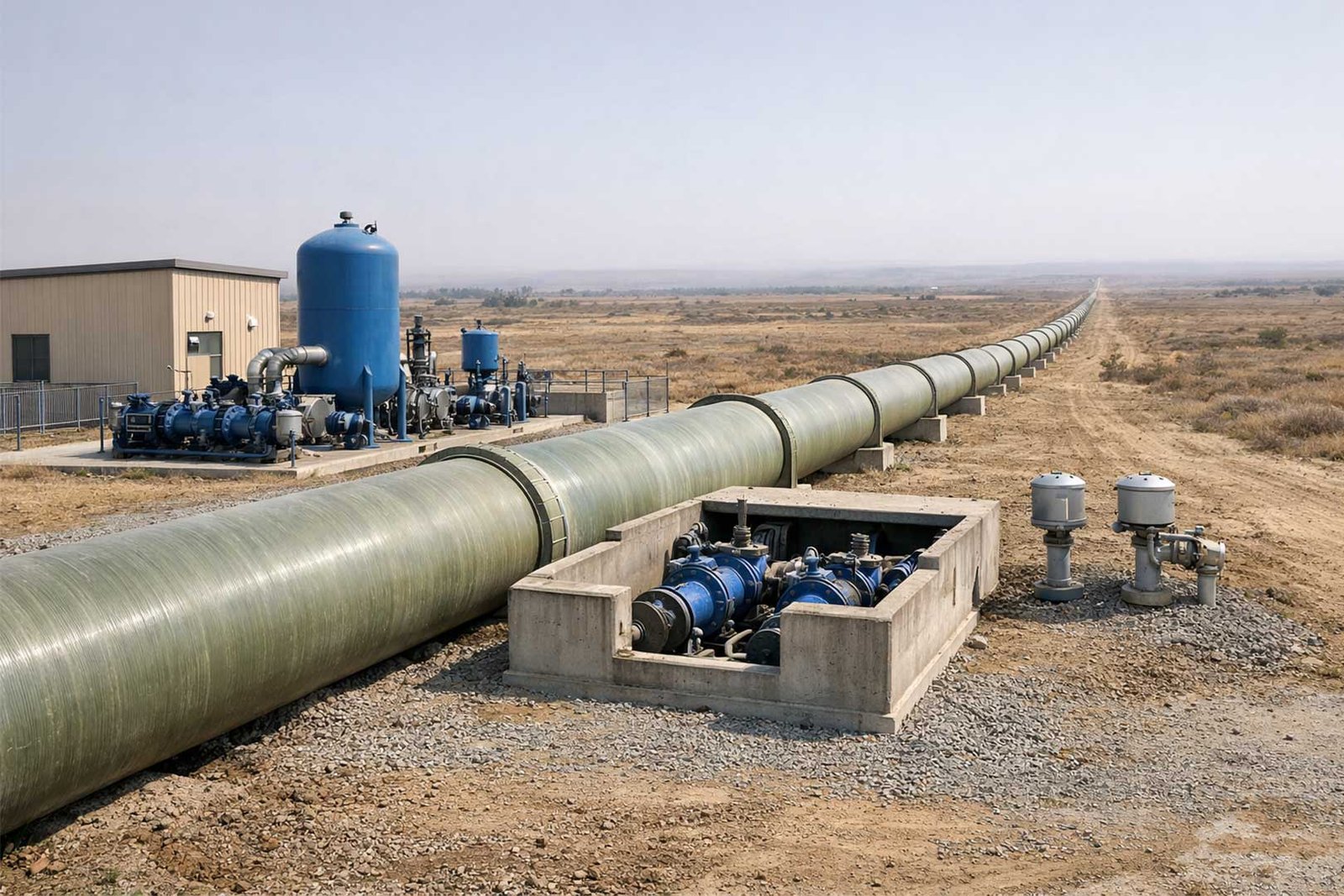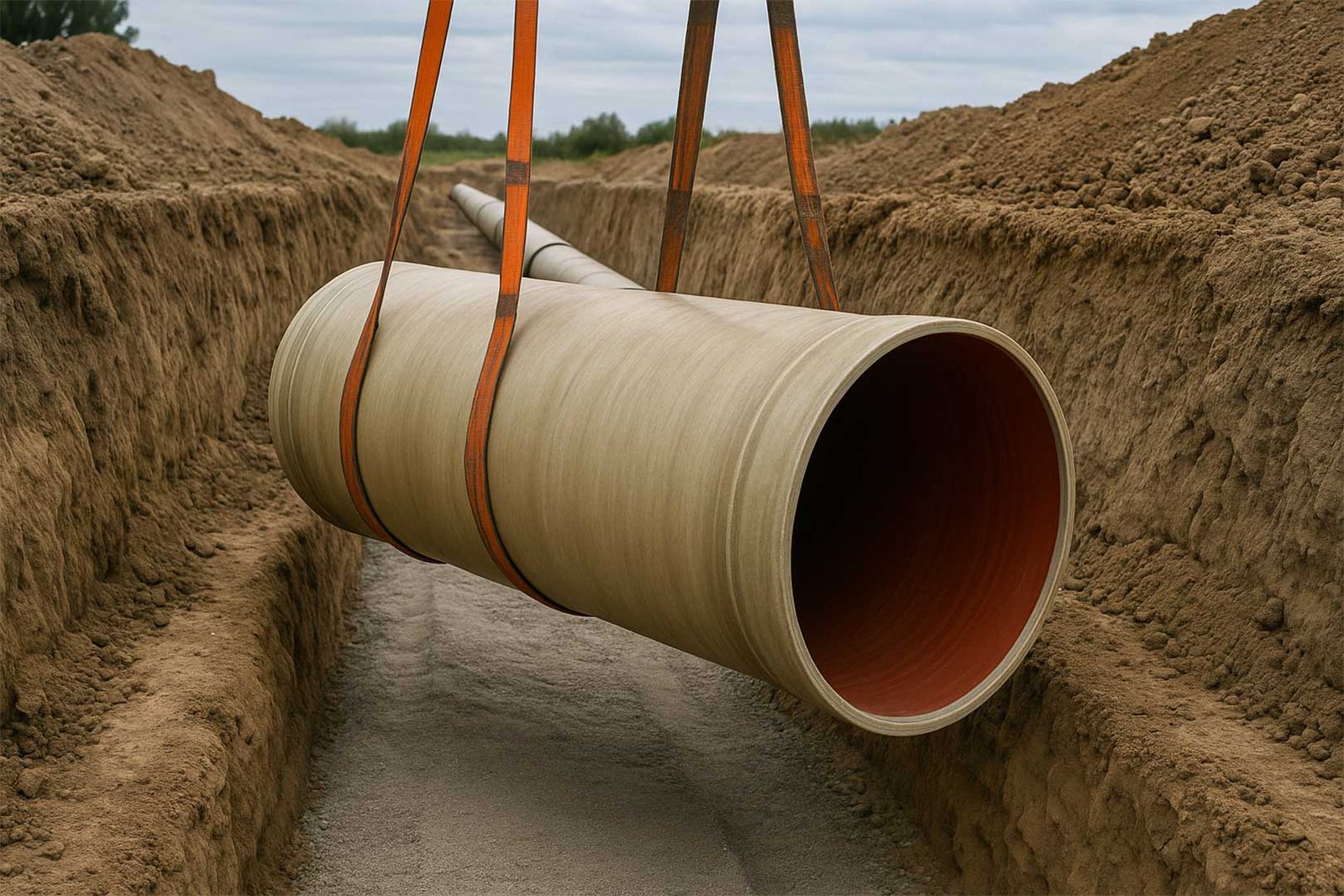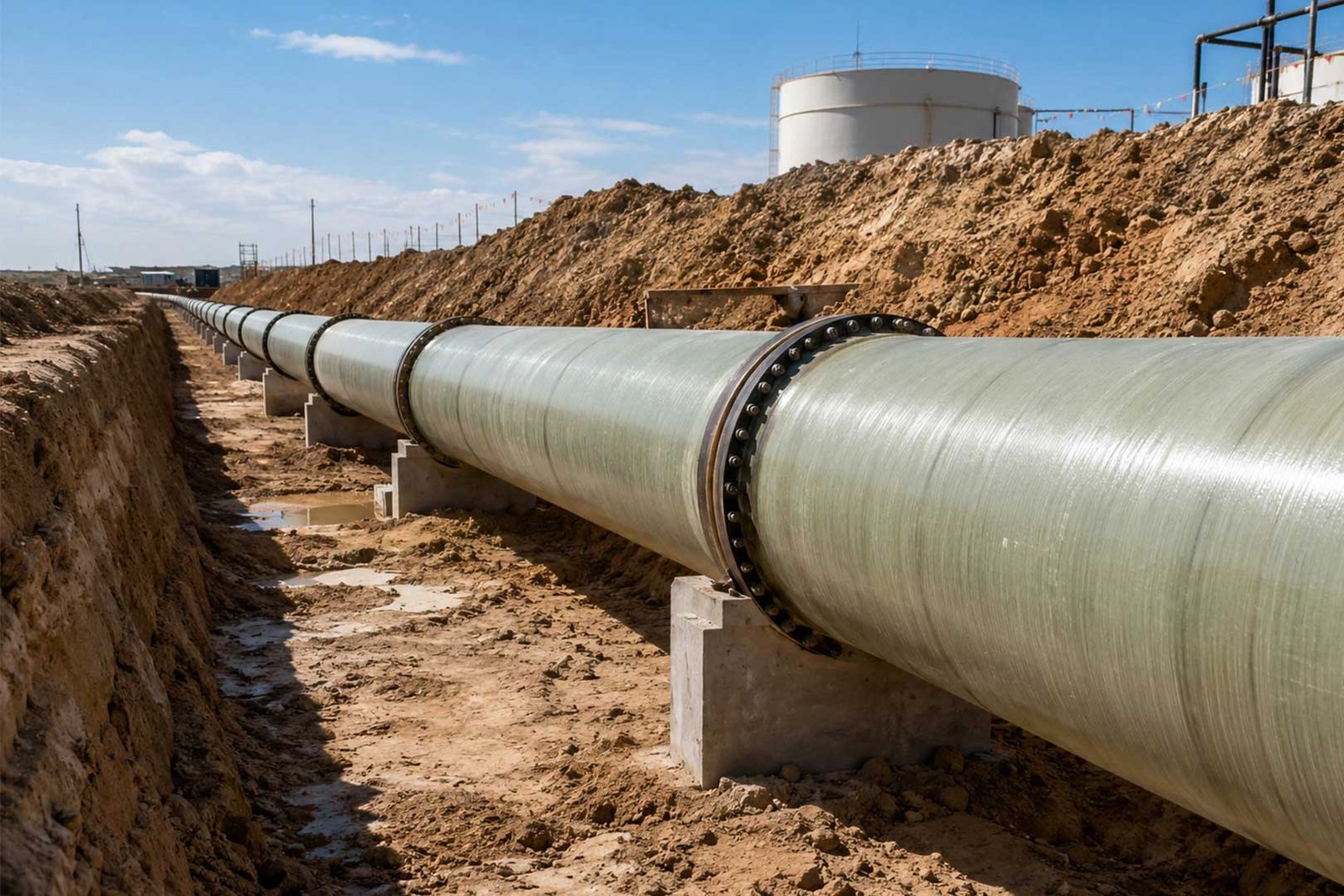
The case of the budget in the pipeline project may seem clear at first sight, but it’s likely to get changes during the installation or further operations. Pipe supply is not the only cost EPC managers should consider; each direction change can add to the fittings, joints, and more handles on the site. These connections lead to a chance of leakage and future inspections. These risks totally increase the cost of labor, which for owners represents how much thoughtful alignments matter.
If you’re about to design a piping system, you probably need to know how to optimize the alignment in a way to become both cost-effective and practical; this post is what can help you to figure it out. So, stay tuned till it ends.
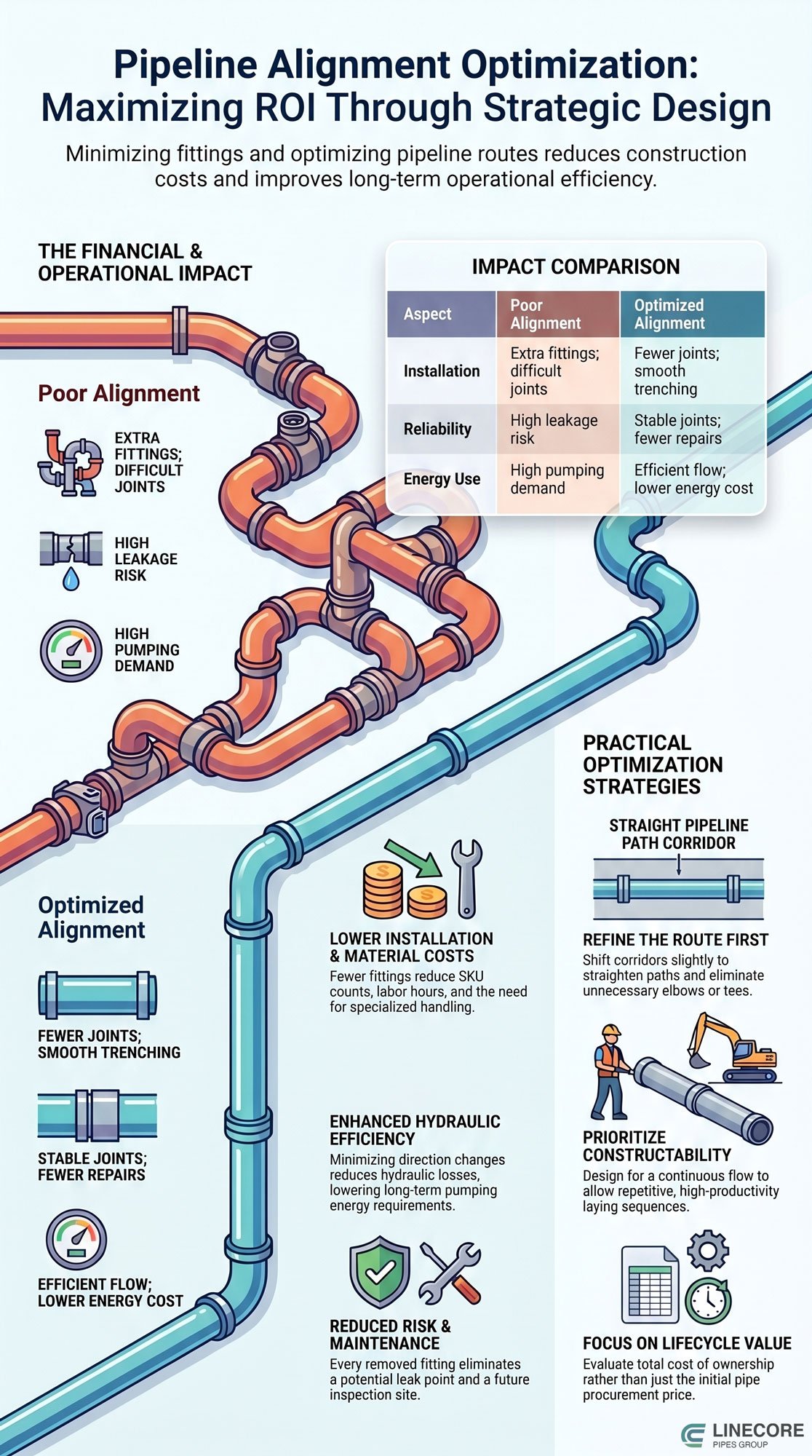
Pipeline Alignment Optimization Infographic (source: PipelineCoreGroup.com)
What “Pipeline Alignment Optimization” Actually Means?
To understand how exactly the alignment of piping systems can be improved, there are some crucial factors below that light up to cut the budget.
Start with The Route, Not The Fittings.
To start the optimization of pipe alignment, it’s necessary to figure out what it means. It simply means the selection of pipe installation design in a way with less pipe direction change. A little movement of the route can make the system get rid of the extra elbows or further joints.
Fewer bends → fewer joints → fewer checks → fewer chances for misalignment
Less Need for Unnecessary Components
If there are too many elbows, tees, or fittings, there’ll be some special handling and installation steps for them. Then, trying to reduce the need for these jointing components will result in fewer field modifications in projects where the design parameters and actual ground conditions do not match. (Source: ResearchGate)
Use the Pipe System as Intended
Each pipe material includes some specific characteristics, such as flexibility, joint requirements, and installation limits, which an improved alignment program will avoid extra cost on.
Align Design with Execution Reality
There are multiple options that must be considered together to make the real site conditions and route design harmonized, such as
- Hydraulics
- Constructability
- Procurement
- Long-term operation
That’s all that it means for alignment optimization to cut the costs automatically.
Why Fewer Fittings Usually Means Better Financial Performance
Once we discussed what alignment optimization means, it was time to check on how fewer fittings can result in less spending on installation and jointing aspects. Here are four ways to pay less on projects and earn more at the end.
- Lesser Material Costs: More elbows, tees, and fittings mean more cost per unit than straight pipes. A lesser need for SKUs and the number of joints can make logistics easier on-site and decrease the delays.
- Lower Installation Cost: More fittings → more joints → more cleaning, assembly, and inspection → more downtime and labor cost
- Lower Risk of Rework: The trench goes with lots of problems when it’s getting into the fitting points; that’s why a reduced plan for fittings will make engineers get rid of rework on bedding.
Final Point: Better Operating Value
Consider that each change in directions of the pipeline can add hydraulic loss risks. Over long distances, this increases pumping demand. As mentioned in ScienceDirect, a smoother pipeline with fewer interruptions runs more efficiently and has fewer locations that require maintenance over time.
The Hidden Cost of Too Many Fittings in Water Transmission Lines
Most cost overruns do not come from a single big mistake. They build up through small design choices that multiply in the field. Extra fittings are a clear example. Each one adds another connection, another inspection point, and another place where something can go wrong under pressure.
What Is Happening on Sites with Too Many Direction Changes or Fittings?
On site, directional changes rarely stay simple. Crews should get in trouble with more careful bedding and repeated checks to ensure everything is aligned. In soft soil or high groundwater, this slows progress even further. What looked manageable on drawings turns into stop-and-go installation in the trench.
What Massive Fittings Do to Installation Operations in Piping Systems
Fittings also bring civil implications. Thrust blocks, more digging, and teams working together make the job load bigger and the wait time longer. More joints during testing mean more possible leaks, more repairs, and longer commissioning times.
- Engineering Consideration: Even little problems get worse quickly on large-diameter wires. For the owner, a few extra fittings per kilometer might mean a lot of extra money, longer schedules, and a larger long-term risk.
Why This Matters Especially for GRP Water Transmission Projects
GRP pipe systems are often chosen for long-distance water transmission because they resist corrosion, offer a smooth internal surface, and hold performance over time. These advantages are well known.
| Aspect | Poor Alignment | Optimized Alignment | Result |
|---|---|---|---|
| Installation | Extra fittings, difficult joints | Fewer joints, smooth trench | Less labor & rework |
| Support | Uneven bedding, poor compaction | Correct support & compaction | Prevents stress |
| Reliability | High leakage risk | Stable joints | Avoids long-term repairs |
Strategic Design Coordination & EPC Partnership: LineCore Pipes Group
Design coordination is what can change the game when GRP pipes include such flexibility within defined limits. Using that flexibility properly can reduce the need for specials and simplify installation.
This is where a supplier with EPC understanding adds value. A partner such as LineCore Pipes Group can support both product selection and route development, helping owners achieve a pipeline that is easier to build and stronger in long-term performance.
Where ROI Comes from in Alignment Optimization
The return on alignment decisions shows up across the entire project, not just in material cost. First, capital spending goes down. Fewer fittings and extras mean fewer purchases, and easier installation means less work.
- Faster Schedule: Risk reduction ties all of this together. Each removed fitting eliminates a potential leak point and reduces dependence on field corrections. The result is a system that performs more reliably, with fewer surprises for the owner over time.
- Operational Efficiency: These savings continue long after handover. As we mentioned before, a pipeline with fewer direction changes has lower hydraulic losses, which can use less pumping energy during the system’s lifespan. Maintenance demand is also what’s being decreased due to fewer joints and fittings with less need for control or further checks. (Source: ISO)
- Enhanced System Reliability: Risk reduction ties all of this together. Each removed fitting eliminates a potential leak point and reduces dependence on field corrections. The result is a system that performs more reliably, with fewer surprises for the owner over time.
Practical Examples of How Better Alignment Reduces Cost
A long transmission line often carries small inefficiencies that grow over distance. In one typical case, the initial route included frequent direction changes to follow property boundaries.
| Aspect | Poor Alignment | Optimized Alignment | Cost Impact |
|---|---|---|---|
| Route Design | Frequent direction changes to follow boundaries. | Slight corridor shift to straighten the path. | Reduces material waste and labor hours. |
| Physical Components | High number of elbows and joints over distance. | Fewer elbows and joints required. | Lower material costs and faster trenching. |
| Operational Performance | Higher hydraulic resistance due to bends. | Smoother flow with reduced resistance. | Lower long-term energy and maintenance costs. |
- A Tip for EPC Managers: Standard pipe sections shape the supply, delivery becomes more predictable, and the overall project schedule becomes easier to manage.
How Alignment Optimization Improves Constructability
Good alignment is not only a design improvement. It is a constructability improvement.
● Cleaner Installation Sequences
A well-aligned route allows crews to lay pipe in a continuous flow. There are fewer interruptions for angle corrections or special installations. This matter makes all excavation, bedding, laying, and backfilling consistent instead of separated steps that take too much time.
● Fewer Critical Fit-Up Points
Every fitting introduces a location where precision becomes harder to achieve. In tight trenches or variable soil, these points slow crews down. ResearchGates highlights that reducing them means fewer situations where alignment, jointing, and compaction must all be perfect at once.
● Higher Crew Productivity
Crews perform better when the work is repetitive and predictable. Less time is spent on adjustments, lifting alignment under site pressure.
● Simpler Quality and Logistics Control
Fewer fittings require less inspection and easier QA processes. The handling of materials gets easier, with less need to track special components. What can get changed by following a clearer plan for pipe alignment is listed below:
- Tie-ins
- hydrotests
- section completions
These components improve coordination across teams.
The Lifecycle View: Why Owners Should Look beyond Initial Pipe Price
A low pipe price may look efficient at the procurement stage, but it rarely reflects the true cost of a pipeline once it is installed and operating.
| Cost Area | Low-Price Focus (Poor Alignment) | Lifecycle Focus (Optimized Alignment) |
|---|---|---|
| Installation | More fittings, slower progress, higher labor hours | Fewer fittings, smoother installation, lower labor demand |
| Hydraulic Performance | Higher losses due to frequent direction changes | Lower losses, more efficient flow along the pipeline |
| Energy Use | Increased pumping demand over time | Reduced energy consumption across asset life |
| Maintenance | More joints and fittings to inspect and repair | Fewer sensitive points, lower maintenance effort |
| Risk | Higher leak potential and field adjustment issues | Lower risk, more predictable system behavior |
| Long-Term Cost | Hidden costs accumulate over time | Controlled costs with better lifecycle value |
For large water transmission systems, these differences scale quickly. Alignment decisions made early in design often define whether the project delivers short-term savings or long-term value.
What Project Owners Should Ask Before Finalizing a Pipeline Design
Before locking a pipeline design, owners should challenge not only the pipe specification but also the alignment decisions behind it. Small questions at this stage often prevent large costs later in construction and operation.
Can the alignment be refined to reduce fittings and specials without affecting hydraulic requirements or land constraints? How much of the current route increases installation time, trench complexity, and labor demand in the field? These two questions often reveal hidden cost drivers that are not obvious in drawings.
It is also important to understand hydraulic impact. Does the current design introduce unnecessary direction changes that increase energy losses over the asset life? Which sections of the alignment are likely to require field adjustments once excavation starts and actual ground conditions are exposed?
Owners should also confirm whether the design has been reviewed from both engineering and EPC execution perspectives, not just hydraulic or theoretical feasibility.
Finally, the key question remains: Is the project being optimized for the lowest initial cost or for the lowest total lifecycle cost?
What project owners should ask before finalizing a pipeline design
At this stage, value comes from asking the right questions early, before the trench is open and changes become expensive. A few focused checks can reveal where cost, delay, and risk are likely to appear.
1- Can the alignment be refined to reduce fittings and specials?
In many cases, small route adjustments can remove unnecessary elbows, tees, and custom components without affecting system performance.
2- How does the current route affect installation time and labor?
Frequent direction changes slow laying rates, increase joint work, and force crews into more adjustments under site conditions.
3- What is the impact on hydraulic efficiency?
Each change in direction adds minor losses. Over long distances, this increases pumping demand and operating cost.
4- Which parts of the design increase field adjustment risk?
Tight angles, uneven terrain transitions, and sections with many fittings often lead to on-site corrections once excavation begins.
5- Has the design been reviewed from both engineering and EPC execution perspectives?
A layout that works on paper may still create challenges in real trench conditions if constructability is not considered early.
6- Are we optimizing for first cost only, or total lifecycle value?
Projects perform better when decisions account for installation effort, energy use, maintenance, and long-term reliability, not just initial material cost.
Why An Integrated Supplier + EPC Partner Creates More Value
The design, supply, and execution all can reduce the final cost of piping system setup. That’s where alignment decisions must be so wise that they can cover dilemmas stemming from the actual trench conditions and the illustrations. This approach removes unnecessary fittings, avoids late changes, and keeps installation steady from start to finish.
With LineCore Pipes Group, the focus goes beyond supplying pipes. The team looks at how the line will be built, how it will perform, and how costs develop over time. This reduces gaps between design and site work, limits surprises during construction, and leads to a pipeline that is easier to build and more reliable in operation.
about
The Author

Farshid Tavakoli is a seasoned professional in engineering and international trade. Holding degrees in Electrical Engineering, Mechatronics, and a Doctorate in Business Administration (DBA) from the University of Lyon, he also has a strong background in industrial automation and production line technologies.
For over 17 years, he has led an international trading company, gaining deep expertise in commercial solutions tailored to industrial needs. With more than 8 years of active involvement in infrastructure development, he specializes in the supply of electromechanical equipment for water and wastewater treatment plants and transfer projects.
Together with comapny expert team, he now provides consultancy and integrated solutions for sourcing and implementing complex infrastructure projects across the region.