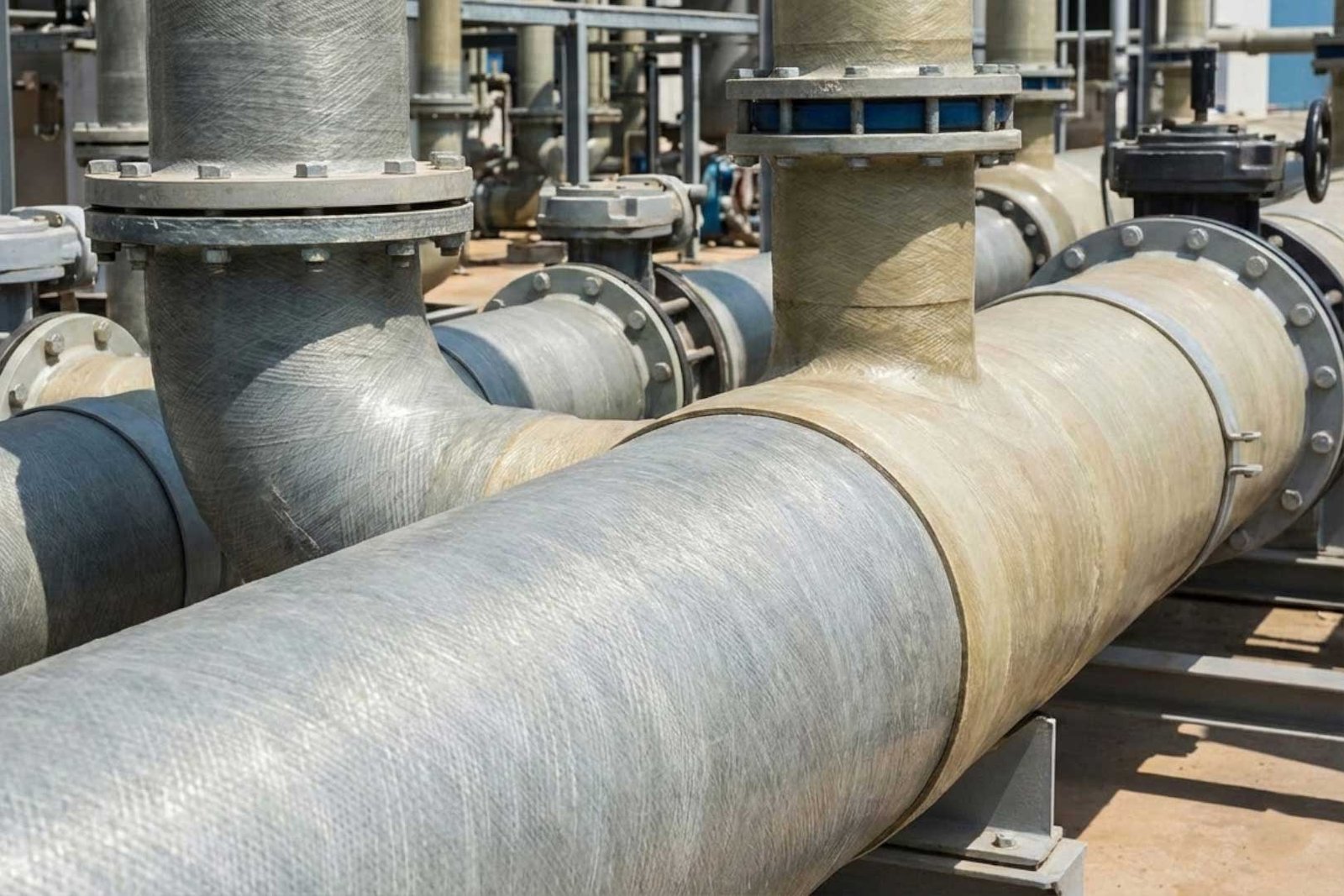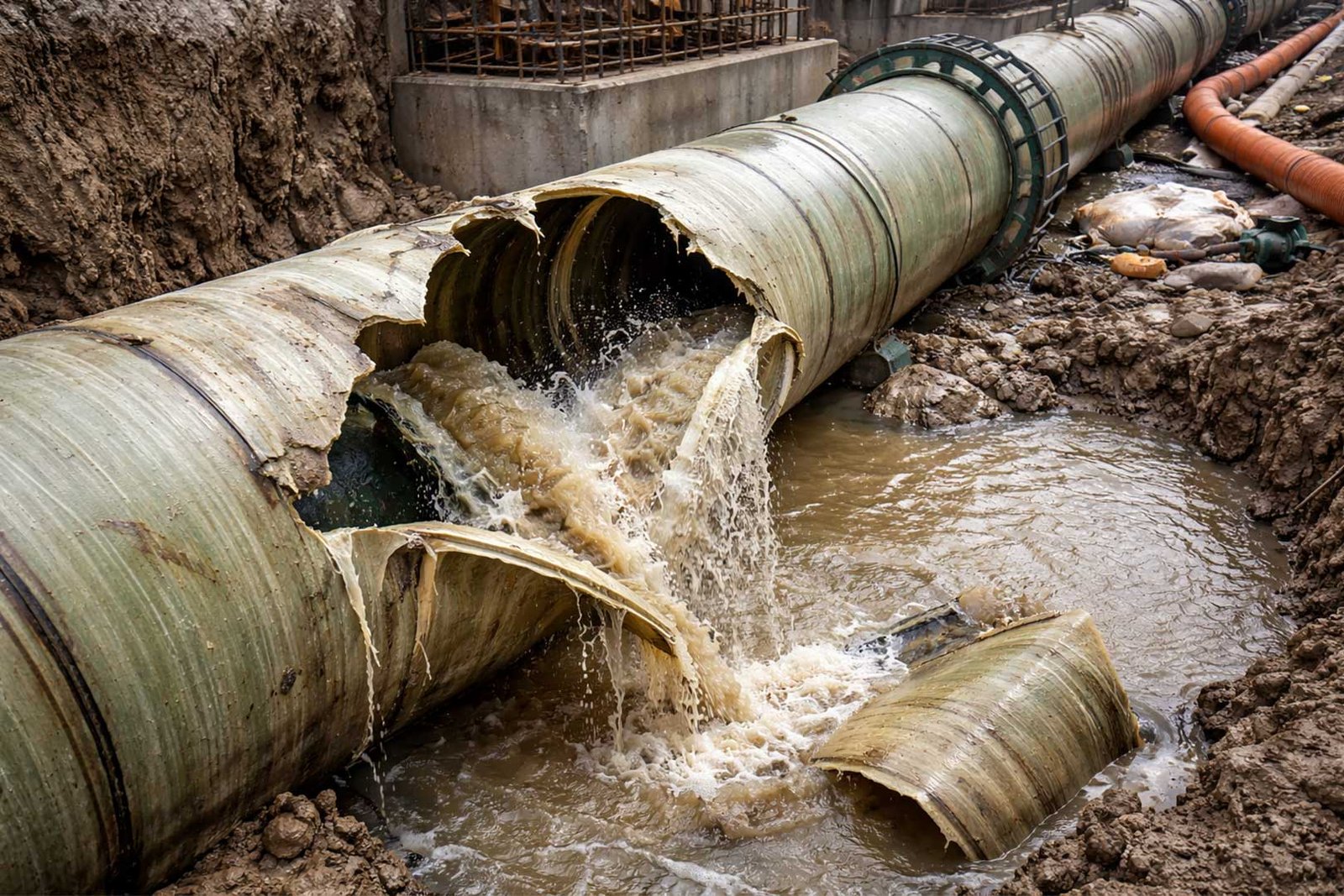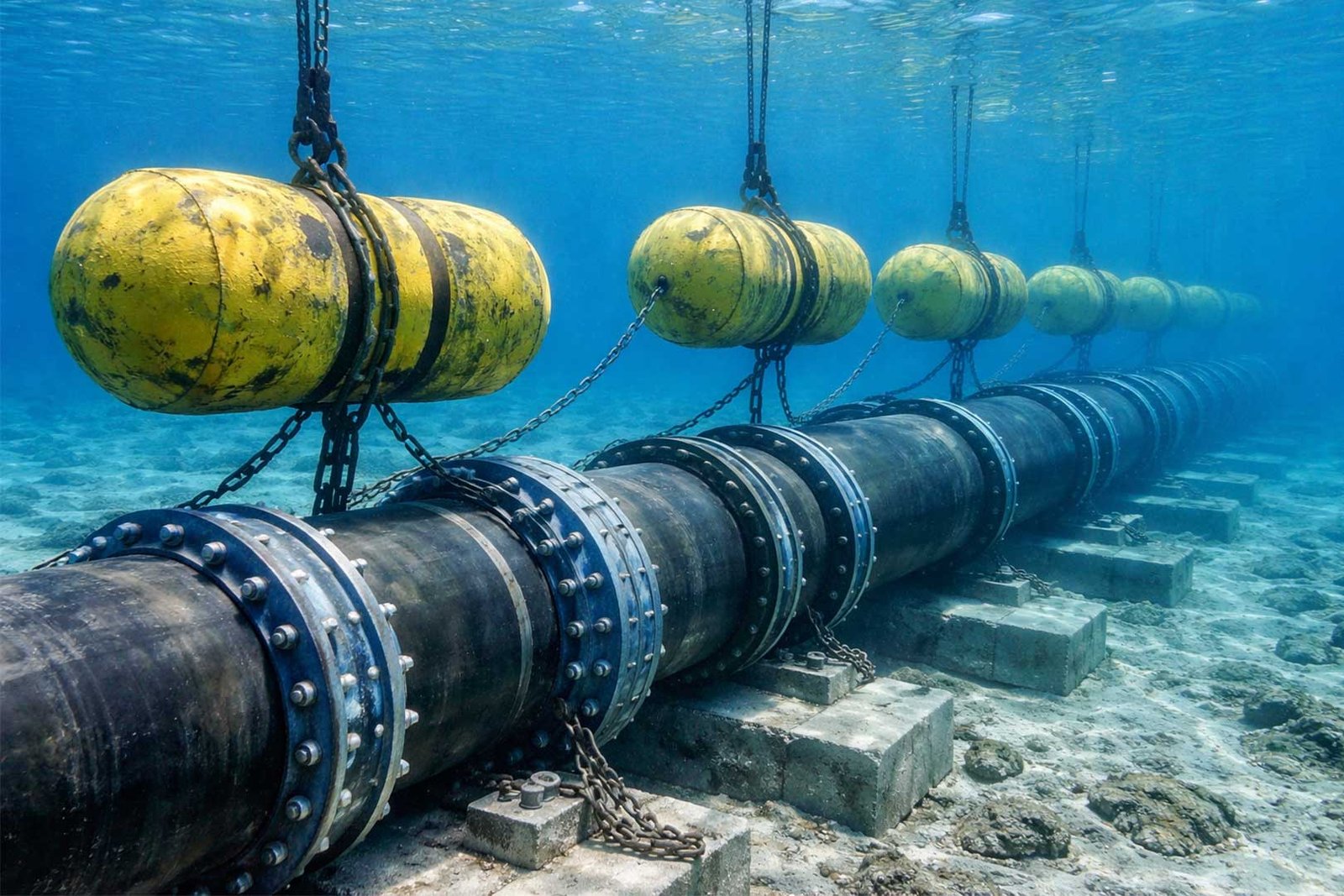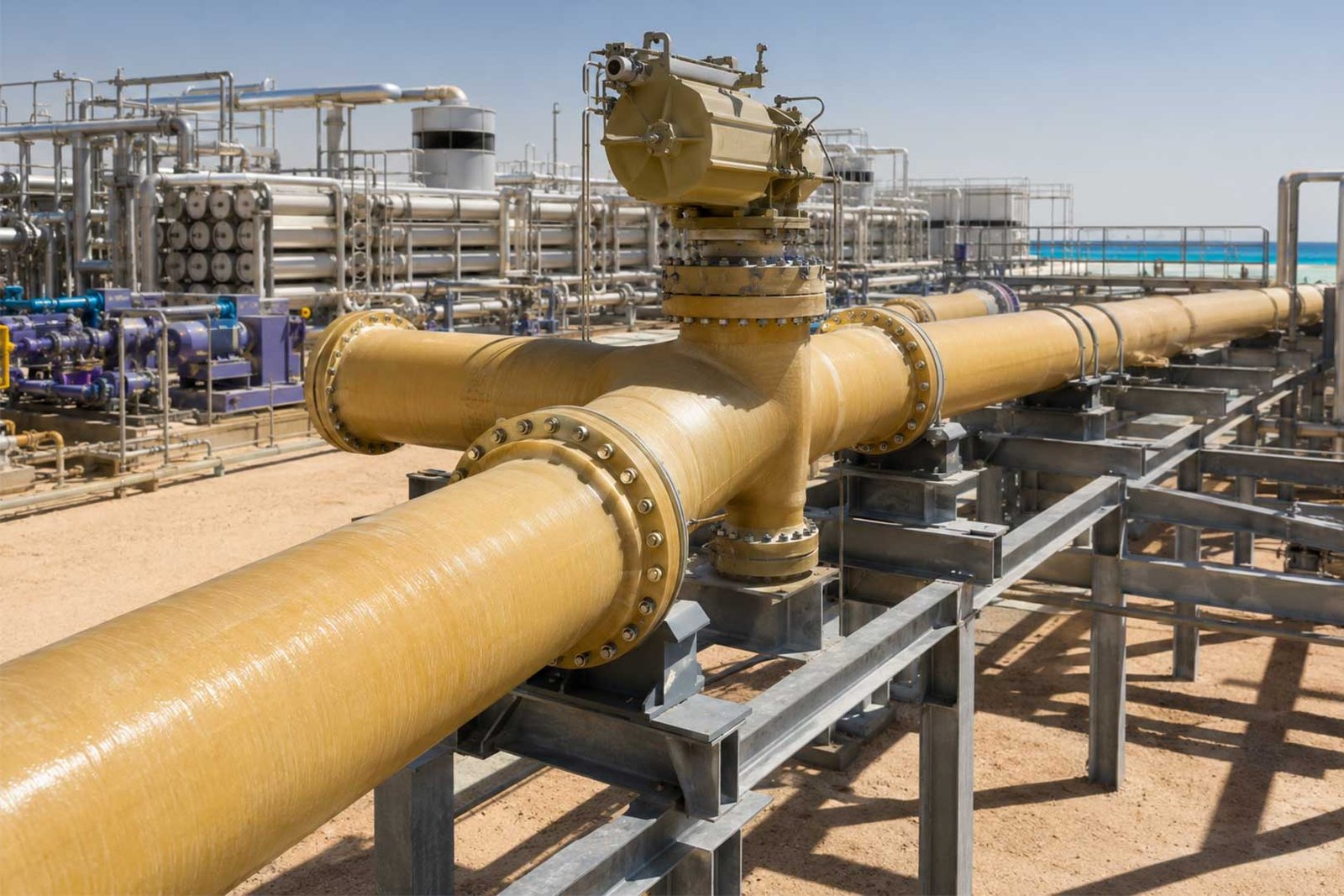
Composite pipe temperature limits do not act the same as the datasheet’s suggestion. This matter brings a question in: How hot can a GRE or GRP pipe get? The answer is rarely a single number. Temperature changes pressure capacity, pipe movement, joint performance, and service life. This understanding of those relationships is what exactly helps avoid costly design and processing mistakes later in the project.
Engineers, EPC teams, and pipeline owners can use this guide to check GRE and GRP temperature limits, resin types, support needs, and what system data to request from suppliers.
The table below summarizes typical temperature guidance:
| System / Context | Typical Range | Practical Note |
|---|---|---|
| Standard GRP water/sewer | 2–50 °C | Conservative service |
| GRP above 35 °C | >35 °C | Check pressure rating |
| GRE potable water | Higher | Requires qualified system |
| Industrial GRE | High | Product-specific limits |
| Hot water / special service | Elevated | Special resin/joints needed |
Why GRP and GRE Temperature Limits Are Different
GRP and GRE react differently to heat because their resin type, fiber layout, and service conditions vary. The pipe name alone does not set the limit. Engineers need to consider how pressure, temperature, and time work together in the full system.
GRP vs GRE Pipe Systems
GRP usually refers to glass-reinforced plastic based on polyester or vinyl ester resins. GRE uses epoxy as the matrix. Both rely on glass fibers for strength, but the resin controls most of the thermal and chemical response.
Resin carries load transfer between fibers. It also sets the boundary for heat resistance and long-term stability. Fiber winding controls stiffness and pressure capacity, especially in the axial and hoop directions. That difference matters when temperature rises under pressure.
Why Temperature Limits Do Not Follow a Single Number
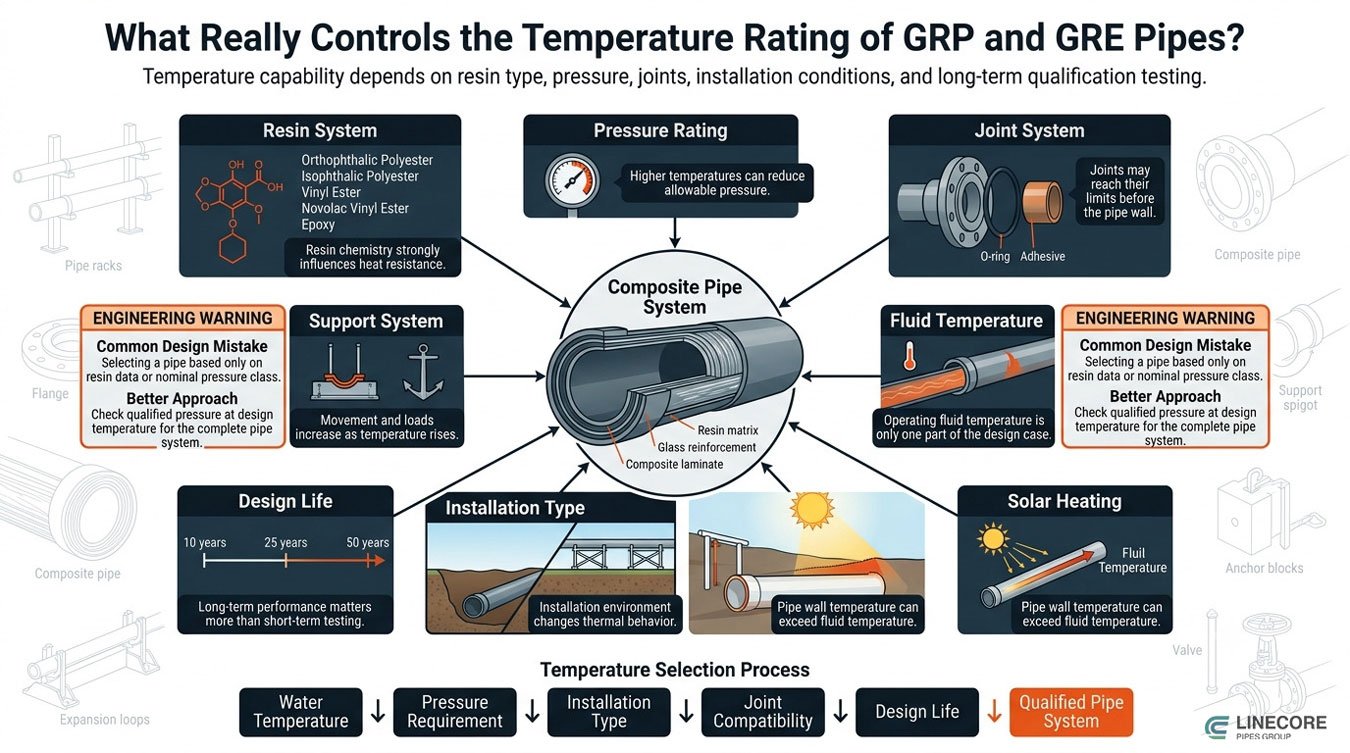
A single maximum temperature value does not work for composite pipes. Several factors interact at the same time:
- Resin chemistry changes performance at elevated temperature
- Pressure capacity drops as temperature rises
- Long-term creep and stress relaxation reduce allowable load
- Joints, gaskets, and adhesives may fail earlier than the pipe wall
- Aboveground lines see higher pipe wall temperature due to solar gain
A buried line at 40°C water temperature behaves differently from an exposed pipe carrying the same fluid. The soil buffers heat, while solar radiation pushes surface temperature higher in open installations.
System Rating Versus Resin Data
Resin datasheets often show Tg and HDT values. These help compare materials, but they do not represent real operating limits.
A pipe works as a full system. That includes pipe walls, joints, gaskets, and long-term pressure behavior under real temperature cycles. A valid design must come from tested system data, not resin values alone.
Tip: ResearchGates noted in an article that hydrostatic strength decreases as temperature rises. Values usually go from near 100% at 20°C to around 60–70% at 50°C which is up to the resin and layup. Review long-term regression data to avoid surprises in service life and pressure performance.
Standards and Qualification for GRE and GRP Pipes
Temperature limits mean little without understanding how a pipe was tested and qualified. Engineers must look at the full system, including resin, joints, and installation conditions.
Water Transmission Standards
Common references include ISO 23856, ISO 10639, EN water/sewer codes, and AWWA C950 for fiberglass pressure pipes. These standards cover pressure, stiffness, and long-term durability for buried systems.
Industrial and Oil & Gas Standards
ISO 14692 applies to GRE pipes. ASTM D2992 sets long-term hydrostatic design basis, ASTM D2996 classifies fiberglass pipe, and API standards may apply in oil and gas installations. What to Request From Suppliers:
- Pressure rating at operating temperature
- Design life data (50-year basis if available)
- Resin type and liner/barrier system
- Joint type and test results
- Gasket or elastomer material
- Temperature derating and support spacing tables
Procurement Note: How to Avoid Deformation
Two pipes with the same nominal pressure class may behave very differently under elevated temperatures. Compare qualified pressure at your actual design temperature. This can prevent further unwanted extra loads on pipes or wrong design choices.
Resin Selection for GRE and GRP Pipes
Resin choice sets the real limit of a composite pipe system. It controls temperature tolerance, chemical resistance, and long-term behavior under pressure. GRP and GRE may look similar on paper, but the resin inside changes how the pipe performs in service.
A Technical Insight before Going through the Resin Types
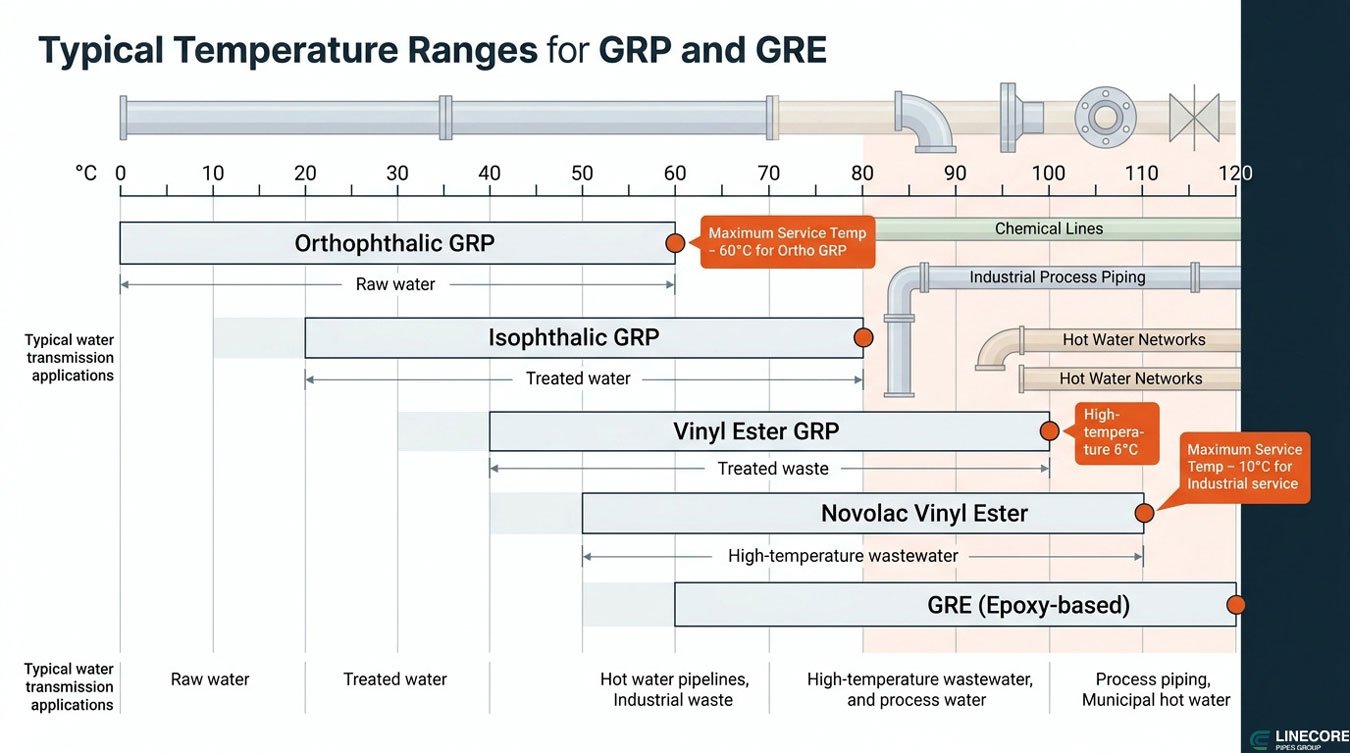
Vinyl ester systems typically retain higher strength at elevated temperatures compared with polyester systems, which makes them common in pipelines operating above 40–50°C in industrial water service.
Polyester Resin Options in GRP Systems
There are many options for the resin system in the GRP pipes family. This depends on the project requirements to choose which for your project. Check each of these systems to find the best alignment.
- Orthophthalic Polyester: This sits at the lower end of GRP resins. It works in basic water service where temperature and chemistry stay mild. Hot water or aggressive fluids push it beyond its comfort range, especially under sustained pressure.
- Isophthalic Polyester: This option provides a better water-resistance base. Many urban pipelines use it as a standard upgrade. It handles lower temperature shifts better, but still needs project-specific checks before the final selection.
- Vinyl Ester Resin: GRV as one of the most resistant choices among all moves the system into higher chemical and thermal resistance. It suits wastewater, desalination, and industrial utility lines where water quality or temperature varies more than normal.
- Novolac Vinyl Ester: This goes further. It can manage harsher chemicals and higher heat exposure better than previous options. Engineers usually specify it for industrial fluids where both temperature and corrosion load stay high over long periods.
Epoxy Systems in GRE Pipes
GRE pipes use epoxy-based resin systems. Performance depends heavily on curing chemistry and manufacturing control. Amine-cured epoxies work better in hot water service compared to systems sensitive to hydrolysis. In practice, the full pipe system needs qualification, not just the resin datasheet.
Related
GRE pipe for high-temperature and high-pressure duty: specifications, fabrication, fittings and temperature limits for oil, gas and desalination lines.
Check the table below to figure out which suits your project better.
| Resin Family | Typical Use | Practical Note |
|---|---|---|
| Orthophthalic polyester | Basic GRP water | Low temperature service |
| Isophthalic polyester | Municipal GRP | Standard upgrade option |
| Vinyl ester | Industrial water | Better chemical and heat resistance |
| Novolac vinyl ester | Severe service | High chemical and thermal load |
| Epoxy (GRE) | GRE systems | Requires full qualification |
Engineering Perspective: Resin choice does not stand alone. Temperature, pressure, joint type, and installation method all interact. A resin that works in buried pipelines may behave differently in exposed pipe racks due to higher wall temperatures and expansion loads (Source: AZoM)
Understanding Glass Transition Temperature and Pipe Ratings
Temperature limits in GRP and GRE pipes do not come from a single material value. Tg gives a first check, but real operating limits come from how the full pipe system behaves under heat, pressure, and long service time.
What Tg Means in Practice
Tg describes the point where resin shifts from a hard state to a more flexible one. The pipe does not melt like thermoplastics. Still, stiffness and load transfer reduce as temperature rises, which changes how the pipe carries pressure and external loads.
Practical Note: Do not treat Tg as a working limit. Use it only to screen resin options early in design.
Why Tg Does Not Set Operating Temperature
Pipe pressure ratings rely on long-term testing, not resin data. Joints or gaskets may fail first. Aboveground pipes can heat up beyond fluid temperature under the sun. Design must cover commissioning, hydrotest, and upset conditions.
Field Reminder: Always check joint, gasket, and adhesive ratings together with pipe pressure class.
What Engineers Should Rely On
Tg and HDT help narrow material selection, but they do not confirm real operating limits. The final temperature rating must come from tested pipe-system data provided by the manufacturer, including joints and installation conditions.
Engineering Takeaway: Ask for system-level qualification data, not only resin datasheets, before final design approval.
Thermal Expansion in GRE and GRP Pipelines
Composite pipes like GRP or GRE usually do not behave the same as metallic ones do. These pipes are more likely to expand in multi dimensions. This forces engineers to be more accurate about issues such as routing, trenching, or pipe placements.
Anisotropic Behavior in Composite Pipes
GRE and GRP pipes are anisotropic. Axial and hoop properties differ because of fiber winding angles and resin distribution. This means expansion does not follow a single steel-like rule. Each system needs supplier-specific axial CTE values for realistic movement checks.
Thermal Expansion Formula
Free axial movement follows a simple relation:
ΔL = α × L × ΔT
Where ΔL is movement, α is axial CTE, L is pipe length, and ΔT is temperature change.
This helps estimate how much a straight run will move when temperature shifts during operation.
What Happens in Real Pipe Runs
Long aboveground pipelines can shift noticeably with daily or seasonal temperature swings. The strain looks small in percentage terms, but it creates real forces at anchors, guides, expansion loops, and equipment nozzles.
GRE pipes can operate at elevated temperatures, but long-term pressure ratings decrease as the fluid temperature rises, making temperature derating tables essential in design, as noted in INCURE INC.
Diameter and Movement Misconception
Thermal growth depends on material and length, not pipe diameter. Diameter mainly influences support spacing, bending stiffness, and anchor loads. It does not change free axial expansion under the same temperature and length conditions.
Pressure Effects and Stress Behavior in GRE Pipelines
GRE pipes do not only react to temperature. Internal pressure also creates movement and stress in the system. In long runs, this effect can be as important as thermal expansion, especially in aboveground or poorly restrained layouts.
● Pressure Driven Movement in GRE Pipes
Internal pressure pushes the pipe wall outward and also generates axial strain. GRE has a lower axial modulus than steel, so this movement becomes more noticeable in real installations. Engineers need to consider pressure and temperature together, not as separate cases.
● Using Real Composite Properties in Analysis
Stress analysis must reflect composite behavior. Steel assumptions do not work here. Design models should use supplier data for:
- Axial and hoop modulus
- Poisson’s ratio
- Allowable stress limits
- Temperature derating curves
- CTE values for axial movement
Pipe routing also matters. Anchors, guides, bends, tees, valves, and nozzle connections all influence how stress distributes along the line. A simplified steel model can miss local load peaks, especially near restraints or equipment connections.
● Buckling Control and Layout Practices
Long pipelines need controlled flexibility. In ground-supported systems, pre-snaking can help absorb movement without overstressing joints. It creates space for thermal and pressure-driven strain.
Aboveground pipe racks behave differently. They do not gain friction support from soil, so lateral guides become important to keep alignment under pressure cycles and temperature shifts.
Technical Insight: In GRE systems, axial strain from pressure can reach a similar order of magnitude as thermal strain in long straight runs, which is why combined load cases are always checked in stress analysis.
Aboveground Support Design for GRE and GRP Pipes
Aboveground GRE and GRP pipelines behave differently from buried systems. Once the pipe sits on supports, temperature change, pipe weight, and layout start driving the real structural response. Support design becomes part of the pipeline behavior, not just installation detail.
A. Support Spacing and Temperature
Support spacing depends on diameter, pressure class, fluid weight, insulation, and joint type. Temperature also changes the picture. As the pipe heats up, stiffness drops and mid-span deflection increases under the same span.
Manufacturer span charts matter here. They already include material behavior at different temperatures, which field rules usually miss.
B. Avoiding Point Loads on Pipe Walls
Composite pipes do not tolerate sharp contact well. A narrow U-bolt can create local stress marks and long-term damage.
A wider bearing surface spreads the load better. Lined clamps, cradles, and saddles help the pipe sit without local crushing, especially where small movements happen during thermal cycles.
C. Saddles and Contact Area
Large diameter pipes need proper support width. A contact angle around 120° to 180° is common, depending on diameter and support layout.
Wearing saddles reduces friction during movement and protects the pipe surface where sliding occurs. Saddle length should match expected expansion so the pipe does not ride off the support during operation.
D. Anchors and Guides
Anchors fix the pipeline in place. They take pressure thrust, thermal force, and sometimes water hammer loads. These should be built with proper structural details, not tight clamping alone.
Guides sit between anchors and control lateral movement while still allowing axial expansion.
- Allow axial sliding without binding
- Restrict sideways movement
- Keep long runs aligned under temperature change
- Protect bends and expansion zones from shifting loads
Clearance matters. Too tight and the pipe binds. Too loose and alignment is lost.
E. Equipment Connections
Pumps, valves, and flanges need independent support. When equipment weight transfers into the pipe, stress builds at joints and misalignment increases local bending. That is where many field issues start.
Technical Insight: Most aboveground composite pipe problems come from support layout, not pipe pressure rating. Small errors in spacing or alignment can increase local stress far more than design calculations predict.
Joint Selection and Temperature Limits in GRE and GRP Pipes
Joints often set the real limit of a composite pipeline. The pipe wall may handle the load, but joints decide how the system behaves under temperature, pressure, and movement.
- Adhesive-Bonded Joints: These joints create a fully restrained connection. Field-installed adhesive-bonded joints must stay within 10–35 °C for proper curing; deviations can reduce bond strength by up to 20% (Source: FuturePipe).
- Laminate Joints: This method is mainly used where repairs are often. They are flexible enough, though they require skilled workers. Also, their strength is under the control of wall thickness or curing process.
- Flanged Joints: Used at pumps and valves. Gasket condition, bolt torque, and alignment control performance. Small changes can create uneven stress over time.
- Mechanical Joints: Used in buried lines where speed matters. They allow small movement during installation and service. Temperature performance mainly depends on the elastomer, not the pipe itself.
- O-Ring / Bell-and-Spigot Joints: As published in Amiblu, bell-and-spigot joints in GRE pipelines allow up to 1°–2° angular deflection per joint, which helps accommodate minor settlement without overstressing the pipe wall, critical in buried water transmission.
Additional Joint Types
Grooved couplings and restrained mechanical couplings are used in some EPC layouts. They help with fast installation and controlled flexibility but still depend on gasket and housing quality.
- Allow limited angular movement
- Sensitive to elastomer temperature range
- Require thrust restraint in pressurized lines
- Common in buried or modular systems
After all, we provide you a complete table for all joint types, their behavior, and uses in composite pipings.
| Joint Type | Behavior | Main Limitation | Typical Use |
|---|---|---|---|
| Adhesive-bonded | Restrained | Cure conditions | Aboveground pipelines |
| Laminate | Restrained | Workmanship control | Field fabrication |
| Flanged | Restrained | Alignment, gasket load | Equipment connections |
| Mechanical (push-fit) | Flexible | Elastomer limits | Buried water lines |
| Bell-and-spigot (O-ring) | Flexible | Thrust and gasket | Transmission pipelines |
| Grooved coupling | Semi-flexible | Joint integrity | Modular EPC systems |
| Restrained mechanical coupling | Restrained | Housing and gasket | Repair and tie-ins |
Technical Insight: In many GRE and GRP systems, joint behavior under temperature defines the true operating limit, not the pipe wall itself.
Buried vs Aboveground Temperature Design in GRE and GRP Pipes
Temperature behavior changes with installation type. Buried, aboveground, and industrial lines follow different design logic, so material selection and support approach also shift.
Buried Water Transmission Lines
Soil smooths out temperature swings, so movement stays limited. Joints handle small shifts, but thrust blocks or restrained zones are still required in pressure lines. Bedding quality and compaction affect long-term stability.
- Resin choice: Isophthalic polyester is widely used due to stable, low-variation buried conditions.
Aboveground Pipe Racks
Sun exposure can push pipe wall temperature above fluid temperature. Supports, guides, and sliding points control movement. Thermal expansion needs planned routes through loops or offsets. Insulation and pipe weight also matter.
As noted in Wermac, support spacing for composite pipes must account for fluid density, insulation, and thermal expansion, with wider bearing surfaces reducing laminate stress.
- Resin choice: Vinyl ester or GRE is preferred where temperature swings are higher.
Industrial and Utility Services
- Desalination and cooling systems face both chemical attack and heat cycles. Chlorides, brine, and cleaning chemicals often drive material selection more than layout.
GRE or novolac vinyl ester is used when both temperature and chemical exposure are severe.
GRE and GRP Pipe Procurement Checklist
A composite pipe package should be evaluated on technical qualification, not price per meter alone. Before placing an order, request:
- Applicable pipe standard and qualification basis
- Design life and long-term pressure data
- Pressure rating at project design temperature
- Temperature derating table
- Resin and liner material details
- Stiffness class and reinforcement data
- Joint type and qualification records
- Gasket or O-ring temperature limits
- Adhesive specifications and curing requirements
- Support span recommendations
- Anchor and guide details
- Allowable joint movement and deflection
- Hydrotest procedure
- Installation method statement
- Field QA/QC requirements
- Handling, storage, and UV exposure guidelines
- Repair procedure
- Commissioning recommendations
Linecore Pipes Group Support
Linecore Pipes Group supports composite pipe projects from material selection and technical review through supply, installation, hydrotesting, and commissioning.
Common GRE and GRP Temperature Design Mistakes
Most temperature-related pipe failures do not come from the pipe itself. They come from design assumptions, installation shortcuts, or incomplete project data.
Mistake 1: Using a Generic Temperature Rating
Not all GRE and GRP systems have the same temperature capability. Always check project-specific manufacturer data.
Mistake 2: Looking Only at the Pipe Wall
A pipe may handle the temperature, while the adhesive, gasket, or O-ring cannot. The entire system needs review.
Mistake 3: Ignoring Temperature Derating
As temperature rises, allowable pressure and stiffness can drop. Always verify pressure ratings at the actual design temperature.
Mistake 4: Copying Steel Pipe Supports
Composite pipes need different support details. Wide saddles, lined clamps, and controlled guide clearances help prevent local damage.
Mistake 5: Over-Tightening Clamps
More tightening does not create a better support. Excessive clamp loads can damage the laminate.
Mistake 6: Forgetting Thermal Movement
Long pipe runs move. Without guides, anchors, loops, or offsets, thermal growth can create unwanted loads on joints and equipment.
Mistake 7: Poor Joint Installation Control
Adhesive-bonded joints need proper surface preparation, mixing, alignment, and curing. Hot, cold, humid, or dusty conditions can reduce joint quality.
How Linecore Pipes Group Supports GRE and GRP Projects
Linecore Pipes Group supports water transmission projects from early design through commissioning. Our scope includes GRP pipes, GRE pipes, fittings, flanges, couplings, joints, and related accessories. Our engineering team assists with material selection, pressure and temperature reviews, support layout coordination, specification development, and technical document evaluation.
For EPC projects, we support route planning, logistics, pipe handling, trenching, aboveground installation, jointing, field QA/QC, hydrotesting, and commissioning activities.
Linecore Pipes Group is more than a pipe supplier. We help project teams connect material selection, procurement, installation, and testing into one coordinated execution process.
FAQs
1- What is the maximum temperature for a GRE pipe?
There is no single temperature limit for all GRE pipes. The allowable temperature depends on the resin system, pressure rating, joint design, fluid type, and manufacturer qualification data.
2- Is GRE pipe better than GRP for high-temperature water?
In many cases, yes. GRE systems generally offer better temperature resistance than standard polyester-based GRP systems. Final selection should always be based on qualified project data.
3- Does pipe diameter affect thermal expansion?
No. Free thermal expansion depends on pipe length, temperature change, and the material’s thermal expansion coefficient. Diameter influences support loads and structural behavior, not free expansion itself.
4- Why do GRE and GRP pipes need special support?
Composite pipes require wider bearing surfaces and controlled support details to prevent local laminate damage, excessive deflection, and movement-related stress.
5- Can GRE pipe be used aboveground?
Yes. GRE pipe is widely used in aboveground water, utility, and industrial systems. Proper support spacing, anchors, guides, and thermal movement control are required.
6- What information should be requested from a GRE/GRP pipe supplier?
Request pressure ratings at design temperature, temperature derating data, design life basis, resin details, joint specifications, support recommendations, installation procedures, and quality-control documentation.
about
The Author

Farshid Tavakoli is a seasoned professional in engineering and international trade. Holding degrees in Electrical Engineering, Mechatronics, and a Doctorate in Business Administration (DBA) from the University of Lyon, he also has a strong background in industrial automation and production line technologies.
For over 17 years, he has led an international trading company, gaining deep expertise in commercial solutions tailored to industrial needs. With more than 8 years of active involvement in infrastructure development, he specializes in the supply of electromechanical equipment for water and wastewater treatment plants and transfer projects.
Together with comapny expert team, he now provides consultancy and integrated solutions for sourcing and implementing complex infrastructure projects across the region.