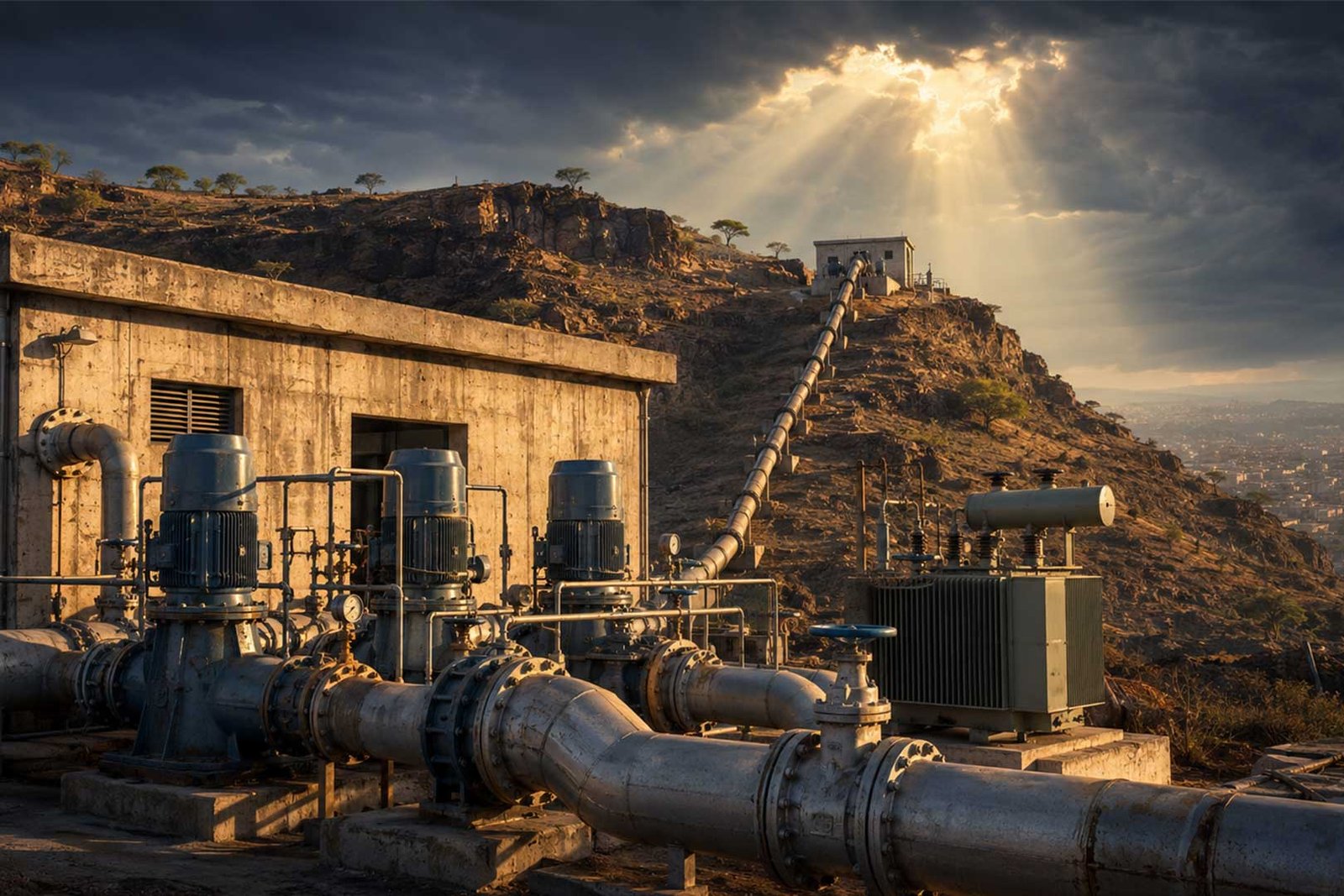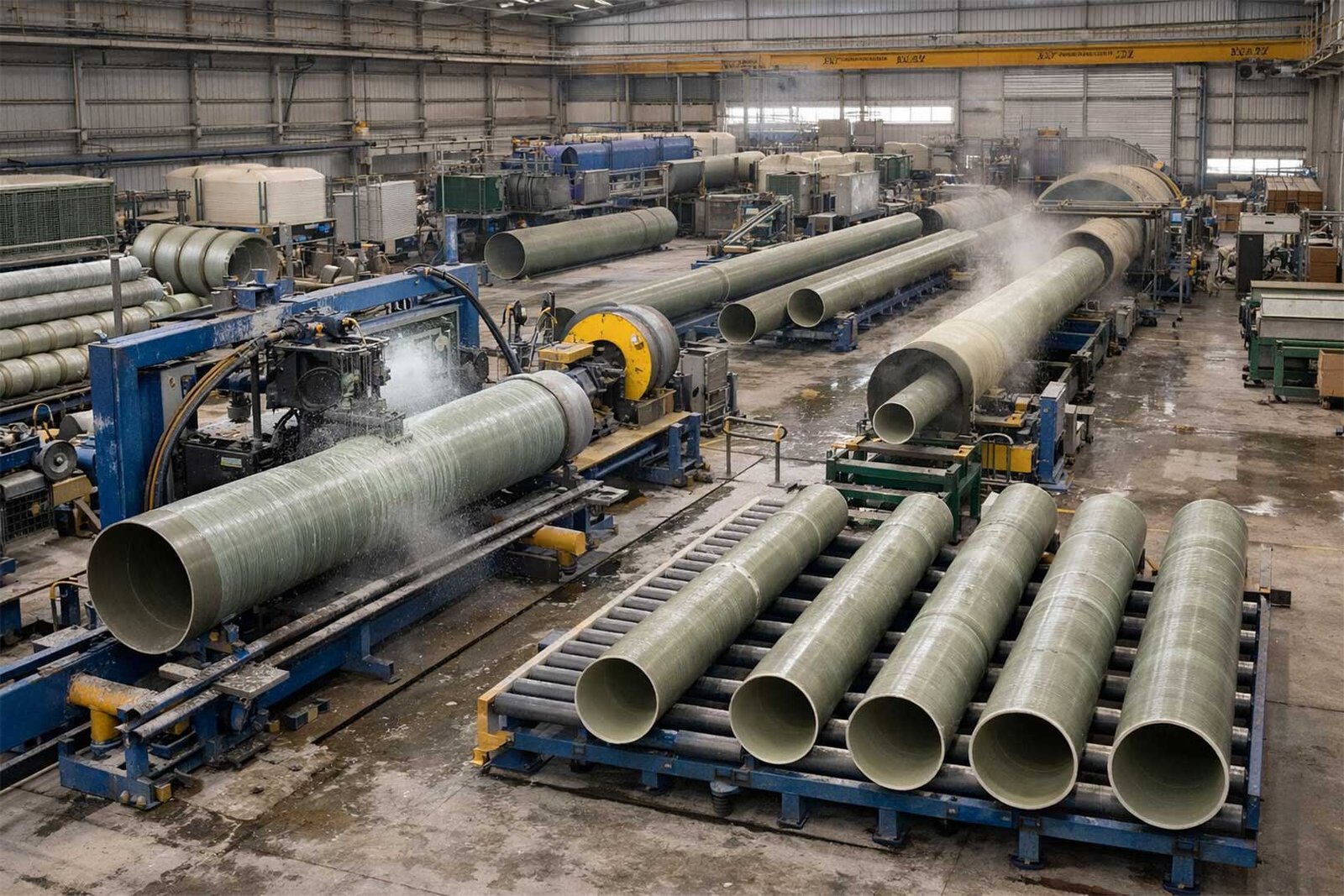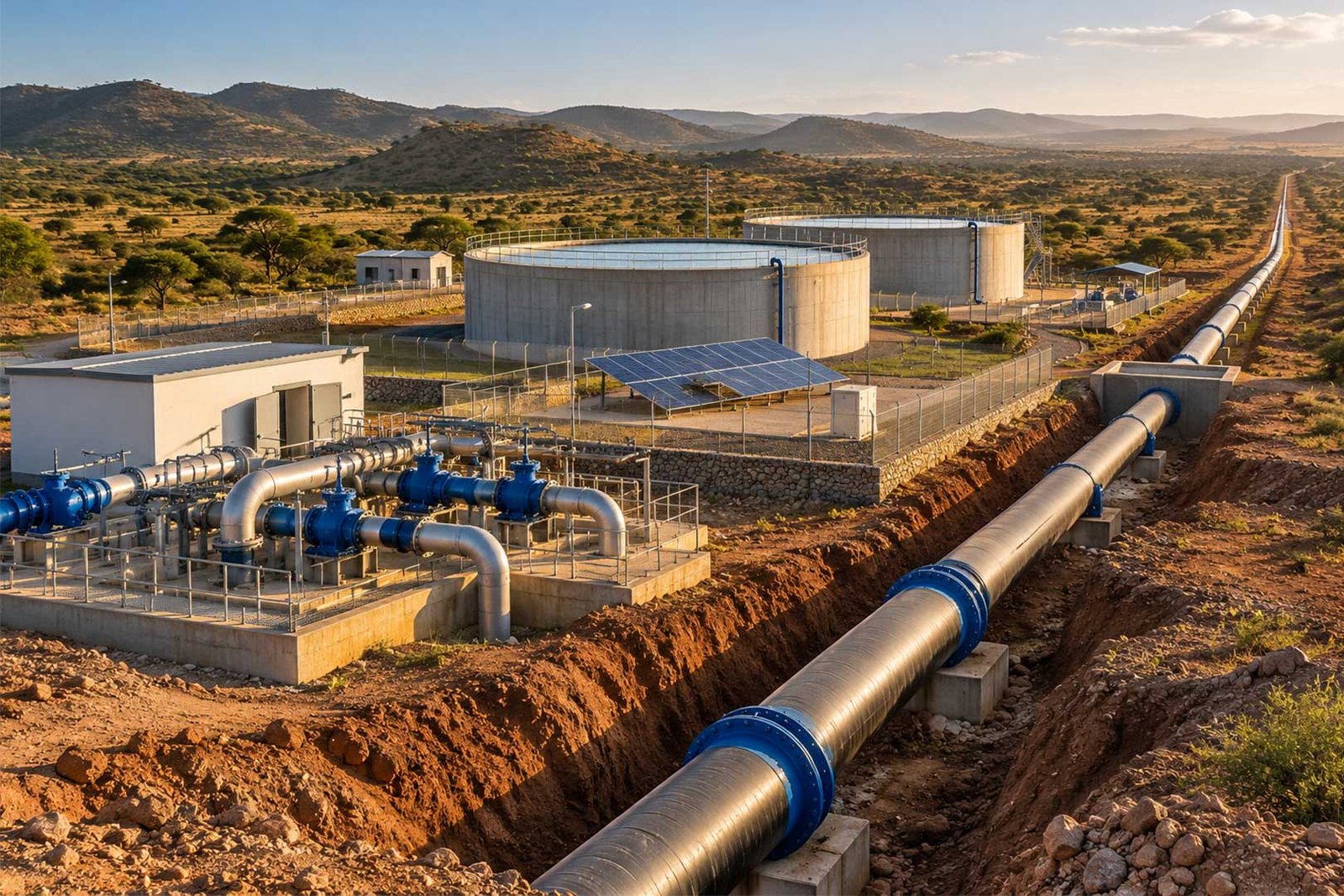
The Ethiopia Water Compact could have a real impact on which water projects move forward, how they get funded, and when they reach the market. If you work in EPC, pipe supply, equipment, consulting, or infrastructure, this is worth watching. The Compact is meant to help turn water and sanitation needs into projects that can actually be prepared, financed, tendered, built, and operated.
Its main focus is WASH: water supply, sanitation, hygiene, utilities, and climate-resilient services. Irrigation can still create related opportunities, but it is not a main part of the Compact.
The real question for businesses is where the first serious opportunities will appear, who will fund them, and how early you need to get involved. And we will answer in our following post:
What Does the Ethiopia Water Compact Actually Change?
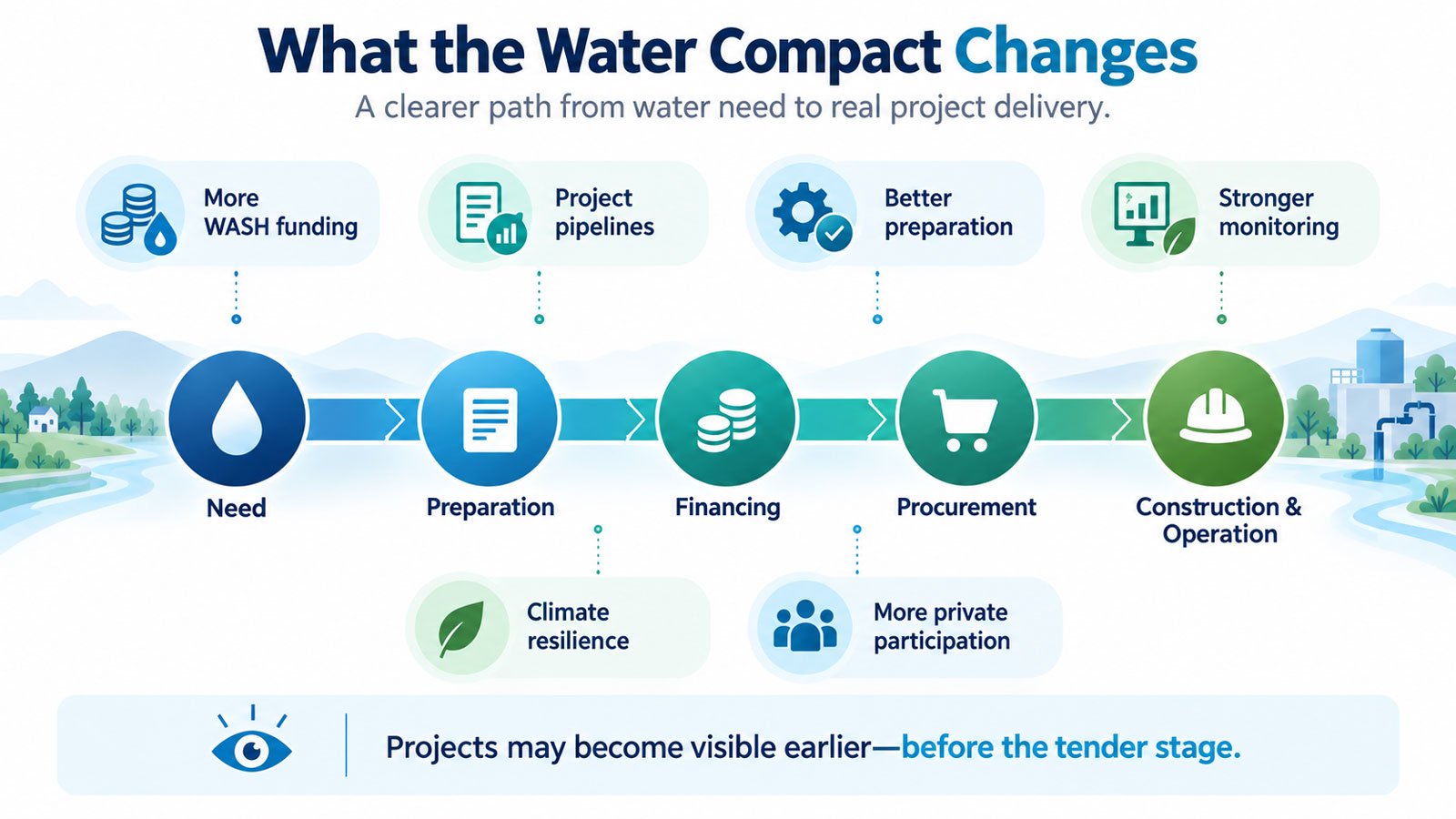
The Compact does not suddenly turn every water need into a ready construction project. Its main goal is to make the path from a water need to a real project clearer and easier to follow. Start with the changes that could matter most to your business.
The World Bank’s Water Forward framework explains that Country Water Compacts are government-led plans that bring together policy changes, stronger institutions, and investment planning. For Ethiopia, that means more focus on:
- financing and raising more money for WASH
- national, regional, and woreda-level project pipelines
- better project preparation
- stronger management, monitoring, and accountability
- better utility performance and O&M
- climate-resilient infrastructure
- more private-sector participation
- clearer financing systems
One of the most useful changes for suppliers is better project visibility. The Compact calls for national, regional, and woreda-level WASH project pipelines to be developed and updated.
That matters because you may be able to see projects earlier. Instead of hearing about a project only when the tender comes out, you may be able to follow it while studies are being done, financing is being arranged, approvals are moving forward, and procurement plans are being prepared.
For your business, that is the real value. The Compact is trying to make the path from project need to preparation, financing, procurement, construction, and operation much clearer.
Funding Priorities: Where Is the Money Supposed to Come From?
The funding number is large, but you need to understand what it really means. The Compact sets a US$37.618 billion WASH financing requirement. This is a funding target. It does not mean US$37.618 billion has already been committed to projects. Use the table below to see where the Compact expects the money to come from.
| Funding source | Compact indication | What it could mean for you |
|---|---|---|
| National & regional government budgets | 45% | Public infrastructure procurement |
| Development partners & donors | 35% | World Bank, AfDB and bilateral programs |
| Tariff collections | 15% | Utility sustainability and future financing |
| Community contributions | 5% | Mainly smaller local schemes |
| Private sector & MFIs | 0.2% / US$75m | Limited direct private financing |
| Climate & blended finance | Not quantified | Project-specific resilient infrastructure |
These numbers show the proposed funding mix. They are not a list of projects that already have money. The real business opportunity depends on which programs actually get funding, finish their preparation work, and move into procurement.
Private Participation Is Bigger Than Private Financing
The small private-finance share can look surprising, but it does not mean private companies have only a small role. Your company can work on a project even when the money comes from the Ethiopian government, World Bank/IDA, AfDB, bilateral agencies, or climate funds. Private companies may still provide:
- EPC and civil construction
- pipes and fittings
- pumps and electromechanical equipment
- treatment systems
- engineering and design
- operation and maintenance
- training and technical support
So when you look at a project, separate two questions: Who is paying for it? and Who can win the work? They are not the same thing.
From Policy Commitment to Procurement-Ready Water Projects
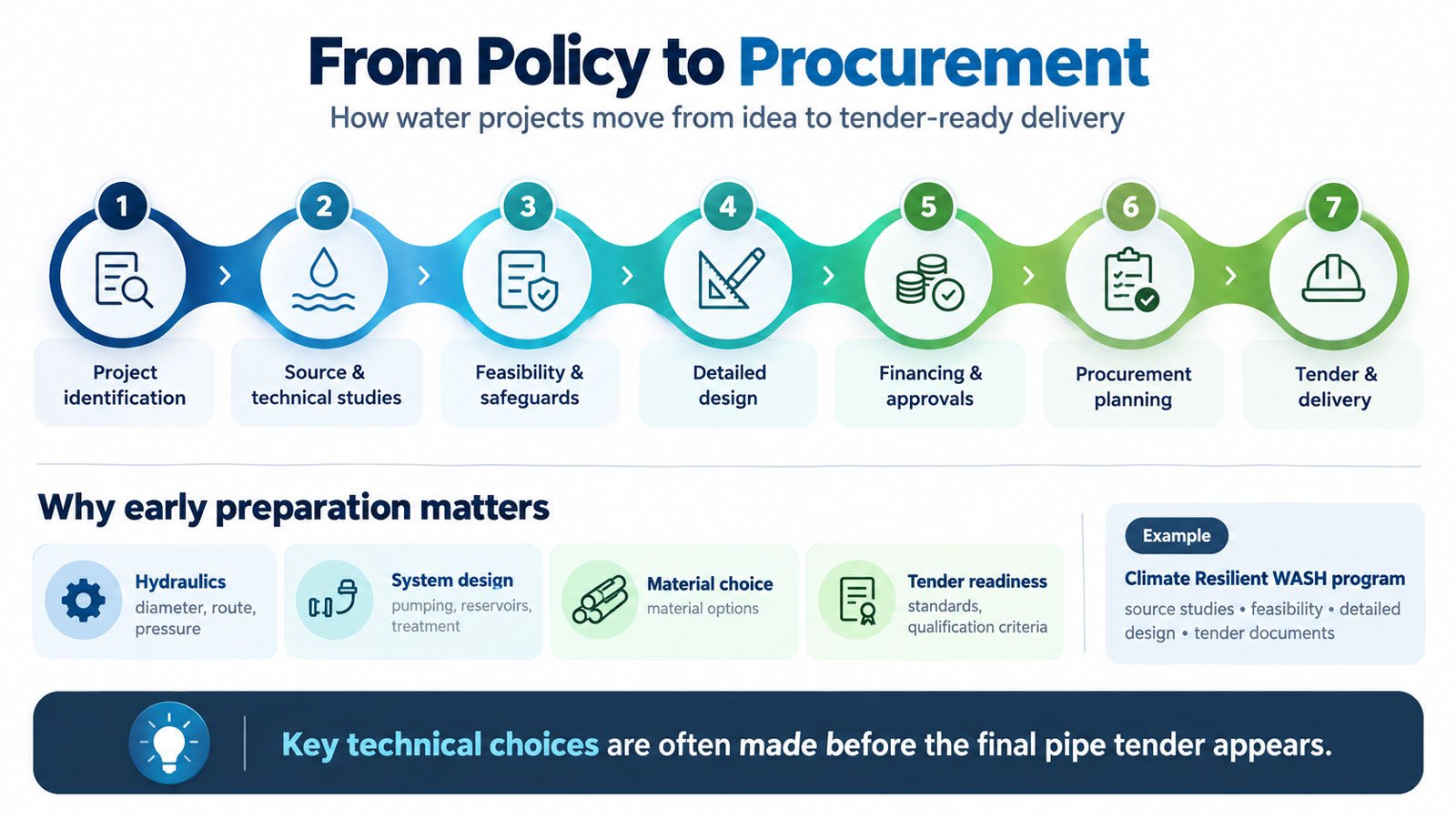
A policy plan is not the same as a real contract. You need to know how far a project has moved from an idea to something that can actually be tendered. These are the main stages you should watch:
- Project identification: The problem, service area, and basic project idea are defined.
- Source and technical studies: Water sources, groundwater, hydrogeology, routes, and other technical issues are studied.
- Feasibility and safeguards: The project is checked from technical, financial, environmental, and social sides.
- Detailed design and planning: Engineers work on the design, costs, business planning, and tender documents.
- Financing and approvals: The project secures funding and required approvals.
- Procurement planning: Contract packages, bidder requirements, and tender plans are prepared.
- Tender and delivery: Consulting, supply, construction, or EPC packages reach the market.
Why Early Project Preparation Matters to Suppliers
You can learn a lot about a project before the final construction tender appears. During feasibility and detailed design, engineers may already be deciding:
- pipe diameter and route
- design pressure
- pipe material options
- pumping requirements
- reservoirs
- treatment systems
- technical standards
- bidder qualification requirements
The AfDB-backed Climate Resilient WASH program is a good example. Its work includes source studies, feasibility studies, environmental and social assessments, detailed engineering, tender documents, and business and financial planning.
For Grand LineCore and other suppliers, this means a feasibility or design contract can be an early sign of future business. If you only watch final pipe tenders, many important technical decisions may already have been made by the time you arrive.
Where Water Infrastructure Opportunities Are Already Becoming Visible
You do not need a long list of every water project in Ethiopia to understand what is happening. A few strong examples already show how preparation, donor funding, climate finance, and procurement can lead to real infrastructure work. Look at these three projects to see where different opportunities are appearing.
Horn of Africa: Groundwater for Resilience
The World Bank approved US$385 million for the first phase of its groundwater resilience program, including US$210 million for Ethiopia. The business opportunity is already visible. Recent MoWE water tenders in Borena include:
- civil works
- design review
- pipe and fitting supply
- pipe installation
- electromechanical equipment
Another package in Afar also includes reverse-osmosis treatment.
Borana Resilient Water Development Program
Borana Phase II shows how climate finance can turn into real water infrastructure work. The Web Route system includes reservoirs, transmission pipelines, distribution lines, water points, and related works.
AfDB procurement also shows work moving into pipe supply, installation, civil construction, and electromechanical systems. The business lesson is simple: climate-finance programs can eventually create real contracts for transmission lines, distribution systems, pumping, pipe supply, installation, and construction.
Climate Resilient Urban & Rural WASH
This program is useful because it shows both current work and possible future projects. Its project-preparation work includes:
- source studies
- feasibility studies
- climate and environmental assessments
- detailed design
- tender documents
- business and financing plans
- future investment projects
AfDB records also show procurement for systems such as Ebala-Adilo and Beshasha, including civil works, pipes and fittings, design review, and electromechanical equipment.
| Program | Current signal | Potential business scope |
|---|---|---|
| HoA Groundwater for Resilience | Active works procurement | Pipes, pumping, civil & electromechanical EPC |
| Borana Phase II | Climate-financed works | Transmission, distribution & installation |
| Climate Resilient Urban & Rural WASH | Preparation + works | Future EPC and supply pipeline |
| Sustainable WASH Access Program | Financing pipeline | Potential future utility/WASH investment |
The World Bank also lists an Ethiopia WASH program at US$250 million in its future pipeline. You should treat this as a project to watch, not as an already approved construction budget.
You should also keep an eye on groundwater projects, regional water systems, bulk transmission, urban networks, secondary-city WASH, wastewater, and industrial water systems where EPC and pipeline companies may have a role.
Where Private-Sector Opportunities Could Expand
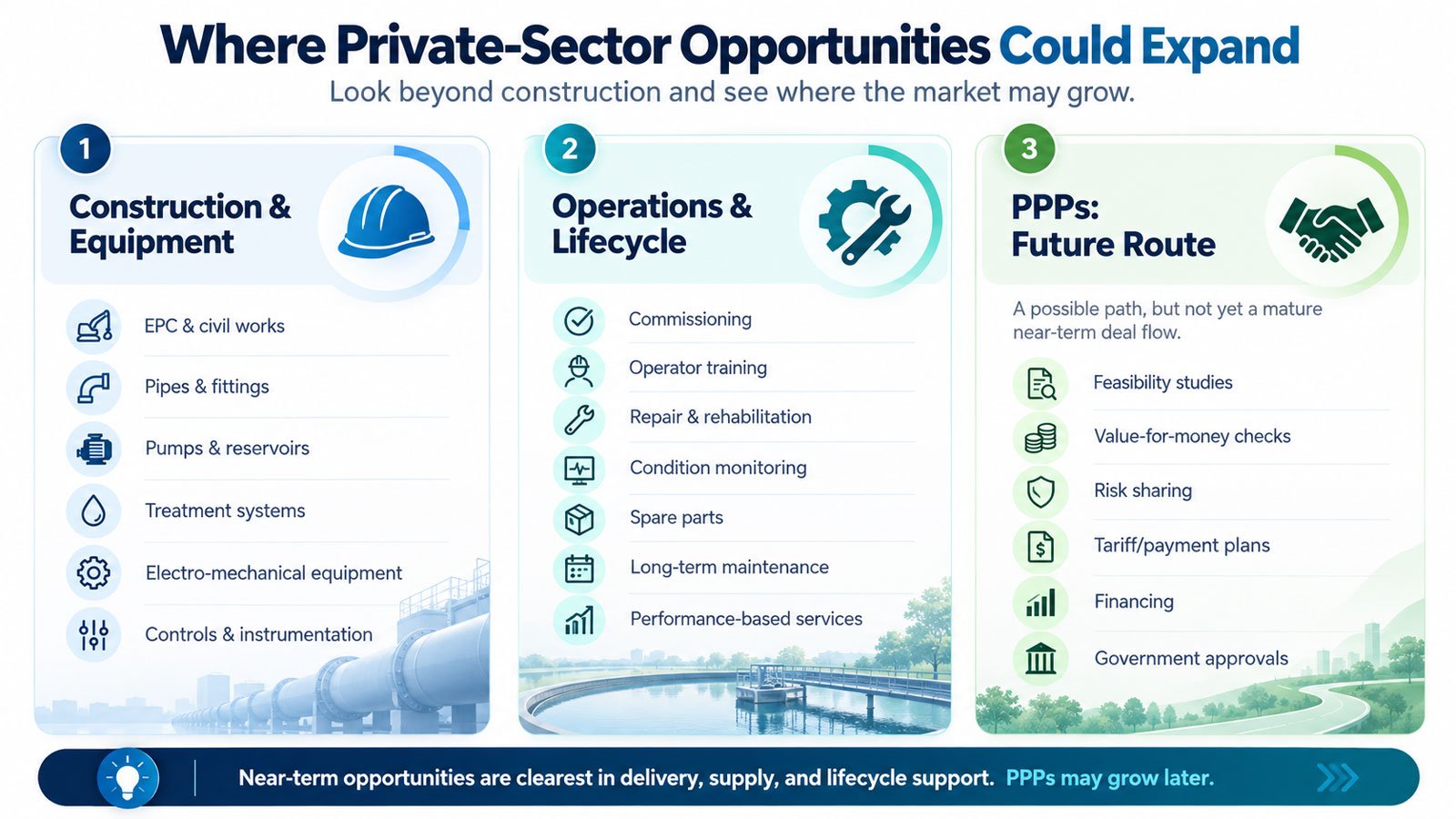
Construction may be the easiest opportunity to see, but it is not the only one. The Compact also gives more attention to O&M, supply chains, asset management, and utility performance. Look at both the work available during construction and the services that may continue after the project is built.
Construction and Equipment Supply
The most direct opportunities may include:
- EPC and civil works
- pipes and fittings
- pumps and reservoirs
- treatment systems
- electromechanical equipment
- instrumentation and controls
Operations and Lifecycle Services
Your role does not always have to end when construction is finished. Better O&M and stronger utilities can create work in:
- commissioning
- operator training
- repair and rehabilitation
- condition monitoring
- spare parts
- long-term maintenance
- performance-based services
PPPs: Opportunity, but Not Yet Mature Deal Flow
Ethiopia already has a national PPP framework, a PPP Board, and a PPP Directorate General in the Ministry of Finance.
The Compact also mentions possible PPP opportunities in areas such as urban water and sanitation. But you should not assume there is already a large pipeline of ready WASH PPP deals. Each PPP still needs:
- feasibility studies
- value-for-money checks
- risk sharing
- tariff or payment plans
- financing
- government approvals
For now, PPPs are better seen as a possible future route, not guaranteed near-term business.
Procurement, Localization and Market-Entry Conditions
Finding a good project is only part of the job. You also need to know who is buying, which procurement rules apply, and whether working locally can improve your position. Start with these two questions before you decide how to enter the market:
Who Controls Procurement?
Depending on the project, procurement may be managed by:
- the Ministry of Water and Energy
- regional water or energy bureaus
- utilities
- project implementation units
- World Bank-financed programs
- AfDB-financed programs
This matters because the rules can change from project to project. For example, current Groundwater for Resilience tenders use World Bank procurement rules, while AfDB-funded packages follow AfDB rules.
How Local Should Your Delivery Model Be?
Ethiopia’s procurement rules include rules around local participation. Donor-funded projects may follow different systems. Depending on the tender, you may need to think about:
- importing finished pipes or equipment
- using Ethiopian subcontractors
- local assembly
- local manufacturing
- working with a local partner or JV
- technology transfer
- local value addition
For Grand LineCore, the right choice should depend on the tender rules, logistics, import costs, qualification requirements, project size, and how much future work may be coming.
Key Implementation Risks Companies Should Watch
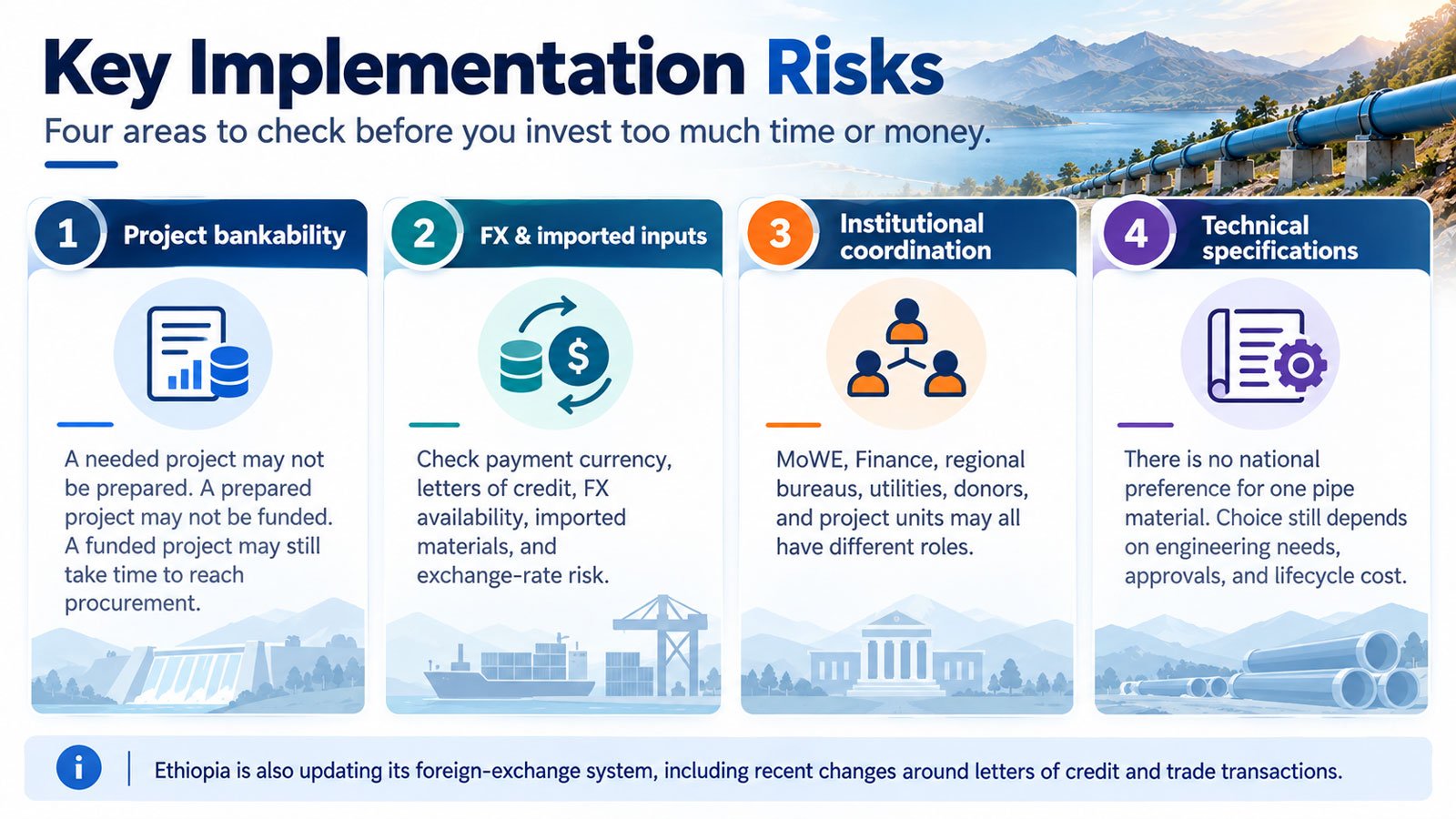
The Compact can make the project pipeline easier to follow, but it does not remove normal project risk. A project can look interesting and still be far away from a real contract. Check these four areas before you spend too much time or money on an opportunity:
- Project bankability: A needed project is not always prepared. A prepared project is not always funded. And a funded project may still take time to reach procurement.
- FX and imported inputs: Check whether you will be paid in ETB or hard currency, how letters of credit work, FX availability, currency-adjustment clauses, imported materials, lender payments, and exchange-rate risk.
- Institutional coordination: MoWE, the Ministry of Finance, regional bureaus, utilities, donors, and project units may all have different roles. The buyer, financier, asset owner, and future operator may be different organizations.
- Technical specifications: The Compact does not give GRP, composite pipe, or any other pipe material a national preference. Pipe choice still depends on engineering needs, project specifications, approvals, and lifecycle cost.
Ethiopia is also continuing to change its foreign-exchange system. The National Bank’s latest FX changes relaxed some rules around letters of credit and trade transactions.
What Should EPC and Pipeline Suppliers Monitor Next?
If you wait until the final tender appears, you may be entering the project too late. A simple tracking system can help you see which opportunities are actually moving forward. Track these points for every project that matters to you:
- project name and region
- financier
- implementing authority
- project stage
- financing status
- procurement plan
- expected tender date
- package type
- transmission length
- pipe diameter
- pressure class
- specified pipe material
- pumping and electromechanical scope
- local-content requirements
- procurement rules
- currency and payment terms
- O&M component
Then keep asking yourself three simple questions:
- Where will this project get its funding?
- Which projects are really moving toward procurement?
- Under what technical and procurement conditions can your company compete?
Conclusion: From Water Policy to Executable Projects
The Ethiopia Water Compact gives the WASH sector a clearer way to raise money, prepare projects, improve utilities, strengthen monitoring, support climate resilience, and involve private companies. To turn that into business, follow projects from the early preparation stage through financing and procurement. Near-term opportunities are still likely to depend mainly on government and development-partner funding.
For Grand LineCore, the strongest opportunities may be in bulk and regional transmission, groundwater systems, climate-resilient networks, urban and secondary-city WASH, wastewater, industrial water, and integrated EPC packages. Irrigation can also create related opportunities, but it should not be treated as a main Water Compact commitment.
If you follow projects early, you can understand the studies, financing, specifications, procurement rules, local requirements, and contract packages while they are still being shaped. That puts you in a much better position when the tender finally reaches the market.

Related
Ethiopia Water Pipeline Tenders: How Procurement Works
A water pipeline tender in Ethiopia is typically much more than buying pipes.
about
The Author
Farshid Tavakoli is a seasoned professional in engineering and international trade. Holding degrees in Electrical Engineering, Mechatronics, and a Doctorate in Business Administration (DBA) from the University of Lyon, he also has a strong background in industrial automation and production line technologies.
For over 17 years, he has led an international trading company, gaining deep expertise in commercial solutions tailored to industrial needs. With more than 8 years of active involvement in infrastructure development, he specializes in the supply of electromechanical equipment for water and wastewater treatment plants and transfer projects.
Together with comapny expert team, he now provides consultancy and integrated solutions for sourcing and implementing complex infrastructure projects across the region.