If you work in oil & gas upstream, you already know the pain. Corrosion eats away at your carbon steel flowlines and produced-water lines. You end up fixing leaks, dealing with surprise shutdowns, and watching maintenance costs climb higher every year. What if there was a better, simpler way?
Composite pipes (like GRP, GRE, GRV, and GRVE) fight corrosion naturally. They last longer, weigh much less, and go in faster than steel. Many operators are switching because they save serious money and headaches over time.
LineCore Pipes Group supplies strong GRP piping systems and handles full water transmission lines as your EPC partner. We’ll show you exactly where composite pipes work best, why they often cost less in the long run, and how to choose the right solution for your project.
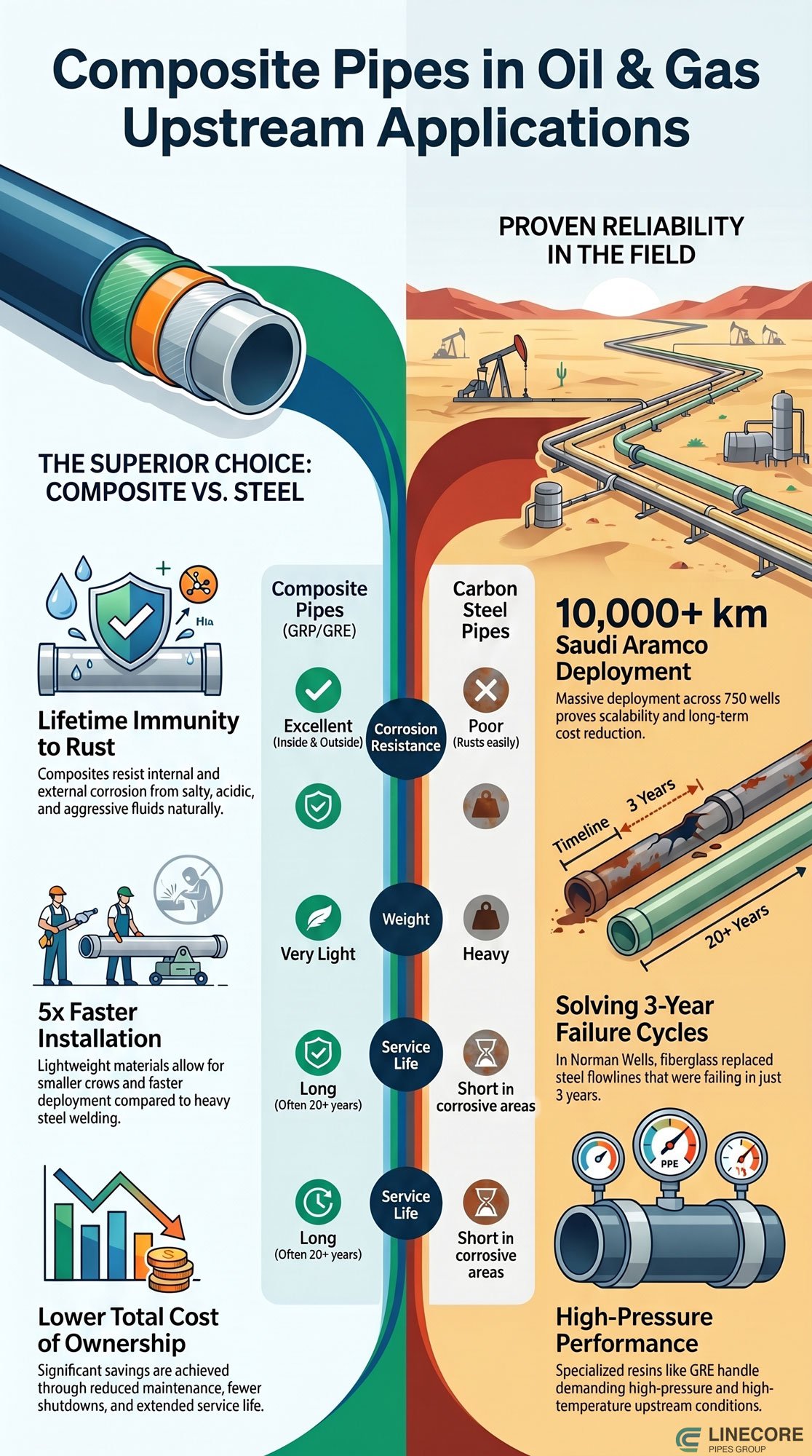
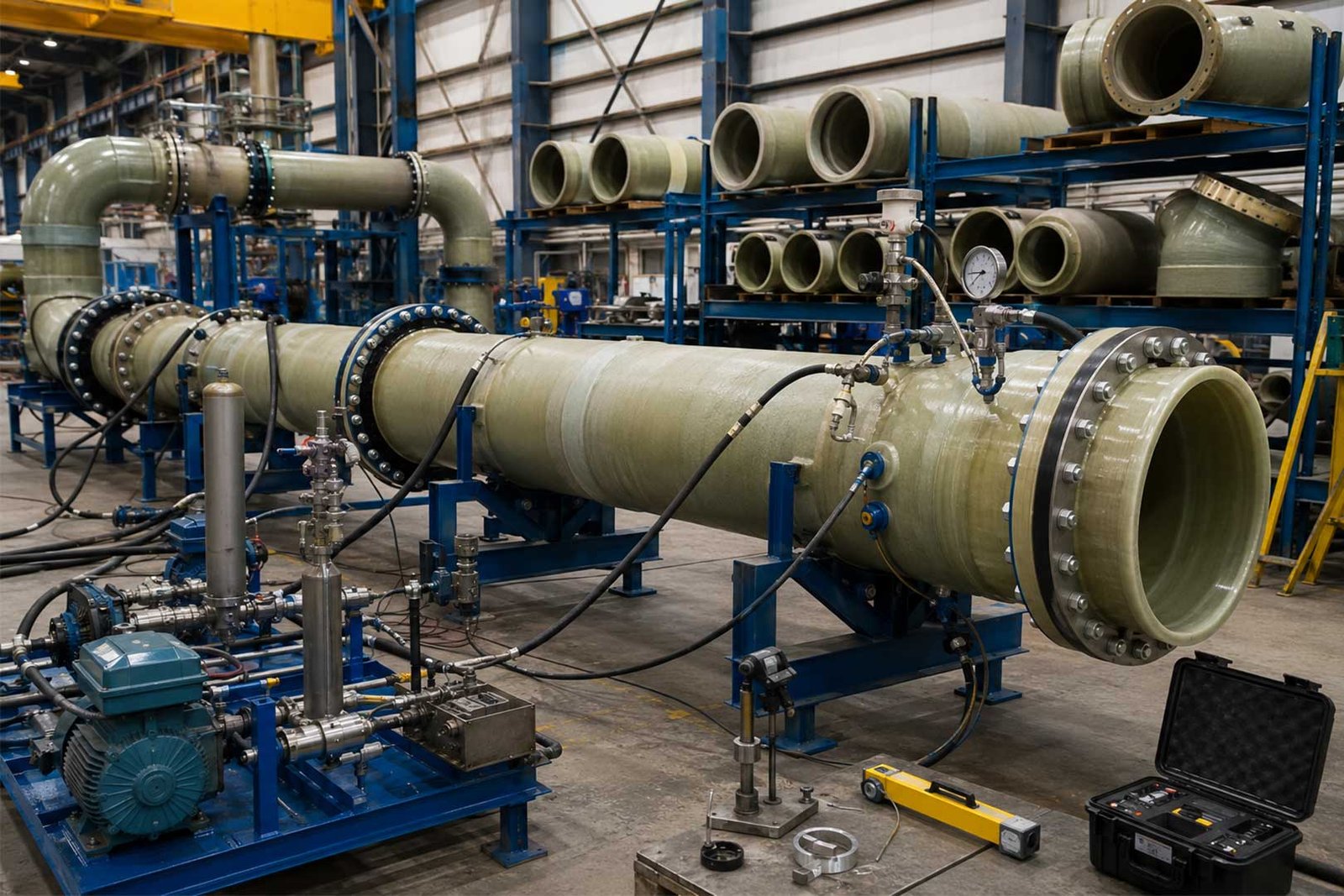
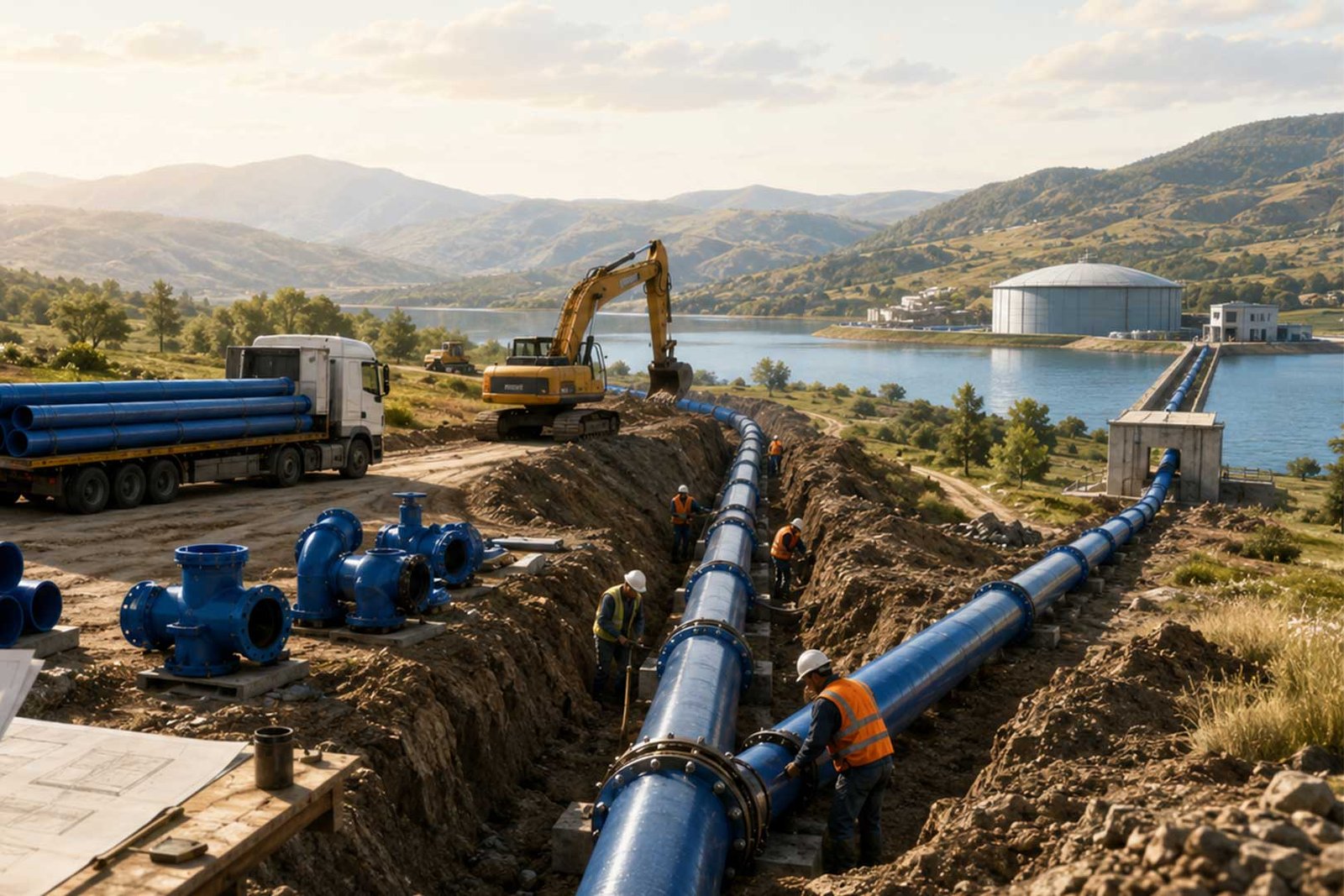
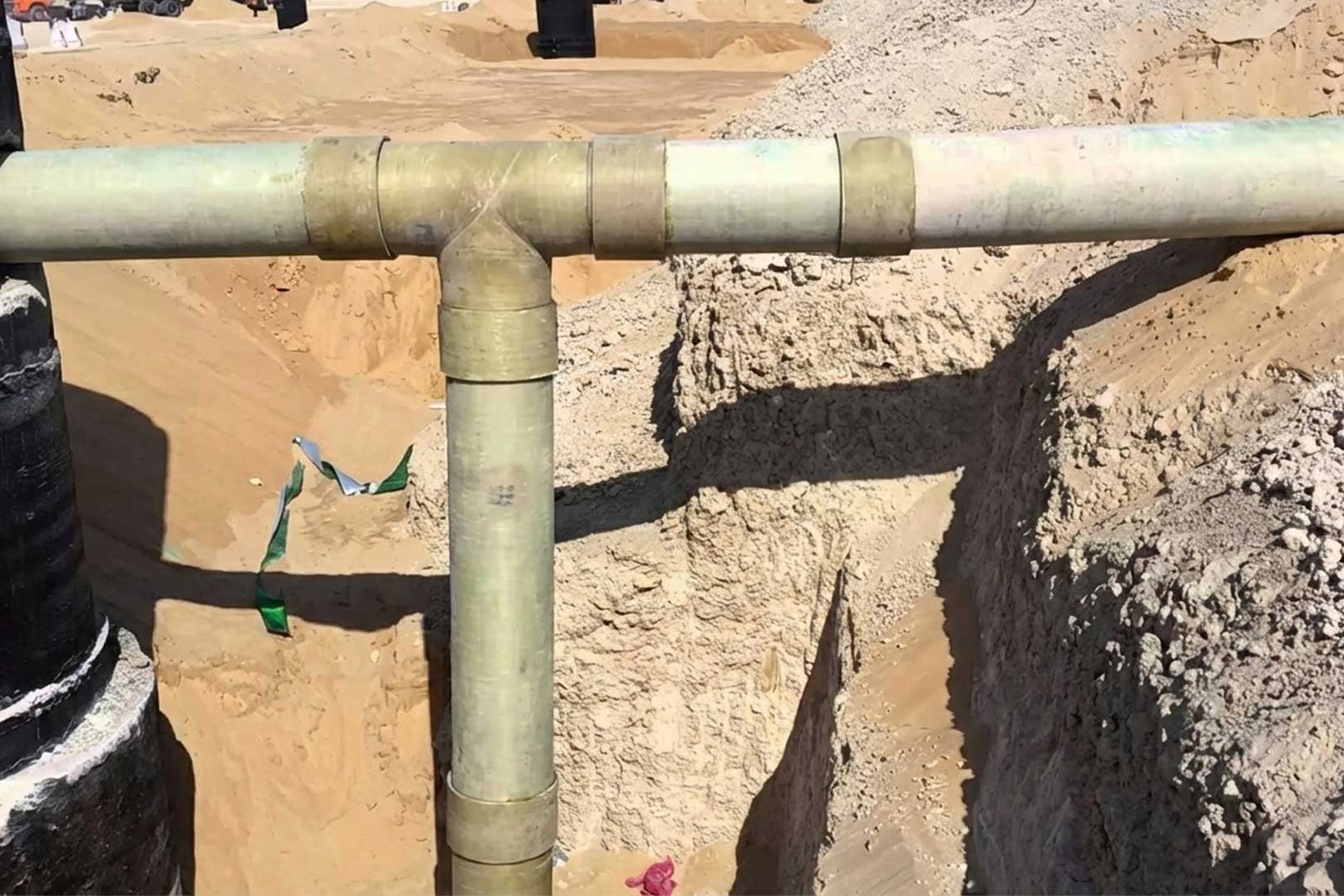
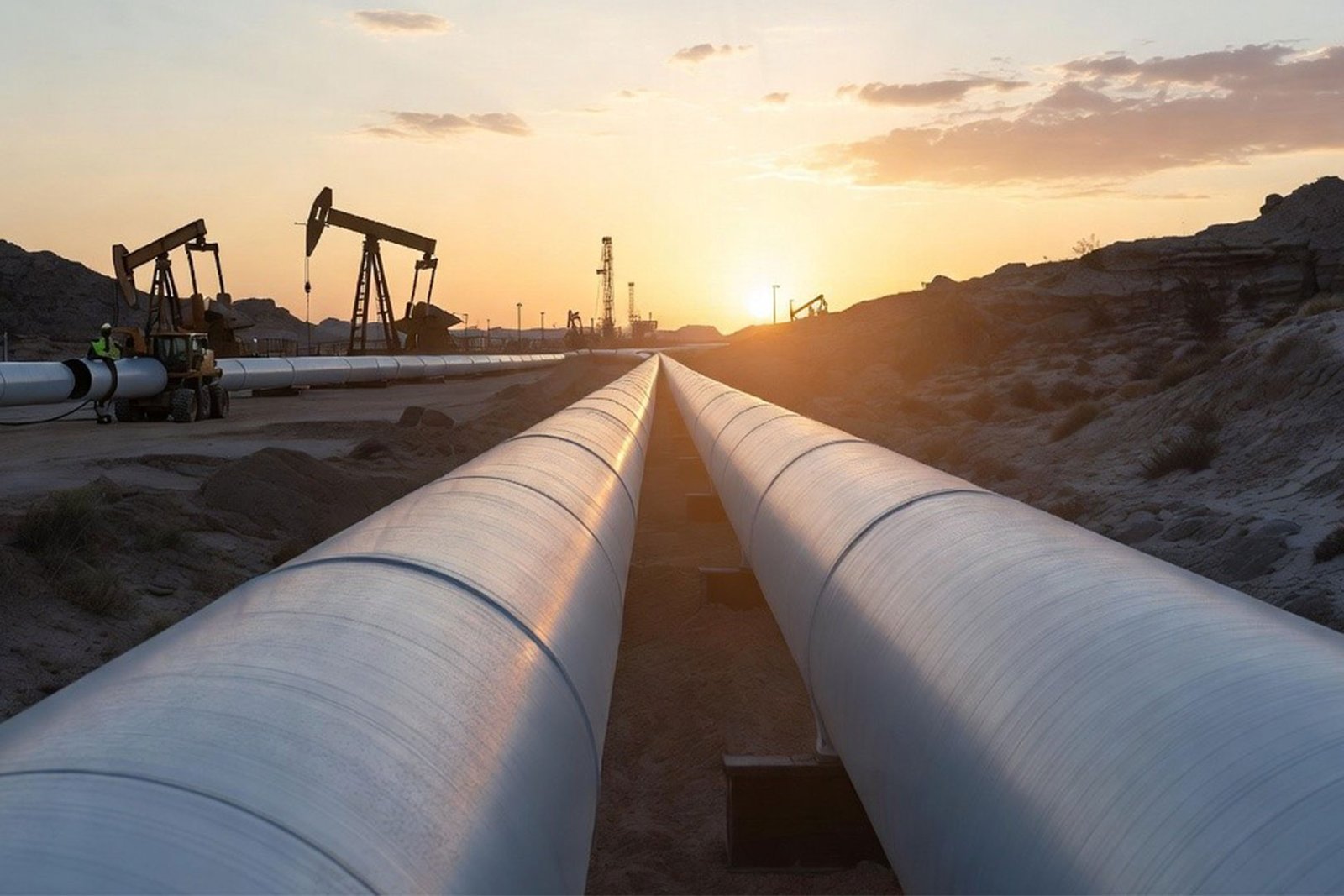
Composite Pipes in Oil & Gas Upstream Applications Infographic (source: Pipelinecoregroup.com)
Why Traditional Piping Becomes Costly in Harsh Industries
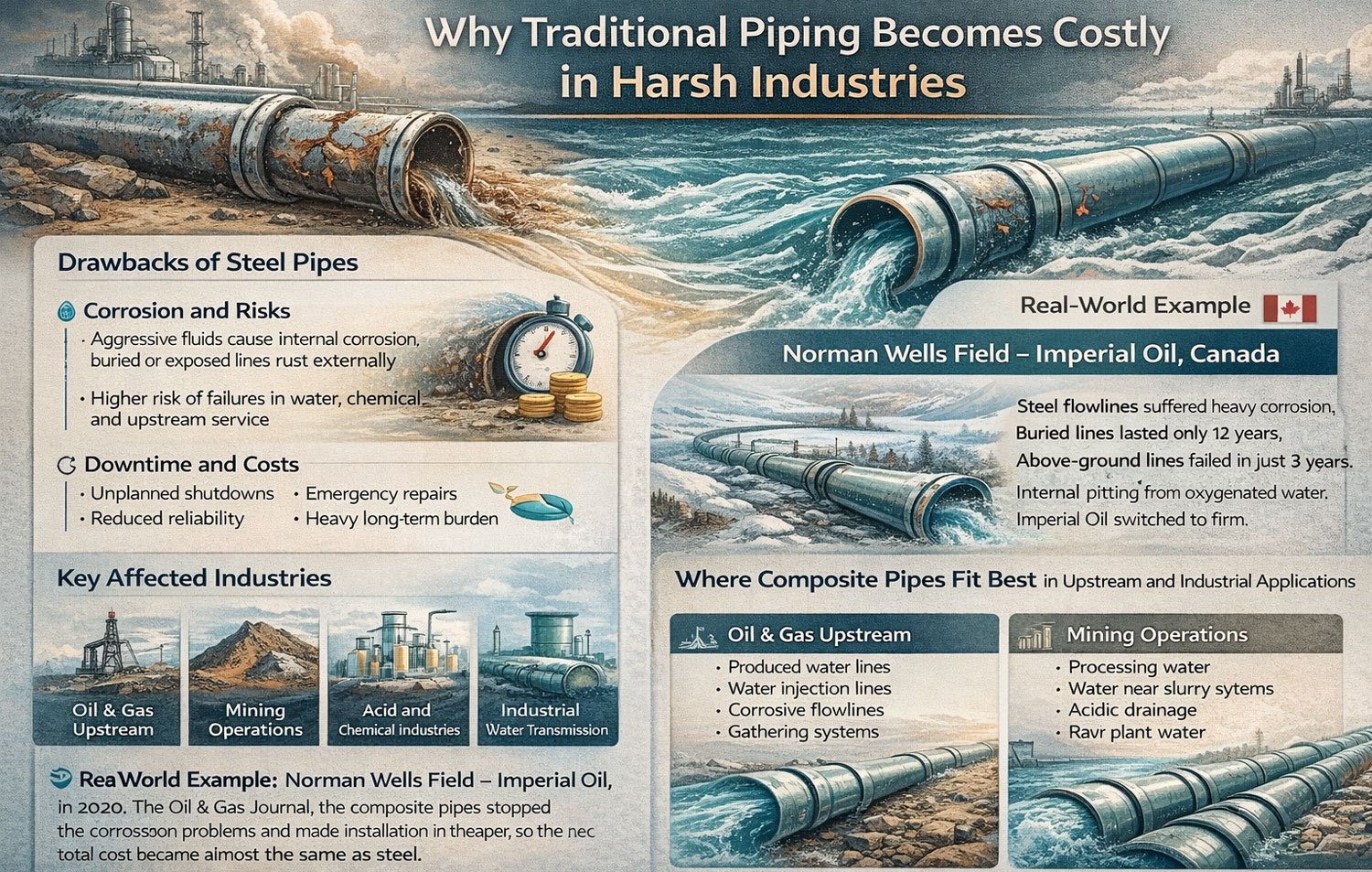
When you run operations in tough environments, steel pipes can become a real trouble and drain your pocket! Corrosion is not just a maintenance issue. Aggressive fluids cause internal corrosion, while buried or exposed lines suffer external rust. This creates a much higher risk of failure in water, chemical, and upstream service. The downtime and replacement costs really add up:
- Unplanned shutdowns
- Emergency repairs
- Reduced reliability
- Heavy long-term operational burden
This problem hits hardest in oil & gas upstream, mining operations, acid and chemical industries, and industrial water transmission systems.
Real-World Example: Norman Wells Field – Imperial Oil, Canada
In the Norman Wells oil field in Canada, steel flowlines suffered heavy corrosion. Buried lines lasted only about 12 years, and some above-ground lines failed in just 3 years because of internal pitting from oxygenated water. Imperial Oil switched to fiberglass composite pipes in suitable areas.
As published in the Oil & Gas Journal, the composite pipes stopped the corrosion problems and made installation cheaper, so the total cost became almost the same as steel.
What Are Composite Pipes?
Composite pipes are simply non-metallic pipes reinforced with glass fibers. They are built to resist corrosion and last much longer than traditional steel pipes. You will often hear about these common types:
- GRP: They work perfectly for water and other types of corrosive fluids.
- GRE: If you need the pipe for a more demanding condition, go for a stronger option like GRE.
- GRV / GRVE: This is especially practical when you need extra resistance against aggressive chemicals.
GRP works great for water and many corrosive fluids. GRE and other resin-based versions handle tougher conditions with higher pressure or temperature. In the end, the best choice depends on your fluid, pressure, temperature, and project needs.
Where Composite Pipes Fit Best in Upstream and Industrial Applications
Composite pipes work great in tough spots where corrosion usually causes trouble. Let’s look at where they fit best for you:
1. Oil & Gas Upstream
If you work in oil and gas upstream, composite pipes are a smart choice for produced water lines, water injection lines, corrosive flowlines, gathering systems, and utility lines. They handle salty and aggressive fluids without rusting, so you get fewer leaks and smoother operations.
2. Mining Operations
For those in mining, these pipes are really useful for processing water, water near slurry systems, acidic drainage, tailings water, and raw plant water. They stand up well to the dirty and acidic water that quickly eats away steel pipes.
3. Acid and Chemical Industries
If you’re in acid or chemical plants, composite pipes work well for moving corrosive liquids, acid plant lines, wastewater, drainage, and chemical utility lines. They resist strong chemicals better than steel, which means less maintenance and fewer headaches for you.
4. Industrial Water Transmission
For industrial water projects, they are excellent for long-distance water transport, plant water supply, plant-to-plant transfer lines, and big integrated transmission systems. They give you a reliable, long-lasting solution for moving large volumes of water.
Have a look at this table to gain more:
| Project Situation | Why Composite Pipes Are Better | Expected Advantage |
|---|---|---|
| Corrosion-heavy environments | Steel fails quickly from rust | Much lower maintenance and replacement costs |
| Remote or difficult locations | Lightweight and easy to transport | Lower logistics and installation expenses |
| Long water transmission lines | Strong long-term performance | Better value over many years |
| Projects focused on total cost | Lower maintenance + fewer shutdowns | Higher overall return on investment |
| High downtime cost operations | Reduces unplanned shutdowns | More production uptime and revenue protection |
Real-World Example: Bapetco Water Injection Network – Egypt
In Egypt, the Bapetco project (a Shell joint venture) had a 20 km carbon steel water injection line that failed quickly because of very high salinity (180,000 ppm) and dissolved oxygen. They replaced it with fiberglass-lined tubing. After many years of service, there were no reported joint failures (source: One Petro)
Why Owners Choose Composite Pipes Over Steel
You want pipes that don’t keep causing you headaches, right? Here’s why many owners like you are choosing composite pipes over steel:
- Excellent corrosion resistance: They fight rust from both the inside and outside really well, especially in water, chemicals, and aggressive fluids. So you get way fewer leaks and failures.
- Lower lifecycle cost: You don’t spend a lot of money on maintenance, almost never need to replace them, and avoid costly shutdowns. It means you pay less over the years.
- Easier handling and installation: They are not heavy, so you can move and install them faster with smaller equipment and fewer crew members. Not just money, but also you cut the time in your project.
- Better long-term reliability: They stay strong and stable even in difficult environments. Plus, their smooth inside surface helps your fluids flow better for many years.
This table shows the main differences between composite pipes and traditional steel pipes:
| Feature | Composite Pipes (GRP / GRE / GRV) | Carbon Steel Pipes | Main Benefit for You |
|---|---|---|---|
| Corrosion Resistance | Excellent (inside and outside) | Poor – rusts easily | Fewer leaks and failures |
| Lifecycle Cost | Much lower over time | High due to repairs and replacements | Saves money in the long run |
| Weight | Very light | Heavy | Easier and faster installation |
| Installation Speed | Fast | Slow (needs welding) | Shorter project time and lower labor cost |
| Maintenance | Very low | High | Less downtime and lower operating cost |
| Service Life | Long (often 20+ years) | Short in corrosive areas | Better reliability |
Real-World Example:Saudi Aramco Non-Metallic Deployment
Saudi Aramco has installed more than 10,000 km of non-metallic pipes across its oil and gas fields in the last few years. As we see in ARAMCO, this includes over 400 km of flowlines and non-metallic products used in more than 750 wells. They chose these pipes to reduce corrosion, speed up installation, and lower long-term costs.
When Composite Piping Becomes Especially Cost-Effective
When does it really make sense to pick composite pipes instead of steel? Have a look at the following list to save you the most money:
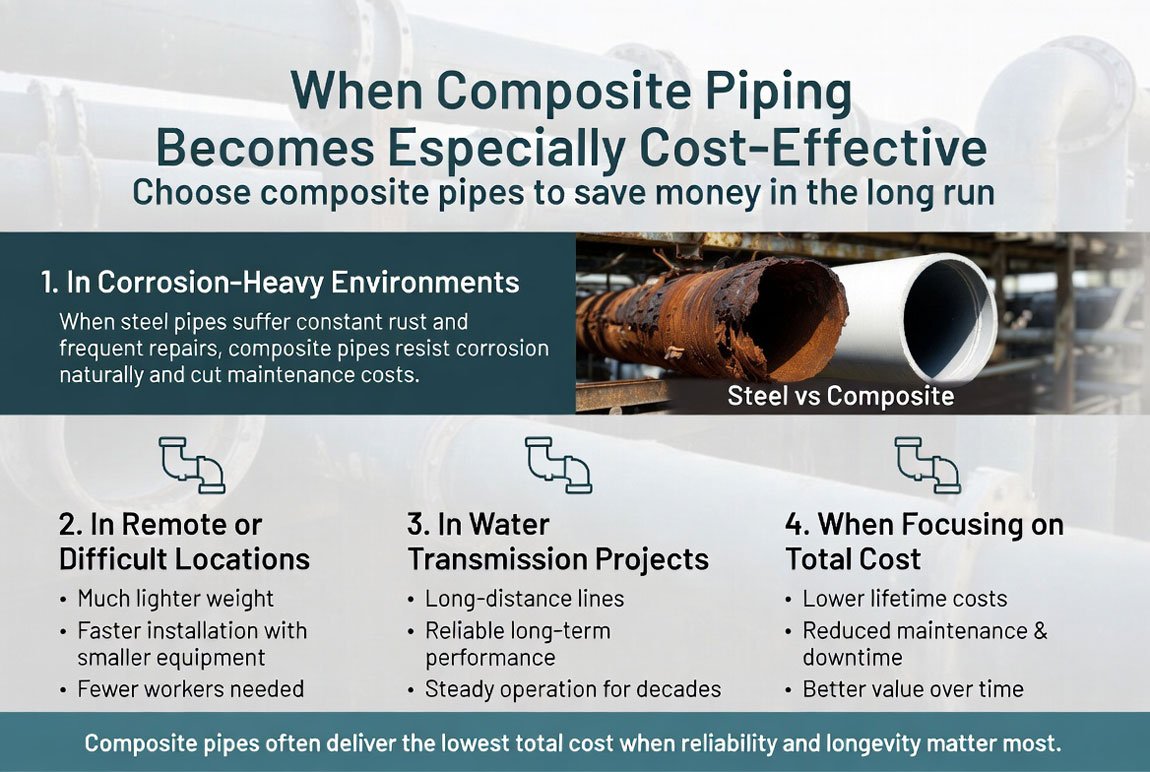
1. In corrosion-heavy environments
If your steel pipes are constantly getting eaten by corrosion and need fixing or replacing all the time, composite pipes are a smart move. They resist rust naturally, so you don’t have to keep spending time and money on repairs.
2. In remote or difficult project locations
Your construction site will find it easier when composite piping is used, especially in cases where your construction site is located far or is difficult to work in. This is because:
- They are much lighter, so moving them is simpler and cheaper
- You can install them more quickly with smaller machines
- You need fewer workers on the job
3. In water transmission projects
For big, long water lines that have to keep working reliably for many years, composite pipes often turn out to be the better choice. In these projects, steady long-term performance matters more than the lowest price at the beginning.
4. In projects focused on total cost
If you look at the real total cost, not just what you pay upfront, but also all the maintenance, repairs, and downtime later, composite pipes frequently end up saving you money. The cheapest pipe to buy at the start is not always the cheapest in the long run.
Practical Considerations Before Selecting Composite Pipes
Before you pick composite pipes, think about these important things first. It will help you make a good choice. Below we have listed the main things you should always take into account:
- Fluid and chemical compatibility: Not every pipe works with every fluid. Some chemicals are very strong. So you must check if the pipe is okay for your exact fluid.
- Operating conditions: Check the pressure and temperature. Also, see how often the pressure changes and where the pipe will be used.
- Installation quality: Good installation is very important. You need proper joining, careful handling, and good work on site.
- Standards and project compliance: Make sure the pipes follow the right industry standards and your project rules.
This table gives you a simple checklist of important questions to consider before making your decision:
| Question | Why It Matters | What You Should Check |
|---|---|---|
| What fluid is being transported? | Affects chemical compatibility | Fluid type, acidity, solids content |
| How corrosive is the environment? | Determines pipe lifespan | Internal and external corrosion risk |
| What are the pressure and temperature? | Ensures the pipe can handle conditions | Maximum pressure, temperature, cycling |
| Is the line buried, exposed, or in difficult terrain? | Affects installation and support needs | Terrain type, burial depth, soil conditions |
| Is the priority lower initial cost or total lifecycle cost? | Helps choose the right long-term option | CAPEX vs full lifecycle cost |
| Do you need only pipes or full EPC support? | Decides if you need a simple supplier or full partner | Pipe supply only vs complete project delivery |
The EPC Advantage: Beyond Pipe Supply
Just supplying pipes is not always enough. Many projects need more than that. You need help with many other things, such as design, procurement, construction planning, execution, and quality control. If these things are not handled well, the project can face delays, extra costs, and problems.
As LineCore Pipes Group, we are not just a pipe manufacturer. We are the provider of a full-fledged solution. We offer GRP pipes, along with engineering services, project management, and installation-focused delivery. We can even undertake the entire water pipeline project as your EPC service provider. When you work with one responsible partner like us, you get:
- Better schedule control
- Smoother project delivery
- Less risk from too many different parties
This makes everything easier and more reliable for you.
Real-World Example: West Bakr Petroleum Company – Egypt
West Bakr Petroleum in Egypt installed 25,000 meters of 4-inch spoolable composite pipe to replace corroded steel gathering lines. Egypt Oil & Gas states that the installation was 5 times faster than steel, and they expect to save up to $50,000 per year.
Why LineCore Pipes Group Is Relevant for Mining, Acid, and Upstream Clients
LineCore Pipes Group knows the real challenges you face in mining, acid plants, and oil & gas upstream operations. We have solid experience with corrosive fluids and water-related applications.
We supply good quality GRP pipes. We also offer complete transmission line solutions and give practical project support from the beginning to the end. This means clients get reliable pipe selection, cost-conscious delivery, and strong performance that lasts for many years.
Typical Project Scenarios Where Your Solution Fits
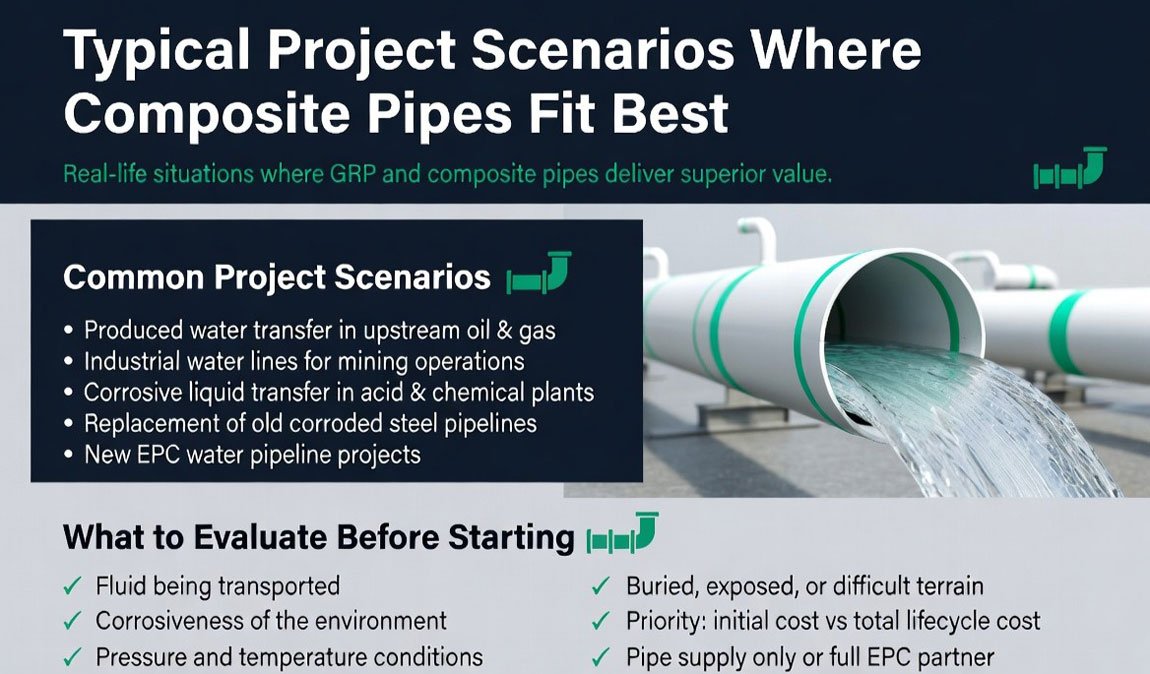
If you’re working on a project right now, you might be wondering whether composite pipes are the right fit for you. Here are some real-life situations where many operators like you have successfully used our GRP pipes:
- Produced water transfer line in an upstream oil & gas field
- Industrial water transmission line for a mining operation
- Corrosive liquid transfer system in an acid-processing plant
- Replacement of old and corroded steel water lines with a new GRP system
- New EPC water pipeline project that needs one reliable supplier for the complete job
If any of these sound like what you’re dealing with, then composite pipes could be a great solution for your project too.
What Clients Should Evaluate Before Starting a Project
Before you start your project, it helps to ask yourself a few important questions. This will make sure you choose the right solution and avoid problems later. Here’s a simple checklist you can use:
- What fluid is being transported?
- How corrosive is the environment?
- What are the pressure and temperature conditions?
- Is the line buried, exposed, or in difficult terrain?
- Is the priority lower initial cost or lower total lifecycle cost?
- Does the project need only pipe supply, or a full EPC partner?
Conclusion
Composite pipes are a smart and cost-effective choice for many projects. They fight corrosion, save money in the long run, and help operations run smoothly. They fit well in oil & gas upstream, mining, acid and chemical plants, and industrial water transmission.
At LineCore Pipes Group, we supply GRP and GRE pipes. We also act as a full EPC partner for complete water and oil & gas transmission projects. If your project needs help with corrosive fluids or water lines, just contact us. We are happy to assist you.
about
The Author

Farshid Tavakoli is a seasoned professional in engineering and international trade. Holding degrees in Electrical Engineering, Mechatronics, and a Doctorate in Business Administration (DBA) from the University of Lyon, he also has a strong background in industrial automation and production line technologies.
For over 17 years, he has led an international trading company, gaining deep expertise in commercial solutions tailored to industrial needs. With more than 8 years of active involvement in infrastructure development, he specializes in the supply of electromechanical equipment for water and wastewater treatment plants and transfer projects.
Together with comapny expert team, he now provides consultancy and integrated solutions for sourcing and implementing complex infrastructure projects across the region.