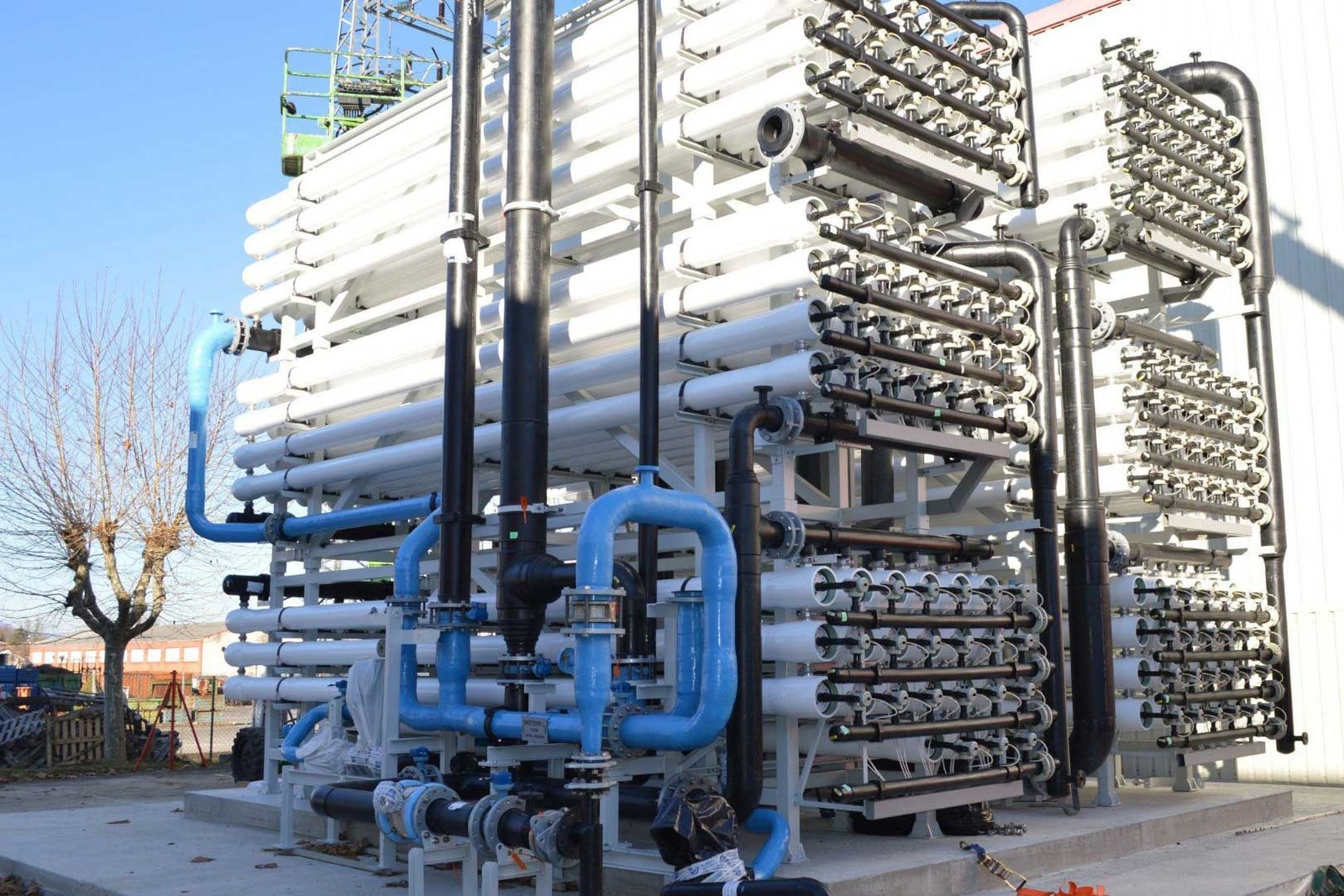
If you manage or build large water transmission networks, you already know the pain. Your systems lose billions of cubic meters of treated water every year through leaks, bursts, and pressure problems. Too much pressure or sudden changes damage pipes fast, waste energy, and drive up your costs. So, what’s the solution? Smart pressure management! With such an approach, you will have everything together.
Stay with us in this post to see how it works. We aim to help you stay away from too many conflicts and learn how to reduce water loss, extend pipeline life, and cut costs with GRP pipes and full EPC solutions.
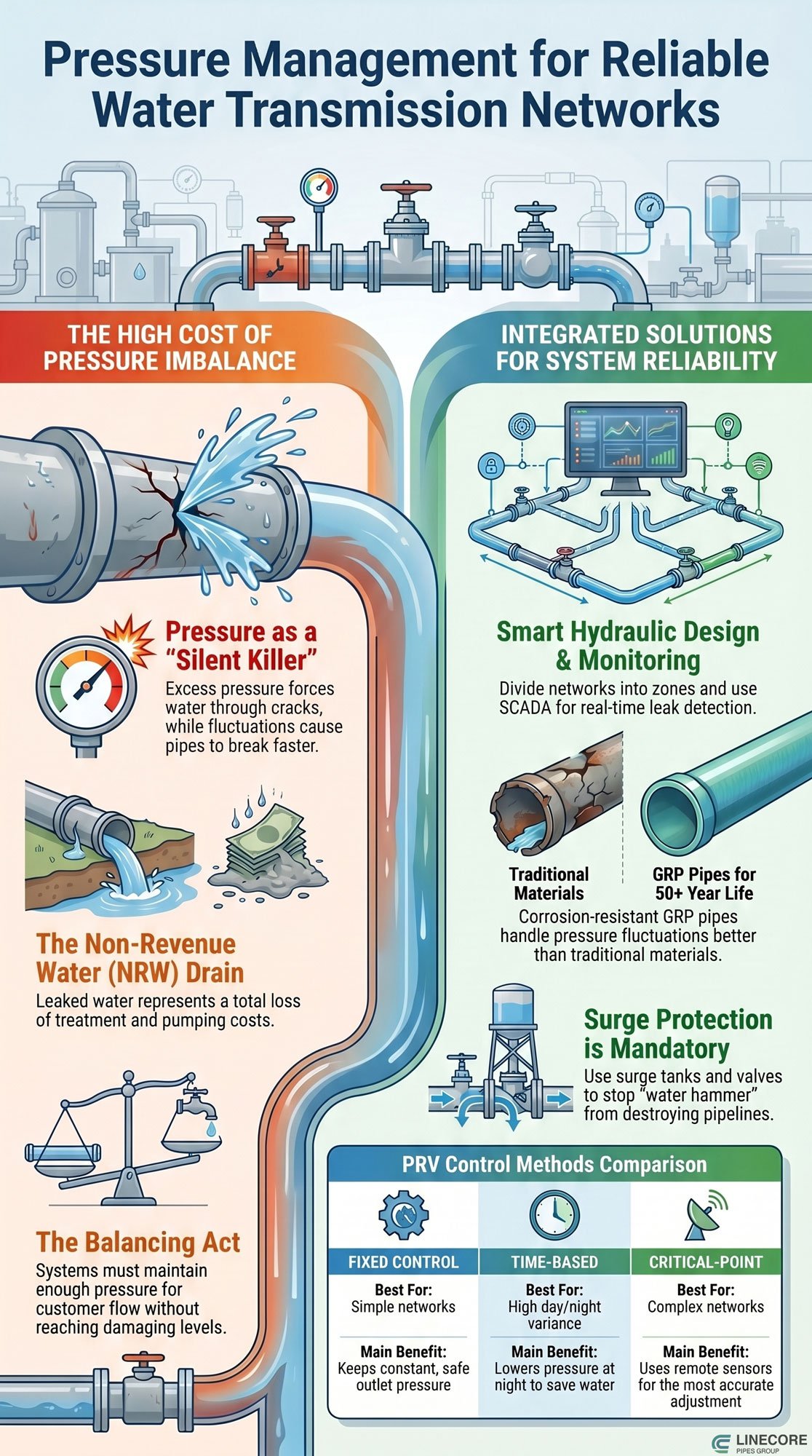
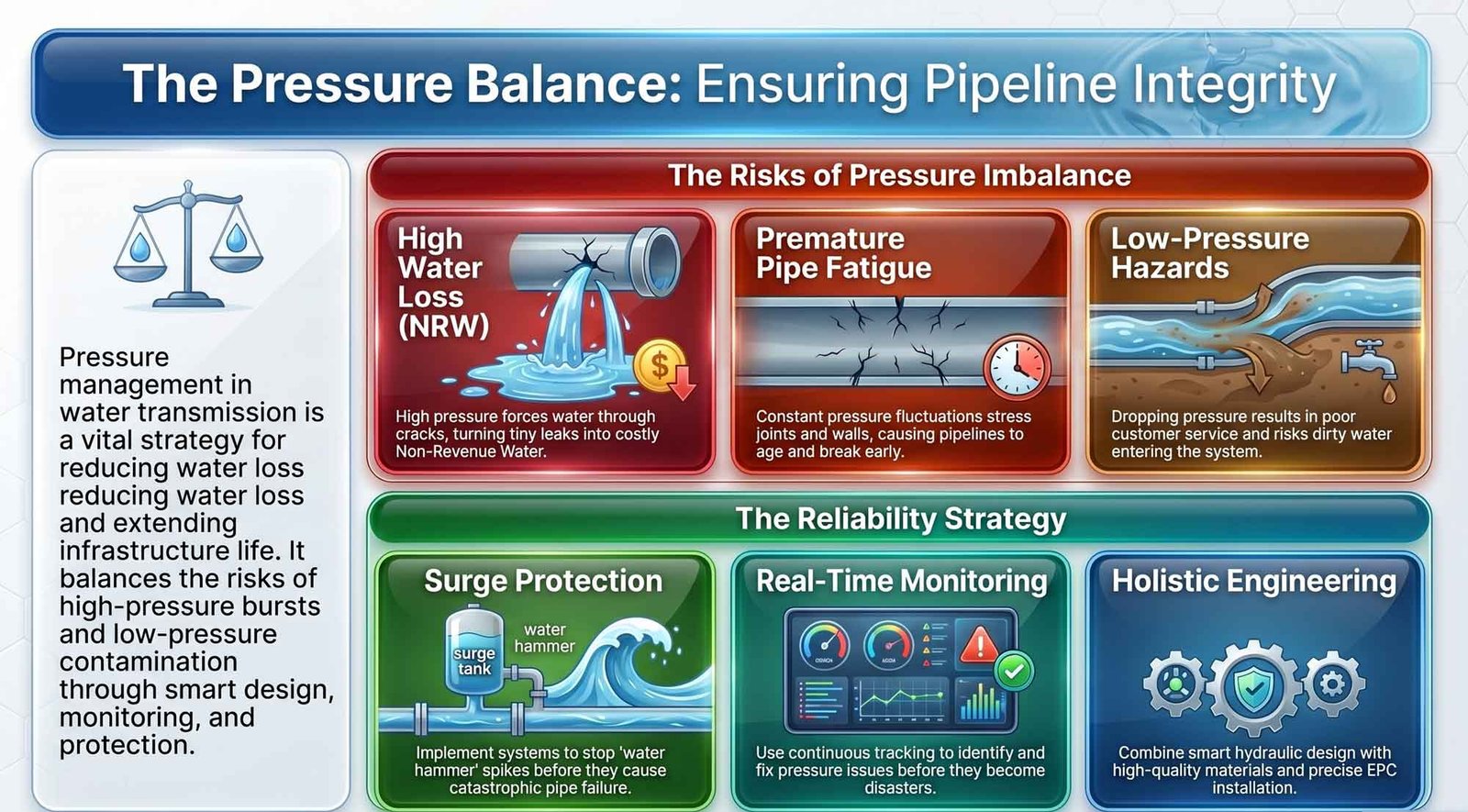
Water transmission pressure management infographic (source: Pipelinecoregroup.com)
Why Pressure Management Is Critical in Large Water Transmission Systems
If you run big water transmission lines, pressure problems hit you hard every day. You lose lots of water through leaks, pipes burst, energy gets wasted, customers get poor service, and costs keep rising. Pressure management is not just about installing valves. It is a full system reliability strategy that includes:
- Smart hydraulic design: Every section of a long pipeline needs to tolerate the right pressure (source:EPA).
- Surge protection: You stop dangerous pressure spikes (water hammer) before they destroy pipes.
- Right pipe material selection: You pick powerful, tolerant pipes that deal with pressure in the right way.
- Quality EPC execution: You build and install everything properly, so there are no weak sections.
- Real-time monitoring and control: You watch pressure all the time and fix problems before they turn into a disaster.
Why Pressure Matters in Water Transmission Networks
Never forget that pressure is the silent killer in your water transmission lines. Get it wrong, and everything suffers. We will have a look at the issues caused by the pressure:
1. Excess Pressure and Hidden Water Loss
Too much pressure forces water out through small cracks and joints. Even tiny leaks become big leaks very quickly. Pressure that goes up and down (fluctuations) causes more damage than constant high pressure. According to the American Water Works Association, the constant changes stress the pipes and make them break faster. All this extra lost water becomes non-revenue water (NRW), water you paid to treat and pump, but customers never receive.
2. Pressure and Pipeline Deterioration
Constant pressure changes wear out your pipes over time. Every push and pull makes the pipes weaker and older. The result? Your pipeline loses its power very soon. Valves, joints, fittings, and pipe walls all get damaged. They start leaking or breaking much earlier than they should. You can’t even imagine how costly the repair and replacement will be in this case.
3. Too Much and Too Little Pressure
You need the right amount of pressure. Too much damages the pipes. Too little causes problems, too. At high places and far ends of the network, you must have enough pressure so customers get a good water flow. WHO also explains that if pressure is too low, water flow becomes weak, service becomes poor, and there is a risk of dirty water entering the pipes. Always consider the balance to keep it working right.
Main Pressure Management Methods That Improve Reliability
Let’s look at the practical ways you can control pressure in your big water transmission systems. These methods really make a difference:
1. Pressure Zoning
You simply divide your long pipeline into smaller zones. Each zone gets its own pressure level that matches the land and how much water people need. This makes managing your whole network so much easier and more stable.
2. Pressure Reducing Valves (PRVs)
PRVs lower and steady the pressure. These valves protect everything downstream by keeping the pressure safe and consistent. In long pipelines, as RS Components states, you place them at the right spots so overpressure doesn’t damage the rest of the line. You have different options, and you can pick what works best for your network:
- Fixed control gives the same pressure 24/7.
- Time-based control lowers the pressure at night when demand drops.
- Flow-based control automatically adjusts as water flow changes.
- Critical-point control uses far-away sensors to fine-tune pressure exactly where it matters most.
3. District Metering and Pressure-Managed Areas (DMA/PMA)
Why not break the network into smaller areas and put meters around them? This gives you clear visibility so you can spot leaks fast and fix them before they get big.
4. SCADA, Telemetry, and Digital Monitoring
You put sensors in place that show you pressure and flow in real time. When something looks wrong, the system immediately sends you an alert. Once everything connects to live data, you stay in control and respond much quicker.
5. Reducing Water Loss Through Smarter Pressure Control
One of the smartest ways to save water in your transmission network is by controlling pressure better. When you manage pressure well, you can cut water loss dramatically. Here’s why it works so well:
- Higher pressure makes leaks worse. It pushes water out faster through small cracks and joints. Lowering the pressure slows leaks down a lot.
- In big systems, pressure often gets too high at night when people use less water.
- Long pipelines have different water demands along the way, so some parts get too much pressure and others get too little.
- One leak in a big main pipe can waste millions of liters every single day.
- You also get fewer pipe bursts, fewer emergency repairs, steadier service, and lower running costs over time.
| Method | Best For | How It Works | Main Benefit |
|---|---|---|---|
| Pressure Zoning | Long transmission lines | Divides system into zones with different pressures | Easier control & stability |
| Fixed PRV Control | Simple networks | Keeps constant outlet pressure | Easy to set up |
| Time-based Control | Networks with big day/night change | Lowers pressure at night | Saves water during low demand |
| Flow-based Control | Variable demand areas | Adjusts automatically with flow | Good response to changing use |
| Critical-Point Control | Large or complex networks | Uses remote sensors for real adjustment | Most accurate pressure control |
| DMA / PMA | Leak detection | Small metered areas | Fast leak finding |
| SCADA + Telemetry | Modern operations | Real-time monitoring & alerts | Proactive management |
Why Transient Analysis and Surge Protection Cannot Be Skipped
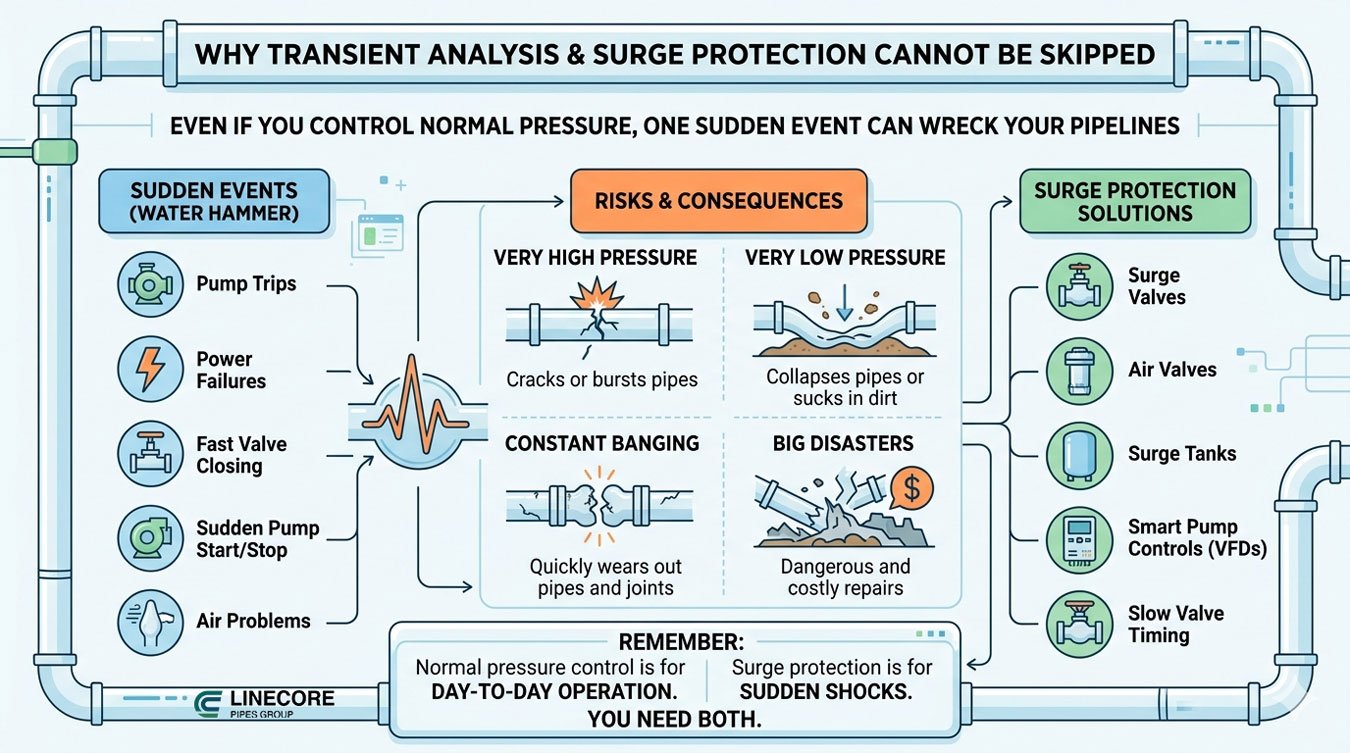
Even if you control normal pressure well, one sudden event can still wreck your pipelines. That’s why you can’t skip transient analysis and surge protection. Sudden pressure waves (called water hammer) usually happen because of pump trips, power failures, fast valve closing, sudden pump start/stop, or air problems in the line. In large pipelines, these waves create serious risks, including:
- Very high pressure that cracks or bursts the pipes
- Very low pressure that can collapse parts of the pipe or suck in dirt
- Constant banging that quickly wears out pipes and joints
- Big disasters that are dangerous and extremely costly to repair
As reported by ASCE You can protect your pipes using surge valves, air valves, surge tanks, smart pump controls (VFDs), and slow valve timing.
Simple reminder: Normal pressure control is for day-to-day operation. Surge protection is for sudden shocks. You need both.
Real-World Example: Oguz-Gabala-Baku Pipeline, Azerbaijan
This is one of the longest GRP water pipelines in the world. It is 265 km long. It carries fresh water from the mountains all the way to the big city of Baku. Reinforced Plastics Magazine reported that they chose GRP pipes because they are strong, light, and do not get damaged by corrosion.
How GRP and Composite Pipes Support Reliable Water Transmission
The pipe material you choose makes a big difference in how well your system handles pressure. The right material helps pipes stay strong under daily pressure, survive pressure ups and downs, and keep good water flow with reliable joints (ANSI Webstore). Let’s discuss the main benefits of GRP and composite pipes in the following:
- Corrosion Resistance: They don’t rust or corrode, even in bad soil or salty water.
- Smooth Inside: Water flows easily, so you save pumping energy.
- Low Maintenance: Much less repair work and cost over time.
- Long Life: Can easily last 50 years or more.
- Lightweight: Easier and cheaper to transport and install.
You need to pick the right pressure class, stiffness, and joint type for your specific project, not a one-size-fits-all choice. These pipes are especially great in tough or corrosive areas. They last longer and cost less in the long run than traditional pipes.
At LineCore Pipes Group, we don’t just sell pipes. We help you choose the best GRP solution for your pressure needs and project conditions.
Real-World Example: Craiova Water Project, Romania
The city of Craiova in Romania wanted to give clean water to 250,000 people. Amiblu explains that they put more than 100 km of GRP pipes in the ground. These new pipes replaced the old leaking ones. Now the city loses much less water, and the supply is steady and reliable.
The EPC Perspective: Pressure Management Must Be Built Into Delivery
Pressure management is not something you add later. You need to build it into every part of the project, from the very first design to the final handover.
Why Design and Execution Cannot Be Separated
You only get reliable pipelines when both engineering and construction are done well. Even a perfect design can fail if the installation is bad. That’s why you must include the full pressure management strategy right from the design stage.
Key EPC Considerations for Reliable Transmission Lines
You should focus on these important areas:
- Strong hydraulic design basis
- Full surge and transient studies
- Right choice of pipe material and joints
- Smart route and pipeline profile planning
- Proper placement of valves and monitoring instruments
Installation, Testing, and Commissioning
You must install the pipes carefully because they decide how leak-free your system stays for many years. This stage includes proper pressure testing, strict quality checks, flushing, disinfection, and a smooth handover so everything works reliably from day one.
Real-World Example: Zagreb River Crossing, Croatia
In Zagreb, workers needed to lay pipes under a big river without disturbing the water. They used GRP pipes with a special microtunneling method. In an article published on ResearchGate, it is indicated that they put one big pipe outside and a clean water pipe inside. Thanks to this, 30,000 more people now get clean water with no leaks.
A complete EPC solution gives you the best outcome. One team takes full responsibility for design, supply, installation, and commissioning. This gives you better coordination, fewer mistakes, and much lower risk.
Smart Operations: Monitoring Pressure for Long-Term Network Performance
Smart monitoring can really change how you manage your water network. Instead of waiting for bursts or big leaks to happen, you can watch the pressure in real time and catch problems early.
You simply use tools like pressure loggers, flow meters, remote telemetry, and SCADA systems to see live data. This helps you spot leaks fast, understand what’s happening in your system, and make smarter decisions.
Simply put, real-time monitoring helps you stay in control, reduces surprises, and saves you a lot of money and headaches over the years.
What Asset Owners, Consultants, and EPC Teams Should Evaluate Before Choosing a Solution
Hey, before you pick any solution for your water transmission project, take time to ask the right questions. It will save you a lot of headaches and money later.
1. Hydraulic and Operational Questions
These are the important things you need to know about how the system will actually run:
- What is the real operating pressure envelope (the actual range of pressures the system will face)?
- Where are the critical high points and low points along the pipeline?
- What are the most likely surge events that could happen?
2. Material and Product Questions
You need to choose the right pipe system for your project. Check which GRP or composite pipe family matches your pressure needs, route, and installation method. Also confirm the required standards, pressure classes, and potable-water approvals, such as NSF/ANSI/CAN 61. Then choose the joint system that best fits your route and installation conditions.
3. Delivery and Lifecycle Questions
Don’t just look at the upfront price. Think about the full picture:
- Who will be responsible for design integration?
- How will testing, commissioning, and handover be managed?
- What will the total cost be over the entire lifecycle, not just the purchase price?
The table below gives you a clear image of the checklist:
| Stage | What You Must Get Right | Why It Matters |
|---|---|---|
| Hydraulic Design | Pressure envelope + zoning | Prevents daily over/under pressure |
| Surge Analysis | Transient study + protection devices | Stops sudden bursts |
| Material & Joint Selection | Correct PN, SN, joint type | Ensures long-term reliability |
| Route & Profile Planning | Elevation, high/low points | Avoids pressure problems |
| Installation & Testing | Proper bedding, pressure testing, disinfection | Guarantees leak-tight system |
| Commissioning & Handover | Full documentation + training | Smooth start of operation |
Why an Integrated Approach Delivers Better Results
The best results come when everything works together. Pressure management, surge control, smart material selection, quality EPC execution, and digital monitoring should never be handled separately. They need to work as one complete system. When you combine all these elements, you get much better outcomes:
- Much lower water loss
- Reduced risk of pipe failures and bursts
- Lower operating costs
- Slower long-term deterioration of your assets
Large water transmission systems are complex. You cannot fix problems with isolated decisions like “just buy good pipes” or “just install some valves.” You need full system-level engineering that considers every part together.
Conclusion
If you want a reliable water transmission, you need to take a variety of considerations into account. Every stage of your project may suffer from pressure, and it is our duty to manage it properly. At LineCore Pipes Group, we bring all these pieces together. We are a supplier of high-quality GRP and composite pipes, a trusted EPC partner for water transmission lines, and a complete solution provider for durable, efficient, and reliable infrastructure.
It’s time to take the next step. Talk to our engineering team for a transmission line consultation. Feel free to contact us anytime for support and full EPC solutions.
about
The Author

Farshid Tavakoli is a seasoned professional in engineering and international trade. Holding degrees in Electrical Engineering, Mechatronics, and a Doctorate in Business Administration (DBA) from the University of Lyon, he also has a strong background in industrial automation and production line technologies.
For over 17 years, he has led an international trading company, gaining deep expertise in commercial solutions tailored to industrial needs. With more than 8 years of active involvement in infrastructure development, he specializes in the supply of electromechanical equipment for water and wastewater treatment plants and transfer projects.
Together with comapny expert team, he now provides consultancy and integrated solutions for sourcing and implementing complex infrastructure projects across the region.