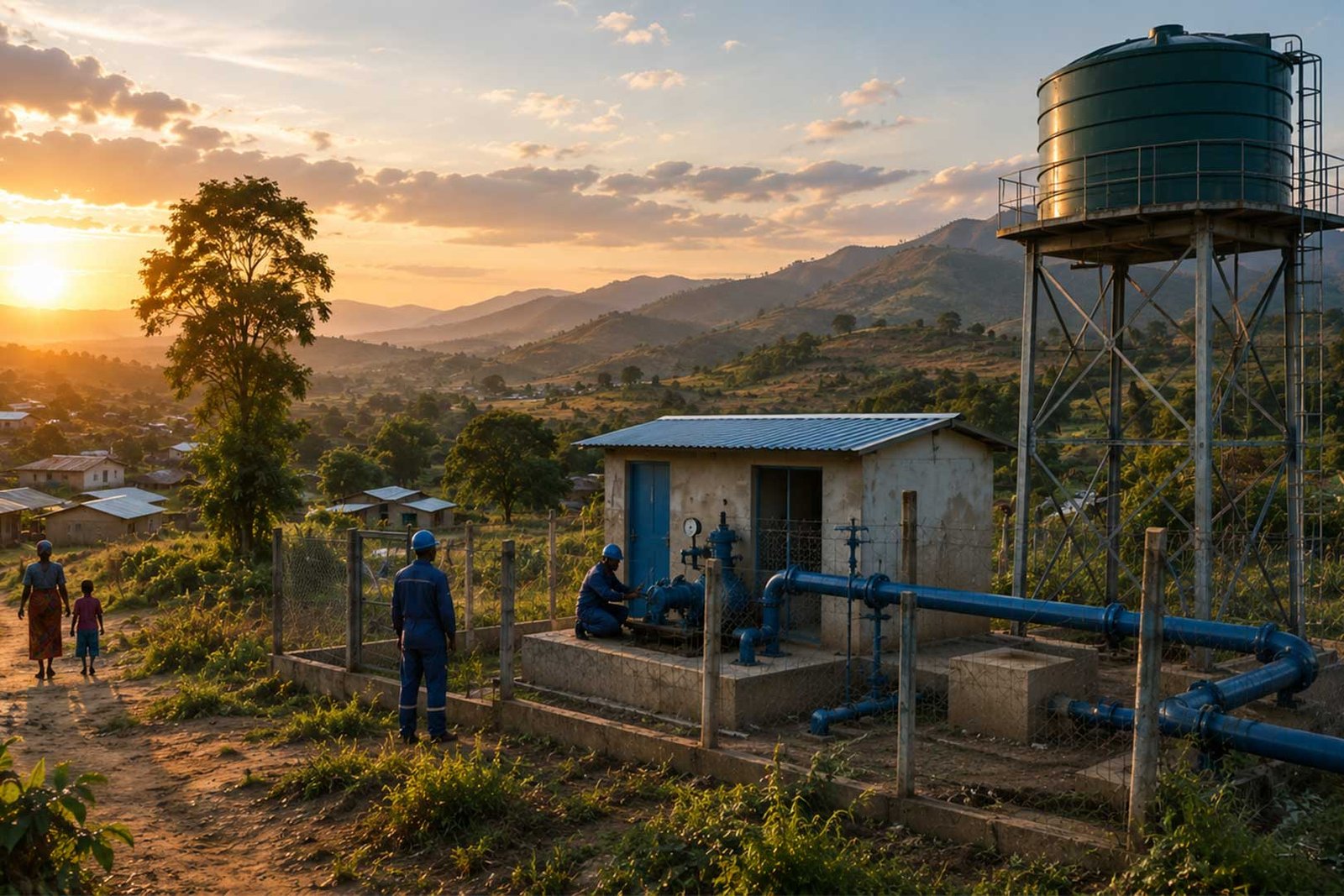
A new water point opens, the pump runs, water reaches the tap, and on day one, everything looks fine. Months later, the source yield drops, a pump breaks, storage runs short, or one missing spare part stops the service.
That is the real challenge with rural water infrastructure in Ethiopia. You need a system that keeps working after construction, is practical to repair, and has room to grow. Keep reading and you’ll see where these systems usually struggle, what to check early, and how to avoid expensive problems later.
What Does Rural Water Infrastructure in Ethiopia Actually Look Like?
One village relies on a protected spring. Another needs a deep borehole and pump. A third serves several communities through one shared network. Rural water infrastructure in Ethiopia does not follow one standard model. The World Bank shows that about 76% of Ethiopia’s population was rural in 2025.
UNICEF states in the One WASH National Program Phase II that rural technologies have included self-supply systems, hand-dug wells, hand-pumped shallow wells, solar-powered shallow wells, boreholes, capped springs, rainwater systems, and single- and multi-village piped supplies. These figures come from historical program planning, so they are not a current national asset count.
| Rural system | Typical arrangement | Main design checks |
|---|---|---|
| Spring / gravity | Protected source, gravity pipeline, storage, public taps | Seasonal yield, source protection, elevation |
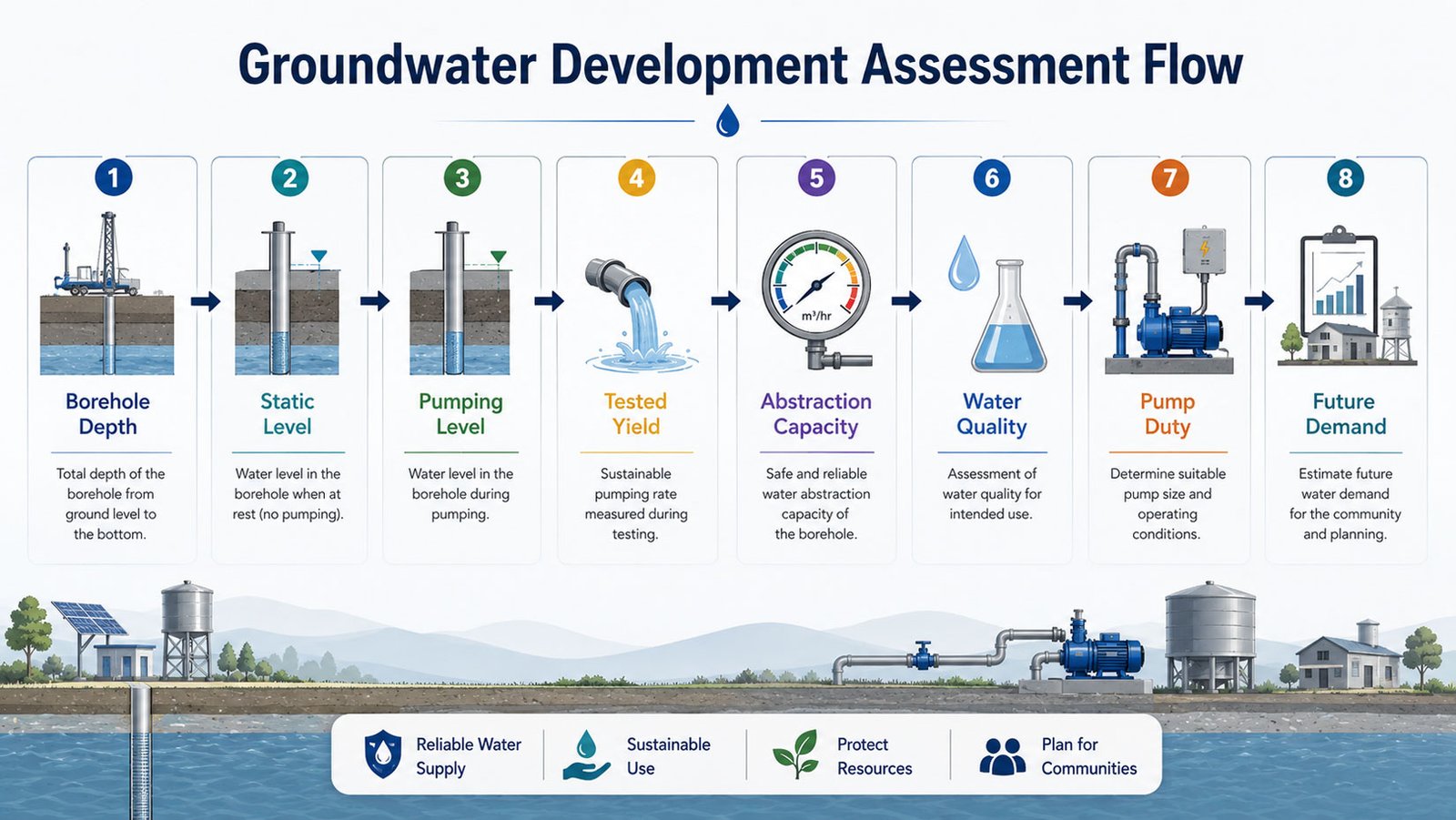
| Borehole | Borehole, pump, rising main, tank, users | Sustainable yield, quality, pump duty |
| Village network | Local source, storage, local pipe network | Pressure, distance, pipe capacity |
| Multi-village | Shared source, trunk main, storage, village networks | Hydraulics, source capacity, O&M |
A rural water system depends on four things working together:
- Source: For springs, check year-round yield, protection, terrain, and elevation. For groundwater, confirm what the borehole can actually support before you size the rest of the system.
- Power: Match the pump and power setup to the site. Solar, grid, diesel backup, controls, and standby needs all affect reliability. The World Bank’s rural electricity access data puts rural electricity access at 44.8% in 2024.
- Storage: Size the tank around daily demand and possible pumping interruptions. Leave room for extra storage where future growth is realistic.
- Distribution: As more homes, schools, health facilities, and public taps connect, check pressure, pipe capacity, coverage, and storage again.
The Structural Challenges Facing Rural Water Infrastructure
Distance changes everything in rural water. A few kilometers between communities or between a source and a village affects your pipeline length, construction cost, pumping needs, and maintenance. Some routes also cross difficult terrain or areas with limited road access. That makes construction harder and repairs slower.
The source itself creates another challenge. A productive borehole or spring may sit far from the community. A closer source may have weak yield, seasonal problems, or poor water quality. Four parts of the system often become trouble spots:
- Pumps and power: wrong pump duty, motor failure, dry-running, grid outages, generator problems, fuel shortages, or solar-control failures.
- Storage: too little reserve, poor tank elevation, leakage, deterioration, or no room for future capacity.
- Distribution: small pipes, low pressure, weak valves, damaged crossings, leakage, or extensions added without a hydraulic review.
- Network records: missing drawings and poor as-built information make repairs and future expansion much harder.
A small local system still makes sense for many communities. Larger shared systems fit better where settlement patterns, source capacity, hydraulics, and long-term costs support them.
The Reliability Gap: Access Is Not the Same as Continuous Service
A working water point does not always mean a reliable water service. What matters is how often people actually get water across the year.
The rural WASH sustainability assessment indicates that among sampled multi-village schemes, 74% were working when assessed, while only 32% were reported to have worked at least 85% of the previous year. For sampled wells, the comparable figures were 73% and 42%. The study covered selected facilities and was not nationally representative. To find the real problem, look at the system piece by piece:
| Failure point | Common problem | What to check |
|---|---|---|
| Source | Falling yield, contamination | Yield, protection, quality |
| Pump | Motor, bearing, impeller, dry-running | Duty, condition, efficiency |
| Energy | Grid, generator, fuel, controller failure | Supply, backup, controls |
| Storage | Leakage, cracking, insufficient capacity | Condition, useful reserve |
| Pipeline | Rupture, joint failure, surge | Pressure, route, transients |
| Valves / taps | Failed valves, meters, taps | Access, spares, repair |
The problem also reaches the final service point. A broken tap, poor drainage, or vandalism stops people from getting water even when the main system still works.
Sometimes the repair itself is simple. The delay comes from somewhere else: no operator is available, the right spare part is missing, or there is no money set aside for the work.
Why O&M Must Be Designed into Rural Infrastructure
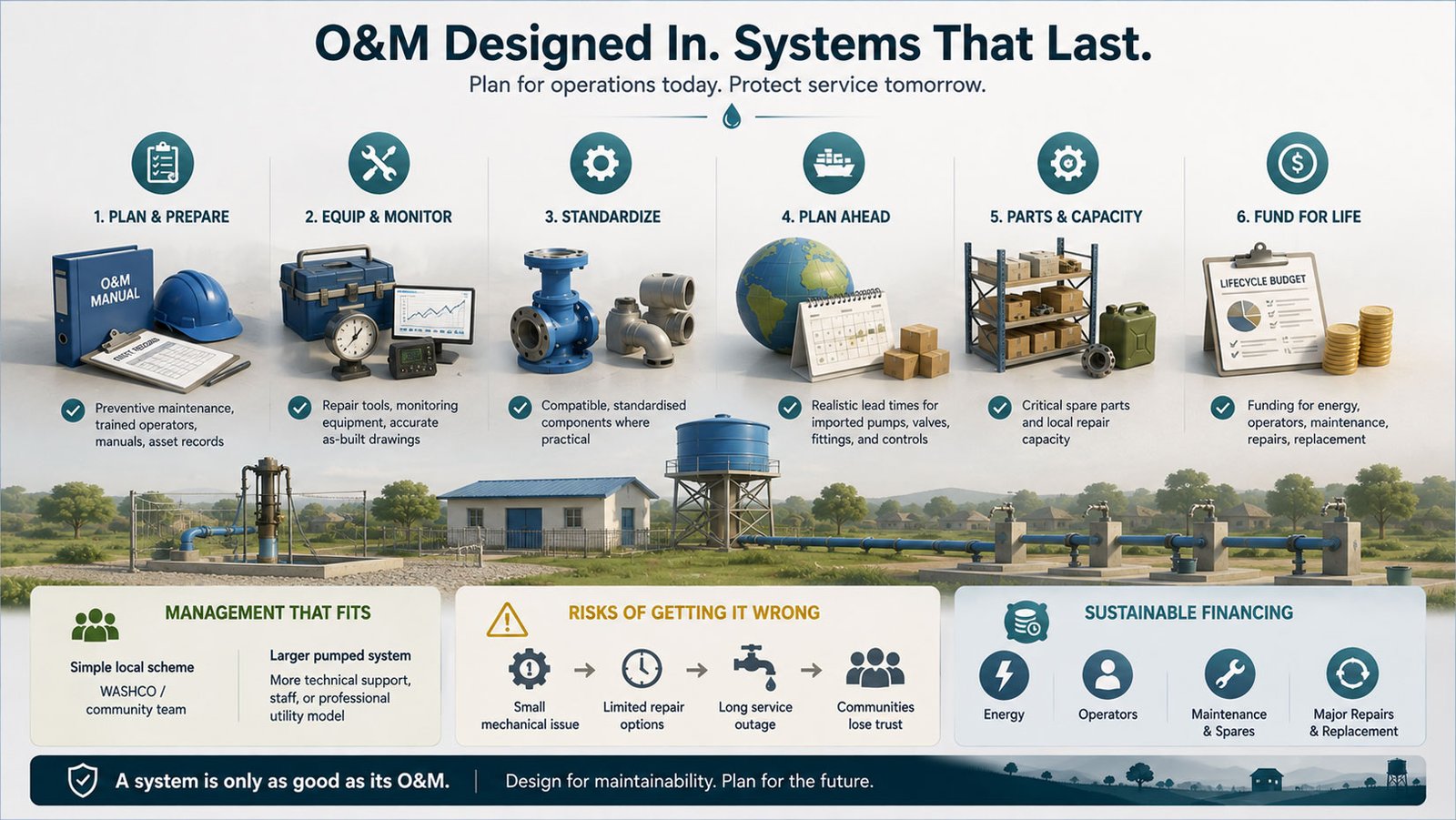
A system is only useful if your team can keep it running. That means thinking about maintenance, repairs, people, and costs before construction is finished.
What Keeps the System Running
Your job does not end when the system starts working. Someone still needs to maintain it, spot problems early, and fix them quickly. For your project, that means:
- preventive maintenance and trained operators;
- clear manuals, records, and as-built drawings;
- the right repair tools and monitoring;
- standard parts where practical;
- critical spare parts and local repair support;
- a real budget for energy, maintenance, and replacement.
The research found weak spare-parts supply and limited maintenance support in UNICEF’s sampled areas. These are not national figures, but they show the problem clearly: a small fault can turn into a long outage when the right part or technician is hard to find.
Match the Operator to the System
A simple local scheme often works with a WASHCO or community team. A pumped or multi-village system is different. You need more technical support, stronger maintenance capacity, and sometimes permanent staff, a cluster setup, or a professional rural utility. As the system gets bigger, the team behind it needs to grow with it.
Plan for the Cost of Keeping It Working
The system still costs money after construction. You have electricity or fuel, operators, spare parts, routine maintenance, and larger repairs to pay for. Tariffs, user contributions, reserve funds, and long-term budgets help you cover those costs. A system that is cheap to build is not always cheap to keep running.
Rehabilitation May Be as Important as Building New Systems
An old or unreliable system is not always a lost system. Parts of it may still have years of useful life. Start by checking what still works, including:
- How much water does the source still provide?
- Is the pump broken, worn out, or simply too small?
- Is the tank still in good condition?
- Are leaking pipes or broken valves causing most of the problem?
- Has the network become too small for today’s demand?
The answer tells you where to spend your budget.
You might need larger or additional pumps, more storage, stronger distribution pipes, new pressure zones, network extensions, parallel mains, or additional boreholes where sustainable yield supports them.
The research recommends comparing the condition of existing assets, hydraulic limits, future demand, and rehabilitation cost with the cost of complete reconstruction.
Designing Rural Water Infrastructure That Can Grow
A village that needs a small system today often needs more capacity later. The smart approach is to leave room for that growth without paying for everything on day one.
| Stage | Typical infrastructure | Future-ready provision |
|---|---|---|
| 1. Local source | Protected spring, hand pump, small borehole | Verify yield, protect source, preserve tank land/easements |
| 2. Pumped system | Source, pump, rising main, tank, water points | Modular pumps, expandable storage, future branches |
| 3. Village network | More taps, homes, schools and institutions | Pressure management, stronger backbone, metering, professional O&M |
| 4. Multi-village | Shared source, trunk mains, reservoirs, village networks | Redundancy, boosters, bulk metering, cross-village O&M |
| 5. Selective interconnection | Adjacent systems connected where justified | Connection nodes, larger mains, shared storage, controls |
This staged pathway is an engineering framework based on the research. It is not an official Ethiopian classification.
Interconnection starts to make sense as villages grow closer together, a rural community expands toward a small town, one source has enough spare capacity, several weaker systems share a stronger source, or a nearby network provides backup.
The technical, financial, and management conditions still need to support that move.
Case Study 1: Guradhamole Multi-Village Water Supply Project
According to DevelopmentAid, the Guradhamole Climate Resilient Multi-Village Water Supply Project included awarded procurement for HDPE pipes and cast-iron and HDPE fittings.
The project appears in the research as part of Ethiopia’s move toward multi-village systems serving more than one settlement. For your project team, it is a useful example of rural supply growing beyond one water point into a connected pipeline, storage, and distribution system. That extra scale also brings more need for hydraulic planning, maintenance, and long-term technical support.
Scalable Does Not Mean Oversized
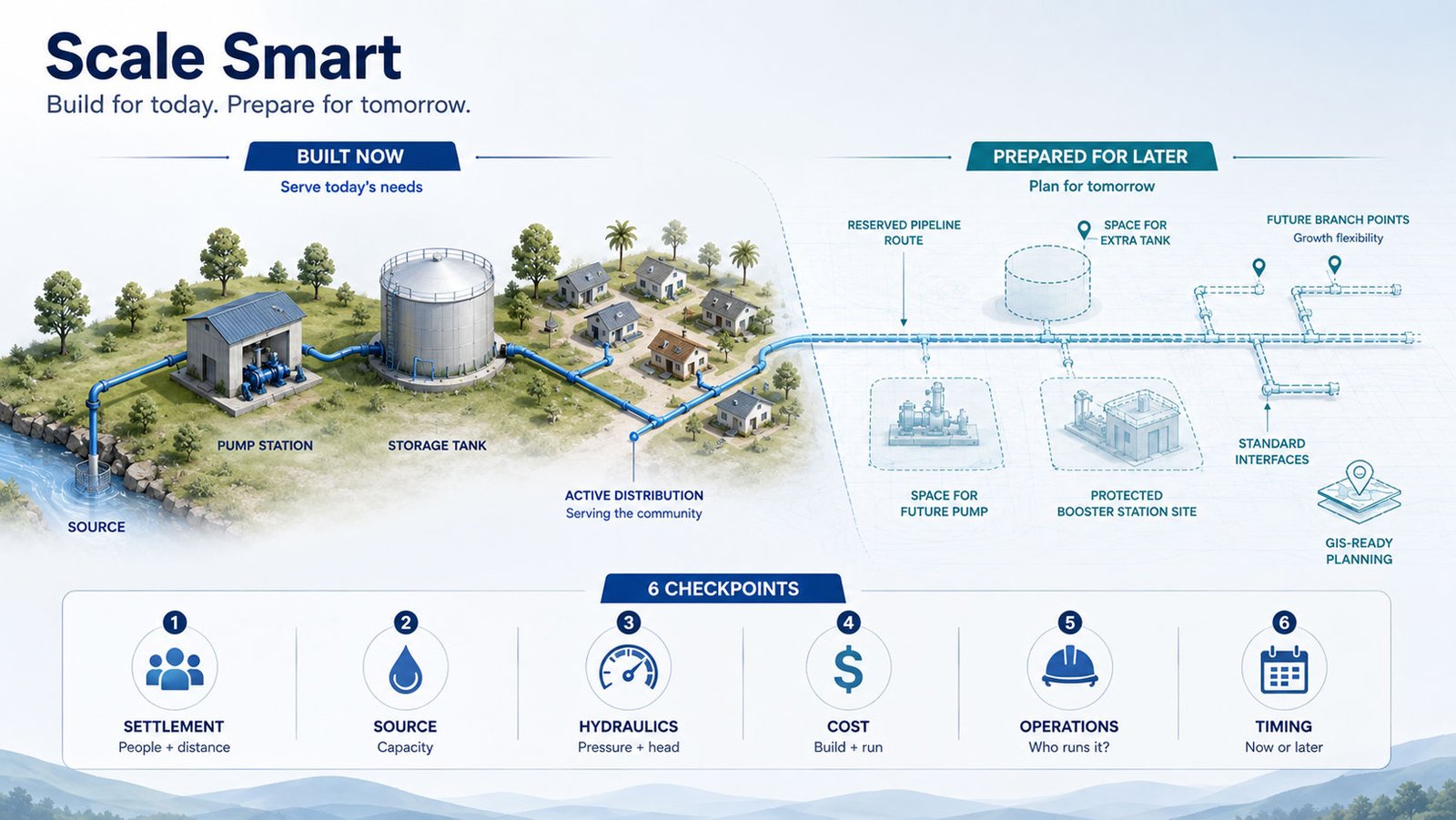
Future-ready does not mean oversized. You can make future expansion easier without installing all of the future capacity today.
Example: Reserve a future pipeline route, leave space for another tank, make room for another pump, add future branch points, protect a booster-station site, standardize interfaces, and keep good GIS and as-built records. Before you expand, look at six things:
- Settlement economics: How many people will you serve, how far apart are they, and how much pipeline will you need?
- Source capacity: Does the source have enough water for today’s demand and the demand you expect later?
- Hydraulics: What happens to pressure, headloss, pumping head, surge, elevation, and storage as the system grows?
- Lifecycle economics: What will you spend on construction, power, maintenance, repairs, and replacement?
- Institutional capability: Who will operate the larger system — a community team, cluster, utility, or professional operator?
- Timing: What needs to be built now, what only needs preparation now, and what belongs in a later phase?
How to Choose Pipe Materials for Rural Water Systems
The right pipe depends on the work it needs to do. Pressure, route, soil, water quality, installation, repairs, and long-term cost all shape the choice.
| Material | Potential fit | Important checks |
|---|---|---|
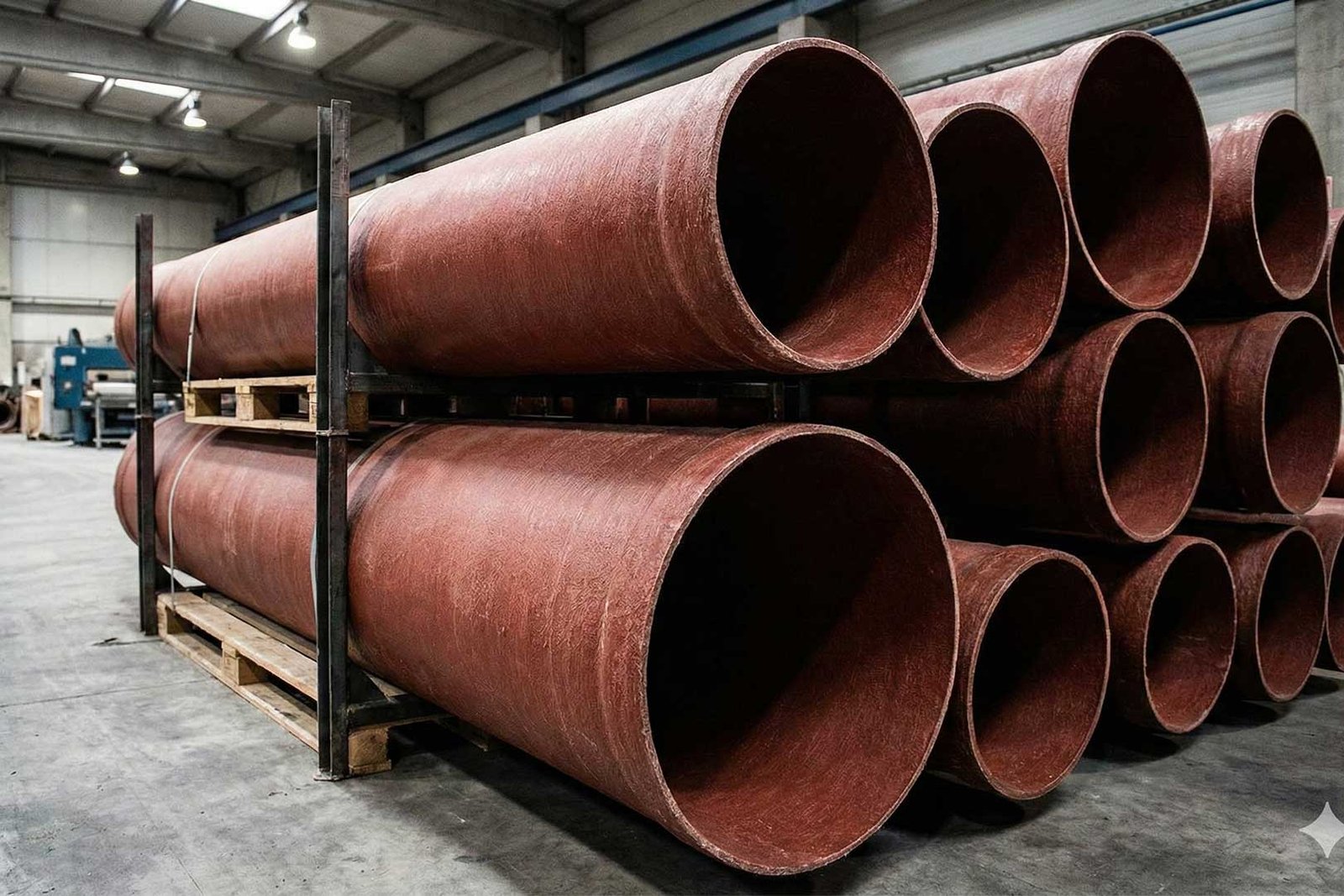
| GRP | Longer/larger rising mains, rural backbones, trunk pipelines | Surge, bedding, backfill, fittings, QA/QC |
| HDPE | Smaller distribution and flexible branches | Pressure, diameter, temperature, jointing |
| Ductile iron | Locations needing high mechanical robustness | Weight, corrosion protection |
| Steel | High-head or specialized exposed sections | Coatings, corrosion, lifecycle O&M |
Your comparison should cover DN, flow, operating pressure, surge and vacuum, burial conditions, soil and traffic loading, water chemistry, terrain, transport, fittings, repair methods, contractor capability, expected service life, and local O&M capacity.
For a small village network or individual connections, HDPE, PVC/PVCO where applicable, or another established material may be more practical.
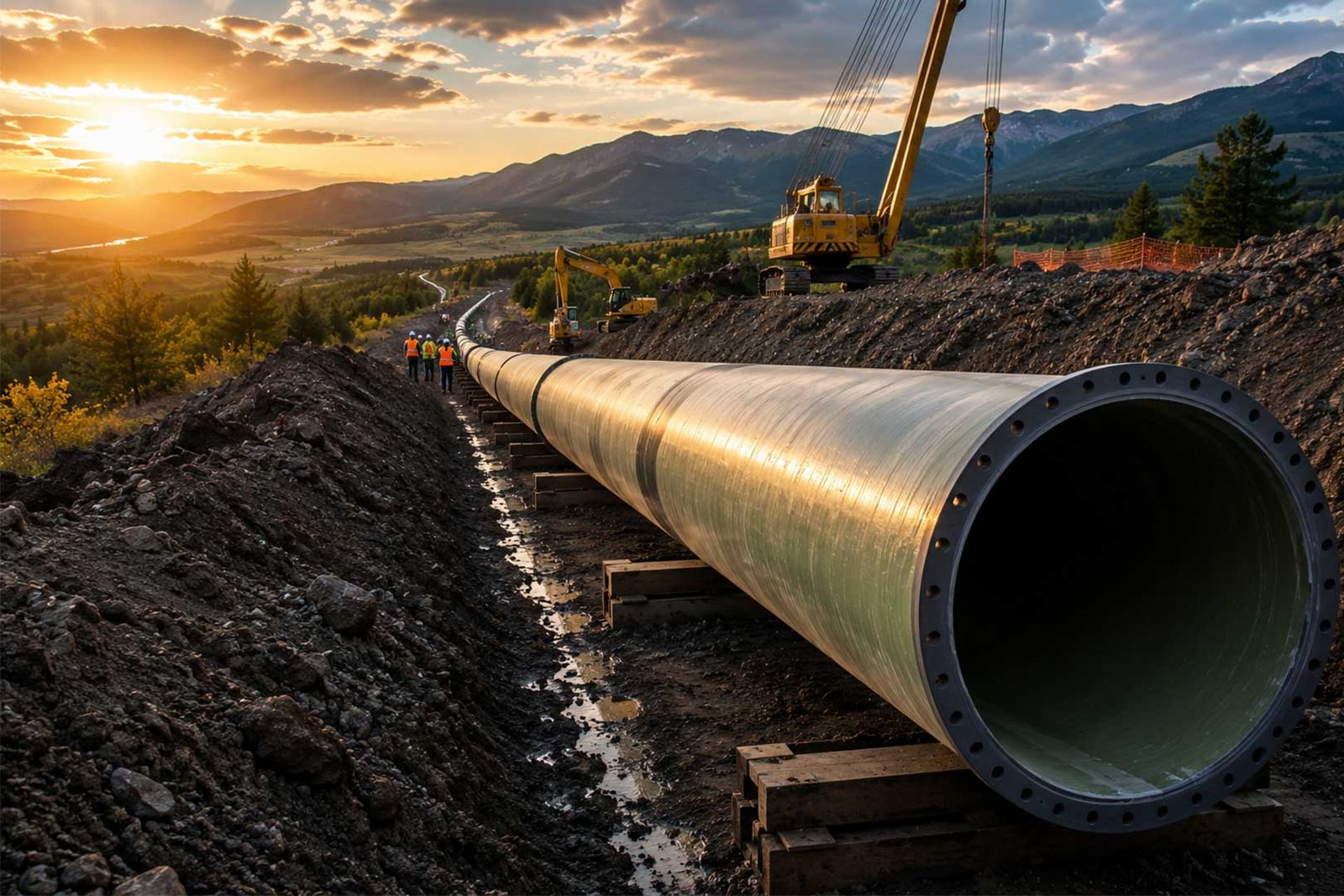
GRP becomes more relevant as systems move into longer borehole-to-reservoir rising mains, gravity conveyance lines, larger rural backbones, multi-village trunk pipelines, shared bulk-water systems, reservoir inlet/outlet mains, capacity upgrades, or selective interconnection.
The purchase price tells only part of the story. Corrosion, hydraulic performance, pumping energy, transport, installation, maintenance, repairs, fittings, and expected service life all affect the cost you carry over time.
Real-World Example: Su’ula-Manda Water Supply Scheme
As ResearchGate shows, the Su’ula-Manda study in Afar looked at water hammer in a multi-village transmission main.
The research shows how sudden pump trips and valve movements across uneven terrain create sharp pressure changes, pipe bursts, and vacuum conditions. It identifies air vessels, surge-anticipation valves, and combination air-release/vacuum-relief valves as relevant protection measures.
For a route with major elevation changes, this is a useful reminder that normal operating pressure tells only part of the story. Pump operation, transient pressure, and surge protection matter too.
ISO states that ISO 23856:2021 covers GRP-UP piping components for pressure and non-pressure water applications. Current Ethiopian standards and the actual tender requirements still need to be checked for each project.
From Rural Water Projects to Integrated EPC Delivery
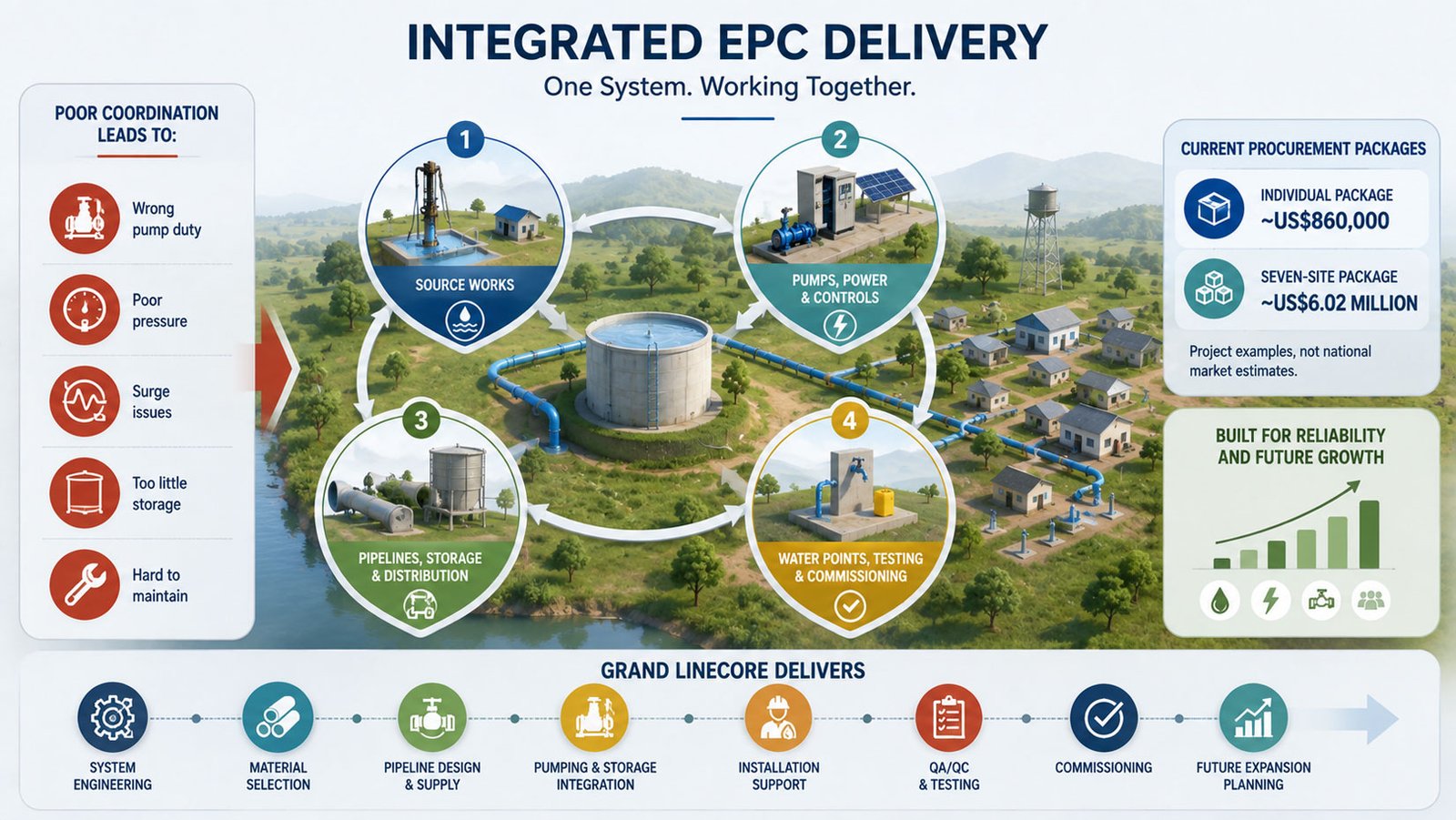
A larger rural water project quickly becomes more than a pipeline job. The main parts need to work together, like:
- borehole and source works;
- pumps, power, and controls;
- pipelines, storage, and distribution;
- water points, testing, and commissioning.
Poor coordination creates real problems. You may end up with the wrong pump duty, poor pressure, surge issues, too little storage, or equipment that is difficult to maintain.
Current Ethiopian procurement already includes packages that combine civil works, pipe laying, electromechanical installation, and water-point construction. The research includes individual packages of around US$860,000 and a seven-site package of about US$6.02 million. These are project examples, not national market estimates.
Grand LineCore supports this type of work through system engineering, material selection, pipeline design and supply, pumping and storage integration, installation support, QA/QC, testing, commissioning, and future expansion planning.
Case Study 3: Horn of Africa Groundwater for Resilience
The 2026 World Bank implementation report reported that, as of 20 January 2026, 12 rural piped systems were complete in Ethiopia, 10 were under construction, and 88 were at study, design, or procurement stages against a program target of 110.
The completed systems were reported as providing basic water service to 59,713 people. For project teams, the program is a useful example of rural water development at several stages at once. Some systems are under study, others are in design or procurement, and others have already reached construction and completion.
Where Larger Infrastructure Opportunities Can Emerge From Rural Development
Some rural systems stay small for years. Others reach a point where stronger backbones, more storage, booster stations, or shared infrastructure make sense. The larger opportunities usually appear in a few areas:
- Borehole-to-storage rising mains where a productive source sits far from the reservoir or community.
- Multi-village trunk pipelines where several communities share one sustainable source and common backbone.
- Additional or shared storage as population, demand, or pumping schedules increase.
- Pumping and booster stations where terrain or network growth adds more head requirements.
- Rehabilitation and capacity upgrades through better pumps, larger tanks, stronger backbones, extra valves, or parallel mains.
- Selective interconnection where neighboring systems share capacity or provide backup.
- Complete EPC packages that combine source development, pumps, pipelines, storage, electromechanical systems, distribution, testing, and commissioning.
Before you move toward any of these, look closely at source capacity, population growth, geography, hydraulics, lifecycle cost, and the team that will operate the system after construction.
What Ethiopia’s Future Rural Water Development Should Prioritize
More infrastructure alone will not solve every rural service problem. The next priority is to make systems more reliable, easier to maintain, and better prepared for realistic future demand.
Start with better source investigation
Understand the groundwater conditions, pumping-test results, water quality, and sustainable abstraction before you design major infrastructure around the source. Then match your pumping and storage to the way the system will actually operate.
Design for reliable service
Look at uptime, service continuity, repair time, pressure, water quality, and the service people actually receive. Choose pumps, controls, backup systems, and other equipment that local operators can realistically maintain.
Get more value from what is already there
An existing borehole, tank, pipeline, or distribution network may still have years of useful life. Rehabilitation often improves service without rebuilding the whole system. More complex pumped and multi-village systems also need stronger O&M and repair capacity.
Plan growth without overbuilding
Build stronger piped systems where source capacity, settlement patterns, hydraulics, and lifecycle costs support them. Protect future routes, tank sites, branch points, and interfaces so expansion is easier later. Material selection and EPC planning should follow the same long-term thinking.
Building Rural Water Systems That Last
The real test starts after handover. People need dependable water, operators need a system they can actually manage, and future upgrades should not force the whole project to start again.
The right setup looks different from one community to another. Some systems stay small and local. Others grow into pumped village networks, multi-village supplies, or selective interconnections.
At Grand LineCore, we support you through that process by bringing engineering, material selection, manufacturing, installation support, testing, commissioning, and EPC planning together around the real needs of your project.
about
The Author

Farshid Tavakoli is a seasoned professional in engineering and international trade. Holding degrees in Electrical Engineering, Mechatronics, and a Doctorate in Business Administration (DBA) from the University of Lyon, he also has a strong background in industrial automation and production line technologies.
For over 17 years, he has led an international trading company, gaining deep expertise in commercial solutions tailored to industrial needs. With more than 8 years of active involvement in infrastructure development, he specializes in the supply of electromechanical equipment for water and wastewater treatment plants and transfer projects.
Together with comapny expert team, he now provides consultancy and integrated solutions for sourcing and implementing complex infrastructure projects across the region.