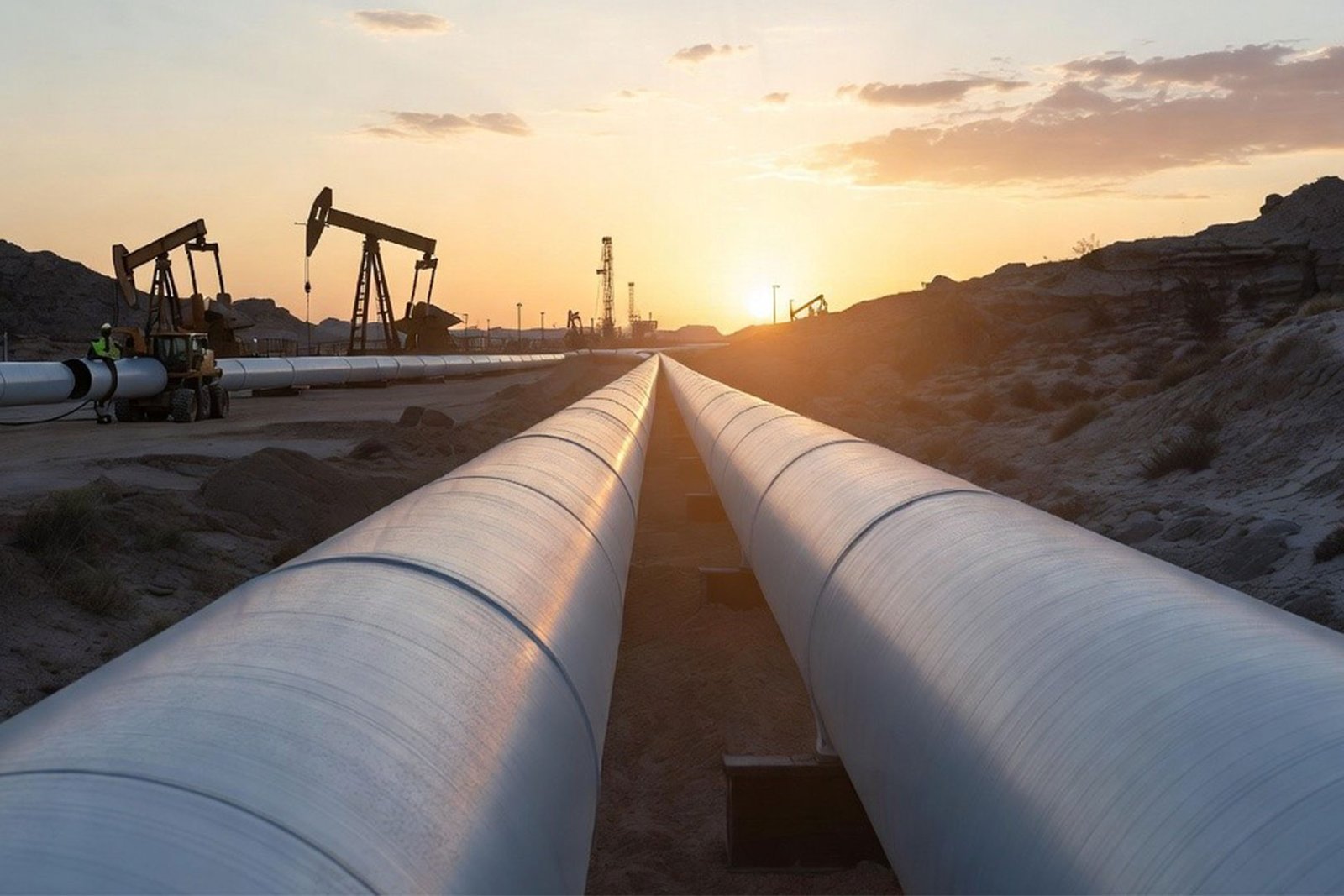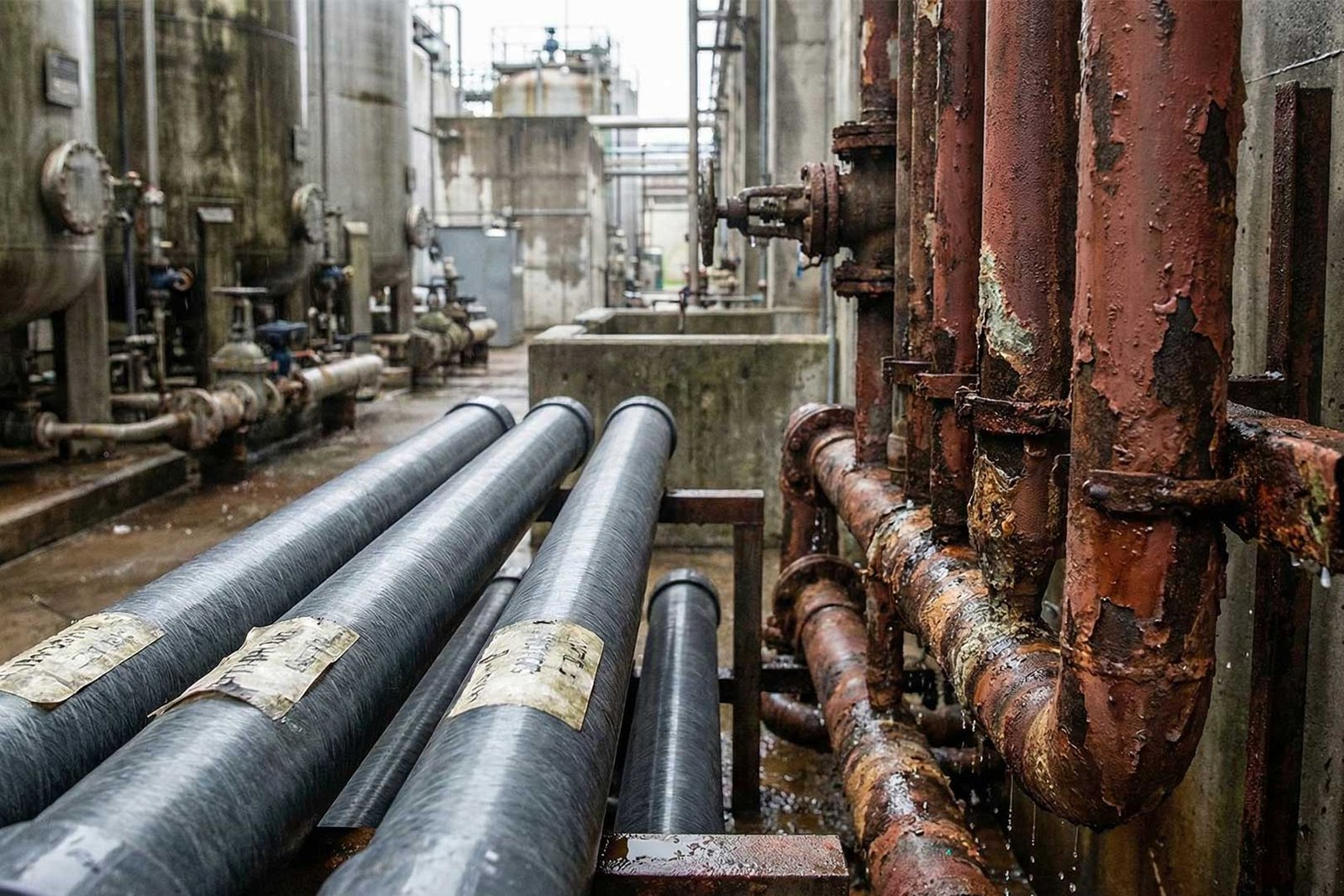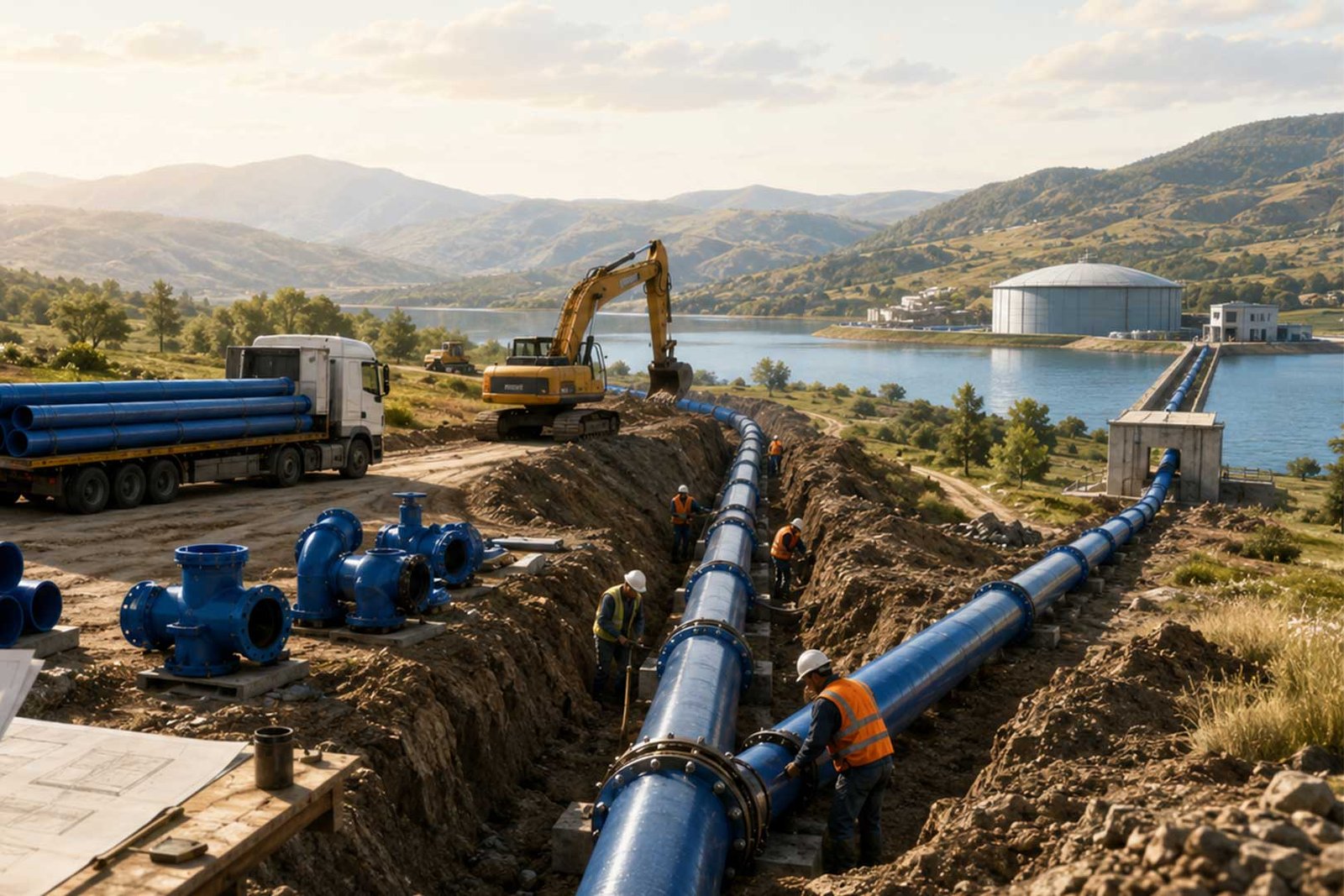
Imagine a water project pumping water 75 kilometers across highland terrain, then splitting into hundreds of taps in one town. That’s really two different jobs, not one. Treat them as the same “water-supply project” and you’ll end up with the wrong pipe, a contractor scope missing pieces, and cost numbers that don’t add up.
In Ethiopia, with its terrain and funding rules, this split matters even more. Let’s walk through how to tell the two apart.
What Is a Water Transmission System?
Think of transmission as the backbone of a water project. It moves large amounts of water between big, important points, not out to individual houses. In Ethiopia, that usually looks like:
- Wellfield to treatment plant
- Intake to treatment plant
- Treatment plant to main reservoir
- Reservoir to a regional supply system
- Pipelines connecting cities or towns
- Big irrigation or industrial corridors
A Real-World Example
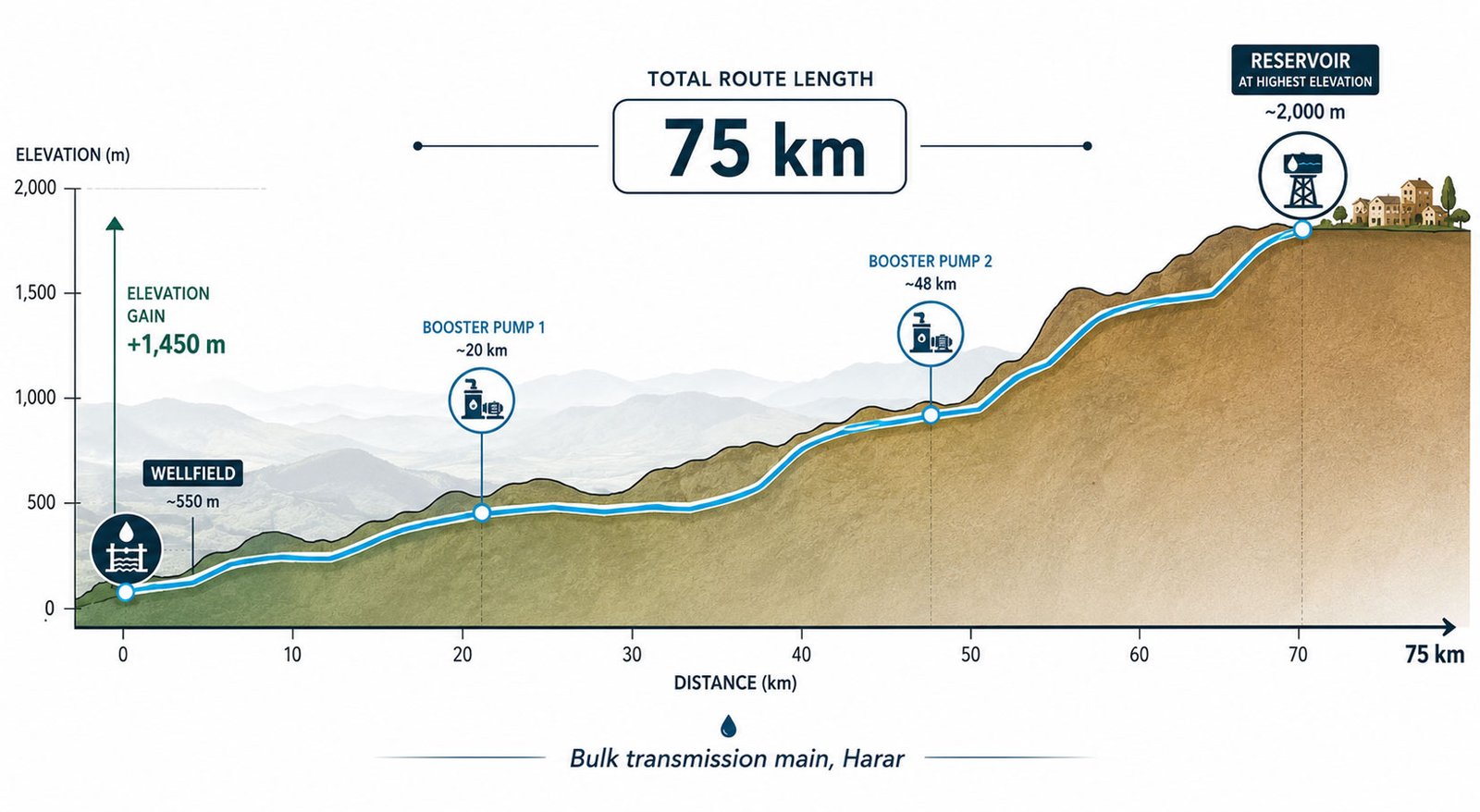
The Harar Water Supply and Sanitation Project runs about 75 kilometers of bulk transmission main, with booster pumps lifting water from lower wellfields up to the town’s reservoirs. Addis Ababa’s Legedadi Water Supply Scheme does something similar, sending treated water through transmission mains into the capital’s main reservoirs.
You’ll usually find these parts in a transmission system:
- Trunk or gravity mains, plus rising mains
- Pumping and booster stations
- Reservoirs, air valves and washouts
- Surge protection, flow metering and SCADA
- Crossings over rivers, highways and other utilities
These lines run long distances, at high or changing pressure, over big elevation changes, with few or no direct connections. That also means a failure is a big deal. Keep in mind: pipe size and pressure always come down to flow, terrain and future demand, not a fixed rule.
What Is a Water Distribution System?
Once water reaches a reservoir or enters the local network, the job changes. Now it’s about getting water to people.
Distribution branches out to homes, standpipes, schools, clinics, shops and factories across a town. Here’s what you’ll typically find:
- Branched or looped pipe networks
- Smaller local pipes and service connections
- Isolation and control valves, plus consumer and bulk meters
- Pressure-reducing valves and District Metered Areas
- Hydrants and public taps
It’s a busier, more tangled system than transmission. Demand keeps changing throughout the day, so keeping enough pressure at the tap is the real challenge, and leakage (often called non-revenue water, or NRW) is a much bigger risk here.
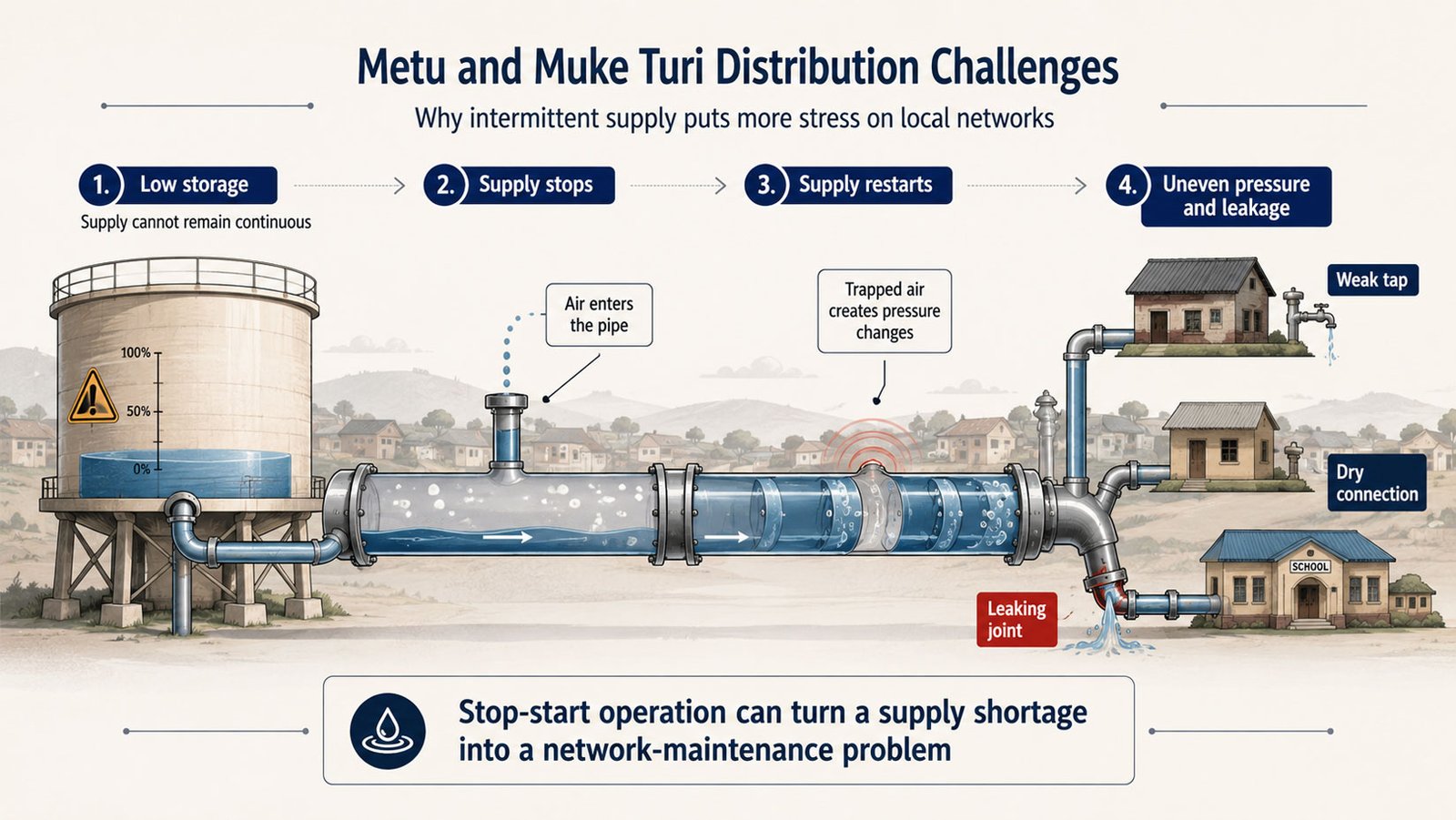
Take Metu town, where supply runs on and off because storage is limited. You’ll see a similar pattern in Muke Turi. That stop-start rhythm pulls air into the pipes and creates pressure surges, which wears out joints faster and pushes leakage even higher.
Water Transmission vs Distribution: Key Differences
You’ve seen how the two systems differ in theory. This table puts it side by side, so you can see at a glance where your priorities, risks and asset choices actually diverge:
| Decision factor | Water transmission | Water distribution |
|---|---|---|
| Primary function | Move bulk water between major points | Deliver water to consumers |
| Network shape | Long, linear corridor | Branched or looped network |
| Connections | Few or none | Many service connections |
| Main concern | Flow, headloss, pressure, surge | Residual pressure, demand swings, leakage |
| Typical assets | Trunk mains, pumps, reservoirs, controls | Local mains, valves, meters, connections |
| Construction challenge | Route access, crossings, logistics | Urban congestion, utility conflicts |
| If it fails | Whole region or city can lose supply | Usually localized |
| Main O&M focus | Pipeline integrity, reliable transfer | Leakage, repairs, metering, pressure |
| Material priority | Hydraulics, corrosion, pressure, lifecycle | Flexibility, tapping, repairability |
| Grand LineCore focus | Core strategic focus | Selective, often part of a bigger EPC package |
This is why you can’t scope, price or spec these two systems the same way. A pipe built to handle surge on a 75-kilometer trunk main has almost nothing in common with the tapping flexibility needed on a busy street.
Why Transmission Matters So Much in Ethiopia
You’ve probably heard Ethiopia called the water tower of East Africa. But most of that water sits in the west and southwest, while more than half the population lives in the east and center, where it’s scarce. Transmission infrastructure bridges that gap.
It carries water from wellfields, intakes, treatment plants and reservoirs to the towns that need it. Along the way, it also has to deal with some tough realities:
- Highlands and rugged routes
- Deep valleys and river crossings
- Long pumping distances
- Remote, hard-to-reach sites
- Pressure zoning across elevation changes
Big programs like the One WASH National Program, which pools money from government and international donors through the Consolidated WASH Account, and the €75 million Urban Water Supply and Sanitation Programme, both lean heavily on this kind of infrastructure. They connect regions, support schemes serving multiple towns, and back urban and industrial growth with a steadier supply.
Spotting a Transmission Opportunity in a Tender
Sometimes it’s obvious. Look for words like:
- Transmission main or trunk main
- Bulk water supply, rising main
- Long-distance pipeline, regional conveyance
- Wellfield integration
- Booster station, command reservoir
Other times, it’s hiding in plain sight. A tender might simply say “Water Supply Project,” while the scope underneath is really a transmission job. Watch for combinations like:
- Boreholes paired with a remote reservoir
- A treatment plant feeding a long pipeline
- Several towns being fed from one source
- Booster stations along a regional route
- Big river or highway crossings
The takeaway: read the project’s actual layout, not just its title.
Engineering Priorities for Transmission Projects
Once dealing with transmission, the engineering questions shift too, like:
1. Hydraulic Capacity and Headloss
You need required flow, diameter, elevation, pipe roughness, pumping head, energy use, and room for future growth, all at once.
2. Pressure and Surge
Normal operating pressure only tells half the story. Pump starts and stops, power failures, and valve closures can all create sudden pressure spikes known as water hammer.
This actually happened to the Su’ula-Manda-Daba scheme in Afar, which suffered repeated pipe collapses and pump failures before protective measures were put in place. The bottom line: you can’t choose a pipe material or pressure class without running a proper surge analysis first.
3. Route and Ground Conditions
Soil type, groundwater, corrosivity, rock, settlement, bedding, backfill, crossings, and seismic risk all shape the final route.
4. Installation and Logistics
Ethiopia is landlocked, and around 98% of its trade moves through the roughly 900-kilometer corridor from the Port of Djibouti, a route with its own congestion and delays. That affects transport, storage, cranes, access roads, and jointing speed on site.
Choosing the Right Pipe Material
Picking a pipe material shouldn’t come down to “which one’s cheaper right now.” It’s a lifecycle decision shaped by pressure, surge, corrosion, hydraulics, site conditions, and how well your team can keep it running. No single material wins every time.
Where GRP Tends to Fit Best
These are the project conditions where GRP usually earns its spot, so you can quickly check if your route matches:
- Long-distance buried transmission
- Large diameters
- Corrosive soils and groundwater
- Raw and treated water
- Energy-sensitive pumping
- Remote schemes with limited maintenance support
This comes down to needing less coating and cathodic protection.
Where Other Materials Make Sense
Not every job calls for GRP. Here’s where the other three options actually pull ahead, so you’re comparing fairly:
- Ductile iron works well in busy urban networks with lots of connections, especially where the utility already knows how to maintain it.
- Steel suits very high pressure, exposed or above-ground sections, and heavy structural loads.
- HDPE is a good fit for smaller diameters, flexible routing, lower-pressure networks, and rehab work.
The real question isn’t “which pipe is best?” It’s “which system fits this route, this pressure, this soil, and this budget?”
Why GRP Can Work Well for Bulk Transmission
Four reasons show up again and again when GRP gets picked for a transmission line, and what each one actually means for your project.
1. Corrosion Resistance
GRP doesn’t rust, which matters in aggressive soils, salty groundwater, and tough raw-water chemistry. It can cut reliance on coatings, linings and cathodic protection, though good installation and regular checks are still part of the job.
2. Hydraulic Efficiency
GRP has a smooth inner surface that resists scale and slime buildup, which keeps friction low. Industry sources report pumping-energy savings of roughly 10% to 20% compared to metallic pipes, though your actual number depends on a hydraulic study for your specific project, not a general figure.
3. Lighter and Easier to Install
GRP weighs about a quarter of steel and a tenth of concrete. That means smaller pipes can nest inside larger ones for transport, cutting truck trips along corridors like Djibouti to Addis Ababa. On site, it also means fewer heavy cranes, a real plus on remote routes, though the benefit depends on diameter, length and jointing method.
4. Built for the Long Run
Put corrosion resistance and hydraulic stability together, and you get a genuine lifecycle argument, not just a lower price tag upfront. Manufacturer literature often cites service lives of 50 to 100 years, sometimes longer under standard conditions, worth checking against the specific resin, liner and standard used on your project.
GRP Isn’t Automatically the Right Answer
Being fair means naming the catches too. Before specifying GRP, or anything else, check:
- Pressure and surge behavior for the actual route, not a catalog number
- Pipe stiffness against burial depth and loads
- Bedding and backfill quality
- Deflection control during installation
- Protection from point loads and impact
- Joint angular deflection limits (often just a few degrees per coupling)
- Thrust restraint and fitting interfaces
- Qualified field supervision and documented jointing
- A plan for spares and repairs
GRP earns its place when the hydraulics, structure and site conditions genuinely support it, not just because it’s familiar or preferred.
Transmission Needs More Than Pipe Supply
Lenders funding Ethiopian water projects, including the World Bank, the African Development Bank and European agencies, expect tight standards on procurement, governance and quality. That’s why more transmission projects now move toward a single EPC contract, instead of splitting design, supply, logistics and construction across separate parties, which tends to cause delays and disputes. A right EPC scope covers:
- Design, hydraulic modelling and surge analysis
- Pipe-class selection, plus valve and chamber integration
- Manufacturing coordination and logistics
- Trenching, jointing, crossings and site QA/QC
- Testing, commissioning and utility training
A Real-World Example
Kenya’s Kerugoya Water Supply Project is a good regional example. According to Jiuding Composite, it’s one of the first major transmission lines in the region built mainly with GRP, delivered under one design-and-build contract, and credited with bringing clean water to nearly 600,000 people. The real lesson isn’t the pipe. It’s the coordination.
Grand LineCore’s Role in Ethiopian Water Transmission
Grand LineCore supports transmission projects by combining GRP and composite pipe supply with engineering coordination and EPC delivery support, not just selling pipe. That can look like:
- Helping you weigh hydraulics, pressure and surge behavior, corrosion risk, soil conditions, lifecycle cost and O&M capability during material selection, with your team making the final call after detailed engineering
- Manufacturer-backed supply of pipes, fittings and specials, plus technical submittals and QA/QC documentation
- Broader EPC support across procurement, logistics, construction, testing and handover
Grand LineCore is building out this role as an engineering-led partner for Ethiopia and East Africa, backed by an Ethiopian office and manufacturing base.
What Owners and Consultants Should Check Before Deciding
Before locking in a decision, run through these four categories, they cover most of what tends to get missed.
- Hydraulics: design and future flow, min/max pressure, surge envelope, pumping-energy assumptions
- Route: DN and pressure class, pipe stiffness, elevation profile, soil, groundwater, crossings
- Operations: design life, allowable outages, repair strategy, spares, O&M capacity
- Delivery: EPC packaging, funding rules, import exposure, production schedule, local contractor capability
One more thing worth knowing: under Ethiopia’s Water Resources Development Fund model, regional bureaus and town utilities usually put in a matching share of project cost and pay off the rest over 20 to 25 years through tariffs. Lifecycle cost, not just sticker price, deserves a seat at the table from day one.
Common Mistakes to Avoid
These mistakes show up on Ethiopian water projects more often than they should, and each one is avoidable if you catch it early:
- Treating transmission and distribution as one system. This confuses material selection, hydraulics, the BoQ and contractor qualifications.
- Choosing material by price alone. Ethiopia’s national water loss rate sits around 43%, well above the 25% ceiling generally recommended, a sign of what happens when energy, corrosion and repair costs get ignored.
- Skipping surge analysis. Static pressure alone doesn’t tell you the pipeline class you actually need, as the Afar case shows.
- Treating GRP like a commodity. Pipe, fittings, joints, soil and QA/QC work as one engineered system, not separate parts.
- Splitting procurement from construction planning. Delivery length, transport, storage and lifting all affect the build schedule.
- Joining too late. Getting involved during feasibility or design gives far more room to get material and EPC choices right than showing up at tender.
Getting the Split Right From the Start
Transmission and distribution aren’t two names for the same thing. They’re different engineering problems, with different pressures, failure risks, and material priorities. Get that split right early, and everything that follows, pipe class, contractor scope, real lifecycle cost, gets easier to nail down.
Grand LineCore can support that process as an engineering-led partner across material selection, EPC coordination and delivery, working alongside your team rather than making the call for you. Start by figuring out which system you’re building. The rest follows from there.
Grand LineCore: In Before It’s Too Late to Change Course
Maybe you’re staring down a 75-kilometer route through the highlands. Maybe you’re trying to figure out if that “Water Supply Project” tender is secretly a transmission job. Either way, Grand LineCore can help you think it through, hydraulics, surge, corrosion risk, the whole picture, before it’s too late to change course.
We’re not here to sell you a pipe and disappear. We’re here to help you get the material, the design, and the delivery plan right from day one, so you’re not firefighting problems three years into operation.
Frequently Asked Questions
1- Is a transmission main the same as a distribution main?
No. A transmission main carries bulk water between strategic nodes; a distribution main serves consumers directly.
2- Are transmission pipes always large diameter?
Usually bigger than distribution pipes, but size depends on flow, velocity, route, pressure and future demand.
3- Is GRP suitable for drinking-water transmission?
Yes, as long as the pipe system, resin, liner, joints and certifications meet the project’s applicable standards.
4- Is GRP always better than ductile iron or steel?
No. It depends on pressure, surge, corrosion, loading, installation, repair capability and lifecycle goals.
5- Why does surge analysis matter so much?
Pump trips, valve closures and sudden flow changes create pressure swings that can damage a pipeline, as Ethiopia’s Afar scheme found out.
6- Can Grand LineCore do more than supply pipes?
Yes. Depending on the project, that can include composite pipe supply, engineering coordination, logistics, EPC execution, installation, testing and commissioning.
7- What information do you need before picking a pipe material?
At minimum: hydraulic profile, surge analysis, diameter, pressure range, soil data, route conditions, and O&M expectations.
8- When should an EPC or pipe-system partner join the project?
Ideally at feasibility or detailed design, before the spec and procurement approach are locked in.
about
The Author

Farshid Tavakoli is a seasoned professional in engineering and international trade. Holding degrees in Electrical Engineering, Mechatronics, and a Doctorate in Business Administration (DBA) from the University of Lyon, he also has a strong background in industrial automation and production line technologies.
For over 17 years, he has led an international trading company, gaining deep expertise in commercial solutions tailored to industrial needs. With more than 8 years of active involvement in infrastructure development, he specializes in the supply of electromechanical equipment for water and wastewater treatment plants and transfer projects.
Together with comapny expert team, he now provides consultancy and integrated solutions for sourcing and implementing complex infrastructure projects across the region.