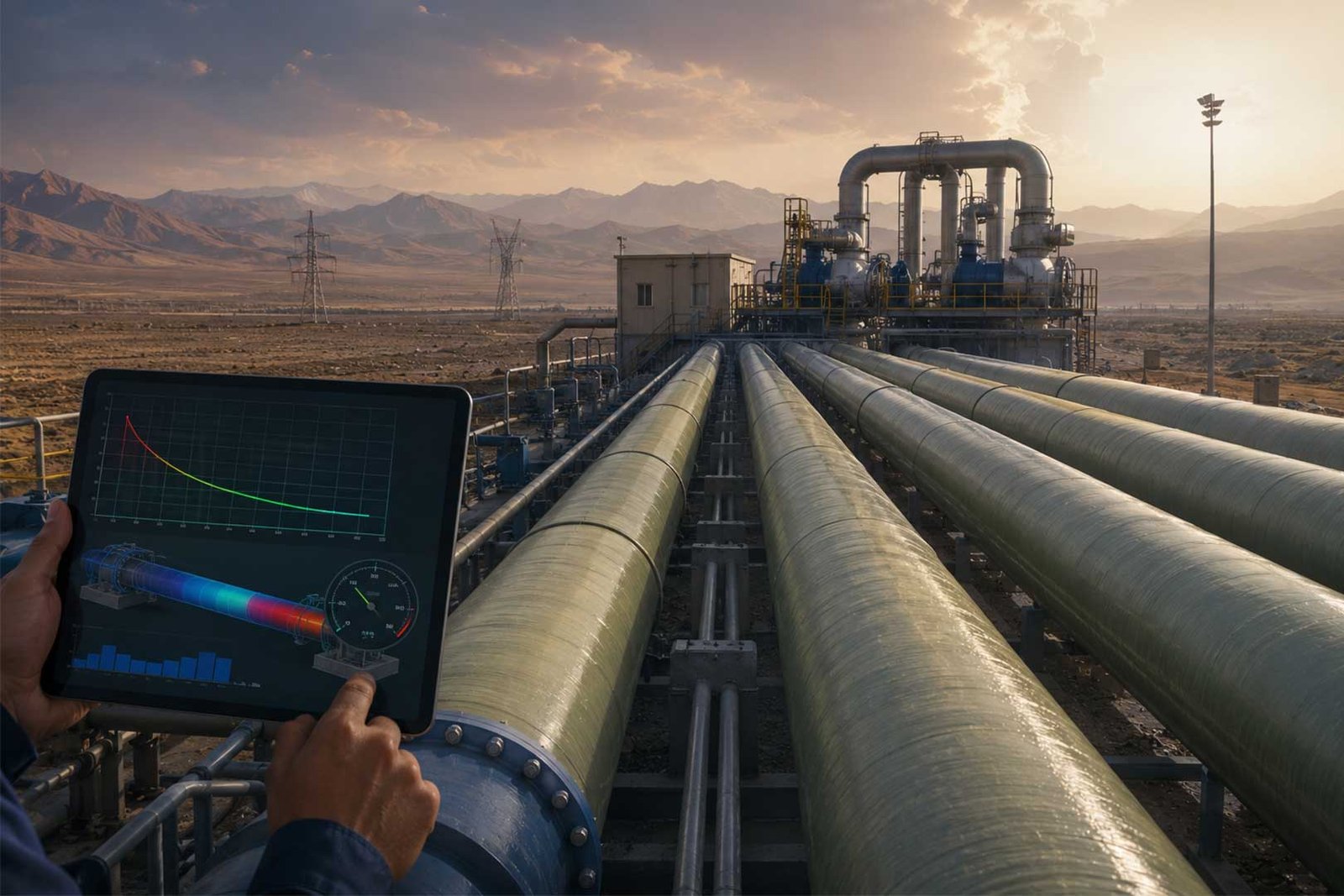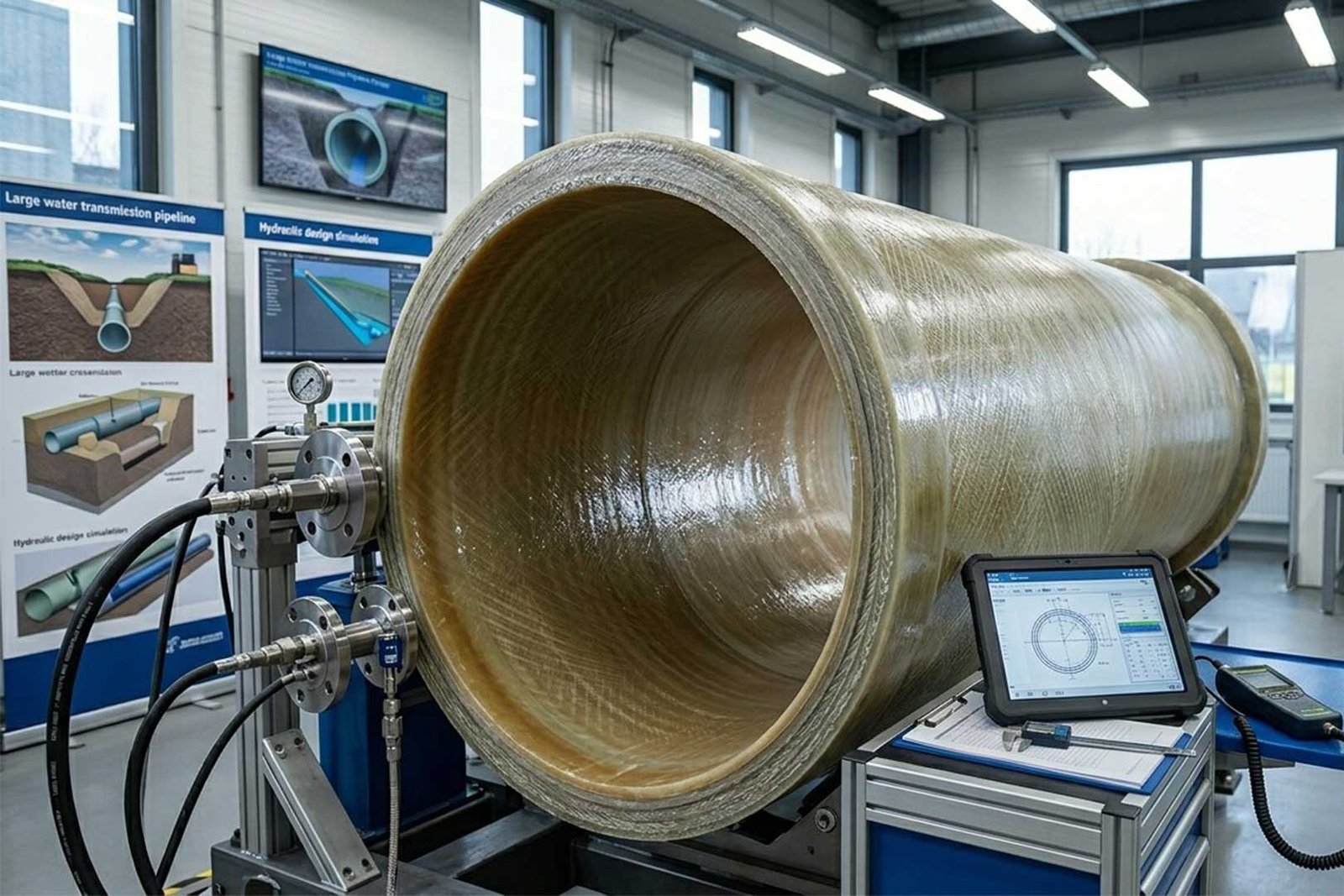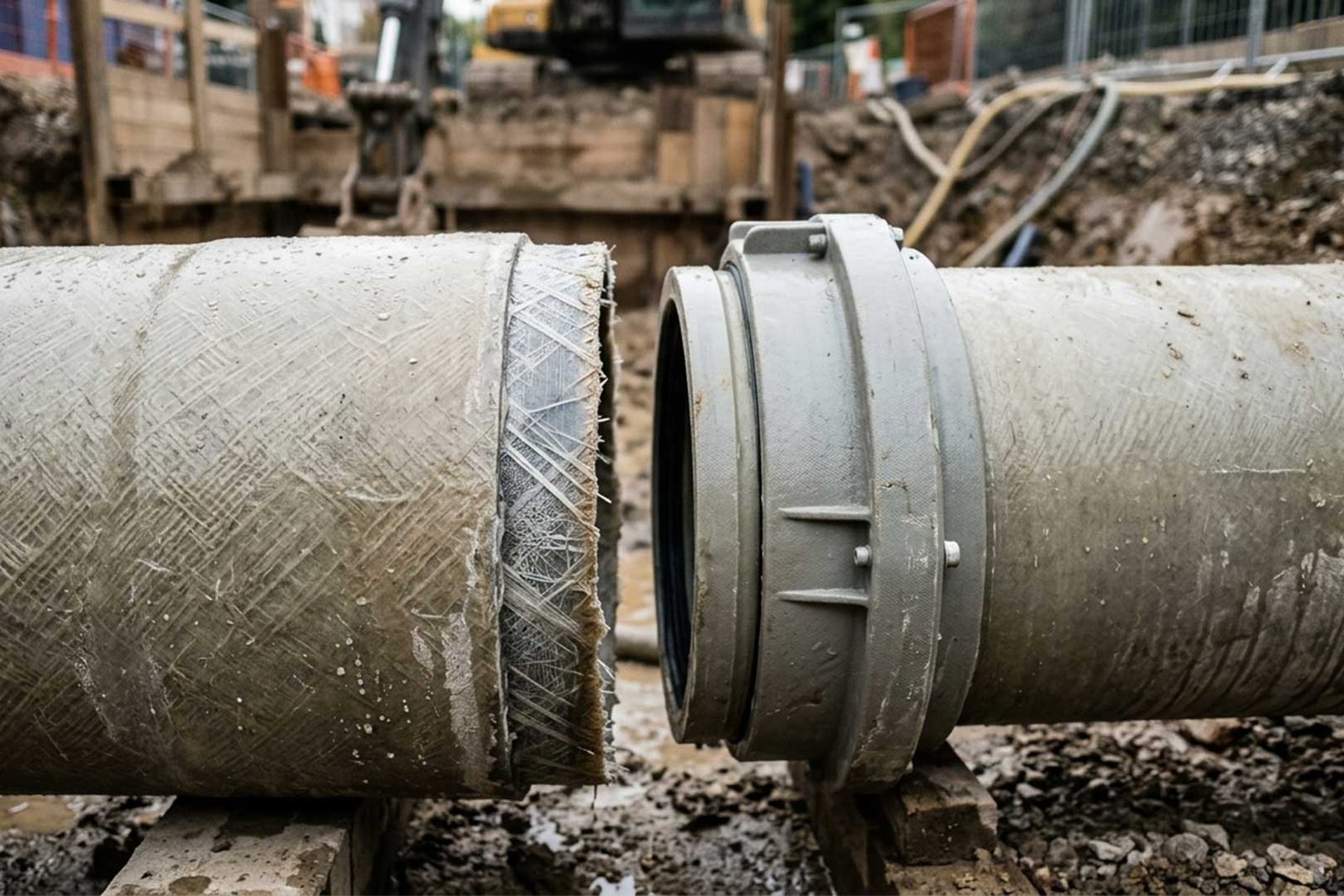
A GRP pipe can look perfect on paper and still struggle at the approval stage. Water transmission projects only move forward when owners, consultants, and QA/QC teams trust the full pipeline design, not just the pipe material. They want confidence that the system can perform reliably, pass technical reviews, install correctly, and operate safely for years.
In this article, we explain how value engineering and a Pipeline Technology Center help turn a GRP concept into an approval-ready pipeline solution with support from LineCore Pipes Group.
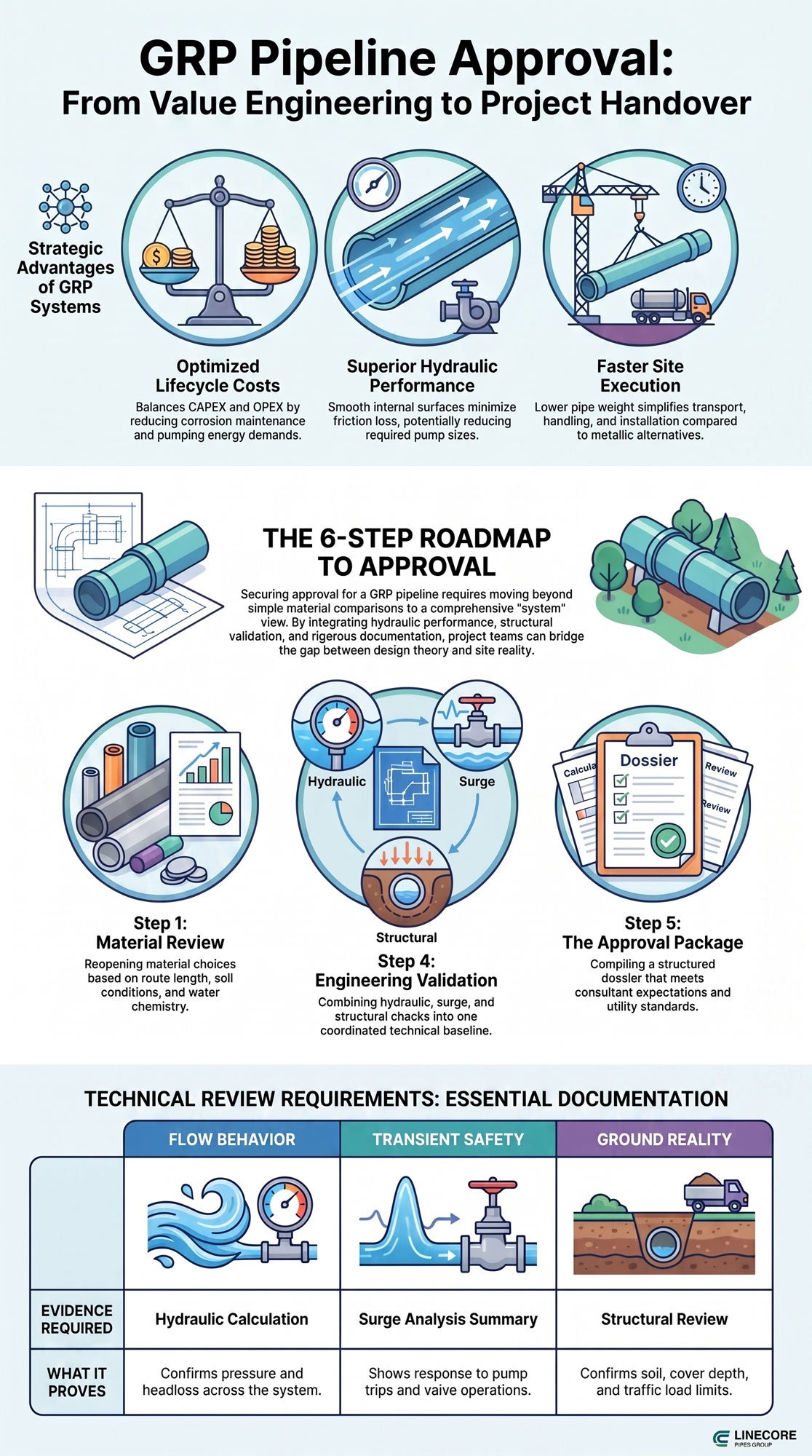
GRP pipeline design approval infographic (source: pipelinecoregroup.com)
What Value Engineering Means in GRP Pipeline Projects
Value engineering is not about to choose the cheapest pipe. Water transmission lines operate for decades, so material selection changes installation cost, maintenance exposure, pumping demand, and project risk long after construction ends.
Looking Beyond Initial Pipe Cost: Where GRP Pipes Shine!
Project teams usually compare GRP pipes with traditional materials such as steel, ductile iron, HDPE, or concrete systems. The review shows how CAPEX, installation time, corrosion condition, maintenance requirements, and costs of the pipe’s lifetime go on.
Hydraulic performance also changes project economics. Smaller internal diameter increases headloss through the line. Higher resistance means more pump power, higher energy use, and larger operating cost over time.
Why GRP Enters Water Transmission Evaluations
GRP draws attention in large transmission projects because it addresses several site conditions together. Lower pipe weight helps transport, trench work, and installation across long routes.
In seawater, raw water, or aggressive soils, GRP can also reduce dependence on coatings and cathodic protection systems used with metallic pipelines.
- Project Note: Final material selection still depends on pressure class, route conditions, burial depth, water chemistry, installation method, and utility approval requirements.
| Value Engineering Question | Why It Matters |
|---|---|
| Can the pipeline reduce corrosion-related maintenance? | Important for aggressive soils and seawater |
| Can hydraulic performance lower pumping energy? | Reduces long-term operating cost |
| Can one EPC team manage supply and installation? | Reduces interface risk |
Why GRP Pipes Enter the Shortlist for Water Transmission Lines
GRP pipes appear in many water infrastructure evaluations because they address several technical and construction concerns at the same time. Project teams use them in water transmission, irrigation, desalination, cooling water, and industrial pipeline systems where corrosion exposure, hydraulic performance, and long service life matter.
● Corrosion Exposure and Service Conditions
Metallic pipes mostly require coatings, linings, or cathodic protection in aggressive environments. While GRP systems can decrease the need for these protection measures in seawater lines, raw water systems, and corrosive soils.
● Transport and Installation Conditions
Large-diameter pipelines create transport and handling challenges across long routes. Lower pipe weight helps reduce lifting demand, trench congestion, and installation time on site.
● Hydraulic Performance Across Long Routes
The internal surface condition directly changes headloss through the pipeline. Lower friction loss can reduce pumping demand across long transmission distances, depending on flow conditions and pipe sizing.
● GRP Works as a Full Pipeline System
GRP is not only a pipe product. The system also includes joints, fittings, thrust control, bedding design, hydrotesting, and installation quality. In EPC projects, coordination becomes easier when one supplier supports both the product and the execution requirements.
From Material Selection to Approval-Ready Design
Approval does not come from a single document. It builds up step by step, where each technical layer must align before construction moves forward. Before getting into the main gates, check the table below at a glance to understand essential values in piping systems.
| Project Stage | Where issues usually appear | Engineering focus | Value signal (what improves with control) | What prevents delays |
|---|---|---|---|---|
| Concept stage | Material chosen too early without system view | Lifecycle comparison (GRP vs steel, DI, concrete) | Better CAPEX vs OPEX balance visibility | Early value engineering review |
| Basic design | Hydraulic and surge not fully checked | Flow, pressure, transient behavior | Lower pump sizing uncertainty | Complete hydraulic + surge study |
| Detailed design | Soil and structure not aligned | Burial depth, traffic load, deflection limits | More stable long-term pipe behavior | Geotechnical input early |
| Procurement | Submittals incomplete or inconsistent | Datasheets, standards, traceability | Faster consultant approval cycle | Structured approval package |
| Construction | Installation method not fully defined | Trenching, jointing, handling | Fewer site rework events | Clear installation method statement |
| Commissioning | Testing records unclear or missing | Hydrotest, flushing, pressure checks | Faster handover acceptance | Defined QA/QC + testing plan |
Gate 1: Functional and Commercial Value Engineering
The first check is simple: does GRP make sense against steel, ductile iron, concrete, or HDPE? Cost is part of it, but so are installation limits, corrosion exposure, service life, and construction risk. Early choices shape how the site will actually run.
Gate 2: Design and Standards Compliance
The design is tested against ISO, AWWA, ASTM, EN, or utility rules. Hydraulic behavior, surge cases, pressure class, stiffness, and burial assumptions all sit here. Small assumptions can shift pump load or pipe class.
Gate 3: Product and Material Acceptance
Some projects, especially potable water, need formal approvals. That means certificates, factory test records, traceability, and third-party documents where required.
For potable water pipelines, material approval often depends on compliance with NSF/ANSI 61, which verifies that components do not introduce harmful contaminants into drinking water systems.
Gate 4: Project Submittal and Handover Approval
All documents come together for review: design basis, hydraulic and surge reports, QA/QC plan, installation method, hydrotest records, commissioning files, and final handover dossier. Below, we provide a full range of what are musts for a well-designed approval package.
A well-designed approval package should include:
- Design basis report
- Hydraulic and surge review
- Pressure class and stiffness selection
- Joint and fitting selection
- Soil and installation assumptions
- Quality inspection and test plan
- Factory test records
- Site installation method statement
- Hydrotest and commissioning documents
- Final handover dossier
The Role of a Pipeline Technology Center
A Pipeline Technology Center is where a GRP pipeline moves from paper to something that can actually pass review and survive site conditions. It connects design decisions with how the project will really be built.
A Pipeline Technology Center turns assumptions into evidence.
- Material and System Selection: The team checks if GRP is really the right option for the pressure, route, soil, and water type. It is not about preference; it is about what holds up under the actual conditions.
- Hydraulic and Surge Support: Flow rate, pump behavior, pressure swings, and valve actions are reviewed so the line does not behave differently once it starts running.
- Structural and Installation Review: Soil class, trench depth, traffic loads, bedding, and deflection limits are checked against what the site will actually look like, not just drawings.
- Joint and Fitting Verification: Joints, bends, reducers, and transitions are matched with installation limits so crews do not face surprises during assembly.
- Testing and Quality Documentation: Factory records, inspection plans, traceability, and hydrotest requirements are aligned with what the owner will accept at handover.
- EPC Method Support: Storage, handling, trenching, installation, testing, and commissioning are connected into one workable sequence.
- Technical note: ISO guidance on composite pipelines treats the system as a whole, not just pipe material, including joints and installation conditions (ISO 14692, ISO.org).
For owners and consultants, the real value is simple. They see how design, materials, site execution, and documentation already fit together before construction begins.
What an Approval-Ready GRP Pipeline Package Should Include
Approval teams don’t read drawings one by one. They look for a complete story that shows how the pipeline will behave from design to commissioning. The checklist below helps structure that story in a way engineers and reviewers actually follow.
| What they look for | Document / Evidence | What it proves |
|---|---|---|
| Project logic | Design basis report | Shows assumptions, design limits, and operating conditions |
| Compliance path | Standards compliance matrix | Confirms ISO, AWWA, ASTM, EN, or utility requirements are covered |
| Flow behavior | Hydraulic calculation summary | Confirms pressure, flow rate, and headloss across the system |
| Transient safety | Surge analysis summary | Shows response to pump trips and valve operations |
| Ground reality | Structural / buried pipe review | Confirms soil, cover depth, and traffic load conditions |
| Material clarity | Pipe and fitting datasheets | Defines sizes, pressure class, stiffness, and joint type |
| Construction control | QA/QC plan or ITP | Sets inspection points and testing steps |
| Production proof | Factory test reports | Confirms manufacturing quality before shipment |
| Site execution | Installation method statement | Explains how crews will actually install the line |
| Final acceptance | Commissioning and handover dossier | Brings all tests and records into final approval package |
How LineCore Pipes Group Supports EPC Delivery
In EPC water transmission projects, gaps often appear between design intent, supply chain, and site execution. Pipe performance, installation method, and approval requirements do not always move in the same direction unless someone connects them early.
1. Engineering–Execution Alignment
LineCore Pipes Group works across that gap by linking GRP and composite pipe supply with engineering input from early value engineering through to final design confirmation. The scope extends to fittings, joints, and accessories, along with support for large-diameter transmission lines where installation and logistics need closer coordination.
2. Site and Documentation Support
On the project side, support also covers installation planning, method statements, QA/QC input, and commissioning documentation. This helps align technical requirements with what actually happens on site.
3. Coordinated Project Flow
The intent is simple: keep engineering decisions, procurement details, and construction steps within one connected flow so approval and execution stay consistent.
How a GRP Pipeline Moves from VE Study to Approval
Most GRP approvals start from a design that follows a familiar material path. Problems usually appear when design intent, site reality, and approval requirements do not align early.
Step 1: Initial Project Direction
At the beginning, designs often stay fixed on steel, ductile iron, or concrete based on past experience.
The work here is to reopen the material choice after reviewing flow, pressure, route length, soil conditions, water type, and construction schedule. This prevents early lock-in on a single option.
Step 2: Project Review
Project information is usually spread across different teams, which slows decisions and creates gaps in understanding. The solution is to collect and align hydraulic data, pressure limits, diameter needs, route conditions, and construction constraints into one clear baseline.
Step 3: Value Engineering Option
Alternative designs sometimes stay theoretical and do not reflect how the pipeline will behave on site. A GRP option is developed based on real installation and operational conditions, not only cost or material comparison.
Step 4: Engineering Validation
Hydraulics, surge, structural checks, joints, fittings, and installation methods are often reviewed separately. These elements are combined into one coordinated check so the full system behaves consistently under design and field conditions.
Step 5: Approval Package
Even technically strong designs can slow down in review when documentation is incomplete or scattered. A structured package is prepared that follows standards and matches consultant expectations from start to finish.
- What to Consider? As noted in Philadelphia Water Department, utility approval is typically a formal review cycle where engineering drawings, calculations, and construction methods are checked before construction release is granted.
Step 6: Execution Support
Some projects lose alignment after approval when construction starts. Support continues through manufacturing, delivery, installation guidance, testing, commissioning, and final handover so the design intent remains intact on site.
Common Questions Owners Ask Before Approving GRP Pipelines
Approval discussions usually slow down at a few recurring questions. These come from owners, consultants, and QA teams trying to reduce uncertainty before they commit.
- Is GRP suitable for water transmission lines?
Yes, it is used in water transmission, irrigation, desalination, cooling water, and industrial systems. The real condition is always the same: the design must match pressure, soil, water type, and installation requirements.
- Is GRP always cheaper than steel or ductile iron?
Not always on purchase price. The difference shows up during installation and operation. Lower weight, corrosion resistance, smoother hydraulics, and reduced maintenance can change total project cost over time.
- What makes a GRP pipeline design ready for approval?
A complete set of design basis, standards alignment, hydraulic and structural checks, product data, test records, installation method, QA/QC plan, and commissioning steps. Missing one of these usually triggers review delays.
- Why does a Pipeline Technology Center matter?
Because it connects design assumptions with product data, testing, and construction planning. Without that link, approval becomes a back-and-forth process instead of a clear package.
- Can LineCore Pipes Group support beyond pipe supply?
Yes. The work usually extends into engineering support and EPC coordination for water transmission projects, not only material delivery.
Final Wrap-Up: GRP Approval Works as a System, Not a Claim
GRP can add value in water transmission projects, but approval depends on evidence, testing, documentation, and how the system will actually be built and operated. A Pipeline Technology Center connects these parts into one coordinated package. LineCore Pipes Group supports projects from value engineering through design, supply, EPC execution, testing, and handover.
Planning a water transmission project? Send your route, flow rate, pressure, soil conditions, and project standards. The team can map out a GRP value engineering option for your line and highlight where the design can be simplified or improved.
about
The Author

Farshid Tavakoli is a seasoned professional in engineering and international trade. Holding degrees in Electrical Engineering, Mechatronics, and a Doctorate in Business Administration (DBA) from the University of Lyon, he also has a strong background in industrial automation and production line technologies.
For over 17 years, he has led an international trading company, gaining deep expertise in commercial solutions tailored to industrial needs. With more than 8 years of active involvement in infrastructure development, he specializes in the supply of electromechanical equipment for water and wastewater treatment plants and transfer projects.
Together with comapny expert team, he now provides consultancy and integrated solutions for sourcing and implementing complex infrastructure projects across the region.