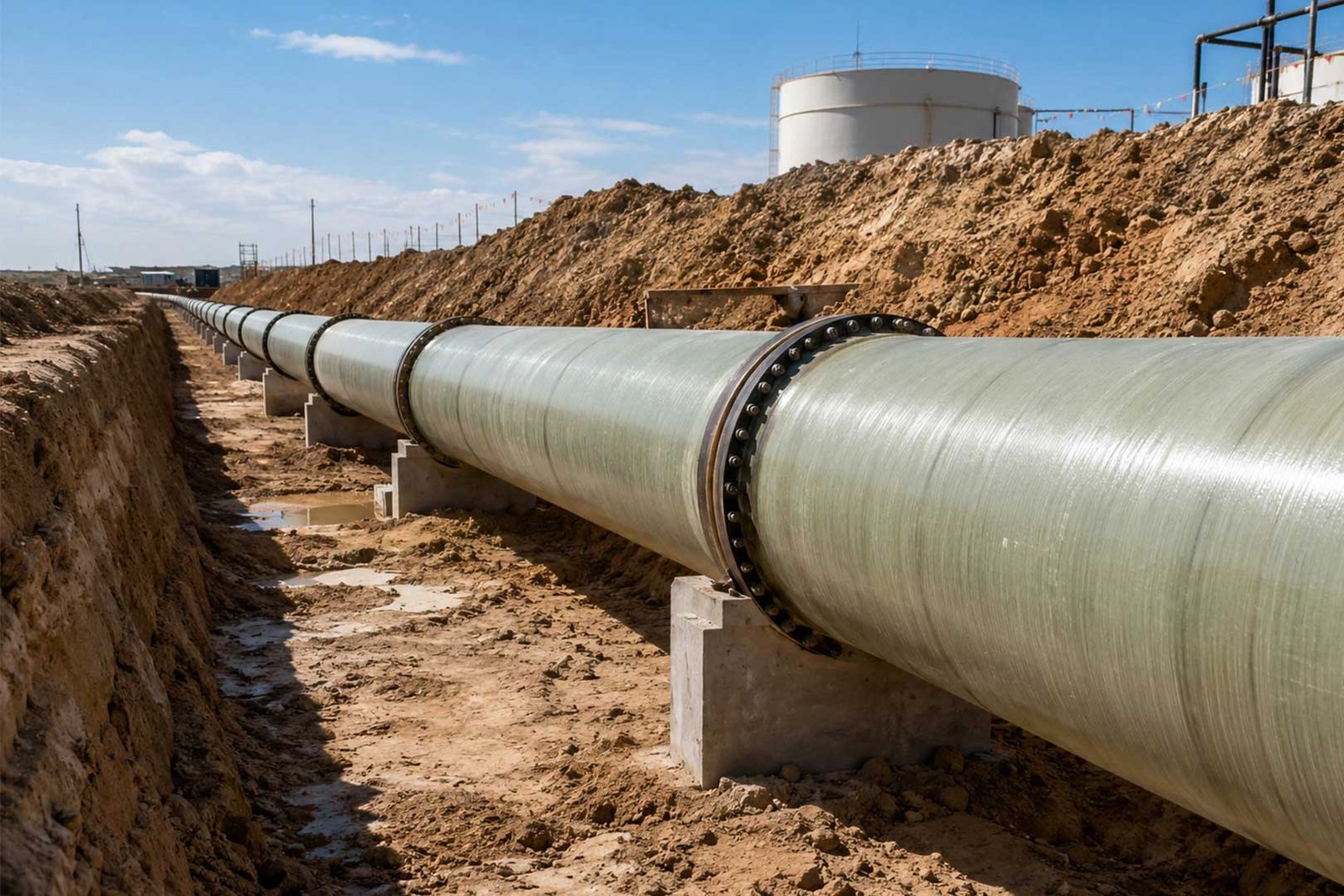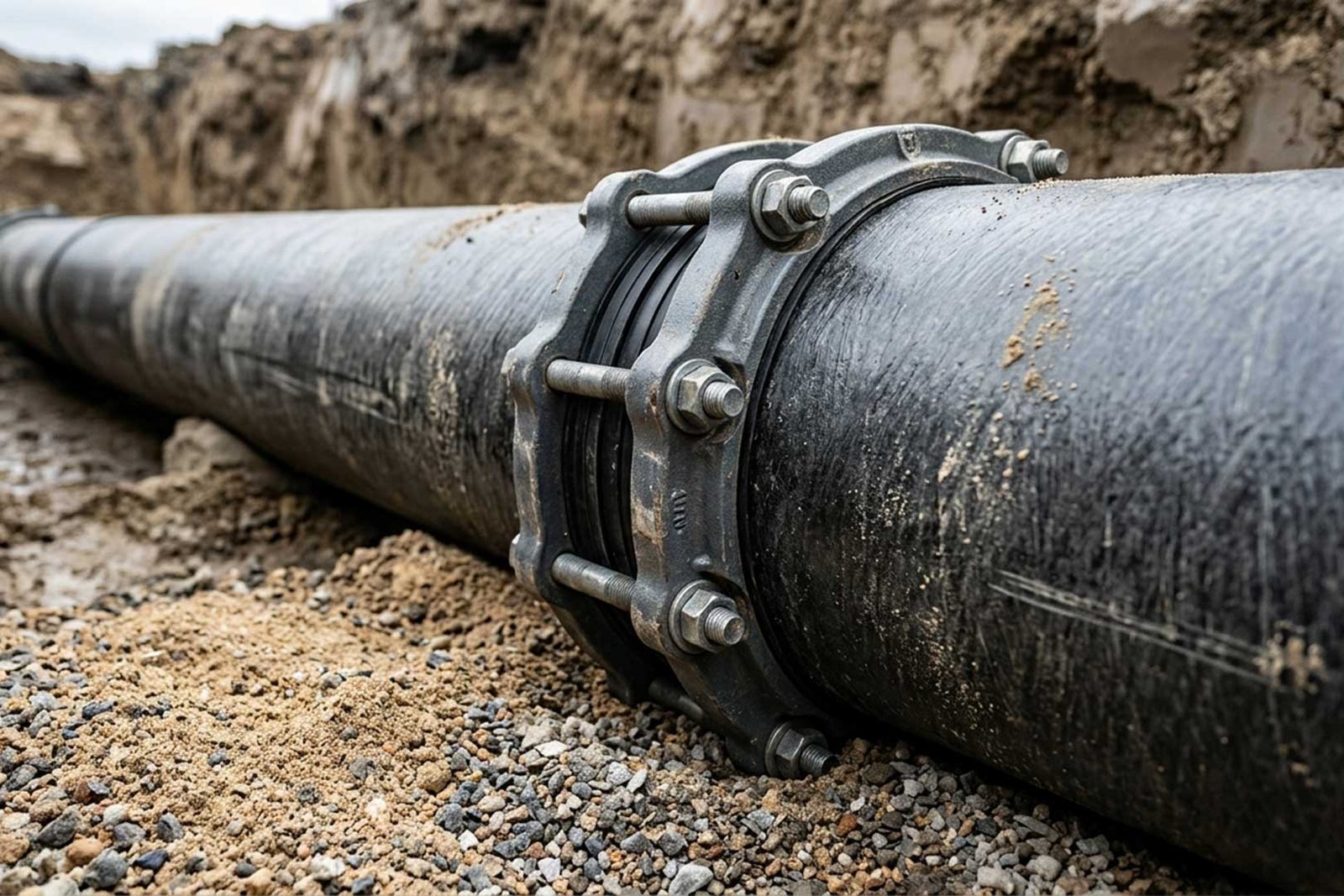
Most piping project owners go wrong by thinking of the design dilemmas as the only chance of failure. Problems usually appear where responsibility shifts from one team to another. A design assumption does not reach the factory. Pipe deliveries arrive before trench sections are ready. Site crews install joints without the same QA/QC criteria used during manufacturing. The project slows down long before commissioning starts.
This article focuses on interface gaps in water transmission EPC projects before handover. LineCore Pipes Group connects design, manufacturing, supply, installation, and technical coordination in one chain.
What Is Interface Risk in GRP Pipeline Projects?
Most pipeline problems start at the connection point between teams, not inside one isolated activity. In GRP transmission lines, technical gaps usually appear when information moves from engineering to manufacturing, procurement to site, or supplier to installer.
Where Interface Risk Starts
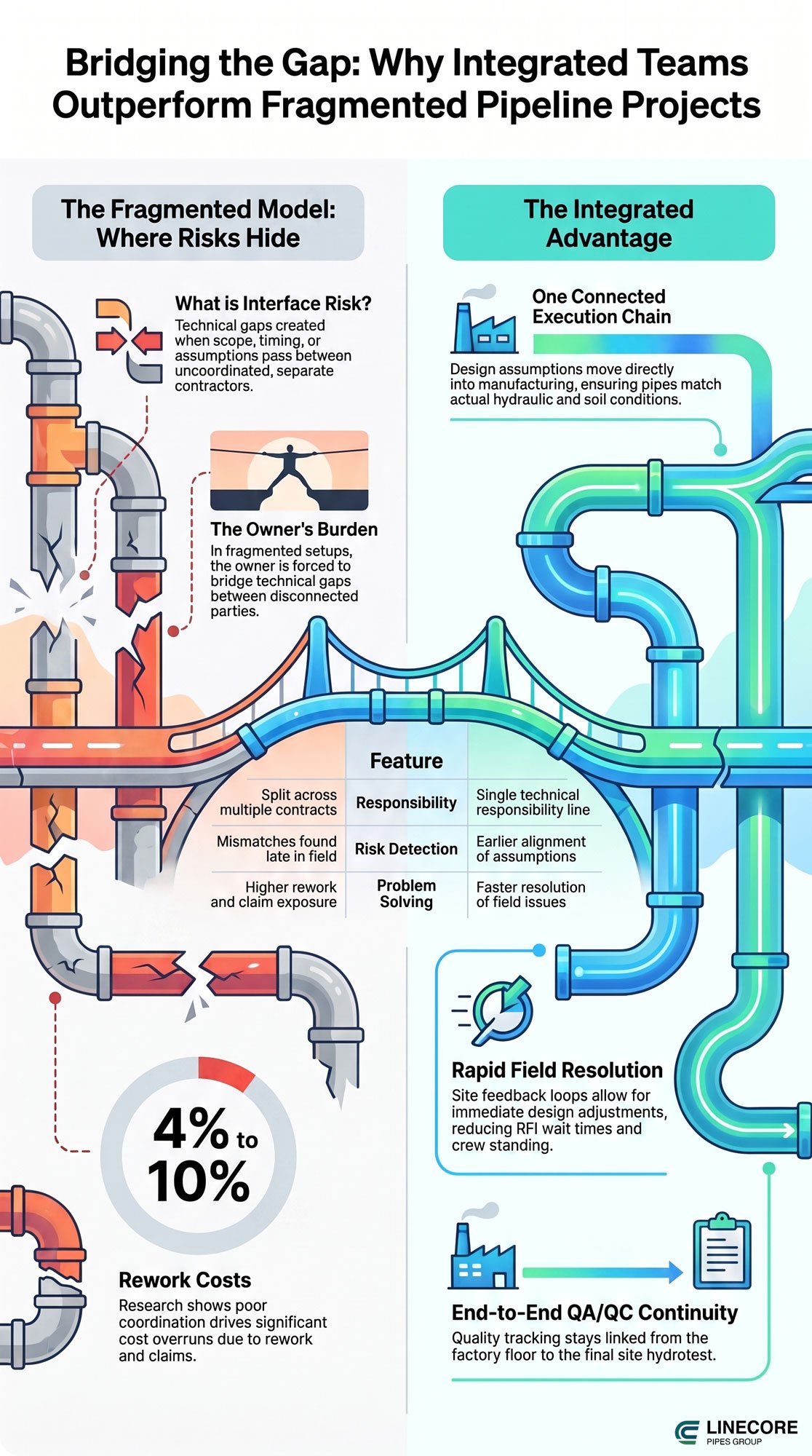
Interface risk appears when scope, timing, or technical assumptions pass between separate work packages without full coordination. In GRP and composite pipeline projects, this can happen between:
- design and manufacturing
- procurement planning and trench readiness
- factory QA/QC and site QA/QC
- delivery sequencing and installation sequencing
- field feedback and future production adjustments
A pipeline may meet the specification on paper while the project still struggles in the field. The pipe can leave the factory compliant, yet late route revisions, wrong fitting sequences, poor joint installation, or mismatched QA/QC criteria can still create leakage, rework, hydrotest delays, and contractual disputes across the EPC chain.
Interface Risk Is Different from Handover Risk
Many teams connect pipeline risk with commissioning and final acceptance. In practice, most execution problems appear much earlier, while engineering, manufacturing, procurement, logistics, and installation still move in parallel.
● Interface Risk Happens Before Handover
Handover risk belongs to the transition from construction to operation. Interface risk belongs to active project execution. It starts when the factory receives incomplete design assumptions, when delivery sequencing does not match trench readiness, or when site crews apply different GRP jointing and QA/QC practices from the factory team.
● What These Gaps Cause in the Field
These gaps create direct field consequences. A late route revision can stop production while new fittings are reviewed. Incorrect joint handling may damage sealing surfaces before hydrotest. Slow RFI response can leave installation crews waiting across multiple chainages.
➔ Why Industry Standards Treat GRP Pipelines as One Connected System
The industry guidance in AWWA treats GRP pipelines as one connected system linking design, soil conditions, manufacturing, installation, and field inspection because buried pipe performance depends on all phases working together
The Traditional Fragmented Model Why Risk Falls Back on the Owner
Large water transmission projects often divide design, supply, and installation into separate contracts. Each party works within its own scope, but the pipeline still behaves as one system once construction starts.
When Design Supply and Installation Are Split
In a fragmented setup, coordination sits with the owner. One engineering consultant defines design assumptions, a pipe manufacturer produces to specification, a logistics contractor manages delivery, and a civil contractor carries out installation with a separate QA/QC team.
- Technical Insight: When site problems appear, each party usually looks at its own scope first. Engineering questions installation, the supplier refers to factory records, installers question drawings, and the owner ends up closing the coordination gap.
Once problems appear, responsibility spreads and technical alignment weakens during execution.
The table below shows how fragmented and integrated setups behave differently in real projects, especially when design intent has to match manufacturing and site conditions under pressure.
| Fragmented Model | Integrated Model |
|---|---|
| Separate contracts across disciplines | One connected execution chain |
| Owner bridges technical gaps | Single technical responsibility line |
| Mismatches found late | Earlier alignment of assumptions |
| Higher rework and claim exposure | Faster resolution of field issues |
| Weak flow of site feedback | Continuous feedback into engineering |
Large EPC datasets show that poorly aligned interfaces between stakeholders are a primary driver of claims and schedule pressure across major projects, with disputes escalating when technical responsibility is split across multiple contracts (Source: Archdesk / HKA CRUX Insight).
Interface Gap 1: Design to Manufacturing
Small design assumptions can create large site problems once manufacturing starts. In GRP pipelines, the factory does not only produce pipe dimensions. It produces pipes for specific hydraulic loads, trench conditions, joint behavior, and installation methods.
Furthermore, academic construction research of MDPI identifies interface gaps between project participants as a systematic source of rework and performance loss, especially when design, procurement, and construction decisions are not coordinated as one flow.
When Engineering Assumptions Must Become a Buildable Pipe
GRP manufacturing depends on technical inputs from the design stage, including:
- Pressure and surge conditions
- Stiffness class and burial depth
- Soil support and thrust restraint
- Joint type, fittings, and route geometry
- Chemical exposure and operating temperature
A drawing alone does not give enough production context. If hydraulic or geotechnical assumptions change late, the pipe may still meet specification while becoming difficult to install or unsuitable for actual trench conditions.
When a Reliable Supplier Reduces the Design Risks
LineCore Pipes Group connects engineering and manufacturing before pipe production starts. Hydraulic performance data, fitting and jointing methods, QA/QC requirements, and installation operations will move into production planning early, which can decrease the risk of mismatches between factory output and field conditions.
Interface Gap 2: Procurement to Site Readiness
Pipe supply only works when delivery matches actual installation progress. In long transmission projects, timing matters as much as quantity. One missing fitting can stop installation across several chainages, while early bulk delivery can create storage and handling problems before trench work even starts.
Pipes Arrive Before the Trench Is Ready
In fragmented projects, deliveries sometimes reach the site before excavation, bedding, or access roads are ready. Pipes then sit in temporary laydown areas longer than planned, increasing handling exposure and storage congestion.
Delivery Sequence Does Not Match Installation Sequence
Installation crews rarely need materials in simple purchase-order order. They need them according to hydrotest sections, crossings, valve chambers, and active trench progress. Out-of-sequence fittings or missing specials can stop work across multiple crews.
Why Integrated Coordination Matters
An integrated delivery plan connects production schedule, trench readiness, site access, installation sequence, hydrotest planning, and QA/QC hold points. This makes manufacturing and field progress to go through the same timeline instead of operating as separate activities.
Interface Gap 3: Supplier to Installer
GRP pipe performance depends as much on installation quality as factory production. A compliant pipe system can still fail in service if joints, handling, bedding, or field workmanship fall outside acceptable limits.
Joint Integrity Depends on Site Practice
GRP installation requires controlled handling from unloading to hydrotest. Crews must protect spigot and bell ends, position gaskets correctly, control joint deflection, and follow proper bedding and backfill practice.
A coupling may leave the factory fully compliant but still leak if the sealing surface is scratched during unloading or if the joint exceeds allowable angular deflection during installation.
When Responsibility Becomes Fragmented
In fragmented projects, joint failures often turn into disputes between supplier and installer. The manufacturer points to factory testing, while the installer questions product suitability or drawings.
Real-World Project Example
At the NOMAC Sirdarya power plant project, engineers checked the GRP installation after some dilemmas appeared in construction. The evaluation showed how problems are related to joint areas, trench support, backfill quality, and installation control on site.
What happened The case showed a major GRP interface problem. The pipe itself was not the only problem. Long-term performance also represents how workers handled installation, jointing system, supervision, and hydrotesting in the field. Dynaflow GRP Installation Assessment Case Study
Interface Gap 4: Factory QA/QC to Site QA/QC
GRP pipeline quality is not fixed at the factory. It is shaped again on site, where installation conditions control how the system actually performs.
1. Factory QA/QC Defines the Pipe Before Release
Factory QA/QC checks materials, dimensions, stiffness class, pressure class, visual condition, curing, traceability, and test certificates. This indicates how the information will be aligned with the manufacturing conditions
2. Site QA/QC Defines Installed Performance
Site QA/QC covers trench condition, bedding, joint inspection, backfill and compaction, deflection control, hydrotesting, NCRs, repair records, and as-built data. It verifies installation quality in real conditions.
3. When Factory and Site Quality Do Not Align
A compliant pipe can still fail if bedding is uneven or joints are installed outside tolerance. GRP performance depends heavily on soil support and installation practice.
4. QA/QC Continuity Across Factory and Site
LineCore Pipes Group is your reliable partner to link factory records with site inspections so quality tracking continues through installation, not only production.
Design Changes: Who Owns the Decision When Site Conditions Change
Site conditions rarely follow drawings exactly. Soil can change across chainages, buried utilities may appear without warning, and access restrictions can force route or depth revisions during construction.
When Design Changes Move Through Multiple Parties
In a fragmented model, even a small field change can slow the whole project. The installer sends an RFI, the owner forwards it to the designer, the supplier reviews the revision, pricing returns for approval, and only then can work continue. Meanwhile, crews wait, production schedules shift, and pressure builds across the site.
When Technical Teams Work Together
In an integrated setup, engineering, manufacturing, and site teams review the issue together and move directly toward a workable answer.
- Site findings move quickly into design review
- Pipe details and fittings update before delays spread across installation crews
- Manufacturing changes follow actual trench progress
- Site teams receive faster technical direction for field adjustments
Site Feedback Loop Turning Field Data into Better Manufacturing and Installation
Good pipeline delivery depends on feedback between site, engineering, manufacturing, and QA/QC. Problems found in the field should move back into the project while construction is still active, not after completion.
What Site Teams Report
Crews on the real site can discover more than design assumptions. These are what factors usually reveal when installation goes on.
- joint inspection problems
- bedding and compaction issues
- delivery access restrictions
- fitting mismatches
- hydrotest failures
- deflection or alignment concerns
How Feedback Improves Execution
When field observations return into the same technical chain, teams can adjust delivery sequence, fitting details, inspection points, installation guidance, and handling methods before the same issue spreads across later sections of the project.
How Integration Reduces Claims Rework and Delay
Most pipeline delays do not start with one major failure. They grow through small coordination gaps between design, manufacturing, delivery, and installation teams.
Less Finger-Pointing Faster Decisions Fewer Rework Loops
An integrated design, manufacture, supply, and install model does not remove all project risk. It reduces interface problems by keeping technical decisions, production, and field execution connected through the same workflow.
- Design Interpretation Disputes: Site and engineering teams work from the same project assumptions from the beginning.
- Late RFIs: Field questions move through fewer technical layers before crews receive answers.
- Site Waiting Time: Installation workers spend less time waiting for approvals or missing fittings.
- Delivery Integrity: Material arrival is based on real trench progress and hydrotest sections more closely.
- Joint Repair Events: Installation methods will be closer to actual product and joint requirements.
- Hydrotest Retests: Fewer installation mistakes reach the final testing stage.
- Repeated NCRs: Site issues become visible earlier before they repeat across multiple sections.
- Material Damage: Storage and handling follow real site conditions instead of fixed delivery dates.
- Variation Claims and Rework: Fewer mismatches appear between drawings, manufacturing, and field installation.
Research referenced by ASCE shows that rework in construction projects can reach 4% to 10% of total project cost once coordination and execution problems start spreading across the job.
What Owners Should Ask Before Choosing a GRP Pipeline Partner
Many pipeline problems start long before installation defects appear on site. They begin when design assumptions, manufacturing decisions, delivery planning, and field execution move through disconnected teams without one clear technical chain between them.
Below, we provided a checklist for owners to make sure if the project
- Does the supplier understand the hydraulic and structural assumptions behind the pipe specification?
- Can the manufacturer support pressure class, stiffness class, fittings, and joint selection from the design stage?
- Does delivery sequencing follow trench readiness and installation progress?
- Are installation crews trained in GRP handling, jointing, bedding, and backfill practice?
- Is factory QA/QC connected to site QA/QC records?
- Can inspection records and test certificates be traced from production to installation?
- Who handles technical decisions when field conditions require design changes?
- How do RFIs, NCRs, repairs, and hydrotest results return into engineering and production review?
- Can one technical team support design, manufacturing, supply, installation, and EPC coordination together?
- What project references support this experience in water transmission work?
One Question Usually Shows the Bigger Problem
If these answers come from different companies, the owner may still carry the coordination risk between design, manufacturing, delivery, and installation teams.
Why LineCore Pipes Group Works as a Total Solution Maker
Water transmission projects face fewer coordination problems when design, manufacturing, delivery, and installation follow the same technical direction. LineCore Pipes Group works across design, GRP pipe manufacturing, fittings, documentation, supply planning, site coordination, QA/QC, installation, and EPC activities as one connected project partner for water transmission lines.
about
The Author

Farshid Tavakoli is a seasoned professional in engineering and international trade. Holding degrees in Electrical Engineering, Mechatronics, and a Doctorate in Business Administration (DBA) from the University of Lyon, he also has a strong background in industrial automation and production line technologies.
For over 17 years, he has led an international trading company, gaining deep expertise in commercial solutions tailored to industrial needs. With more than 8 years of active involvement in infrastructure development, he specializes in the supply of electromechanical equipment for water and wastewater treatment plants and transfer projects.
Together with comapny expert team, he now provides consultancy and integrated solutions for sourcing and implementing complex infrastructure projects across the region.