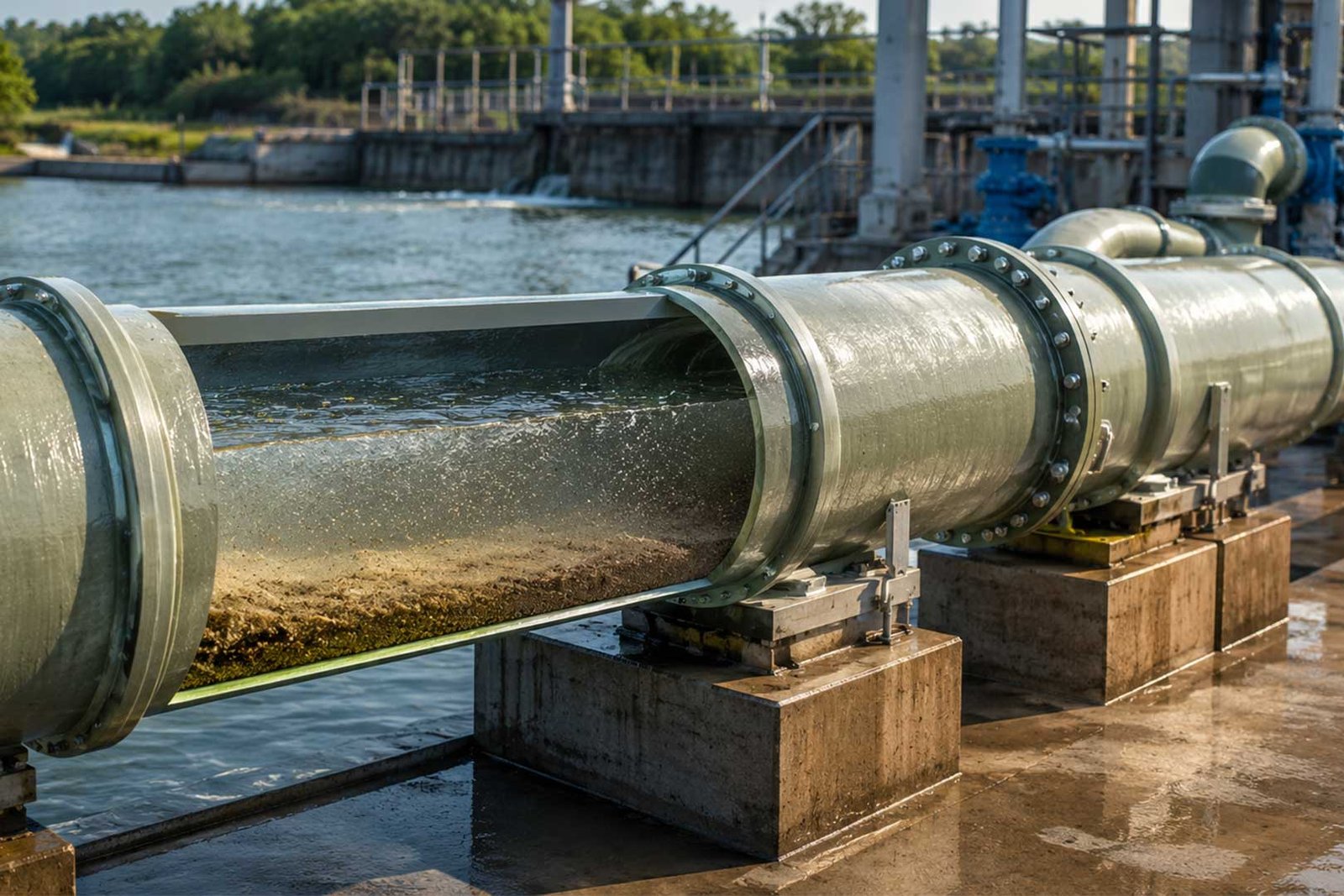
If you’re asking whether GRP pipes can handle sand, the honest answer is yes, but only when the solids are understood and the pipeline is designed around them.
GRP pipes can handle sand, sediment, and suspended solids in many raw water, stormwater, wastewater, intake, and water transmission projects, but standard GRP should not be treated like a mining slurry pipe by default (source: ResearchGate).
Stay with us in this post to see when GRP works, when it becomes risky, and what project data helps you choose the right pipe system, not just the right pipe material. Linecore Pipes Group supports that decision through GRP and composite pipe supply with EPC project capability.
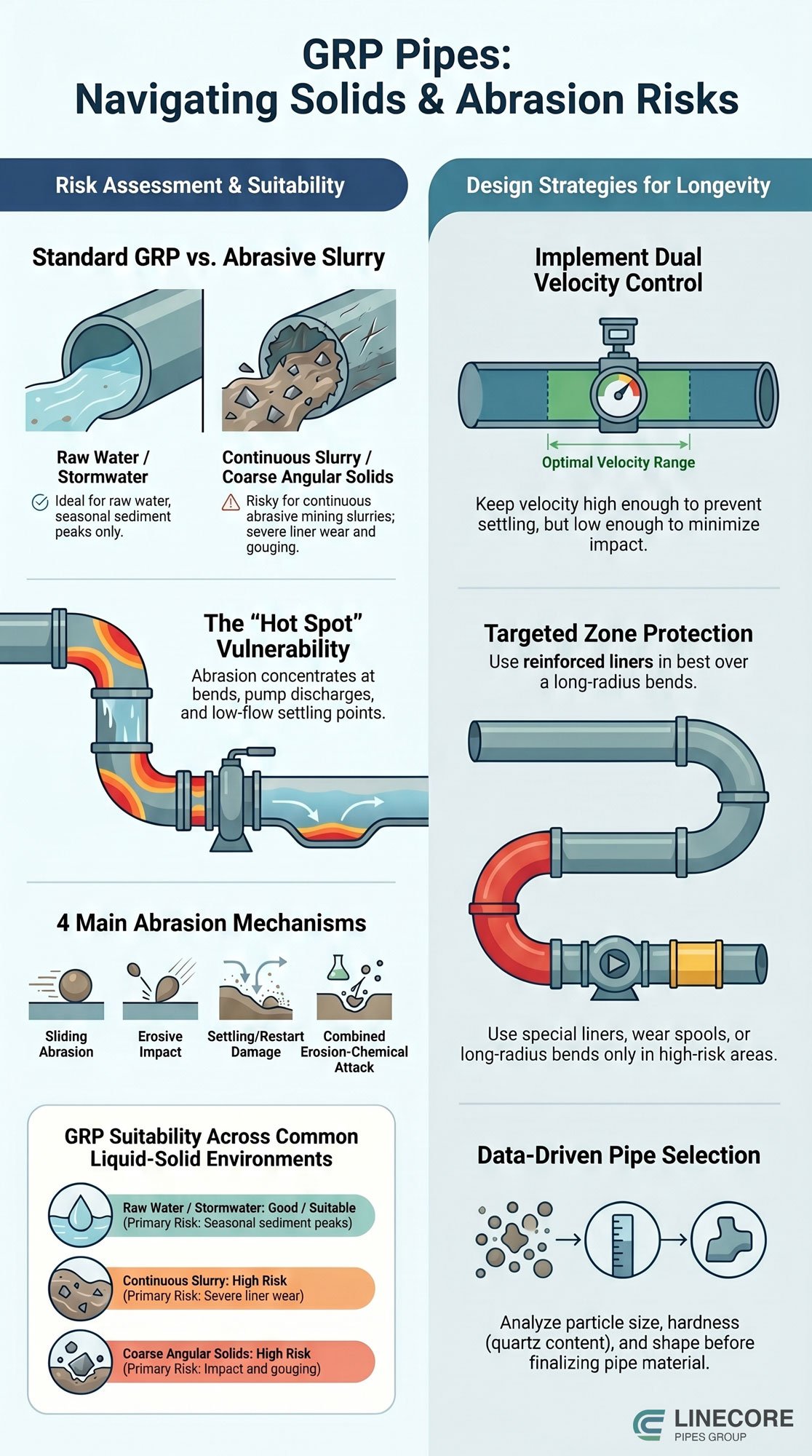
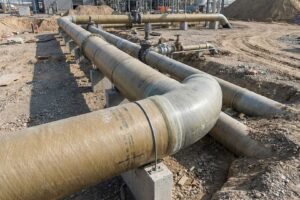
GRP pipes solids transport infographic (source: pipelinecoregroup.com)
Quick Answer: When GRP Works — and When It Doesn’t
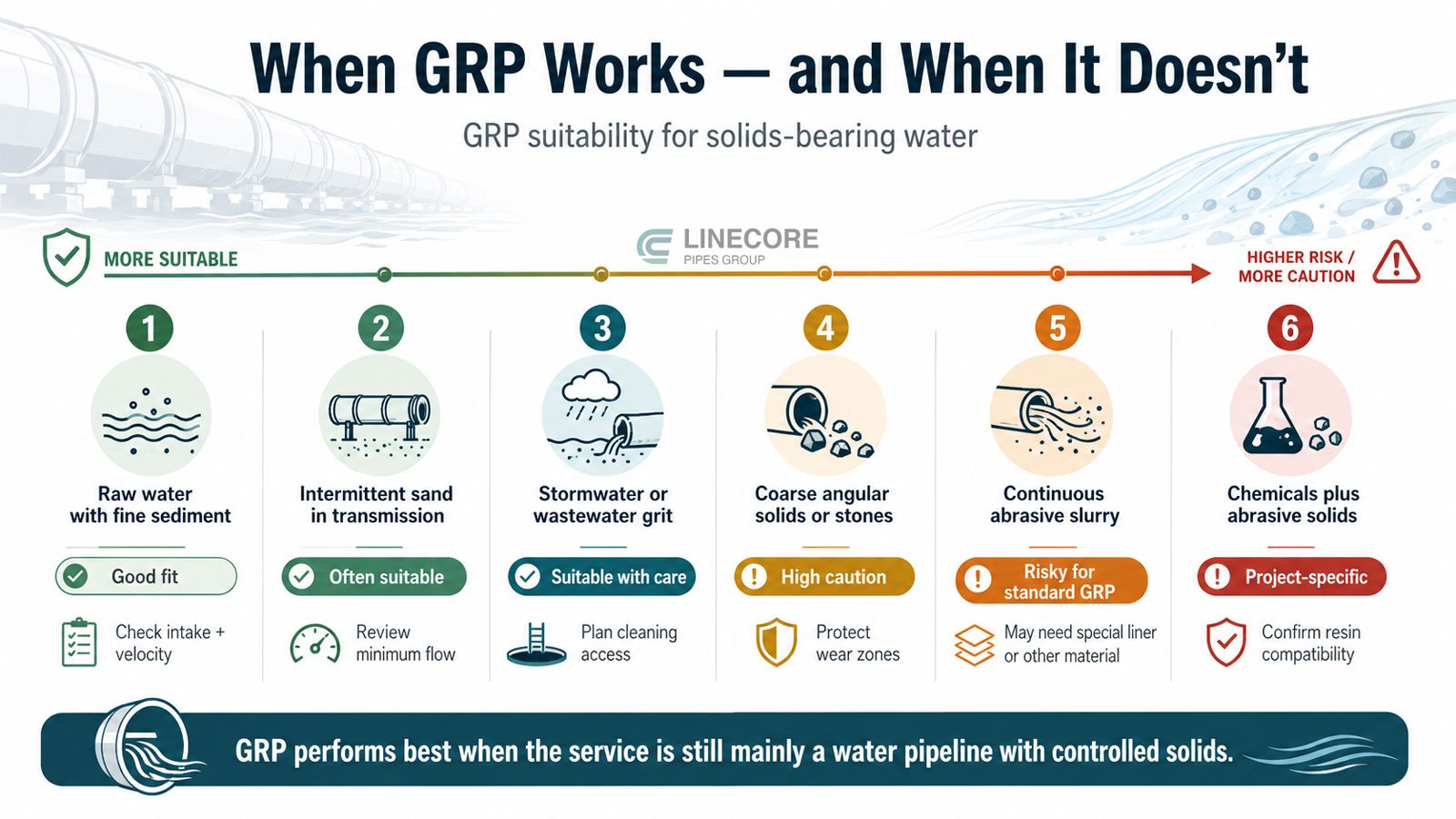
GRP works best when the service is still mainly a water pipeline with controlled solids. It becomes risky when the service behaves like a continuous abrasive slurry line.
| Situation | GRP Suitability | Main Risk | What You Should Check |
|---|---|---|---|
| Raw water with fine sediment | Good | Seasonal sediment peaks | Intake + velocity |
| Intermittent sand in transmission | Often suitable | Low-flow settling | Minimum flow |
| Stormwater or wastewater grit | Suitable with care | Invert wear | Cleaning access |
| Continuous abrasive slurry | Risky for standard GRP | Severe liner wear | Special liner/material |
| Coarse angular solids or stones | High risk | Impact + gouging | Wear sections |
| Chemicals plus abrasive particles | Project-specific | Liner attack | Resin compatibility |
Why GRP Can Perform Well in Solids-Laden Water
GRP is a composite pipe system, not one solid wall. That matters because the pipe is designed in layers. The inner liner acts as the first wear and chemical barrier. Behind it, the structural glass-reinforced layers carry pressure and external loads.
For you, this means GRP performance depends on more than the pipe name. You need to know whether the liner, resin, velocity, fittings, and operating conditions match the real service. GRP can work well in solids-laden water because:
- The smooth internal surface helps reduce friction and unnecessary turbulence.
- The pipe is corrosion-resistant, so it avoids the erosion-corrosion problem common in metallic pipes.
- According to NHC, lower roughness can help maintain hydraulic efficiency over time.
- The liner can be selected or upgraded when the service needs more chemical or wear resistance.
But smooth bore and corrosion resistance do not make GRP abrasion-proof. If solids settle, slide, or hit the liner at high velocity, wear can still happen.
The Main Abrasion Mechanisms in GRP Pipelines
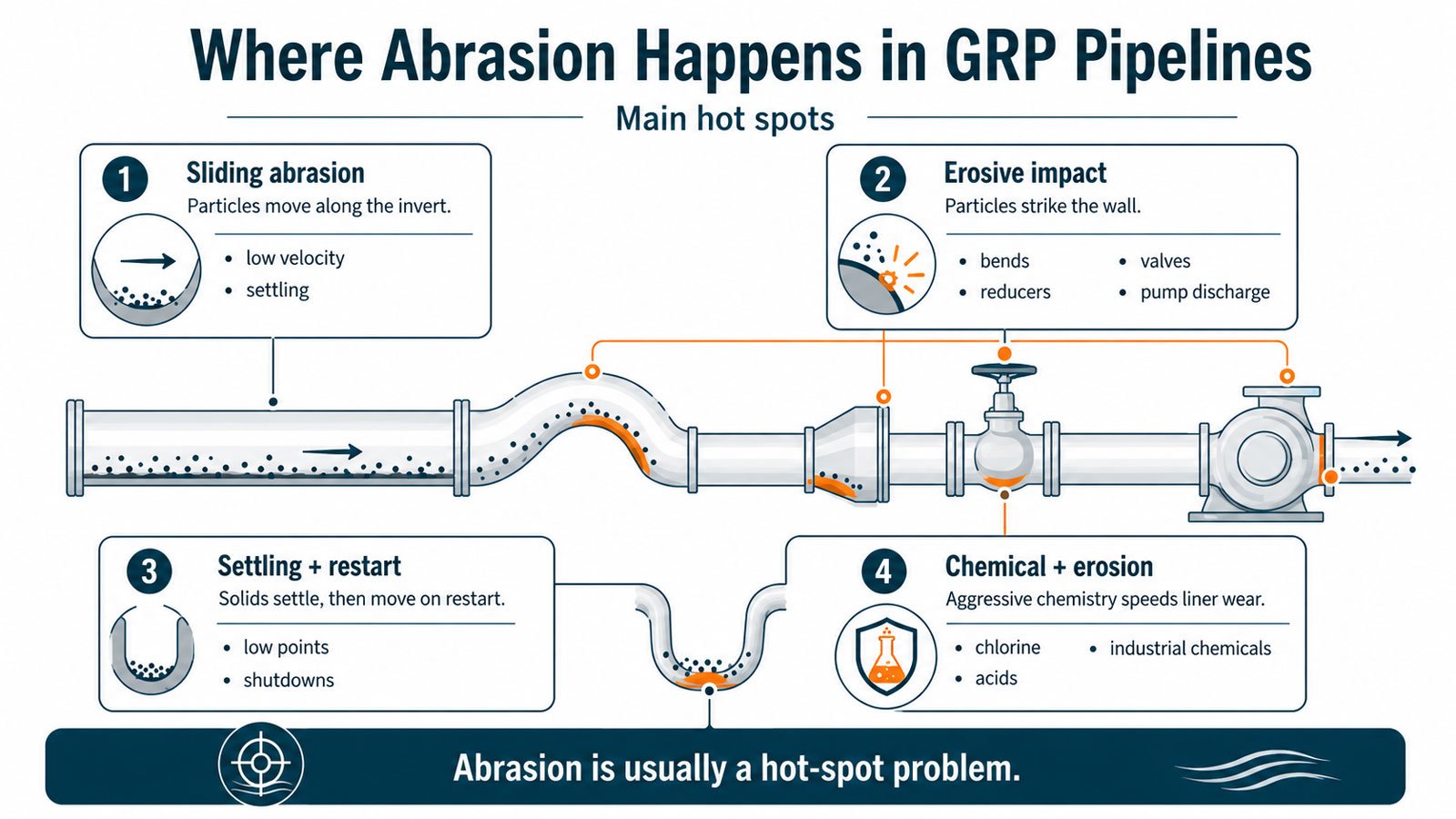
Abrasion in GRP pipelines is usually not spread evenly across the whole line. It often shows up in specific hot spots where solids settle, slide, strike the wall, or combine with aggressive chemistry. To understand the risk properly, you need to look at four main mechanisms:
Sliding abrasion
Sliding abrasion happens when particles move along the bottom of the pipe, especially when velocity is too low and solids start to settle. You should watch for low-flow operation, long shutdowns, low points, and sections where solids may move as bed load.
Erosive impact
Erosive impact happens when particles strike the pipe wall instead of simply moving with the water. It is usually worse at bends, reducers, valves, outlets, tees, pump discharge zones, and turbulent areas.
Settling and restart damage
Settling and restart damage happens when solids drop out of the flow during shutdown or low-flow periods, then move again when the system restarts. That is why you need to check real operating conditions, not only normal flow.
Erosion plus chemical attack
Erosion plus chemical attack happens when the fluid both carries solids and weakens the liner chemically. Aggressive fluids, oxidants, chlorine, acids, industrial chemicals, or wastewater chemistry can weaken the liner while solids mechanically wear it.
The Role of Solids Characteristics
Do not make the decision based only on the word “sand.” A small amount of fine suspended sediment is very different from coarse angular sand, gravel, stones, or mining tailings. Before Linecore recommends a pipe system, you need to understand:
- Particle size distribution
- Percentage of sand, silt, gravel, or stones
- Particle shape: rounded or angular
- Particle hardness, especially quartz or mineral sand
- Solids concentration
- Seasonal or event-driven solids loading
- Whether solids stay suspended or move as bed load
If the solid data is weak, the pipe recommendation is weak too.
Hydraulic Design: Velocity Must Be Controlled
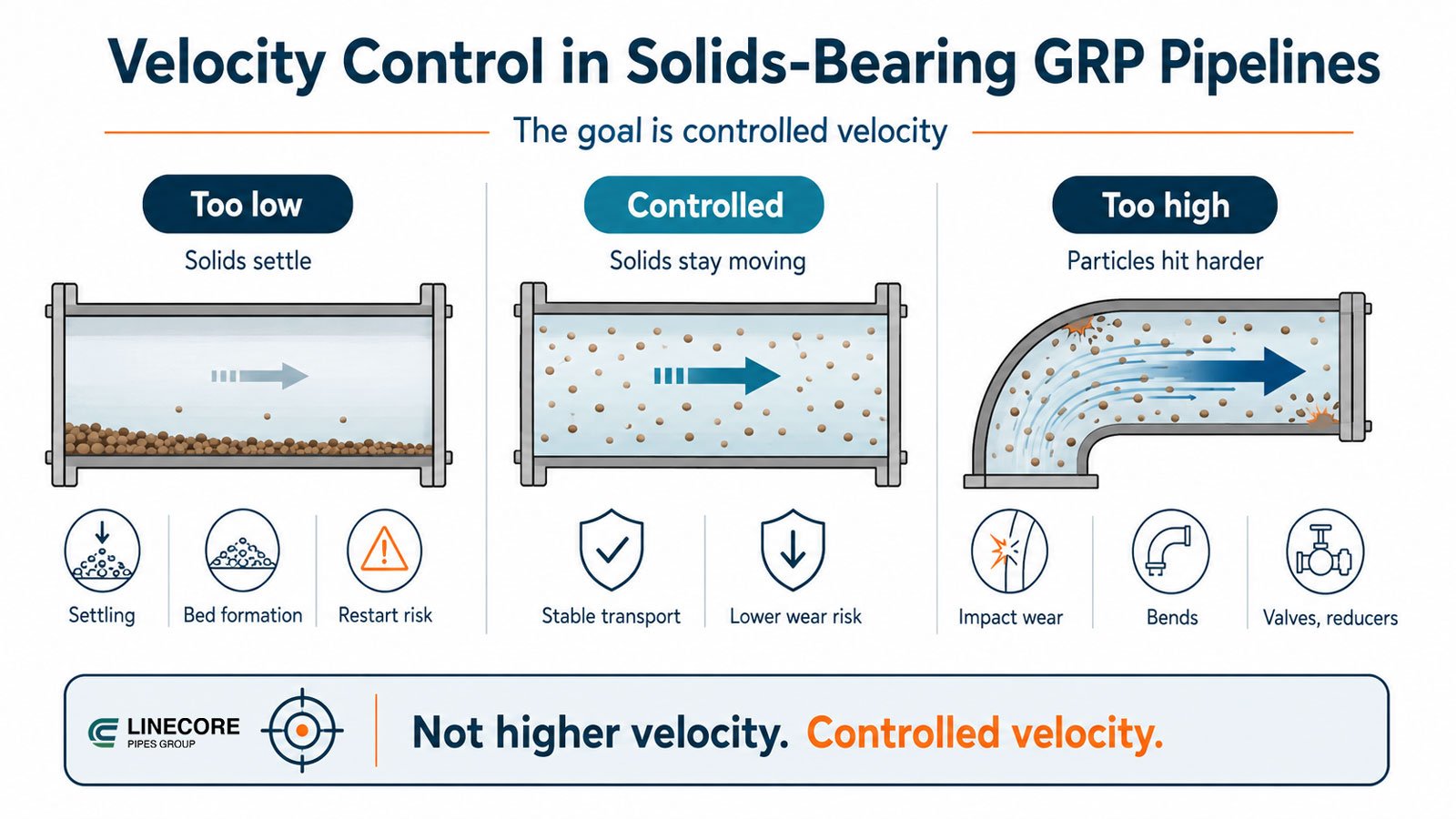
For solids-bearing water lines, don’t only ask, “What is the pressure class?” Ask this instead: Will the solids stay suspended during real operating conditions? The goal is to keep solids moving without creating unnecessarily high impact velocity. Low velocity can cause:
- Settling
- Bed formation
- Invert wear
- Restart damage
- Blockage risk
If velocity gets too high, your solids hit harder, especially at bends, reducers, valves, and pump discharge zones. So you are not just looking for higher velocity. You are looking for controlled velocity across the conditions your line will actually face: minimum flow, normal flow, maximum flow, shutdowns, restarts, surge, and fittings.
This is where Linecore’s EPC capability matters. Pipe selection, hydraulic review, route profile, fittings, installation planning, testing, and commissioning should all connect.
When GRP Pipes Are a Good Fit
GRP pipes are usually a good fit when your pipeline is mainly moving water and the solids are controlled. That includes many raw water, desalination, stormwater, wastewater, and large-diameter transmission projects. But each application still has its own risk points, so let’s look at where GRP commonly works and what you still need to check.
1. Raw water transmission lines
GRP is often suitable for raw water systems carrying natural sediment, especially when intake screening and hydraulic design are handled properly. The real risk is not fine sediment by itself. The risk is uncontrolled solids loading, poor velocity control, or heavy bed material entering the line.
2. Desalination intake and outfall systems
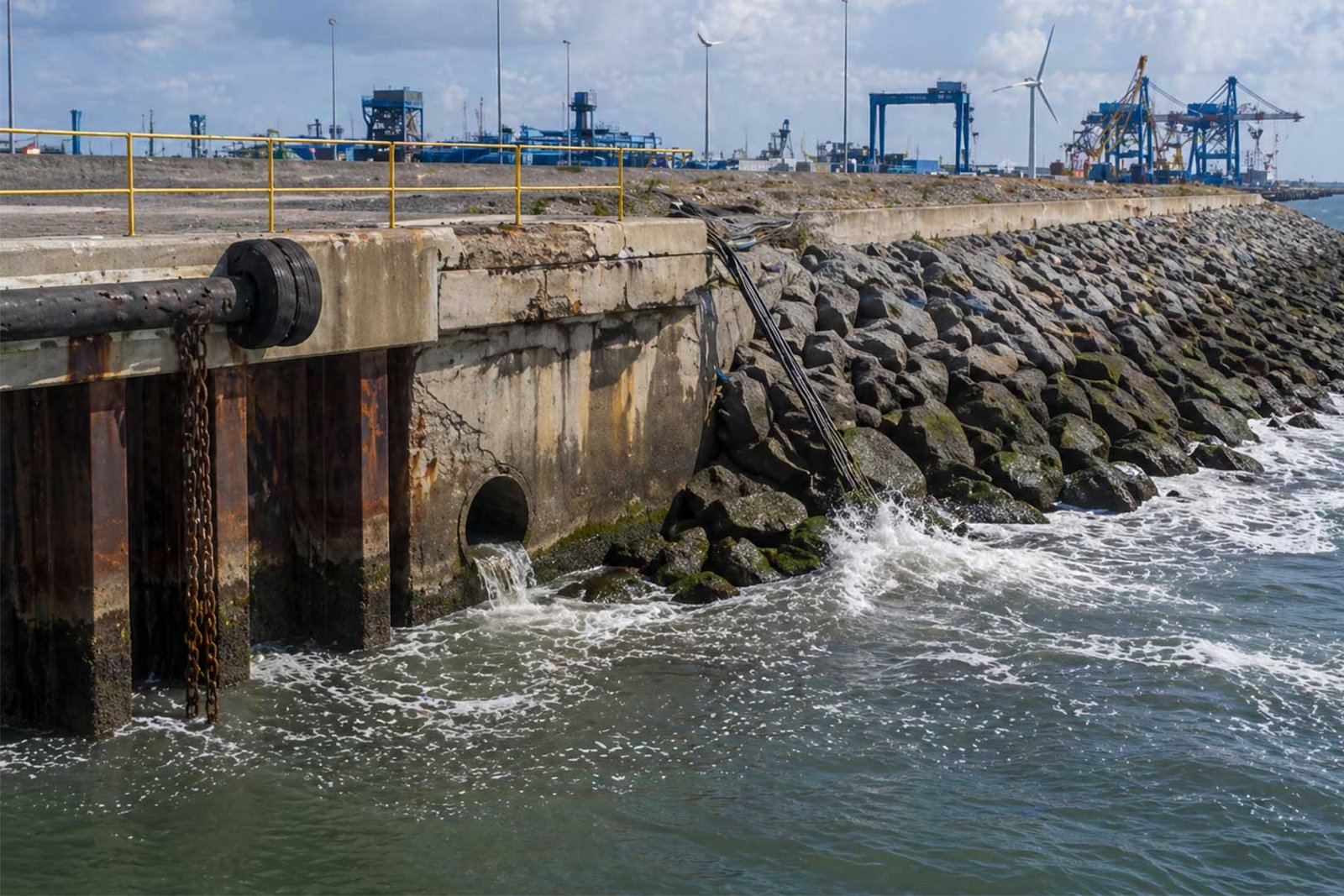
GRP can be attractive in desalination intake and outfall systems because it combines corrosion resistance, smooth bore hydraulics, and suitability for marine environments. But you still need to check salinity, sediment, temperature, joint selection, burial, anchoring, and installation conditions.
3. Stormwater and wastewater systems
GRP can perform well where grit, sediment, wastewater chemistry, or corrosive gases are present. Still, you need proper grit control, cleaning access, inspection planning, low-point management, and liner selection.
4. Large-diameter water transmission EPC projects
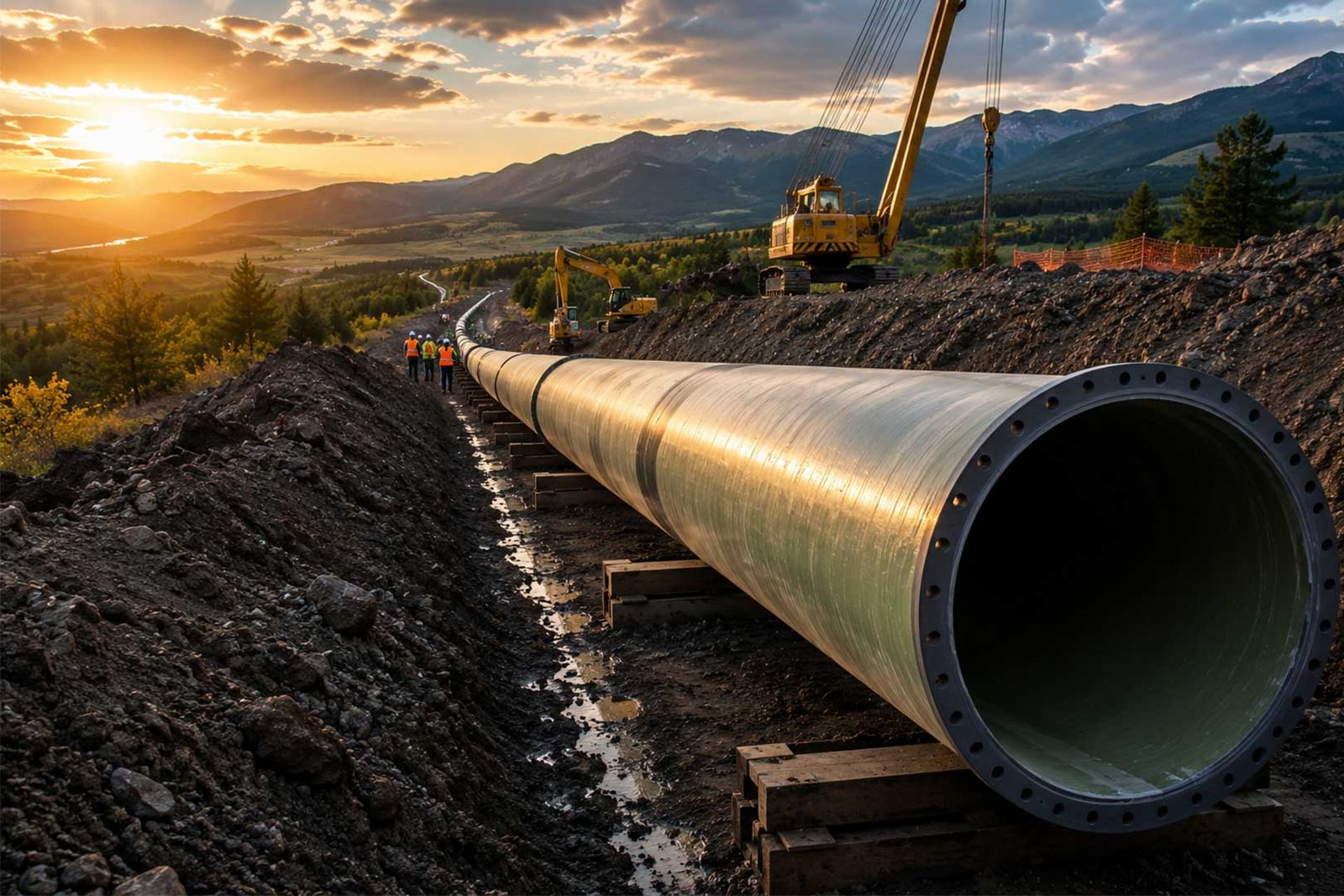
For large-diameter water transmission projects, GRP can help with weight, installation speed, corrosion resistance, hydraulic efficiency, and lifecycle value.
This is where Linecore Pipes Group adds value as a total solution maker. Material selection, hydraulic review, fittings, installation planning, and EPC delivery are considered together.
Real-World Example: Lafayette Raw Water Diversion
A useful example is the Lafayette Raw Water Diversion in Colorado, where Hobas Pipe USA explains that FRPM pipe was used for a 24,000 ft, 36-inch raw water line. The smooth interior helped move sediments and small rocks in the diverted raw water. So if your line is mainly carrying water with controlled solids, GRP can be a strong fit. The key is making sure the design still matches a water transmission duty, not a slurry duty.
When Standard GRP May Not Be the Right Choice
Standard GRP should not automatically be used for severe abrasive service. Be careful when your project includes:
- Continuous abrasive slurry
- Coarse angular particles
- Sharp sand, quartz, gravel, crushed rock, or mineral solids
- Frequent settling and restart cycles
- High-velocity flow with solids
- Aggressive chemistry plus abrasion
- Hot abrasive industrial fluids
In these cases, the solution may still involve GRP, but standard GRP may not be enough. You may need a special liner, thicker wear layer, protected fittings, lined bends, replaceable wear spools, GRV/GRVE, HDPE, lined steel, or another material system.
GRP is not a magic material. It performs best when the pipeline is engineered around the actual solids, flow conditions, and chemical environment.
Real-World Example: Laxá II Hydropower Project
The Laxá II hydropower project in Iceland faced heavy volcanic sand abrasion. Amiblu reports that an estimated 10,000 to 30,000 tons of sand passed the power station each year. The solution was not bare standard GRP. It was GRP with an added elastomeric liner. That is the point for your project too: when the service is highly abrasive, you need an engineered wear solution, not just a standard pipe choice.
Are GRV and GRVE Better for Abrasive or Solids-Laden Services?
GRV and GRVE pipe systems may offer advantages where chemical resistance, temperature capability, or resin compatibility are important. For example, vinyl ester-based systems may be selected when the transported fluid is more chemically aggressive than ordinary water or wastewater.
But GRV or GRVE should not be treated as an automatic abrasion solution. Abrasion still depends on:
- Particle size and hardness
- Solids concentration
- Particle shape and angularity
- Flow velocity
- Liner thickness and liner material
- Bend and fitting design
- Hydraulic conditions
- Chemical exposure
- Shutdowns and restart cycles
GRV/GRVE may improve chemical resistance, temperature capability, and service suitability in aggressive fluids, but abrasion performance still depends on solids characteristics, velocity, liner design, and hydraulic conditions.
That is why Linecore Pipes Group evaluates GRP, GRV, GRVE, and other composite pipe options based on the full duty condition, not only the pipe name.
Related
GRP and GRVE pipe systems: diameters, pressure and stiffness classes, joining methods and corrosion data for water, sewer and industrial pipelines.
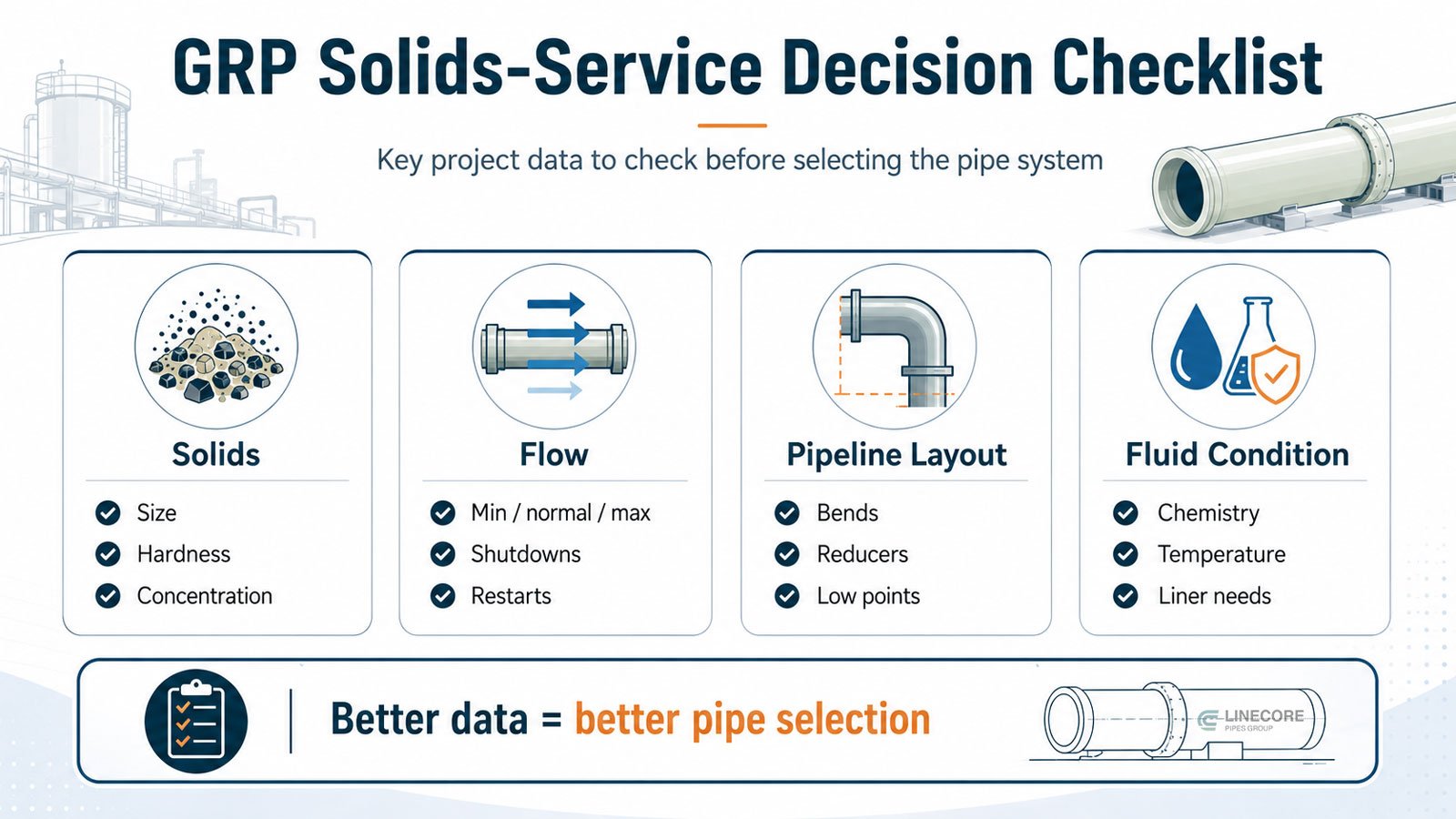
What Project Data Is Needed Before Selecting GRP for Solids Service?
Before you approve GRP for solids-bearing service, you need a clear data package.
| Project Data | Why It Matters | Risk If Missing | What You Should Ask For |
|---|---|---|---|
| Solids type | Defines abrasion severity | Wrong pipe choice | Sand/silt/gravel breakdown |
| Particle size | Controls settling and impact | Hidden bed load | PSD report |
| Particle hardness | Hard minerals wear faster | Liner damage | Hardness/angularity data |
| Flow range | Controls settling and wear | Bad velocity design | Min/normal/max flow |
| Chemistry | Affects resin/liner | Chemical attack | Water analysis |
| Bends/fittings | Wear hot spots | Local failure | Fitting layout |
| Shutdown pattern | Affects settling | Restart damage | Operating profile |
Linecore Pipes Group can review these inputs during early design to help you decide whether standard GRP, GRV, GRVE, lined GRP, or another composite pipe system is the best fit.
Design Strategies to Improve GRP Performance in Abrasive Service
If you want GRP to perform well in solids-bearing water, you need to control more than the pipe material. You need to manage what enters the line, how fast it moves, where turbulence happens, and which areas are most likely to wear first. The main design strategies are:
1. Control solids before they enter the pipe
You may need screens, grit removal, desanders, settling basins, intake improvements, and maintenance access. The less coarse material that enters the pipe, the lower the abrasion risk.
2. Maintain suitable operating velocity
You want solids to keep moving, but you do not want unnecessarily high impact velocity. Review minimum flow, maximum flow, pump cycling, shutdowns, restart conditions, and surge events.
3. Use smooth hydraulic geometry
Abrasion gets worse where flow changes direction suddenly. Long-radius bends, fewer sudden transitions, better tee orientation, controlled reducers, and better valve placement can help reduce wear.
4. Protect high-wear zones
You may not need special lining across the whole pipeline. Sometimes the better approach is to protect the high-risk sections with lined bends, wear spools, replaceable fittings, thicker wear layers, or additional laminate thickness.
5. Manage surge and pump operation
Pump starts, stops, valve closures, and power failure scenarios can affect both pressure and solids movement. Surge and solids behavior should be reviewed together.
6. Plan inspection and maintenance
Focus inspection on the areas most likely to wear:
- Bends
- Low points
- Pump discharge sections
- Reducers
- Intake zones
- Discharge structures
Real-World Example: Caltrans Abrasion Field Testing
Abrasion is tied to real site conditions, not just the pipe name. In a field testing report, Caltrans looked at pipe and pipe lining materials at a real abrasive test site. The useful lesson for you is simple: bed load, flow velocity, particle type, and local wear points all matter. So before you approve a pipe system for abrasive service, make sure the design reflects what the line will actually face.
GRP vs Steel, Concrete, and HDPE in Solids Transport
Once you understand the solids and operating conditions, you can compare pipe materials more fairly. The right choice depends on what is driving your project risk: corrosion, abrasion, pressure, diameter, chemistry, installation, or lifecycle cost.
Here is a practical comparison of GRP, GRV/GRVE, HDPE, steel, and concrete in solids-bearing service.
| Material | Strength in Solids Service | Main Limitation | Best Fit |
|---|---|---|---|
| GRP | Corrosion resistance, smooth bore, large-diameter efficiency | Standard liner may not suit severe slurry | Controlled-solids water lines |
| GRV/GRVE | Better chemical/temperature suitability | Not automatically abrasion-proof | Aggressive fluids |
| HDPE | Strong abrasion performance in many slurry uses | Stiffness/design limits in some large pressure lines | Abrasion-led duties |
| Steel | Tough and customizable with linings | Corrosion, weight, coating dependency | Extreme-duty wear systems |
| Concrete | Strong civil/gravity use in benign conditions | Poor in acidic or severe abrasive service | Benign gravity lines |
The best pipe material depends on whether your project is corrosion-led, abrasion-led, pressure-led, diameter-led, chemistry-led, or installation-led.
EPC Perspective: Why Pipe Selection Is Only One Part of the Solution
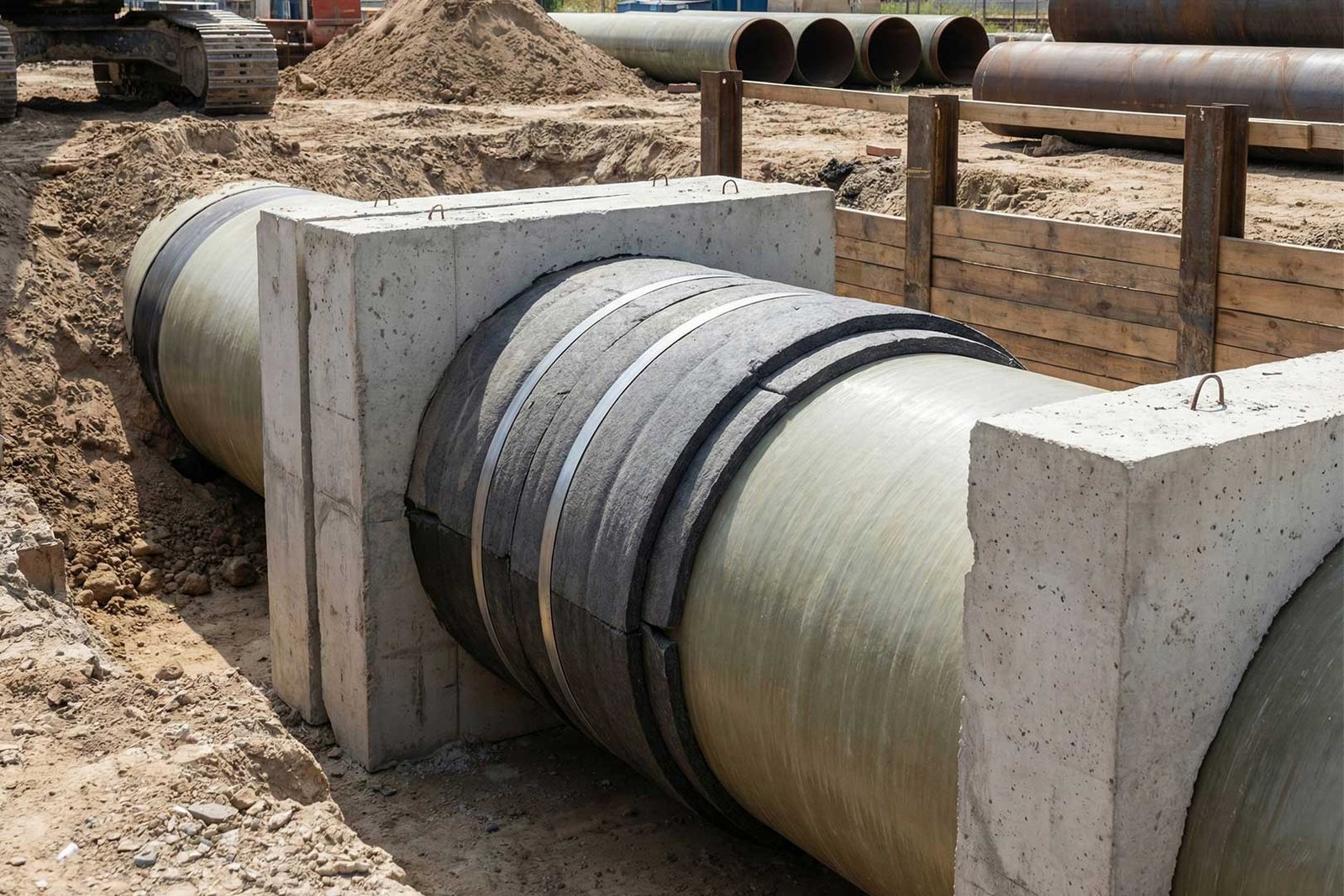
You decide to pick the pipe material, it is only one part of the project. For solids-bearing pipelines, risk can also enter through hydraulic design, fittings, joints, transport, storage, handling, installation, bedding, backfill, testing, commissioning, and maintenance planning.
That is why you should not look at pipe supply in isolation. As a total solution maker, Linecore Pipes Group supports water transmission projects from pipe supply to EPC execution. That means material selection, hydraulic review, surge analysis, intake and solids control, fitting and bend design, joint selection, installation quality, field handling, testing, commissioning, and documentation can be considered together.
This gives you a clearer responsibility path and fewer gaps between the selected pipe system and the real operating environment.
about
The Author

Farshid Tavakoli is a seasoned professional in engineering and international trade. Holding degrees in Electrical Engineering, Mechatronics, and a Doctorate in Business Administration (DBA) from the University of Lyon, he also has a strong background in industrial automation and production line technologies.
For over 17 years, he has led an international trading company, gaining deep expertise in commercial solutions tailored to industrial needs. With more than 8 years of active involvement in infrastructure development, he specializes in the supply of electromechanical equipment for water and wastewater treatment plants and transfer projects.
Together with comapny expert team, he now provides consultancy and integrated solutions for sourcing and implementing complex infrastructure projects across the region.