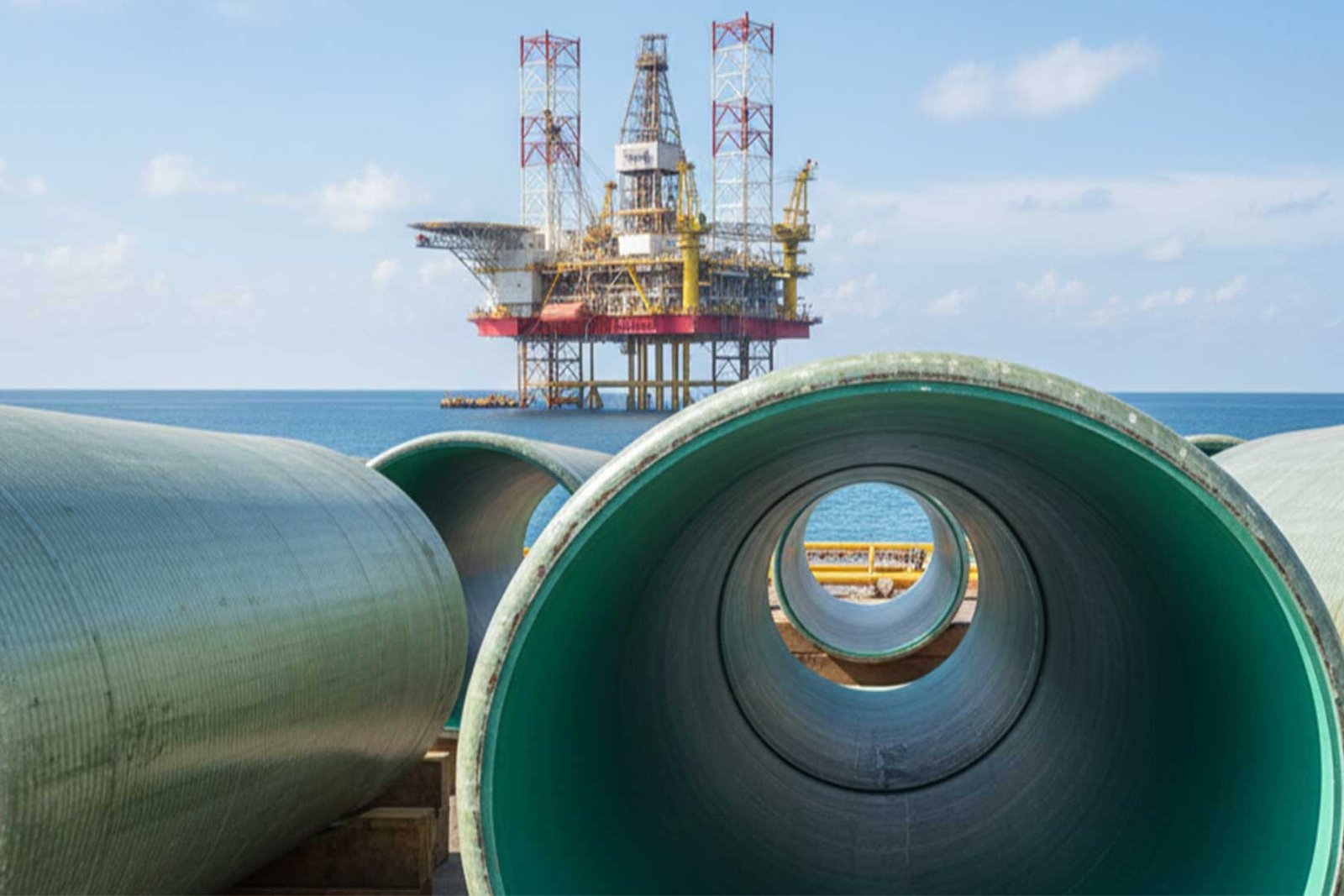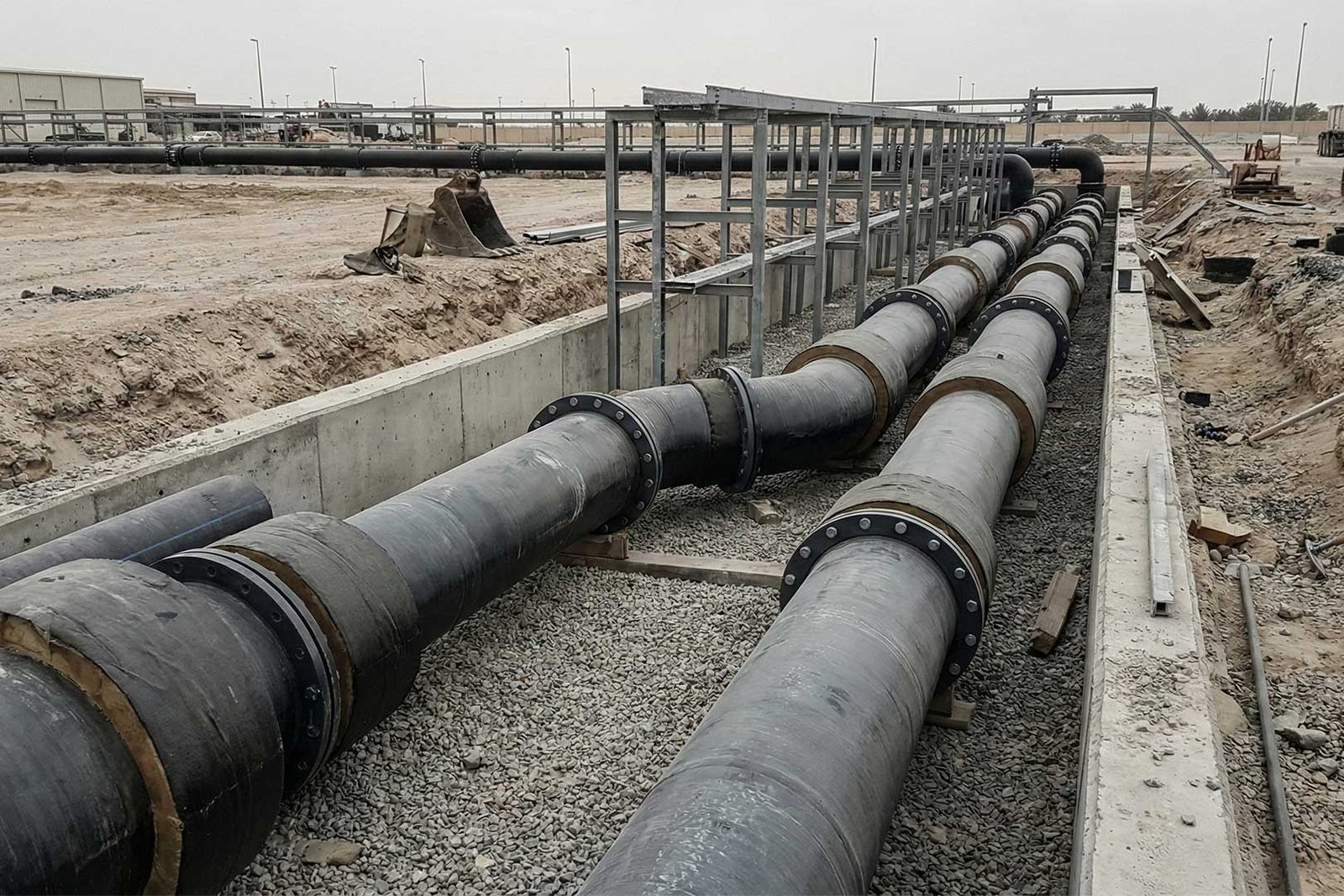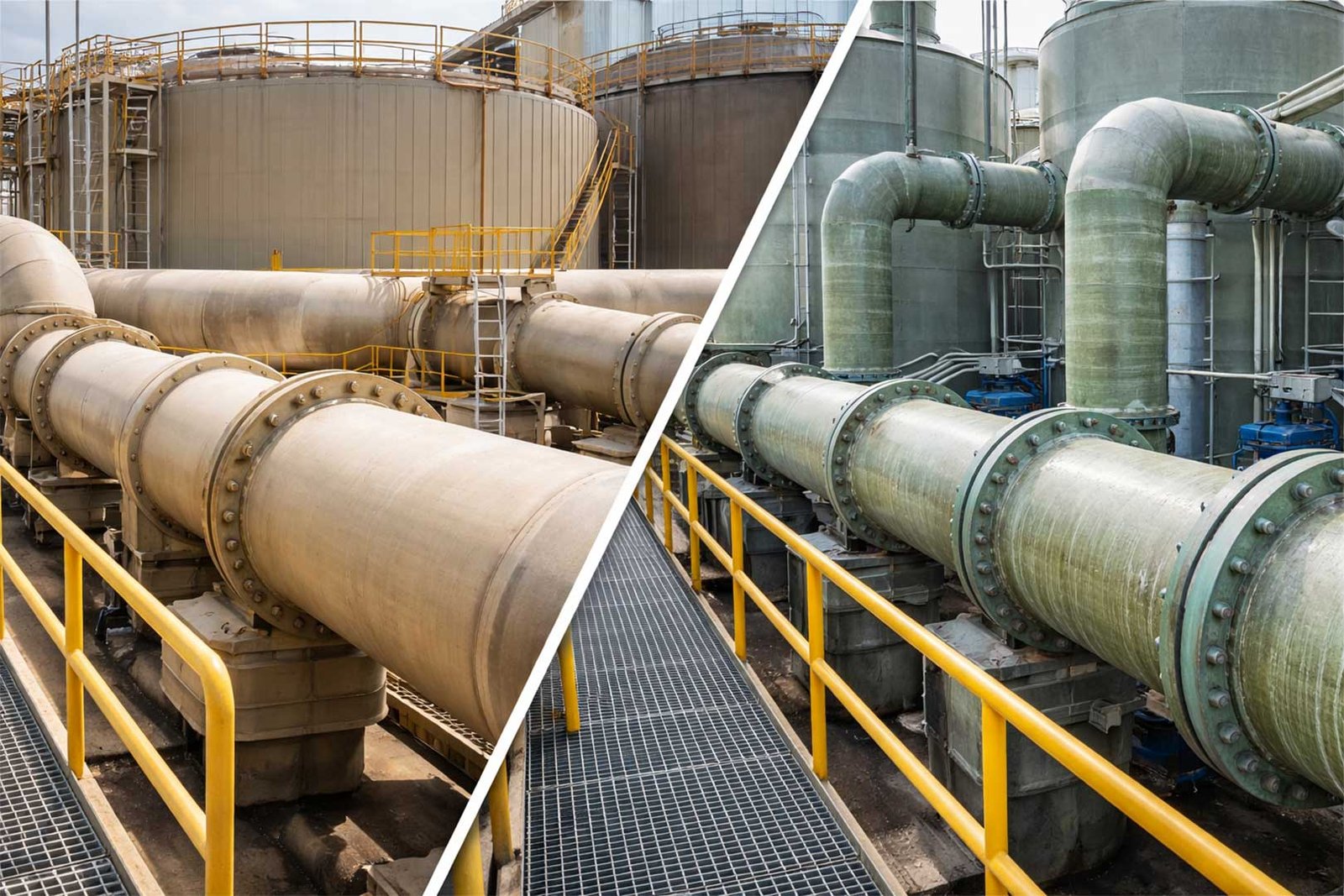
You have heard the terms GRP pipes and FRP pipes several times. But you, like many others, may ask, are they the same? Or are there any distinguished differences between them? GRP (Glass Reinforced Polymer/Plastic) and FRP (Fiber Reinforced Polymer/Plastic) share many features in common, such as their strength and lightweight material made out of resin and glass. However, North Americans prefer FRP while GRP is popular in Asia, Europe, and elsewhere for good reasons.
Wherever you are, you need to end this mix-up and select the right material for longer life, lower maintenance costs, and better performance in water, wastewater, or chemical systems. That is why we pulled together this post and defined everything you need. Keep reading.
What Does FRP Mean in Pipe Manufacturing?
FRP refers to Fiber Reinforced Polymer, or sometimes called Fiber Reinforced Plastic. According to ScienceDirect, the FRP is a big family that contains strong pipes made by combining a special plastic resin with various types of fiber. Fiber is the main reason for their exemplary strength and resistance. Resin also makes these pipes resistant to chemicals and harsh weather. The main types of fiber used in FRP pipes include:
- Glass: This is the most popular because it’s strong, cheap, and really good against rust and chemicals.
- Carbon: This one is only used sometimes, when you need extra strength (but it costs a lot more).
- Aramid: Very good if something hits the pipe hard, but not common for regular pipes.
- Basalt: A newer and cutting-edge option that is derived from natural rock and works well against heat and chemicals.
What Does GRP Mean in Pipe Systems?
GRP is the abbreviation for Glass Reinforced Polymer or Glass Reinforced Plastic. These pipes are definitely as strong as FRP, but with one big difference. The glass fibers are the only reason for their strength. We can call the GRP pipes a subtype of FRP.
As mentioned previously, glassfiber is generally used for almost all real pipes for water, wastewater, chemicals, or industry. They offer various advantages, such as good price, extra strength, and corrosion-free performance.
GRP vs GFRP Pipes: Are They the Same?
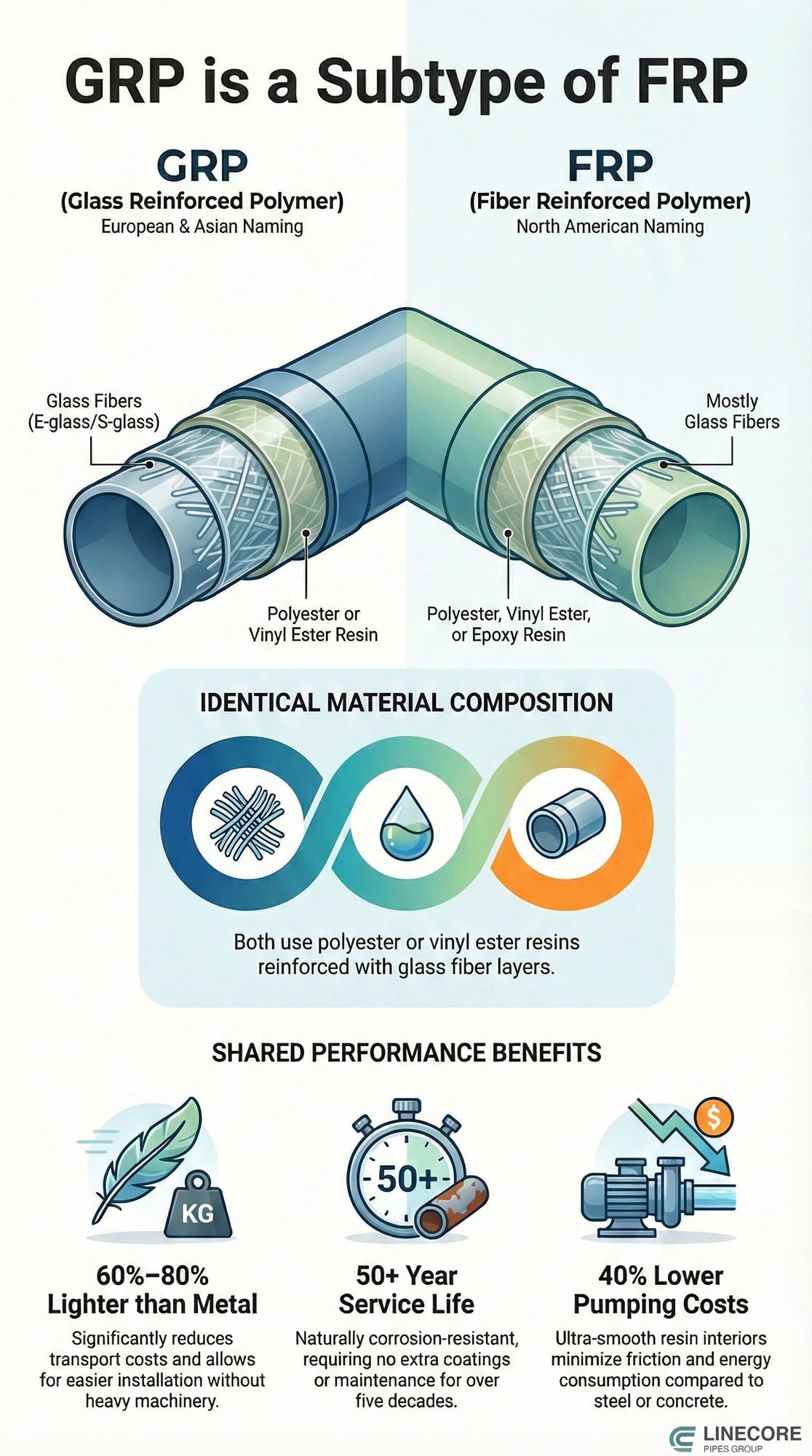
grp vs frp infographic (source: Pipelinecoregroup.com)
There are no technical differences between GRP (Glass Reinforced Polymer) and GFRP (Glass Fiber Reinforced Polymer). This means that they are made of the same materials, are very strong, can handle chemicals, and have the same pressure rating. The letter “F” in the middle stands for fiber, which makes it apparent what the main material is. You could discover both names in newspapers for these reasons:
- In Europe, Asia, the Middle East, and ISO/EN projects, GRP is the most prevalent name. More often than not, GFRP is found in North America and in ASTM or technical papers.
- Teams write “GRP / GFRP” or “GRP (GFRP)” so that no one gets confused, especially when dealing with people from different countries or gaining authorization.
- Some older papers use one name, some newer ones use the other, and some list both names so that they can work with different customers or nations.
Why Suppliers Use FRP and GRP Interchangeably
Suppliers treat FRP and GRP as the same because they are the same pipe material in practice. They may sometimes use GRP instead of FRP or vice versa for the following reasons:
- As we mentioned before, FRP is common in North America; GRP is used in Europe, Asia, the Middle East, and international projects.
- Sales teams pick the name that matches the customer’s area or standards to feel more familiar.
- In the water, wastewater, and chemical sectors, both names appear in quotes and catalogs with no difference. Everyone knows it’s the same product.
What Are the Material Differences Between GRP and FRP Pipes?
The materials used in manufacturing both the GRP and FRP pipes are almost the same. Although the names differ, the materials do not. But, let’s compare the materials that make GRP and FRP pipes as follows:
Composition of GRP Pipes
GRP pipes use glass fibers (usually E-glass because it’s strong and cheap, or S-glass for extra strength) (source: Hobas). The plastic part (resin) is normally polyester or vinyl ester to fight chemicals. Big pipes often have sand mixed in the middle to make them stiffer. They have a smooth inner lining to stop chemicals from damaging them and an outer coat to protect them from the sun and weather.
Composition of FRP Pipes
FRP pipes use the same main things, mostly glass fibers (the usual choice). The resin is polyester, vinyl ester, or sometimes epoxy. In very special cases, they might add carbon or aramid fibers for more strength, but 99% of the time, it’s just glass, exactly like GRP.
Structural Layer Design
Both GRP and FRP pipes are built in the same three layers:
- Inner liner: stops chemicals from leaking or hurting the pipe
- Middle structural layer: glass fibers wound in circles (for pressure) and lengthwise (for bending strength)
- Outer layer: protects against the sun, weather, and scratches
In water, wastewater, chemical plants, and industrial applications, GRP and FRP pipes use the same fibers, resins, and layers. Any tiny difference comes from the project’s needs, not from the names GRP or FRP.
| Component / Aspect | GRP Pipes | FRP Pipes | Key Notes |
|---|---|---|---|
| Main Reinforcement | Glass fibres (E-glass or S-glass) | Mostly glass fibres | Glass is standard in both |
| Resin Types | Polyester or vinyl ester | Polyester, vinyl ester, or epoxy | Epoxy rare in standard FRP |
| Sand-Filled Core | Common in large-diameter pipes | Same as GRP | Adds stiffness |
| Inner Liner | Resin-rich chemical barrier | Resin-rich chemical barrier | Identical protection |
| Outer Layer | UV/corrosion protective coat | UV/corrosion protective coat | Identical shielding |
| Structural Layers | Inner liner + glass laminate + outer | Same three layers | Hoop for pressure, axial for bending |
| Overall Difference | None in standard pipes | None in standard pipes | Variations only from project needs |
How Are GRP and FRP Pipes Manufactured? (Process Comparison)
The way GRP and FRP pipes are made is the same. As for their material, the manufacturing process is almost the same. Below, we will explain various manufacturing processes and compare them both in GRP and FRP pipes:
Filament Winding
This is for sure the most common type. Glass fibers get soaked in sticky resin and wrapped tightly around a spinning tube-shaped mold. The wrapping is done in special directions: circles for handling pressure inside the pipe, and lengthwise for strength against bending.
This machine-made way creates very even, super-strong, and light pipes. It’s great for making lots of pipes quickly and for pipes that need to hold high pressure (like in water or chemical lines).
Hand Lay-Up Process
Workers put sheets of glass fiber by hand onto a mold and spread resin on them with a brush or roller. This is used when someone needs special shapes, custom parts (like bends or joints), small numbers of pipes, or fixes. It’s flexible but takes more time, costs more, and isn’t as perfect or strong for high-pressure pipes.
Centrifugal Casting
Glass fibers and resin go inside a round mold that spins very fast. The spinning pushes everything flat and even against the sides, making a thick, smooth pipe wall with great strength around the circle. This way is very good for big pipes (large diameter) and gives pipes that last long and don’t get damaged by chemicals easily.
Impact of Fibre Type on Manufacturing
Glass fibre is the best choice, the reason is that it is affordable, easy to process, strong enough, and highly resistant to corrosion and chemicals.
Carbon fibre is rarely used because it’s far more expensive and unnecessary for typical water, wastewater, or chemical applications.
How Do GRP and FRP Pipes Compare in Mechanical Performance?
When it comes to real projects, GRP and FRP pipes perform similarly to each other due to the same glass fiber reinforcement. We can compare both pipes for their mechanical performance, as follows:
- Tensile Strength: Glass fibre provides a very good tensile strength (strong enough for typical loads and pulling forces); carbon fibre, found in some FRPs, is way stronger but very expensive.
- Hoop Strength: Both pipes are good at hoop strength. It is because of the winding fiber at an appropriate angle. It is critical for pressure-rated pipes.
- Flexural Strength: GRPs and FRPs work well underground and show good bending resistance. They are good on the ground as well and resist weight or span very well.
- Impact Resistance: Both are strong enough to handle normal drops, knocks, transport, and installation without cracking easily.
- Fatigue Resistance: Both tolerate repeated pressure cycles and temperature changes over many years without weakening or failing.
| Property | GRP/FRP Performance (Glass Fibre) | Typical Range/Value | Notes |
|---|---|---|---|
| Tensile Strength | Good for normal loads | 300–600 MPa | Carbon higher but costly & rare |
| Hoop Strength | Excellent pressure resistance | ~55° winding optimal | Critical for pressure pipes |
| Flexural Strength | Good bending resistance | Sufficient for soil/spans | Reliable underground & above-ground |
| Impact Resistance | Handles handling/installation | Normal drops/knocks OK | No easy cracking |
| Fatigue Resistance | Withstands cyclic loads long-term | Decades of cycles | No weakening from pressure/temp |
| Internal Pressure Rating | Same pressure classes | PN 6–32 (~450 psi max) | Burst ~4× rated (safety factor) |
| External Load Resistance | Resists soil & traffic loads | SN stiffness classes | Depends on burial/backfill |
| Vacuum Resistance | Handles full/negative pressure | Up to -1 bar+ | Reliable with proper stiffness |
How GRP & FRP Pipes Differ in Pressure Rating and Structural Capability?
The way GRPs and FRPs handle the load and pressure is almost the same, too. The design and manufacturing process cause this similarity. Let’s see how much pressure they can withstand from inside and outside:
Internal Pressure Resistance
Both pipes can resist the same amount of inside pressure (called PN ratings, like PN 6 up to PN 32, or up to about 450 psi depending on size). If the total pressure increases up to 4 times the normal amount, the pipe may burst into pieces. It means that the normal flow performs well, even if the sudden surges happen.
External Load Resistance
When buried in the ground, both pipes handle the weight of soil and heavy things like trucks very well. They use the right stiffness level (SN class) in addition to good soil around them to stay strong. GRP and FRP do this exactly the same.
Vacuum Resistance
WIPO states that GRP pipes and FRP pipes can handle sucking pressure or full vacuum (up to -1 bar or more) without collapsing. With the right stiffness and good installation, they work safely in places where pressure drops suddenly or pipes might empty. no difference at all.
GRP vs FRP Pipes: Compare Corrosion and Chemical Resistance
Because they are made the same way, GRP and FRP pipes both do a great job of fighting chemicals and corrosion. There is a thick inner layer full of unique resin that protects against acids, alkalis, seawater, industrial chemicals, and corrosive wastewater. They won’t rust or break as metal pipes do. When you compare them to steel and ductile iron pipes:
- Steel and iron rust quickly when they come into contact with water, chemicals, or salt.
- They need extra paint or protection.
- No further coating is needed for GRP/FRP.
- They work well for much longer (over 50 years) without any difficulties.
- They save money on fixing and replacing things.
How Do GRP and FRP Pipes Compare in Hydraulic Performance?
GRP and FRP pipes let water (or any other fluid) flow very smoothly and in the same way. There isn’t much of a distinction between them because they are both made the same way and have super-smooth insides. Below, we will share information about the hydraulic performance in both pipes:
Smoothness of the Inside Surface
Both pipes have very smooth insides (far smoother than steel or concrete pipes). Because of the minimal friction, the water travels quickly and doesn’t lose much energy (low head loss). This smoothness comes from the resin-rich liner that creates a glass-like finish inside the pipe.
Efficiency of Flow
Water flows quickly and effortlessly because it is so smooth. Inside the pipes stay clean for years, with no rust, accumulation, or scaling. This keeps the flow going forever. The high C-value (around 150–165) means you can use smaller pipes or lower pressure for the same flow rate.
Long-Term Results and Savings on Energy
Rust and other deposits make steel pipes rougher with time, so they need more pump power later. Because GRP and FRP keep smooth, pumps consume less electricity, 30 to 40% less than steel Heat Pumping Technologies reported. This saves a lot of money on energy for things like supplying water, sewage, irrigation, or desalination.
How Are GRP and FRP Pipes Different in Weight and Installation?
GRP and FRP pipes are exactly the same in weight and installation because they use the same glass fibre materials. They are much lighter than steel or ductile iron pipes due to their low density. This makes transport much cheaper since more pipes fit on one truck, and handling is easier as workers can lift them by hand or with small equipment.
Installation is faster, safer, and less expensive than with heavy metal pipes. The jointing systems are also the same and simple: bell and spigot for quick push-fit connections with rubber seals (most common for buried lines), flanged for bolted connections to valves or pumps, and adhesive-bonded for strong glued joints in above-ground or chemical lines.
Pro Tip: GRP and FRP pipes are 60 to 80% lighter than steel or ductile iron, so highlight this to show big savings on transport and installation.
GRP vs FRP Pipes: What Is the Expected Service Life and Durability?
The glass fiber reinforcing and resin systems used to make GRP and FRP pipes are the same; they will last a long time.
- Expected Service Life: As mentioned in Academia, you can expect a lifespan of 30 to 50 years or more in normal operating conditions. If the installation is good, they linger for over 50 years.
- Resistance to Environmental Degradation: These pipes fight against UV radiation, moisture absorption, and wide temperature swings, with no degradation or cracking over time.
- Long-Term Structural Stability: The material keeps its strength, stiffness, and original shape for a very long time, even when it faces repeated pressure changes.
Applications Comparison: Where GRP and FRP Pipes Are Used
As you may be able to guess, both pipes, GRP and FRP, are applied in the same kind of projects. Many projects can use both types for the same purpose with no worries. Now we will compare them in various conditions and for different applications:
Water Supply Systems
Both are widely used for potable water pipelines and municipal water distribution. They are certified safe for drinking water, have very smooth insides for low pressure loss, and resist corrosion from chlorine or soil, lighter and easier to install than ductile iron or steel.
Sewer & Wastewater Systems
Excellent for sewer mains, wastewater collection, and treatment plants. They resist hydrogen sulphide, acids, and aggressive sewage without needing internal linings. Flow capacity stays high for decades.
Industrial & Chemical Pipelines
Great for moving acids, alkalis, and corrosive industrial fluids in factories. Different resins (like polyester, vinyl ester, or epoxy) let you choose the best protection for each chemical, often replacing expensive alloy steels with a cheaper, longer-lasting option.
Desalination Plants
Very common for seawater intake, brine discharge, and treated water lines. They resist saltwater corrosion, high chlorides, and biofouling without extra coatings. Lightweight helps with large diameters.
Oil & Gas Applications
GRP/FRP pipes are used in oil & gas for low-pressure, non-critical services such as:
- Water injection lines
- Firewater systems
- Produced water handling
- Utility and cooling water lines
For high-pressure hydrocarbon service (crude oil, natural gas, multiphase flow), GRE pipes are better and more commonly used because epoxy resin offers very good chemical resistance to hydrocarbons, higher temperature tolerance, and better long-term stability under oil/gas exposure.
Marine & Offshore Pipelines
Frequently used for seawater lift, cooling water, ballast, firewater, and outfall lines offshore or in marine settings. They resist saltwater, marine growth, and wave loads without cathodic protection. Lightweight is beneficial for installation on platforms and vessels.
Start Your GRP Pipe Project with Line Core Pipes Group
Line Core Pipes Group is your go-to global supplier that specializes in GRP pipes. We offer cutting-edge, corrosion-proof, lightweight piping systems that fit various projects, including water transmission, wastewater collection, desalination plants, chemical processing, and heavy industrial use.
Our products meet international standards, offer short lead times, and come with full engineering support from specification through installation. Reach out now for technical data sheets, project references, or a tailored quotation.
Frequently Asked Questions: GRP vs FRP
1- Is the GRP pipe the same as FRP pipe?
Yes, they are the same material in practice (glass fibre reinforced). Only the name differs by region.
2- Are carbon fibre pipes used in pipelines?
Rarely. Glass fibre is standard; carbon is too expensive and unnecessary for most pipelines.
3- Which pipe material is stronger?
Carbon-fibre FRP is stronger, but glass-fibre GRP and FRP is sufficient and far more common/cost-effective for typical use.
4- Which pipe material lasts longer underground?
GRP and FRP lasts longer (over 50 years) than steel or ductile iron due to no corrosion.
5- Are GRP pipes suitable for drinking water?
Yes, when certified (NSF/ANSI 61, WRAS, etc.).
6- Which is more cost-effective long term?
GRP and FRP both. Lower installation, maintenance, and pumping costs over 50 years.
about
The Author

Farshid Tavakoli is a seasoned professional in engineering and international trade. Holding degrees in Electrical Engineering, Mechatronics, and a Doctorate in Business Administration (DBA) from the University of Lyon, he also has a strong background in industrial automation and production line technologies.
For over 17 years, he has led an international trading company, gaining deep expertise in commercial solutions tailored to industrial needs. With more than 8 years of active involvement in infrastructure development, he specializes in the supply of electromechanical equipment for water and wastewater treatment plants and transfer projects.
Together with comapny expert team, he now provides consultancy and integrated solutions for sourcing and implementing complex infrastructure projects across the region.