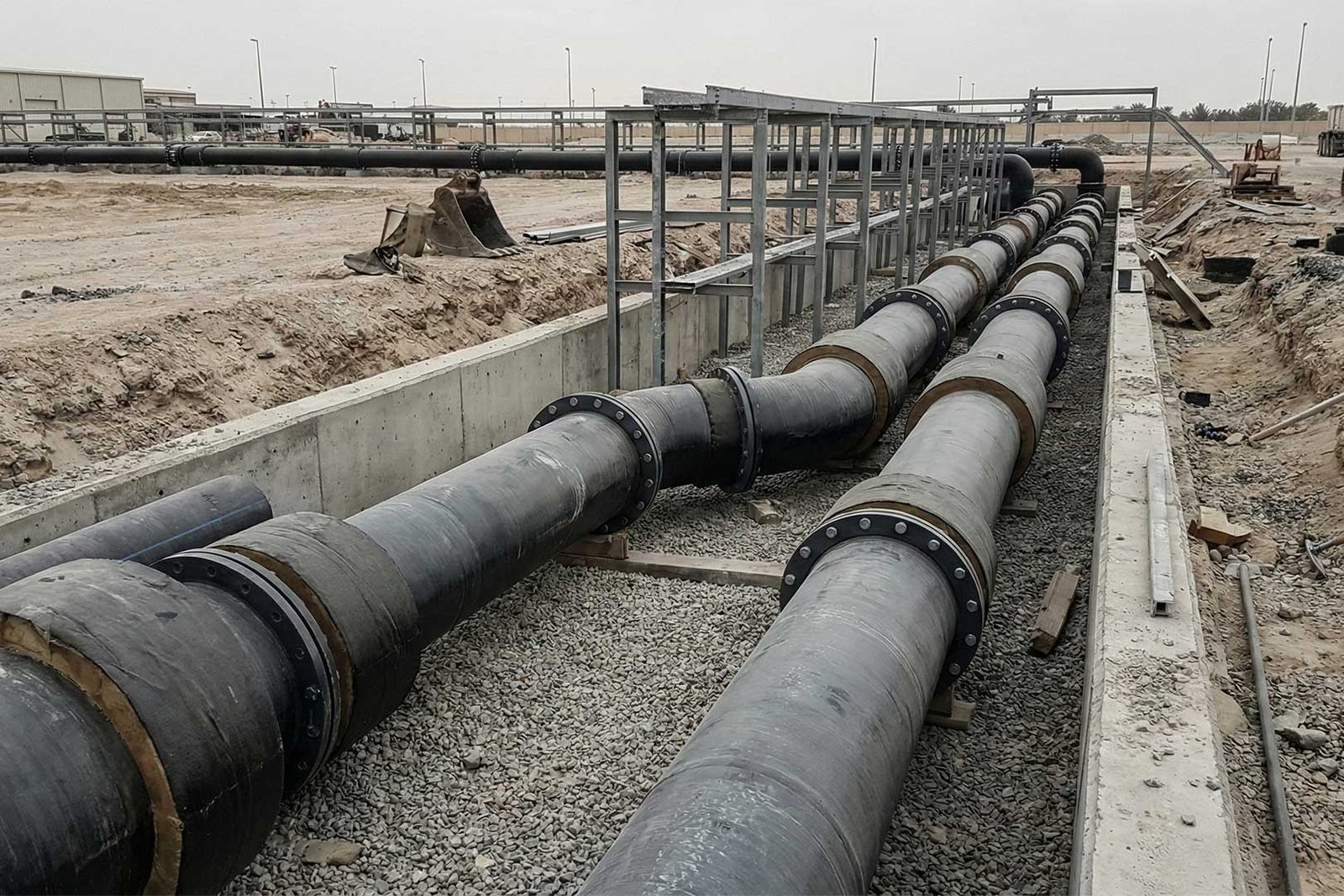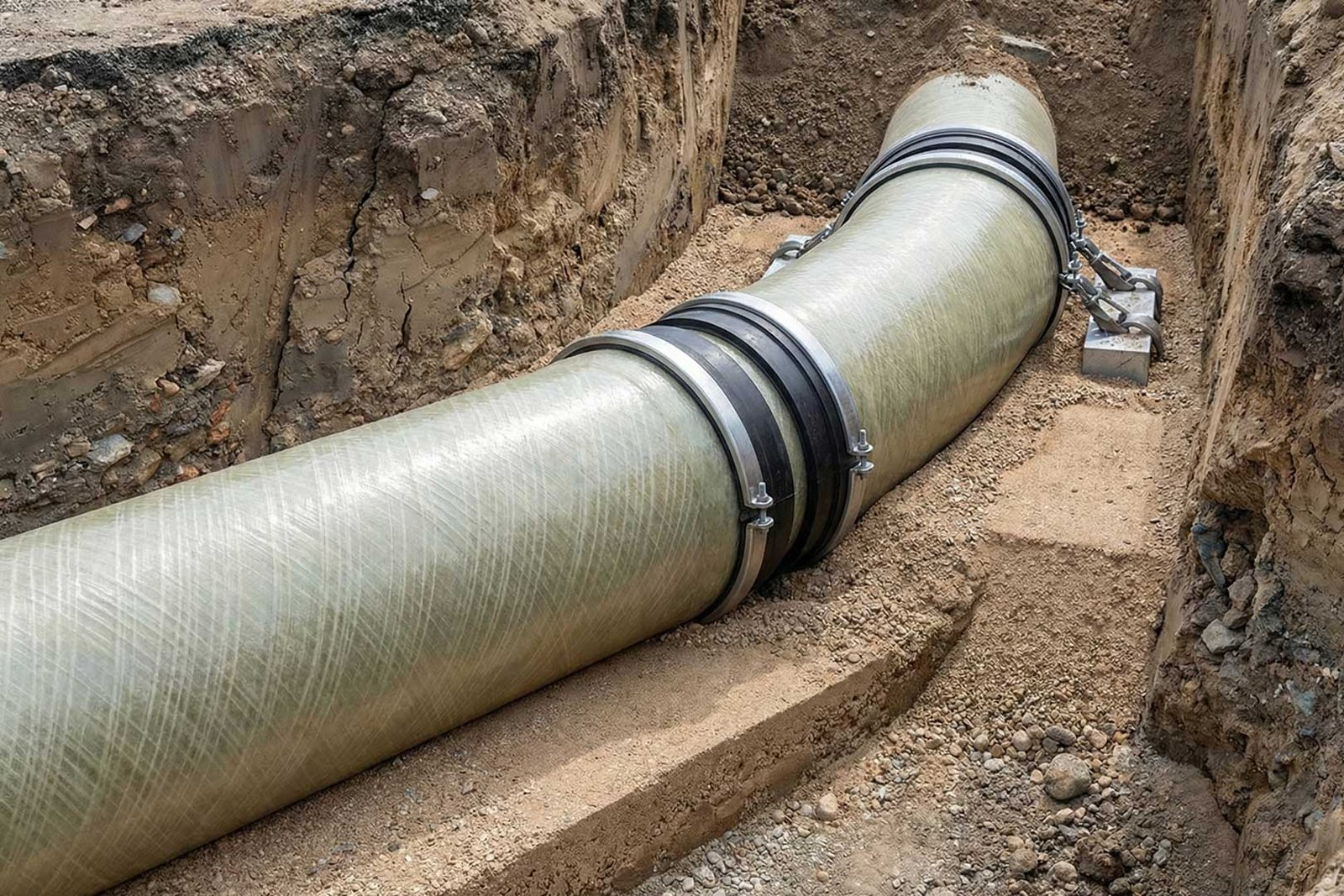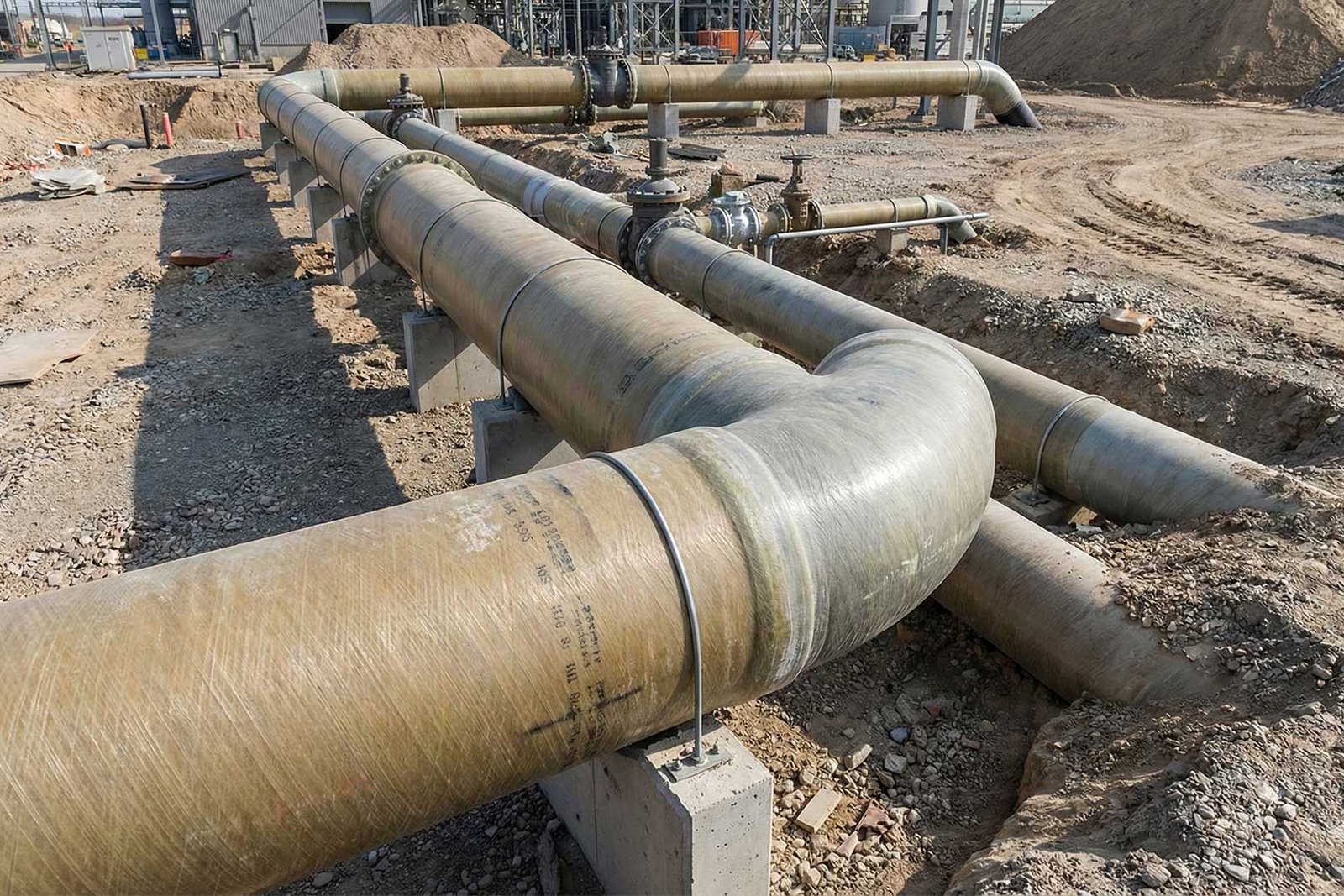
Pressure rating is game-changing for GRP pipes in various projects. It can make your project a safe one or a real failure. Engineers and project managers know that the appropriate rating means a more durable and cost-effective pipeline. GRP pipes perform very well, as long as you go for the right pressure rating.
Pressure rating shows the amount of continued pressure the pipeline can tolerate safely for over 50 years. You’ll see it shown as PN in bar or PC in psi, always including safety margins. We are going to cover everything about GRP pipes’ pressure rating, PN values, the calculation, and the best class for your project. Do not miss this post.
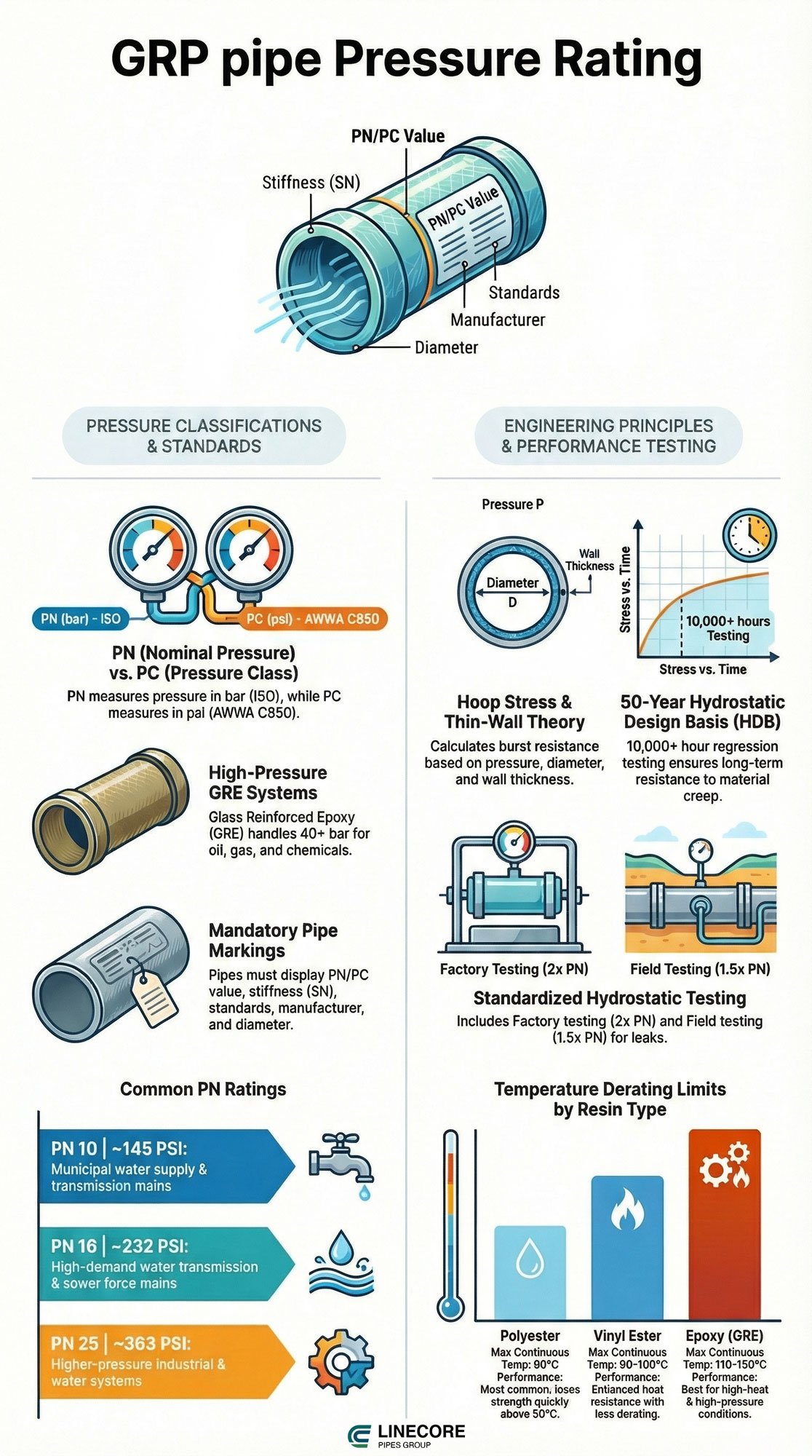
GRP pipe pressure ratings infographic (source: Pipelinecoregroup.com)
Standard GRP Pipe Pressure Classes and Common PN Ratings
The main pressure rating for GRP Pipes uses Nominal Pressure (PN) in bar. The standards, like ISO 10639, determine the number of PN based on the purpose (source: International Organization for Standardization). The PN number indicates the maximum pressure the pipe can resist while continuing to work at normal temperatures.
This table shows the most common pressure ratings (PN in bar and approximate psi equivalents) for GRP pipes:
| PN (bar) | Approx. psi Equivalent (1 bar ≈ 14.5 psi) | Typical Applications | Common Diameter Range (DN) | Typical Max Surge Allowance |
|---|---|---|---|---|
| PN 6 | ~87 | Low-pressure, irrigation, drainage, gravity lines | Up to 4000+ | ~8–9 bar |
| PN 10 | ~145 | Municipal water supply, transmission mains | Up to 2600–4000 | ~14–16 bar |
| PN 16 | ~232 | High-demand water transmission, sewer force mains | Up to 2000–2600 | ~22–24 bar |
| PN 20 | ~290 | Medium-high pressure water/sewer, industrial | Up to 1600–2000 | ~28 bar |
| PN 25 | ~363 | Higher-pressure industrial/water systems | Up to 1400–1800 | ~35 bar |
| PN 32 | ~464 | High-pressure, custom systems, some oil & gas | Up to 1000–1400 | ~45 bar |
AWWA C950 Pressure Classes (PC 50 – 450 psi)
According to standards like AWWA C950 in North America, Pressure Class (PC) in psi is the measurement for GRP pipes’ pressure rating. The standard lists nine pressure classes in 50 psi as follows:
| Pressure Class (PC) | psi | Approximate bar equivalent (1 bar ≈ 14.5 psi) |
|---|---|---|
| PC 50 | 50 | ~3.4 bar |
| PC 100 | 100 | ~6.9 bar |
| PC 150 | 150 | ~10.3 bar |
| PC 200 | 200 | ~13.8 bar |
| PC 250 | 250 | ~17.2 bar |
| PC 300 | 300 | ~20.7 bar |
| PC 350 | 350 | ~24.1 bar |
| PC 400 | 400 | ~27.6 bar |
| PC 450 | 450 | ~31.0 bar |
The most common choices for water distribution, transmission, and similar applications are PC 100 to PC 300 psi.
Custom High-Pressure GRE Systems
The GRP pipes that are used for oil, gas, chemicals, or high-pressure water lines also follow the ISO 14692 or API 15HR/15LR standards. These projects require much higher pressure than the normal PN 6, 10, 16, 20, 25, or 32 classes.
For these kinds of rough projects, companies make special pipes called GRE pipes (Glass Reinforced Epoxy). These pipes are much stronger than the GRP ones, made specifically for more difficult situations. They are 40 bar (580 psi) or more with stronger resins and reinforcement so that they can resist the continued pressure.
How Pressure Class Is Marked on the Pipe
You will see some easy-to-read and easy-to-understand information marked on every GRP pipe. They tell everything you need for picking the right type, including:
- PN or PC value
- Stiffness class (SN), e.g., SN 5000 or SN 10000 N/m²
- Standard (ISO 10639, AWWA C950, etc.)
- Manufacturer name
- Diameter (DN)
- Batch or production date
You can also see the pressure class on the pipe and go for the right one that fits your project’s requirements.
Engineering Principles Behind GRP Pipe Pressure Rating
GRP pipe pressure ratings are driven by robust and cutting-edge engineering, so the pipe remains strong for over 50 years. There are some basic yet effective principles that cause the pipeline to resist the inner pressure from the water flow. These principles are as follows:
Hoop Stress and Thin-Wall Cylinder Theory
Hoop stress is the main force that tries to burst the pipe from the inside out in a circular way. According to Purdue University guideline, for GRP pipes with thin walls, engineers use the thin-wall cylinder formula:
hoop stress = (pressure × diameter) / (2 × wall thickness)
Relationship Between Diameter, Wall Thickness, and Pressure
A bigger diameter means more force on the walls from the same pressure. Higher pressure adds even more force. So, the manufacturers utilize thicker walls for the pipes that must have a bigger diameter. Also, thicker walls are for the pipes that are going to tolerate more pressure.
Role of Glass Fiber Orientation (Hoop vs Axial Winding)
Glass fibers give GRP pipes their strength. Hoop fibers that are wrapped around the pipe are the greatest way to resist the main pressure force. Axial fibers go the whole length of the structure and can endure bending and force from the ground. To keep both sides balanced, most pressure pipes include a 55-degree winding.
Hydrostatic Design Basis (HDB) and Long-Term Regression Testing
Creep can eventually make GRP weaker over time. Long-term tests put pipes under tremendous pressure for more than 10,000 hours. Data is plotted and then used to guess how strong something will be in 50 years. This offers the HDB long-term safe value for pressure ratings.
Safety Factors in Pressure Design
The pressure ratings are substantially safer than the point at which the system fails because of safety features. The PN or PC value is set way lower than what the pipe can really handle. This adds an extra layer of security for use in the real world. Between 1.8 and 4 or higher, most standards utilize safety factors. These factors include:
- Surges (like water hammer or rapid surges in pressure)
- Temperature changes (which can make the material weaker)
- Long-term wear (creep over 50 years)
- Small changes in how things are made (such as how thick or what materials are used)
Pressure Rating vs Other Important Pipe Classifications (What Is the Difference?)
Different jobs call for different pressure ratings for GRP pipes. The two most essential ones are the stiffness class (for exterior loads) and the pressure class (for interior pressure). Let’s have a look at them.
PN (Pressure Class) vs SN (Stiffness Class)
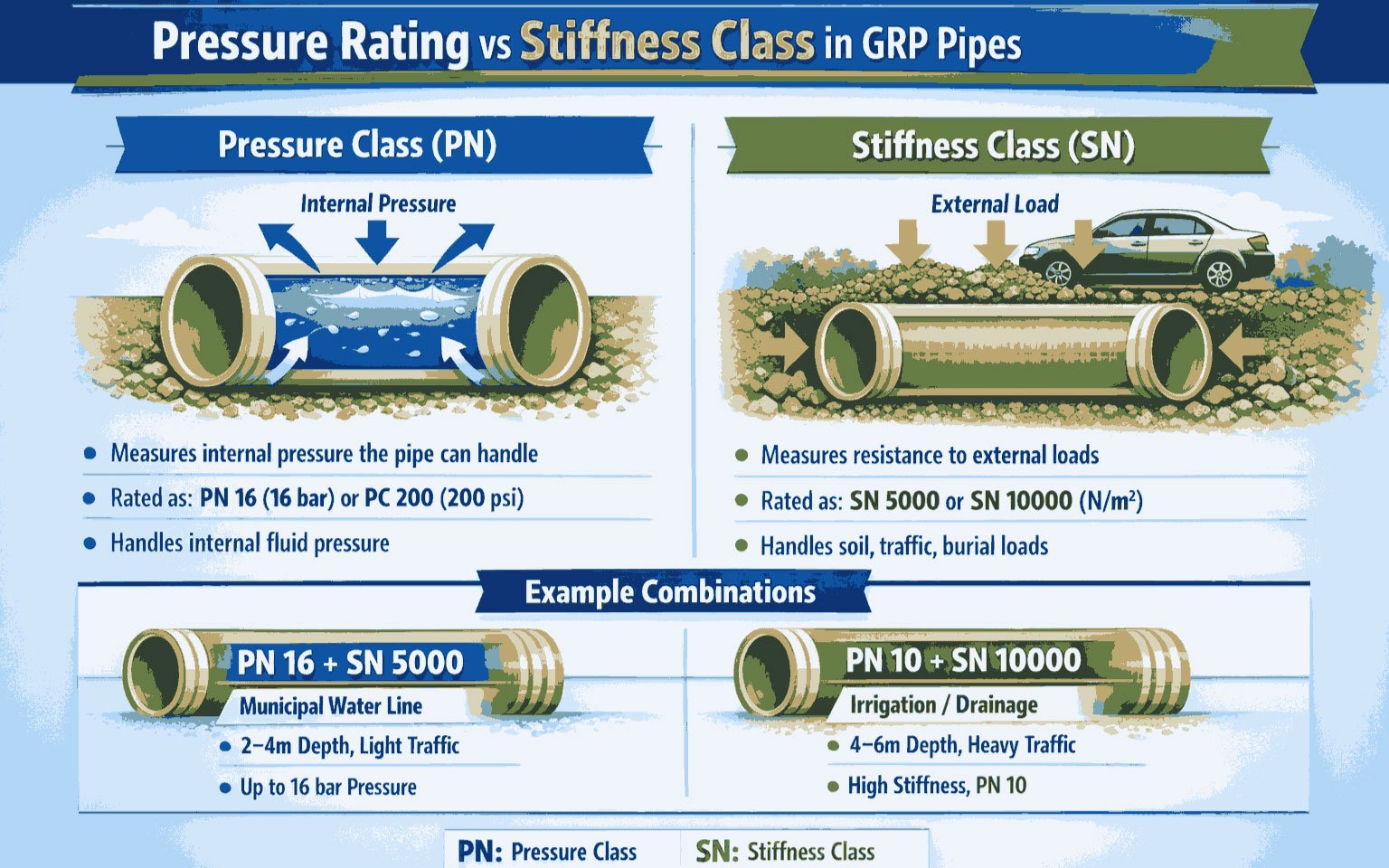
Pressure Class (PN or PC) shows you how much pressure the fluid inside the pipe (water, oil, etc.) can safely handle. It is written as PN in bar (like PN 16) or PC in psi (like PC 200). This rating tells you how strong the pipe is against breaking from pressure within.
Stiffness Class (SN) shows you how stiff the pipe is when forces from the outside act on it. As stated in ScienceDirect, it is written as SN in N/m², as SN 5000 or SN 10000. A higher SN signifies that the pipe is stiffer and can better handle being crushed by soil, traffic, or burial loads.
Example: Manufacturers write the combination on the pipe for your ease. Look at the following examples:
- PN 16 + SN 5000: This combination is typically used for municipal water lines buried 2–4 meters deep in normal soil with light traffic. Handles up to 16 bar pressure.
- PN 10 + SN 10000: It is common for lower-pressure systems, such as irrigation or drainage, to be buried deeper (4–6 meters+) or under heavy traffic. High stiffness (SN 10000) resists crushing, while PN 10 keeps costs down.
What Are International Standards for GRP Pressure Rating?
As mentioned above, GRP and GRE pipes are made according to a series of standards to make sure they are durable, safe, and suitable for different purposes. Below, we will explain more about each of these standards:
| Standard | Application | Key Focus | Pressure Range | Main Tests/Requirements |
|---|---|---|---|---|
| AWWA C950 | North America – Water | Fiberglass pressure pipe | PC 50–450 psi (~3.4–31 bar) | Qualification, hydrostatic (2× factory, 1.5× field), cyclic surge |
| ISO 10639 | Global – Water Supply | Polyester GRP (pressure/non-pressure) | PN-based, up to DN 4000 | Dimensions, pressure strength, long-term HDB |
| ISO 10467 | Global – Sewer/Drainage | Polyester GRP (pressure/non-pressure) | PN-based, up to DN 4000 | Materials, joints, pressure, buried tests |
| ISO 14692 | Oil & Gas – GRE | High-pressure GRE in corrosive areas | Custom high-pressure methods | Materials, design, qualification, pressure rating |
| API 15LR | Oil & Gas – Low Pressure GRE | Low-pressure line pipe | Low-pressure | Design, materials, test, marking, handling |
| API 15HR | Oil & Gas – High Pressure GRE | High-pressure line pipe | 500–5000 psi | Design, connections, strict qualification, inspection |
Surge Pressure & Transient Conditions in GRP Pipelines
When the water flow inside the pipe goes up or down suddenly, surge pressure happens. This pressure, which is also called a water hammer, may happen due to various reasons, like when you quickly close a valve or stop a pump. SAWater says that the safe surge is usually 1.4 times the normal pressure (PN), but it can be 1.5 times for short periods.
The number of surges that happen is important as well. The more the number, the greater the risk of breakage. GRP pipes that are small and not too common resist this situation better. To keep the pipe safe and long-lasting, use these design measures:
- Slow-closing valves
- Soft pump starters
- Air valves or surge tanks
- Low flow speed (1.5–3 m/s)
- Proper check valves
Hydrostatic & Performance Testing of GRP Pressure Pipes
GRP pipes go through various tests and examinations before coming to the market. This helps you ensure their performance in even the hardest conditions. If you wonder what these tests are, have a look at the following items:
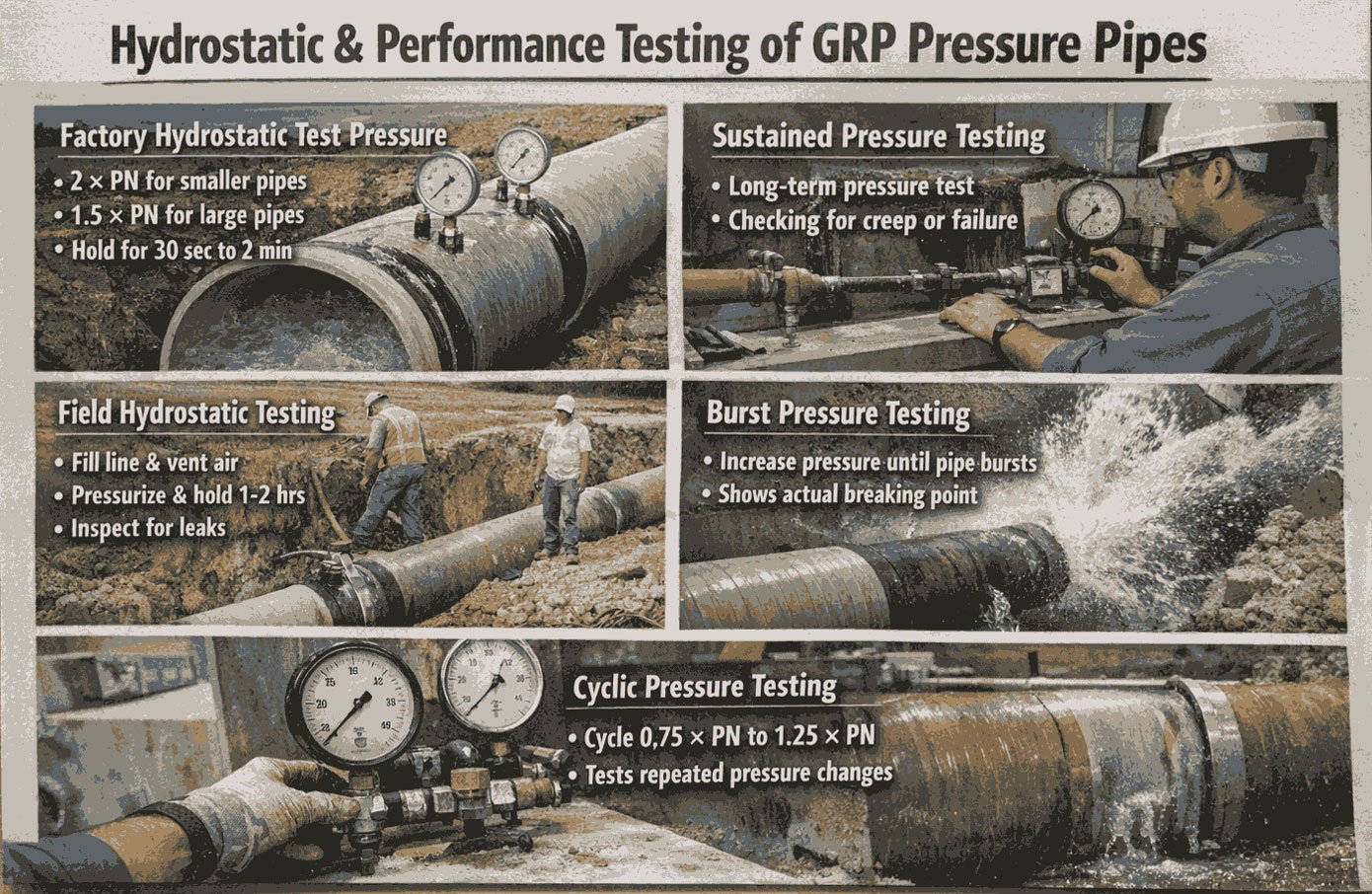
1. Factory Hydrostatic Test Pressure
In the factory, every pipe is filled with water and pressurized to check for any weak spots or leaks. The test pressure is usually 2 times the PN (or PC) value for smaller pipes (up to DN 1400 or 54 inches in AWWA C950).
For very large pipes (bigger than 54 inches), it is often 1.5 times the PN. The pressure is held for 30 seconds to 2 minutes. The pipe must show no leaks, no weeping, and no failure at all.
2. Sustained Pressure Testing
This test sees if the pipe can stay sturdy for a long time. For hours or days, the pipe is kept under continual pressure. Engineers keep an eye on it to see if it steadily gets weaker (called creep) or breaks. This test shows that the pipe can last for 50 years at typical working pressure.
3. Field Hydrostatic Testing Procedures
As soon as the pipe is installed in its place, workers test the whole pipeline and other related parts to see if everything is right. They may follow the easy steps:
- Fill the line gradually with water from the lowest point so that all the air is out.
- Open vents at high points to let trapped air escape.
- Increase pressure up to 1.5 × PN at the lowest point.
- Hold the pressure for 1 to 2 hours and check the joints while.
- If pressure drops a little (due to air or temperature), add more water to bring it back.
In such a situation, there should be no signs of cracks, leakage, or breakdown. This is when they ensure that the whole pipeline is working properly.
4. Burst Pressure Testing
The pressure keeps going up in this test until the pipe breaks. It reveals the real breaking point, which is frequently 4 times the PN or more. This test is done throughout the qualification process to show that there is a good safety margin.
5. Cyclic Pressure Testing
Cyclic testing changes the pressure many times, as it goes from 0.75 × PN to 1.25 × PN and back again. This test makes sure that the pipe won’t crack or break when the pressure changes, like when a water hammer hits it. Standards like ASTM D2992 and ISO 15306 are used to make these tests.
How Temperature Affects GRP Pipe Pressure Rating?
The higher the temperature, the weaker the GRP pipes get. That’s why you have to keep the pressure rating low for high temperatures so the pipeline is safe. This process is called derating. Now you may wonder how much derating you need and what the highest safe temperature is. Here is when the type of resin (the material that holds the glass fibers together) matters the most. Let’s have a look at these materials and their temperature limitations:
- Polyester resin: The most common and least expensive, but it loses strength quickly above 50°C. The maximum continuous temperature is about 60°C.
- Vinyl ester resin: Stronger against heat, handles higher temperatures with less derating. The maximum continuous temperature is about 90–100°C
- Epoxy resin (GRE pipes): Best for hot conditions, keeps its strength even when hot. The maximum continuous temperature is about 110–150°C
Large Diameter GRP Pressure Pipes Ratings, Loads, and Deflection
Large diameter GRP pipes (from DN 300 up to DN 4000 or bigger) handle a lot of water in long transmission lines and pressure systems. In these big sizes, the pressure rating is usually low to medium, almost PN 6 to PN 16. Higher pressure needs much thicker walls, and thick walls are very hard and expensive to make in such large diameters. These pipes tolerate two kinds of force at the same time:
- Internal pressure from the water inside (tries to burst the pipe).
- External loads from outside (soil weight, groundwater, traffic on top).
Now you must pick a pipe with the right pressure class (PN) and stiffness class (SN) together, for example, the combination of PN 10 with SN 5000 or higher is good.
Step-by-Step Guide to Selecting GRP Pipe Pressure Rating
As you know, going for the right pressure rating is of the essence for GRP pipes, no matter PN or PC. As a result, we want to come with you step by step to make sure that you make the right decision:
1. Determine Static Operating Pressure
First of all, determine how much continuous pressure the pipe is going to tolerate during regular use. Do not count the surge pressure in this stage. Just consider the normal working pressure driven from flow, pumps, elevations, etc., and count the pressure in bar or psi.
2. Calculate Maximum Surge Pressure
Now it’s time to calculate the highest surge pressure that you expect to happen. Surge is often 30–50% extra (up to 1.4 × PN in many cases). In these steps, the system design software can come to your help, unless you get help from simple rules to estimate the highest pressure.
3. Apply Temperature Derating
How is the temperature of the fluid that is going to flow inside the pipe? That’s important. If it is higher than 35°C, derating is a must. You can use the suppliers table to reduce the pressure.
4. Apply Safety Factors
You must also take the maximum strength of the pipe in the long run, compare, and then pick a lower PN accordingly. If you choose the appropriate PN, you can ensure that the pipe will tolerate surges, various temperatures, creep, etc. Pay attention to the supplier’s safety warnings as well.
5. Verify Compliance with Applicable Standards
Then, check the standards on the pipe to make sure this is the right fit for your needs. Below are some of the usages with their standard match:
- Water supply: ISO 10639 or AWWA C950
- Sewer pressure: ISO 10467
- Oil & gas: ISO 14692, API 15LR/15HR Confirm the pipe meets the standard’s testing, materials, and pressure requirements.
6. Confirm Joint & Fitting Compatibility
In the final stage, make sure the joints (bell & spigot, flanged, restrained) are rated for your pressure and surge. Check fittings, gaskets, and connections match the PN class and handle combined loads. You can ask the supplier for the most compatible.
GRP Pipe Pressure Rating Comparison with Other Pipes
When purchasing GRP pipes, it is a good idea to compare them with other types as well. It helps you to know whether this is a good option when it comes to pressure rating for your project or not. Let’s compare GRP with steel, ductile iron, and HDPE:
➢ GRP vs Steel
GRP does not corrode and lasts 50 to 100 years with almost no maintenance. Steel handles high pressure well but rusts easily, needs coatings, and regular checks. GRP is much lighter and smoother inside for lower energy costs. Over time, GRP usually costs less overall.
➢ GRP vs Ductile Iron
GRP resists corrosion better and is very light, so it is easy to install. Ductile iron can take high pressure and heavy loads, but needs protection in bad soil and more checks. GRP lasts 50 to 100 years with little care, while ductile iron lasts 25 to 40 years. GRP saves money on repairs and energy long-term.
➢ GRP vs HDPE
Both GRP and HDPE are very resistant to rust and survive for more than 50 years with little upkeep. GRP is stronger when the diameter is big, and the pressure is high, and it is stiffer when it is buried.
HDPE is more flexible and usually costs less at first. GRP usually costs less overall for big, high-pressure, or very corrosive projects because it flows better and can take heavy loads.
Common Mistakes When Specifying GRP Pipe Pressure Rating
The pressure rating for GRP pipes is a really important matter in a way that making any mistakes equals the whole project’s failure. So, try your best to avoid the most common mistakes in determining the GRP pipe pressure rating that we explain below:
- Confuse PN with SN: PN and SN are two different numbers, the first one for internal pressure and the second for external pressure. Do not select the wrong one.
- Ignore Surge Pressure: Never ever forget the water hammer, as you may buy an under-rated pipe that fails under high pressure.
- Overlook Long-Term Regression Basis: Consider the 50-year hydrostatic design basis (HDB) to estimate the right safe pressure for your GRP pipe.
- Incorrect Safety Factor Application: Do not use the wrong or too low safety factors (usually 1.8 — 4). Always pay attention to the manufacturer’s tips in this regard.
- Not Following AWWA / ISO Requirements: If you ignore specific rules from AWWA C950, ISO 10639, ISO 10467, or ISO 14692, it leads your project to failure.
Why Choose Line Core Pipes Group for GRP Pipes?
Line Core Pipes Group has long been the premier supplier of GRP and GRE pipes with reliable pressure ratings from PN 6 to PN 32+ (and custom high-pressure options). We provide full compliance with AWWA C950, ISO 10639, ISO 10467, ISO 14692, API 15LR/15HR, expert derating advice for temperature, surge handling, and correct PN/SN combinations.
You can purchase lightweight, corrosion-free GRP and GRE pipes with over 50 years of lifespan and low lifecycle cost. Contact us today for a free quote, pressure rating consultation, or project support.
FAQs
1- What does PN16 mean in GRP pipes?
PN16 means the pipe can safely handle 16 bar continuous pressure for over 50 years. It’s mostly used for water systems and sewer lines (about 232 psi).
2- How is GRP pipe pressure rating calculated?
It uses the hoop stress formula, long-term regression tests for HDB (10,000+ hours), safety factors (1.8 — 4), temperature derating, and surge allowance.
3- What is the required hydrostatic test pressure?
Factory test: usually 2 × PN for small pipes, 1.5 × PN for large pipes. Field test: 1.5 × PN.
4- Can GRP pipes handle cyclic pressure loads?
Yes. They are tested with many cycles and resist repeated surges well when surges are small and not too frequent.
5- How does temperature affect pressure rating?
Higher temperatures weaken the pipe. You must derate PN above 35°C. Polyester max 60°C, vinyl ester 90–100°C, epoxy 110–150°C.
6- What is the difference between pressure class and pressure rating?
Pressure class (PN or PC) is the specific number (e.g., PN16). Pressure rating is the safe continuous pressure for 50+ years with safety margins.
about
The Author

Farshid Tavakoli is a seasoned professional in engineering and international trade. Holding degrees in Electrical Engineering, Mechatronics, and a Doctorate in Business Administration (DBA) from the University of Lyon, he also has a strong background in industrial automation and production line technologies.
For over 17 years, he has led an international trading company, gaining deep expertise in commercial solutions tailored to industrial needs. With more than 8 years of active involvement in infrastructure development, he specializes in the supply of electromechanical equipment for water and wastewater treatment plants and transfer projects.
Together with comapny expert team, he now provides consultancy and integrated solutions for sourcing and implementing complex infrastructure projects across the region.