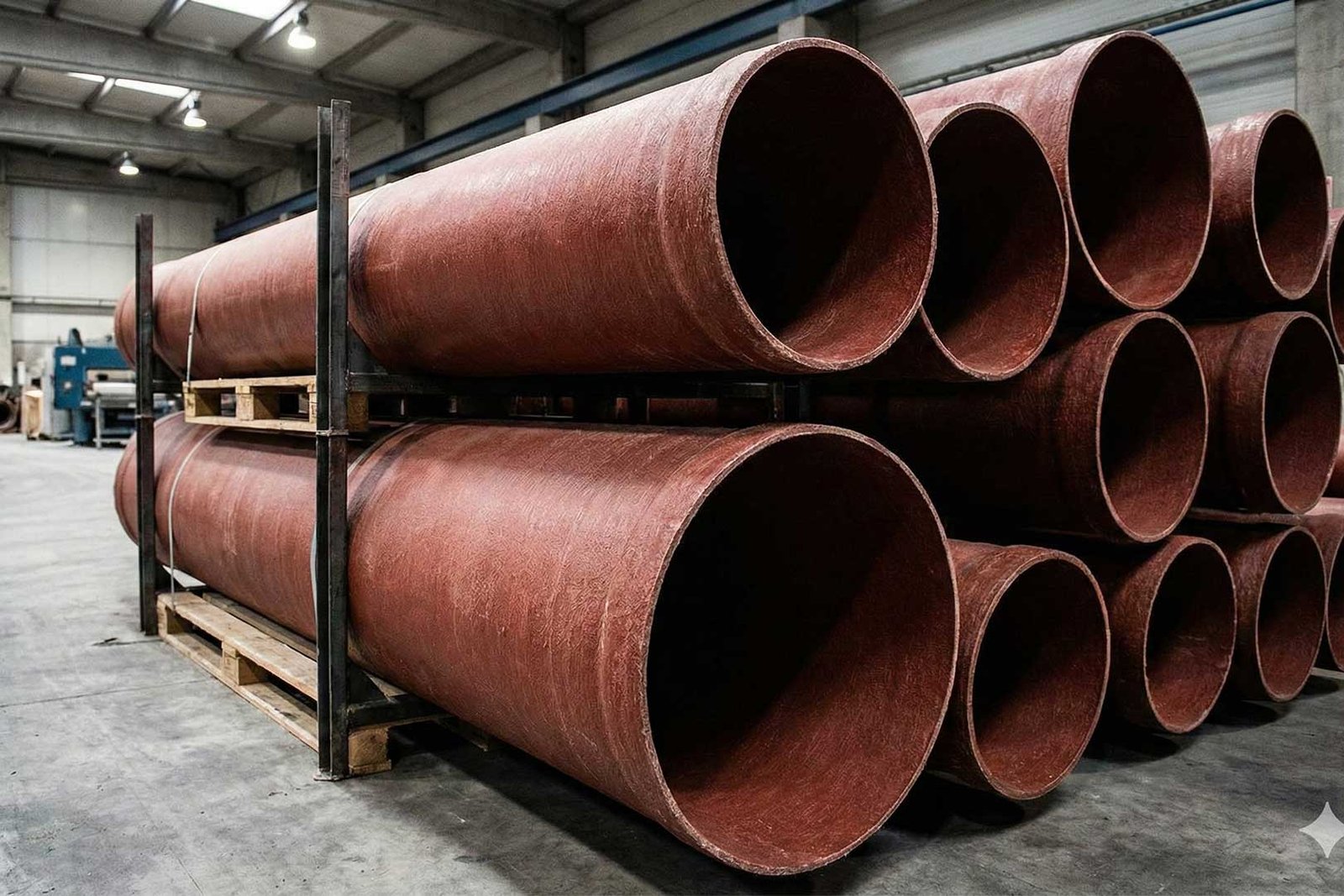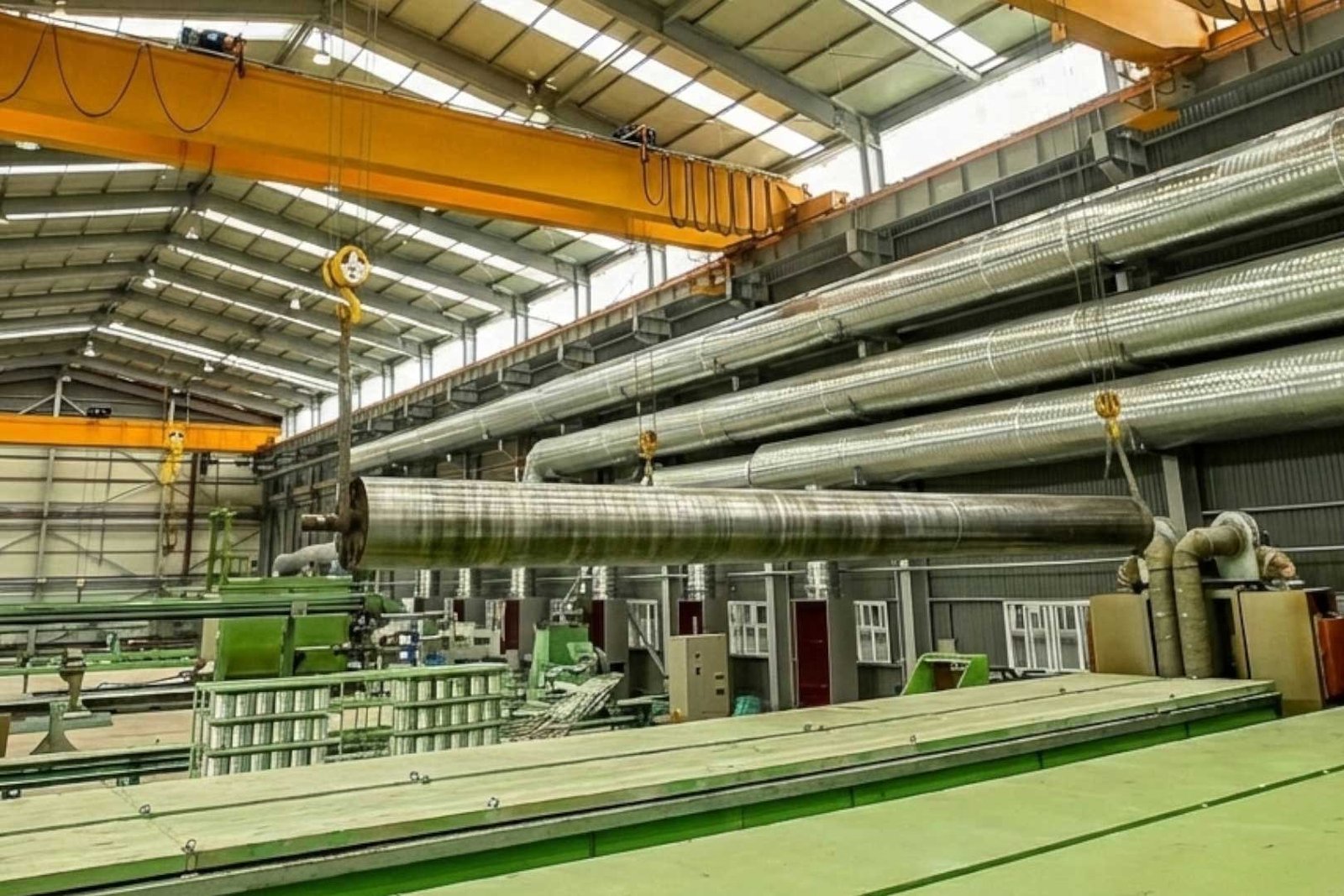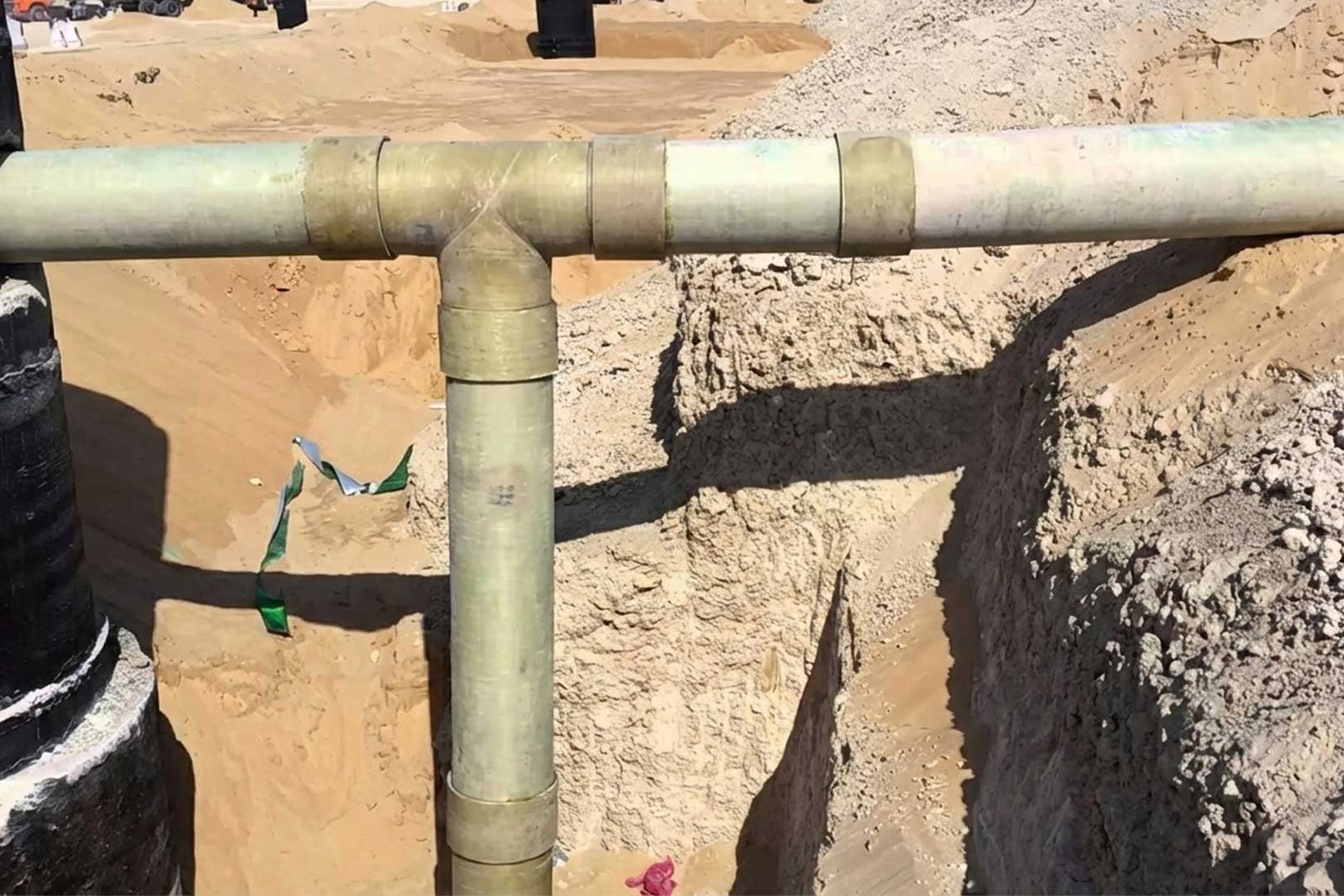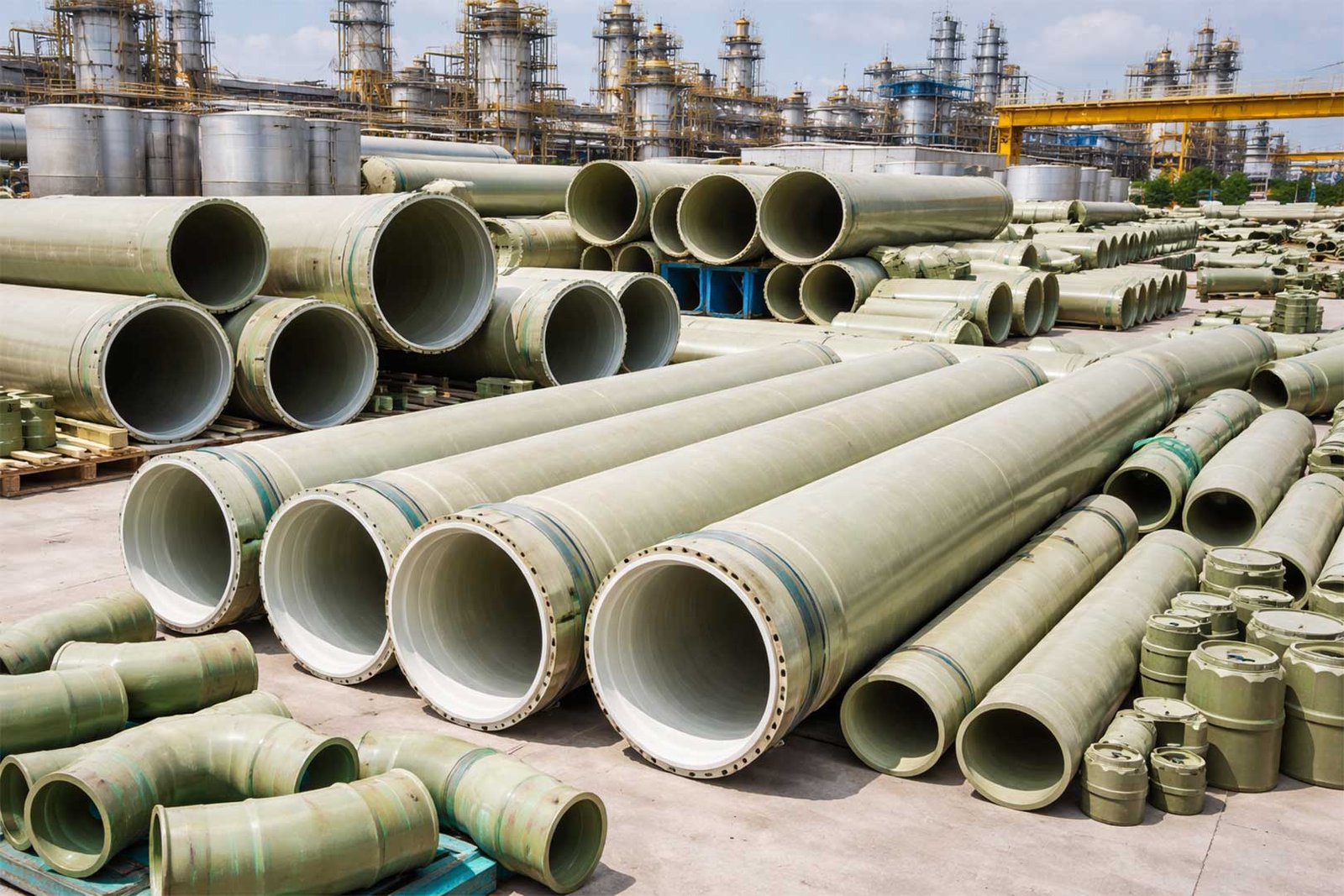
The market of piping systems has changed from the metal era to plastic pipes. The choice of composite pipes as durable and resistant pipes to heavy loads and corrosive areas. Composite pipes are made of glass fibers and a resin matrix that reduces what metal pipes fail in. Composite pipes are popularly used in water, wastewater, oil & gas, and chemical processing with a low cost of maintenance over decades.
This article takes a deeper look into the drivers, landscape, and the future of the composite pipe market. Stay tuned till the end.
An Overview of the Global Composite Pipe Market
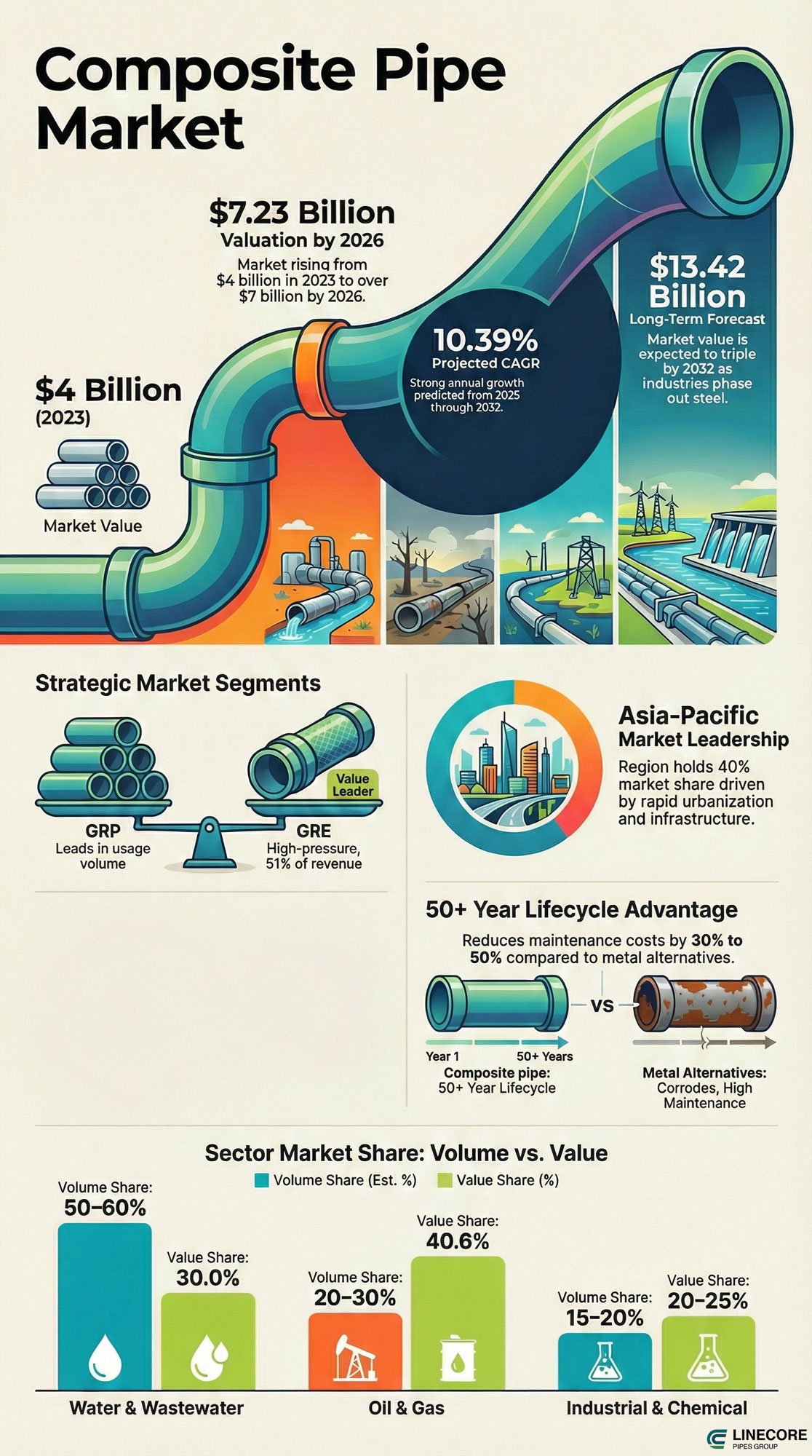
Composite pipe market infographic (source: PipeLinecoregroup.com)
The composite pipe market has experienced such growth in the last few decades due to the shift of piping systems from traditional metal pipes. These composite pipes do not corrode or get deformed under external loads, unlike steel pipes, which require continuous inspection and maintenance.
What Shapes the Market and the Case of Market Evolution
After the specific use cases of composite pipes, they were used in many industries such as water infrastructures, oil and gas, and chemical transportation. The market’s engine goes around its international players, while the regional and other players are working beside the big leaders efficiently.
Current Market Landscape and Adoption Trends
Engineers were looking for a corrosion-free pipeline with lightweight materials that can be placed in hard-to-access sites and locations.
The Middle East and Asia are leaders in desalination and oil and gas projects due to the advantages of composite pipes and the increasing demand for desalination and oil extraction.
While the focus of North America and Europe is on replacing old metal infrastructures.
Composite Pipe Market Size and Growth Outlook
What changed the market of composite pipes and its values relies on the increasing usage of composite pipes in various applications. This section talks about the current size of the market and where it’s going.
How Did the Market Face Growth over Time?
In the late 1900s, the composite pipe business was limited, but it grew quickly as companies realized they needed better materials. By 2010, it was worth about $2 billion (MarketResearchFuture). By 2023, it had doubled to $4 billion due to better production and more applications in water and energy projects. From 2020 to 2025, growth stayed consistent at roughly five to six percent a year, even during hard times like the pandemic, when people were busy fixing outdated pipelines.
Value of the Worldwide Market Right Now
As GrandViewResearch highlighted, the global market will be worth $7.23 billion in 2026, up from $6.71 billion in 2025. This is mostly because FRP kinds can tolerate severe circumstances effectively.
Predictions for Growth in the Short and Long Term
In the short term, expect consistent rises until 2030, when they will reach about 10 billion. In the long run, by 2032, it might triple to 13.42 billion as additional industries start using these pipes.
CAGR Trends and Growth Drivers
The trend shows that the growth rate will be 10.39 percent each year from 2025 to 2032. Corrosion resistance necessities in oil, gas, and water installations, as well as rules for greener materials and tech upgrades in resins and fibers, are some of the main drivers.
Volume vs. Value Analysis
Volume is mostly made up of water projects with massive GRP pipes, but value is mostly made up of oil and gas projects where expensive GRE varieties make up 40% of sales, even if they are utilized less.
| Sector | Volume Share (Estimated %) | Value Share (%) | Key Notes |
|---|---|---|---|
| Water & Wastewater | 50-60% (Dominant) | 30% | High volume from large-diameter GRP pipes in municipal and desalination projects; lower cost per meter. |
| Oil & Gas | 20-30% | 40.6% | Lower volume but high value from specialized GRE pipes handling high-pressure, corrosive fluids. |
| Industrial & Chemical | 15-20% | 20-25% | Balanced; focuses on custom, corrosion-resistant applications like effluents. |
| Others (Mining, Marine) | 5-10% | 5-10% | Niche uses; growing in abrasive or offshore environments. |
Composite Pipe Market Dynamics
Here, we’ve divided a few of the many forces and factors affecting the market and the challenges each of these forces may present.
1. Market Drivers
There is a high demand for composite pipes, especially within the water and energy industry, due to the requirement for pipes that are more long-lasting, economical, resistant to corrosion, and the need for more improved sustainable infrastructures. That’s why it is estimated that the industry will grow 5.8% every year from 2026 to 2033.
An expansion for Composite Pipes in Old Infrastructures
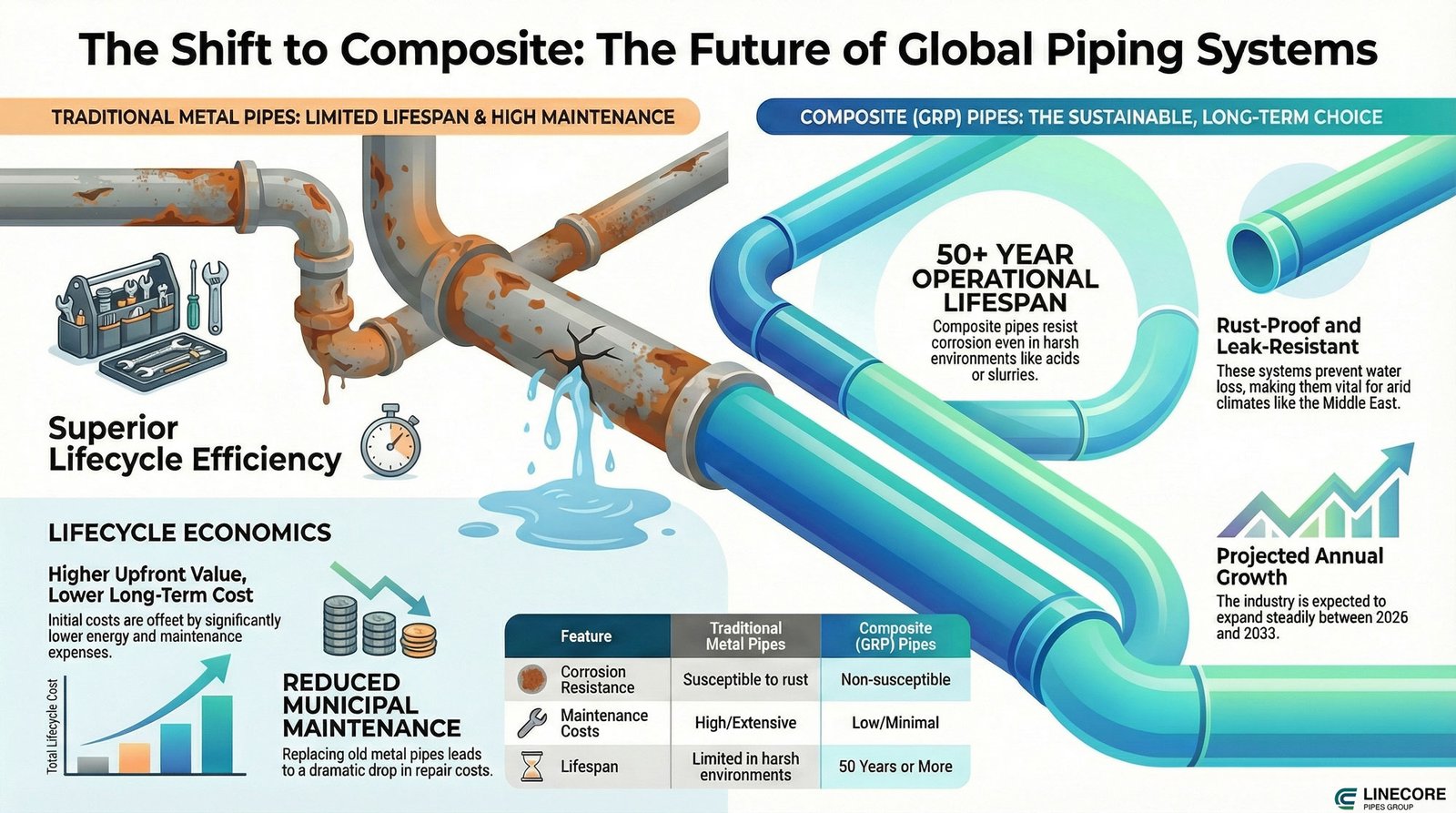
Significant funding is seen in the construction and advancement of water, wastewater, and desalination projects in regions that experience dry and arid climates, such as the Middle East, which is why so many GRP pipes are used in these projects, as they are the only pipes that are not susceptible to rust and can prevent leaks, therefore saving water.
High Demand for Corrosive Lines
Composite pipes are the best choice for a corrosion-resistant piping system that can last 50 years or more, even in extremely harsh environments (e.g., the presence of acids or slurries), which is why they are in high demand.
Maintenance and Lifecycle Issues with Traditional Pipes vs Composite Pipes
Extensive research has shown that metal pipes have a higher lifecycle and maintenance costs than composite pipes. With composite pipes, the upfront cost is eventually offset by the lower maintenance and energy costs. This has been seen with the installation of composite pipes in municipal water systems. The replacement of the old metal pipes led to a dramatic drop in maintenance and repair costs.
2. Market Restraints
The choice of composite pipes requires thoughtful planning for the budget. Here is why a project manager should consider these financial factors:
Unlike traditional and unconventional materials, composite materials are more expensive, and the choice of primary costs may concern managers. The point is, when overall costs (materials + maintenance) are considered, composite pipes are rationally the top choices. (Source: Scribd)
Also, the installation methods of composite pipes require expert workers and may be a bit more time-intensive, though the risk of leak or crack is lower than alternatives in the same situation.
3. Opportunities in the Market
These vacancies show where composites can get additional business as global needs change.
- In general, they show that renewals and tough setups have a lot of promise. The market is looking for development from old grids and new constructs in areas where water is scarce.
- Replacing old steel and concrete pipes: Thousands of miles of pipelines in Europe and North America need to be replaced. Composites can help prevent future corrosion problems.
- More money is going into desalination and water transport systems. For example, GCC mega-projects like NEOM need kilometers of GRP for brine lines.
- Expansion of chemical, industrial, and mining infrastructure, FRP is preferred for acids and slurries in Asia’s industries and Africa’s mines.
- More and more, composite pipes are being used in harsh conditions. For example, offshore wind and hydrogen lines take advantage of their non-rusting properties.
4. What are the Challenges in the Composite Pipe Market?
To keep growth on track, we need steady supplies and clearer procedures to deal with these problems.
Changes in the prices of raw materials: Resin and oil prices are linked, which affects quotations for extended jobs.
Requirements for standardization and certification: ISO and API are examples of patchy worldwide standards that require a lot of testing, which slows down entry.
Moving and shipping large-diameter pipes: Shipping big GRP sizes can damage them; thus, local manufacturers are better.
Composite Pipe Market Segmentation
This part splits the market into key categories to highlight demand patterns and growth areas.
By the Type of Composite Pipe: GRP, GRV, GRVE, GRE
These types focus on glass-reinforced versions that are the most popular because they offer the best balance of cost and performance.
- Glass Reinforced Plastic (GRP) Pipes: These pipes are often used for water and sewage and include a polyester matrix. They hold around 48% of the market for moderate pressures. (ScienceDirect)
- Glass Reinforced Epoxy (GRE) Pipes: Good for oil and gas under high pressure; leads in revenue at 51% and grows the fastest at 6% CAGR.
- Glass Reinforced Vinyl Ester (GRV) Pipes: These Pipes are great for chemicals that don’t break down as easily. They work well in mining and effluents.
- Glass Reinforced Vinyl Ester Epoxy (GRVE) Pipes: These are hybrids that can be used for things like firewater that are in between GRP and GRE.
By the Resin System
Resins determine the pipe’s most important qualities, such as its strength and how well it can handle chemicals.
- Polyester resin systems: a cheap base for GRP that can withstand moderate acidic conditions, used a lot by cities’ infrastructures.
- Vinyl ester resin systems: They work well with strong acids and are important for industrial waste in GRV.
- Epoxy resin systems: They are the best for GRE and work well at high temperatures and pressures in the energy sector.
By Manufacturing Process
The way pipes are created affects their quality and how well they can be customized.
- Filament Winding: Adaptable for different strengths; the fastest growing and most used in GRE.
- Centrifugal Casting: Works well for ordinary GRP sewers and makes walls that are smooth.
- Continuous Lamination: Works well for tiny pipes with a lot of volume; makes the basics more consistent.
By the Diameter Size
Sizes range from little lines to large mains, so they can be used for projects of all sizes.
Small-diameter composite pipes are less than 6 inches wide and are used for plant internals and fuels.
Medium diameter composite pipes are 6 to 24 inches wide and make the most money (35%) for water distribution.
Large diameter composite pipes: More than 24 inches; these are the best for moving a lot of water quickly.
Based on the Pressure Rating
Ratings match pipes to the forces of fluids, from very low to very high.
Composite piping systems with low pressure: for sewers and drains; concentration on rigidity.
Medium-pressure composite pipe systems have a pressure range of 10 to 30 bar and are most common for mains and plants.
High-pressure composite piping systems include more than 30 bar, getting better as technology improves.
| Resin Type | Typical Diameters | Typical Pressure Ratings | Common Applications |
|---|---|---|---|
| Polyester (GRP) | Medium to Large (6–48+ inches) | Low to Medium (<10–25 bar) | Water transmission, wastewater, desalination, large sewers |
| Vinyl Ester (GRV) | Small to Medium (2–24 inches) | Low to Medium (5–30 bar) | Chemical process lines, industrial effluents, corrosive wastewater |
| Epoxy (GRE) | Small to Medium (2–20 inches) | Medium to High (15–100+ bar) | Oil & gas flowlines, high-pressure injection, refinery piping |
By Application
Applications explain how pipes can help with real-world fluid problems.
- 30% of revenue comes from water transport and distribution. Smooth bores cut energy.
- Networks for wastewater and sewage are growing quickly and don’t corrode when H2S is present.
- Desalination plants are important in salty environments because they can handle brine.
- 40% of the value of oil and gas pipelines on land; stops leaks.
- Industrial and chemical process piping: For acids, won’t rust.
- Mining and slurry transport: resistant to wear and tear; lasts longer.
- Marine and offshore pipelines: They save weight and have promise underwater.
By Industry of Use
Industries push for adoption based on their own needs for durability.
- Water and wastewater infrastructure: the biggest volume; lasts a long time without leaking.
- Energy, oil, and gas: Most valuable and most reliable without rust.
- Industrial manufacturing: steady for processes and unique fittings.
- Chemicals and petrochemicals: a place for aggressive people; safe to handle.
- Mining and marine industries: new, but hard to work in.
Analysis of the Regional Composite Pipe Markets
Markets differ from one place to another because of the needs of the infrastructure and the emphasis of the industry.
Africa and the Middle East
There is a lot of demand for GRP, GRE, and GRVE pipes here since there are a lot of oil reserves and not enough water. Desalination, water transport, and oil and gas projects are the most important. Saudi Arabia and the UAE are in charge of big projects like NEOM, where composites can tolerate salty and corrosive conditions without fail.
Asia and the Pacific
The biggest part, 38–40%, comes from rapid urbanization and infrastructural growth. More money is going into water and industrial developments in China and India, which makes more people want to use sewage and chemical lines.
Europe
Replacing existing pipes is very important, as they hold 20–25% of the market. Composites are preferred in utilities and renewables because they are more environmentally friendly and resistant to corrosion.
North America
Rehabilitating infrastructure boosts growth, which is fastest at 25–30%. In US oil fields and water enhancements, there is a growing need for high-performance composite piping. (MarketResearchFuture)
Latin America
New water and industrial infrastructure projects are getting more attention, but they are still a minor part of the whole. Brazil and Mexico are looking at composites for mining and energy to save maintenance costs.
GRP, GRE, GRV, and GRVE Pipes: Importance in the Market
Among all types of composite pipes, the FRP family, including GRP, GRV, and GRE pipes, is the best-suited pipeline for various applications due to their remarkable resistance to corrosion, pressure, and certain temperature conditions.
- The main reasons these types of pipes are so popular in the composite pipe market are: They have more than 90% of the market share because they are strong and cheap. GRE has the highest value at 51%, while GRP has the most volume in water.
- In corrosive and high-pressure settings, GRV/GRVE resists acids, and GRE can handle 100+ bar and 120°C without rusting. (Source: ResearchGate)
- GRP is good for sewers and mains, GRE is the top choice for hydrocarbons, and GRV can handle harsh fluids and chemicals.
- Long-term benefits in terms of cost and reliability: a life span of more than half a century that saves maintenance costs by 30% to 50%, making it cheaper overall.
What Are the Newest Trends in Composite Pipe Tech?
Nowadays, composite pipe technology has come a long way to become well-known in piping systems. These pipes are tougher and work better, which makes them a solid choice for big infrastructure projects.
As the new resin mixes and better fiber reinforcement came to the game, composite pipes can now handle more stress, resist corrosion, and last longer overall. So, they’re a smarter pick when things get rough.
Engineers have also come up with composite systems that stand up to high pressure and heat. That’s a big deal for oil and gas, where the environment doesn’t cut you any slack.
On top of that, new connection methods like adhesive bonding and mechanical couplings make setting up these pipes simpler and more dependable. Fewer headaches, fewer failures. (WhatIsPiping)
And now, with digital monitoring, you can see how pipelines are doing in real time. Inspect the problem early, fix it fast, and keep everything running smoothly for the long haul.
Quality Standards and Certifications
Composite pipes require international certifications to get verified for various use cases, from water infrastructures in modern cities to oil, gas, and desalination plants in the Middle East region. Check the table below for essential standards and certifications for composite pipes at a glance:
| Aspect | Details | Standards | Testing | Importance |
|---|---|---|---|---|
| International Standards | Ensures safety and performance | ISO 14692, AWWA C950 | Pressure, chemical tests | Guarantees reliability in critical use |
| Testing and Inspection | Verifies durability under real-world conditions | ASTM D2996, ISO 14692 | Tensile, thermal stability | Ensures long-term performance |
| Quality Assurance | Ensures compliance with performance criteria | AWWA C950, API 15HR | Visual, NDT inspections | Prevents defects and ensures safety |
| Certified Manufacturing | Requires accreditation for reliable performance | NSF, ISO 9001 | Pressure, corrosion tests | Builds confidence in pipe longevity |
Sustainability and Environmental Impact
Composite pipes with their low maintenance requirement, ease of handling and transportation, and low need for repair are likely to win the eco-friendly prize over their alternatives like steel pipes that last shorter and require continuous repair. Main impacts of composite pipes on the environment:
- Reduced Carbon Footprint: Their lightweight design reduces the need for heavy cranes, and their raw materials and manufacturing process also produce less carbon than other pipes.
- Long Service Life: They last over 50 years with low need for inspection or repair, which already makes them cheaper choices than alternatives.
- Lower maintenance: They are corrosion-resistant and show no deformation under heavy pressures.
An Outlook on the Future of the Composite Pipe Market
Composite pipes, as we’ve shown in the last sections, are more likely to last over decades, and this is why they’re the top choices for all applications during the time of service.
- long-Term Demand Forecasts: Expected to keep growing, with a market size of more than $20 billion by 2035.
- Composite Pipe Use Cases: Desalination, oil and gas, and industrial sectors are all growing quickly because of the benefits of composite pipes.
- Trends in Infrastructures: Investment around the world in water, energy, and industrial infrastructure will keep driving up the need for composite piping systems that are strong and reliable.
Supplier Perspective: how to choose the Right Composite Pipe Partner for Your Project
To achieve the right selection for your project, whether a small rural project, a large urban infrastructure, or a huge desalination plant onshore or offshore, a reliable supplier is what you need to manage your mind and set it free.
Then, first check them for material selection, manufacturing capabilities, and certified QC units. Another point is the power to customize the pipeline for the specific requirements of the project.
Your Reliable Composite Pipeline Supplier: LineCore Pipe Group
Composite piping systems engineered for long-term reliability, mechanical strength, and corrosion resistance are available from LineCore Pipe Group if your project necessitates high-quality GRP, GRE, GRV, or GRVE pipelines.
Contact the technical team at LineCore Pipe Group today to obtain composite pipe solutions that are available for fabrication and are tailored to your unique operational and application requirements.
FAQs
1- What is the current size of the composite pipe market?
In 2026, it’s approximately USD 5.5 billion.
2- What are the key drivers for growth of Composite pipes?
Corrosion resistance, lifecycle savings, infrastructure investments.
3- Which region leads the market of Composite pipes?
Asia-Pacific with 43% share.
4- What are common applications of Composite pipes?
Water, oil & gas, chemicals, mining.
5- How do composite pipes compare to metal?
Lighter, corrosion-free, longer life, but higher upfront cost.
about
The Author

Farshid Tavakoli is a seasoned professional in engineering and international trade. Holding degrees in Electrical Engineering, Mechatronics, and a Doctorate in Business Administration (DBA) from the University of Lyon, he also has a strong background in industrial automation and production line technologies.
For over 17 years, he has led an international trading company, gaining deep expertise in commercial solutions tailored to industrial needs. With more than 8 years of active involvement in infrastructure development, he specializes in the supply of electromechanical equipment for water and wastewater treatment plants and transfer projects.
Together with comapny expert team, he now provides consultancy and integrated solutions for sourcing and implementing complex infrastructure projects across the region.