What pipe can handle corrosive fluids in chemical processing pipelines? The aggressiveness of these flows requires pipes that can handle both corrosion and high pressures. Composite pipes, as brand-new solutions in the modern era of piping systems, are the top-tier for chemical pipes. They are lightweight, corrosion-resistant, and long-lasting under high- pressure and temperature conditions.
In this post, we’ll guide you on how to design, install, and test composite pipes for your harsh chemical piping system.
Overview of Pipe Materials for Chemical Transport
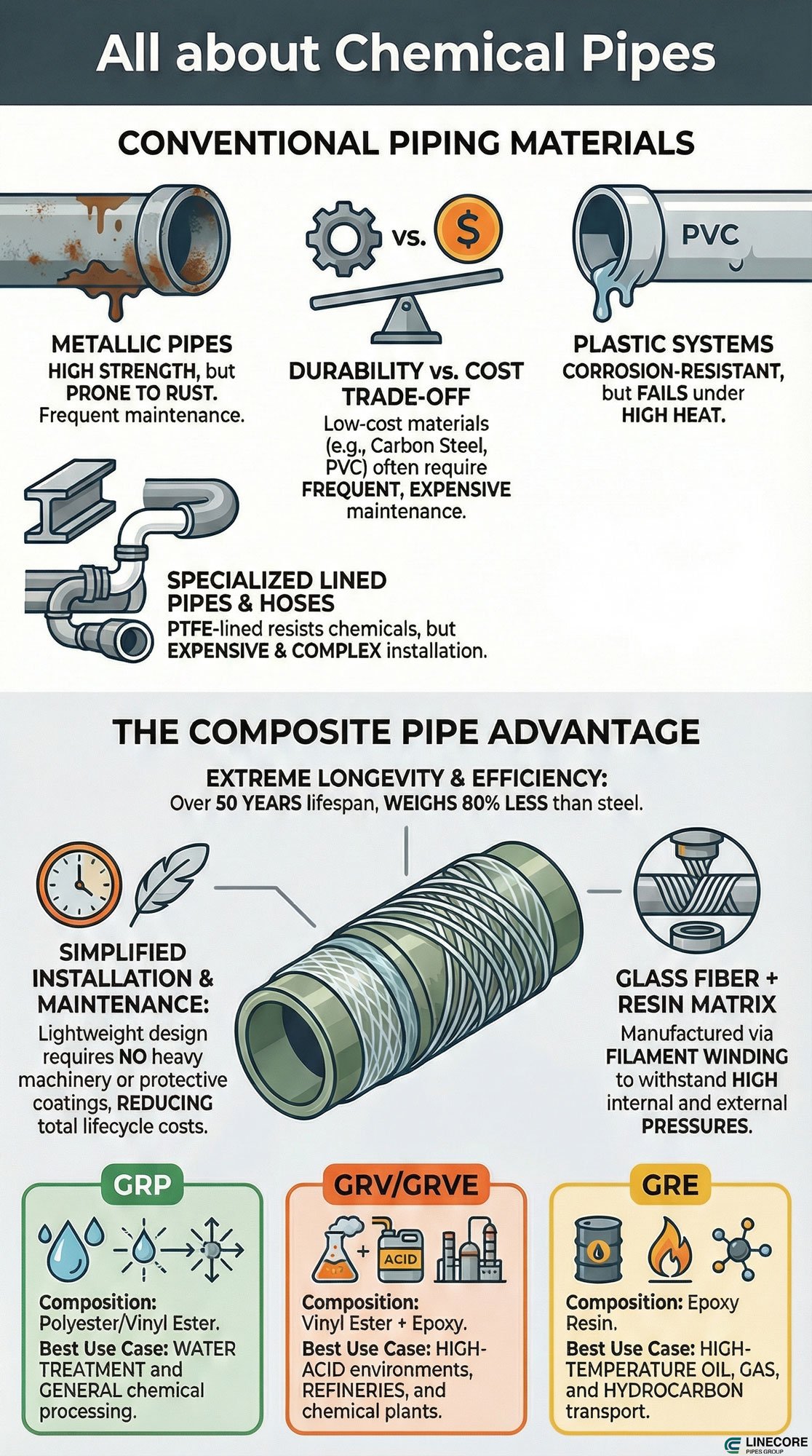
Chemical pipes infographic (source: PipeLineCoreGroup.com)
To select the right piping material for chemical transportation, it’s required to check pipes for their strength, corrosion tolerance, and ability to resist both internal and external pressures.
Traditional Metallic Pipes
Traditional pipes for chemical processing and transportation were made of carbon steel, stainless steel, duplex, and nickel alloys, each of which was used for its high strength and pressure tolerance.
- Carbon steel pipes are strong, long-lasting, and more cost-effective than other options, but they are very vulnerable to corrosion in harsh environments.
- Stainless steel pipes showed better resistance to corrosion in cases with an average risk of aggressive matters that add to the cost of materials.
- Duplex and Nickel Alloys, which include better resistance to aggressive materials and fluids, but they can be used in special cases due to being more expensive than other options.
Plastic and Lined Pipes
Plastic pipes include PVC, CPVC, HDPE, and PTFE-lined systems, which are each used for less demanding situations due to their lightweight and resistance to corrosion in more moderate conditions.
- PVC and CPVC: Cost-effective and resistant to chemicals, while they can handle limited temperature and may deform under high temperatures.
- HDPE: Flexible and more resistant to temperature extremes compared to PVC, but it fails in extreme temperatures or high-pressure systems.
- PTFE-lined Systems: They have good resistance to corrosion, but they are highly expensive and require complicated installation methods.
Flexible Chemical Hoses
Flexible hoses are great for moving chemicals around or using them for a short time. Some of the features are:
- Rubber hoses are easy to put together and very flexible, but they aren’t good for long-term, high-performance piping in tough circumstances.
- UHMWPE hoses can handle a lot of harsh chemicals; however, they might not be able to handle very high or low temperatures (just up to 80°C) or pressures over time. (Source: Linkedin)
Now check the table below for these pipes to get to the most resistant option, “composite pipes”.
| Pipe Material | Strength | Corrosion Resistance | Temperature/Pressure Tolerance | Cost |
|---|---|---|---|---|
| Carbon Steel | High | Poor (susceptible to corrosion) | Medium (up to 400°F / 204°C) | Low |
| Stainless Steel | Very High | Good (corrosion-resistant) | High (up to 800°F / 427°C) | Medium-High |
| Duplex & Nickel Alloys | Very High | Excellent (superior corrosion resistance) | Very High (up to 1,000°F / 537°C) | Very High |
| PVC (Polyvinyl Chloride) | Low to Medium | Good (resistant to many chemicals) | Low (up to 140°F / 60°C) | Very Low |
| CPVC (Chlorinated Polyvinyl Chloride) | Medium | Excellent (better than PVC) | Medium (up to 200°F / 93°C) | Low to Medium |
| HDPE (High-Density Polyethylene) | Low to Medium | Good (resistant to certain chemicals) | Medium (up to 180°F / 82°C) | Low |
| PTFE-lined Systems | High | Excellent (resistant to a wide range of chemicals) | Medium (up to 500°F / 260°C) | Very High |
| Rubber Hoses | Medium | Fair (depends on rubber type) | Low (up to 200°F / 93°C) | Medium |
| UHMWPE (Ultra High Molecular Weight Polyethylene) Hoses | Medium | Excellent (resistant to aggressive chemicals) | Medium (up to 180°F / 82°C) | Medium |
Composite Pipes: The Future of Chemical Piping Systems
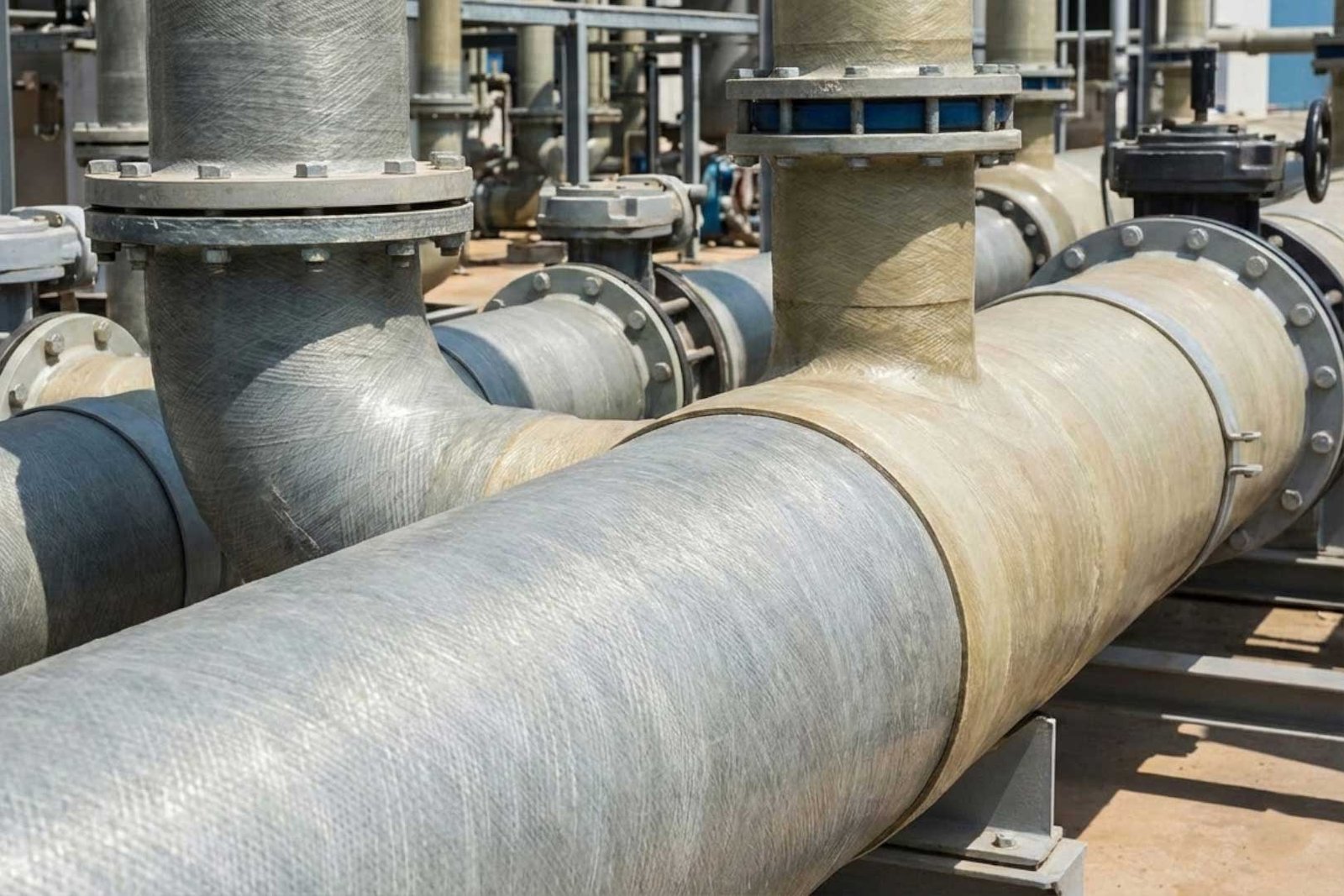
Composite pipes are such piping systems with superior characteristics in harsh environments. They are a combination of glass fibers and resin matrix, which indicates the level of corrosion at the site. Composite pipes are:
- Lightweight
- Corrosion resistant
- Handle pressure and high temperatures
- Flexible design
- Long lifespan
- Cost-effectiveness
How Composite Pipes Are Manufactured
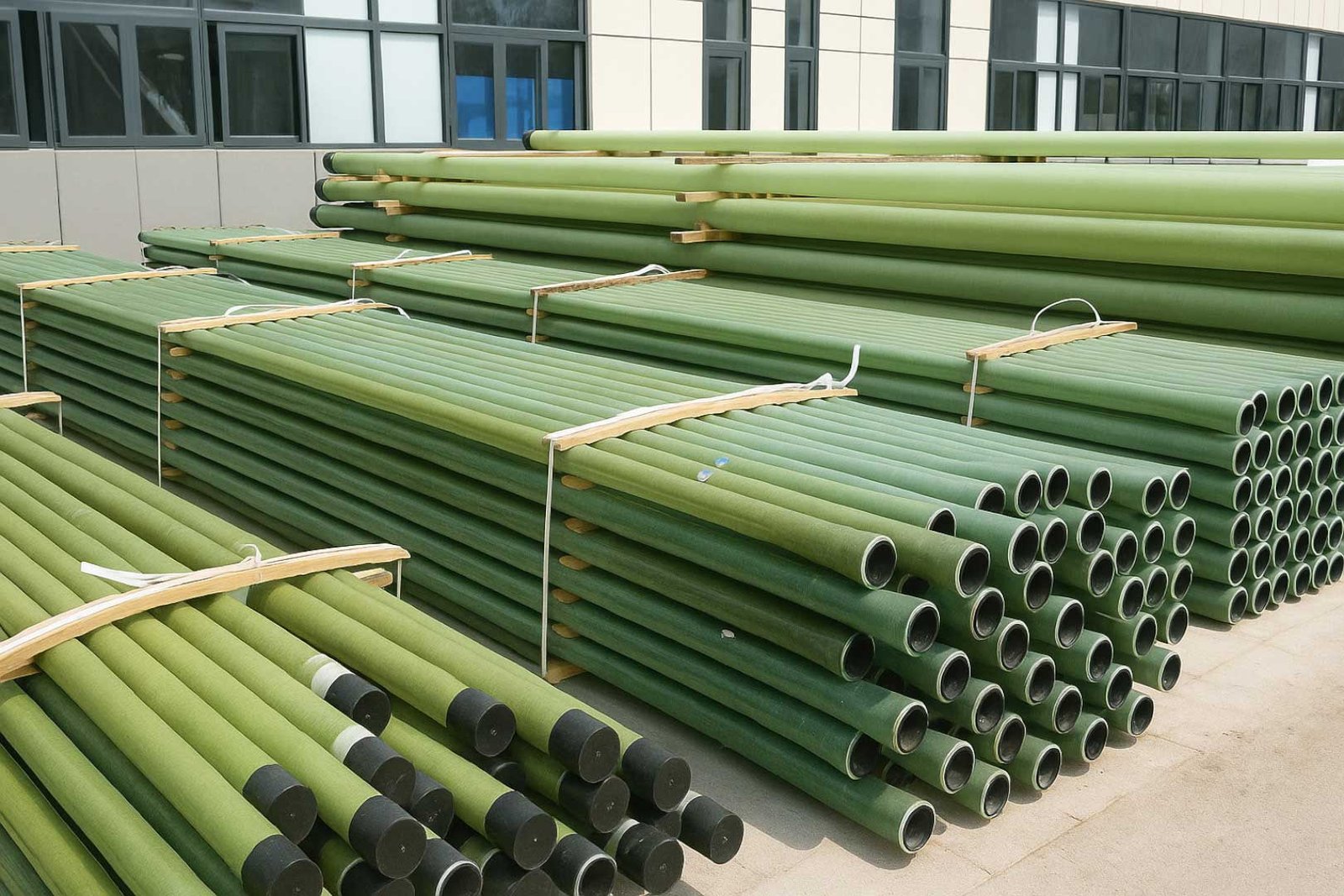
Composite pipes are made by methods like filament winding, centrifugal casting, pultrusion, and hand lay-up. Each technique can be used for specific designs.
The most-used one is filament winding, where pipes are shaped through winding glass fibers around a rotating mandrel, while hand lay-up shapes the pipes with glass fibers, then resin is sprayed or brushed onto the fiber base.
Main Types of Composite Pipes for Chemicals
The main types of composite pipes include GRP, GRV, GRVE, and GRE pipes, where each can be used in a specific use case with its own special properties.
GRP (Glass Reinforced Plastic)
GRP pipes are made of glass fibers and unsaturated polyester resin, which can be used for more general piping uses.
Low to moderate pressure and corrosion tolerance are what make GRP pipes suitable for various applications, such as:
- Water treatment
- Chemical processing
- Sewage systems with moderately acidic conditions
GRV (Glass Reinforced Vinyl ester)
GRV pipes are made of the same material as GRP. The resin choice is vinyl ester, which increases the resistance against acids, alkalis, and solvents, which may cause chemical damage.
In environments with a high risk of corrosive substances:
- Chemical plants
- Refineries
- Acid productions or handling
GRVE (Glass Reinforced Vinyl ester Epoxy)
A combination of GRV and GRE pipes with characteristics of both, including the thermal stability of GRE and the chemical resistance of GRV.
These pipes with superior mechanical strength, a magnificent resistance to chemicals in many use cases, such as:
- Refineries
- Chemical plants
- Wastewater treatment systems
GRE (Glass Reinforced Epoxy)
GRE pipes are reinforced with epoxy resin, offering strong resistance to mechanical stress and moderate chemical exposure. Also, as noted in ScienceDirect, they are suitable for moderate chemical resistance, especially to hydrocarbons and high temperatures.
- Offshore
- Oil & gas pipelines
- Power plants
| Pipe Type | Composition | Chemical Resistance | Mechanical Strength | Best Use Case |
|---|---|---|---|---|
| GRP (Glass Reinforced Plastic) | Glass fiber + Polyester or Vinyl Ester resin | Good to moderate | Medium | Water treatment, general chemical processing |
| GRV (Glass Reinforced Vinylester) | Glass fiber + Vinyl Ester resin | Excellent (acids & alkalis) | Medium | Chemical plants, refineries |
| GRVE (Glass Reinforced Vinylester Epoxy) | Glass fiber + Vinyl Ester + Epoxy resin | Excellent (wide range) | High | Refineries, chemical plants, wastewater systems |
| GRE (Glass Reinforced Epoxy) | Glass fiber + Epoxy resin | Moderate (hydrocarbons) | Very high | Offshore, oil & gas, power plants |
Composite pipes are designed for the future of chemical pipelines with their lightweight and chemical-resistant properties in industrial applications, with long-lasting performance over decades.
Why Composite Pipes Outperform Traditional Materials
Composite pipes surpass traditional pipes for several reasons. This section reveals all these factors of composite pipes in chemical industries to be the top choice.
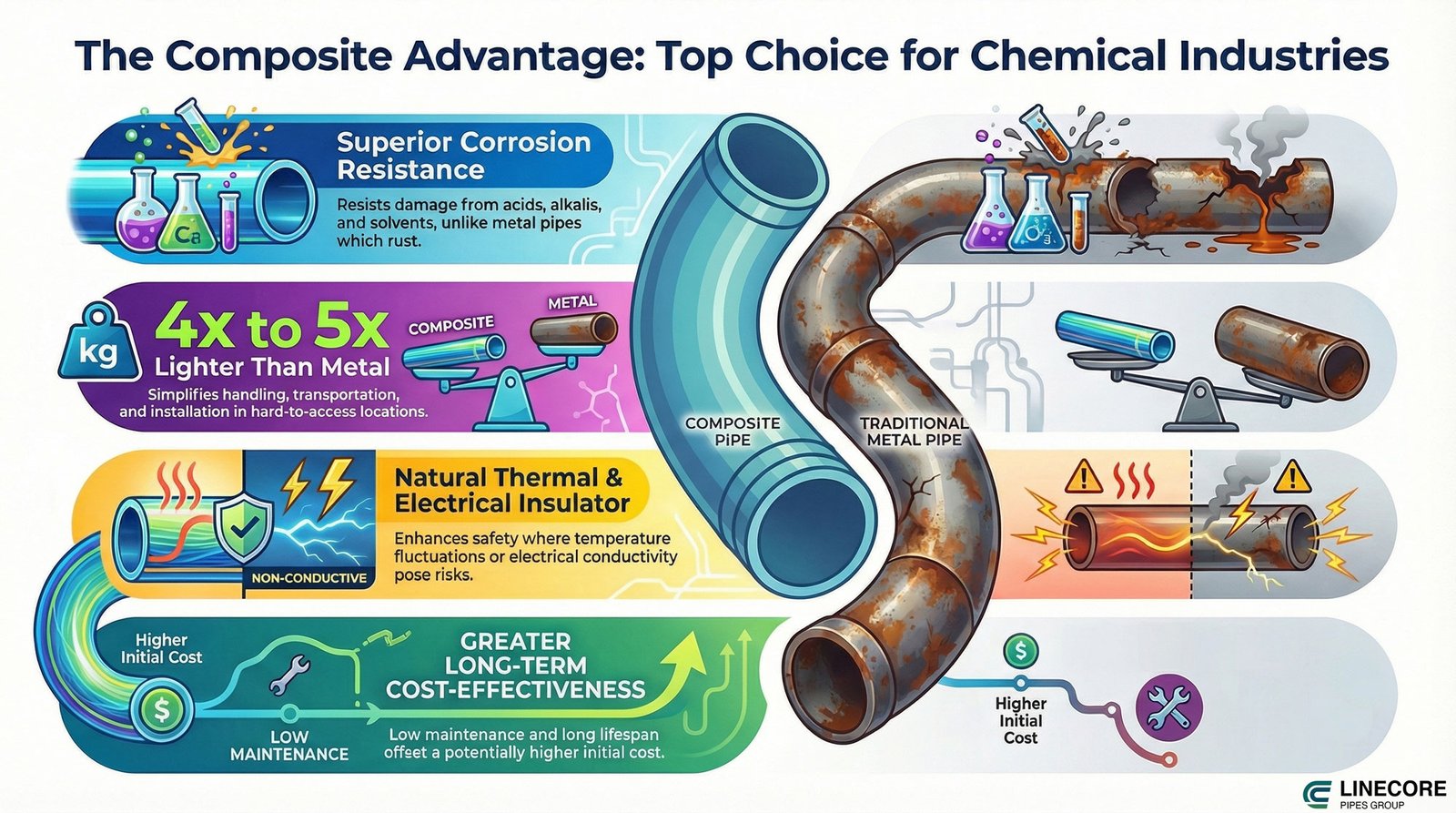
composite advantages chemical pipes inforgraphic (source: PipeLineCoreGroup.com)
Corrosion Resistance
Composite pipes are the best option for chemical resistance in corrosive conditions, due to the use of resin, which keeps the pipes away from damage from acids, alkalis, and solvents.
Unlike traditional metal pipes that rust under aggressive systems, composite pipes show no physical reaction to acids. This matter results in lower maintenance costs or costs for extra protective coatings.
Lightweight Yet Durable
Composite pipes are much lighter than their alternatives (According to Scribd), like metal pipes (about one-fourth to one-fifth in the same weight).
This property makes them superior in handling, storage, transportation, and installation, especially in hard-to-access locations like deep in the ocean or open-trench ones.
Thermal and Electrical Insulation
Composite pipes are great for usage in dangerous or conductive conditions since they insulate both heat and electricity. This is especially useful in businesses where changes in temperature or electrical conductivity might be dangerous. These pipes help ease those worries.
Overall Cost-Effectiveness
Composite pipes may cost more at first than other traditional materials, but their long life and low maintenance needs make them cheaper to buy in the long run.
Composite pipes save a lot of money throughout the life of the system since they need fewer replacements, have less downtime, and cost less to maintain.
Chemical Compatibility of Composite Pipes
Composite pipes, more specifically GRV and GRVE, can resist under high chemical lines and aggressive conditions with no degradation included.
Fluids Handled by GRV/GRVE Pipes
- Acids: Harsh acids like sulfuric, hydrochloric, and nitric acids.
- Bases, Solvents, and Oxidizing Agents: GRV/GRVE pipes work well with strong acids and industrial solvents.
- Seawater, Brine, and Wastewater: The best performance for places that get seawater or wastewater because they don’t show corrosion.
- Fuel and hydrocarbons: GRE pipes work especially well for moving fuel and hydrocarbons in oil and gas applications.
These composite pipes are the preferred option for infrastructures that require long-term performance with low maintenance requirements.
| Fluid Type | GRP | GRV | GRVE | GRE |
|---|---|---|---|---|
| Dilute Acids | Good | Excellent | Excellent | Good |
| Concentrated Acids | Fair | Excellent | Excellent | Fair |
| Alkalis | Fair | Excellent | Excellent | Good |
| Hydrocarbons | Fair | Good | Good | Excellent |
| Hot Fluids | Fair | Good | Excellent | Good |
What Are the Installation & Maintenance Advantages of Composite Pipes?
Once you choose the pipe material, it’s time to consider several points for the reliable installation and operation of piping systems. Then check these points to make sure of your final method.
1. Faster Installation Due to Weight
Composite pipes are easier to install compared to steel or other alternatives due to their lightweight. The GRP family can manage the cost of handling and transportation with low need for heavy machinery like cranes. (Source: BHEL)
2. Easier Jointing Techniques
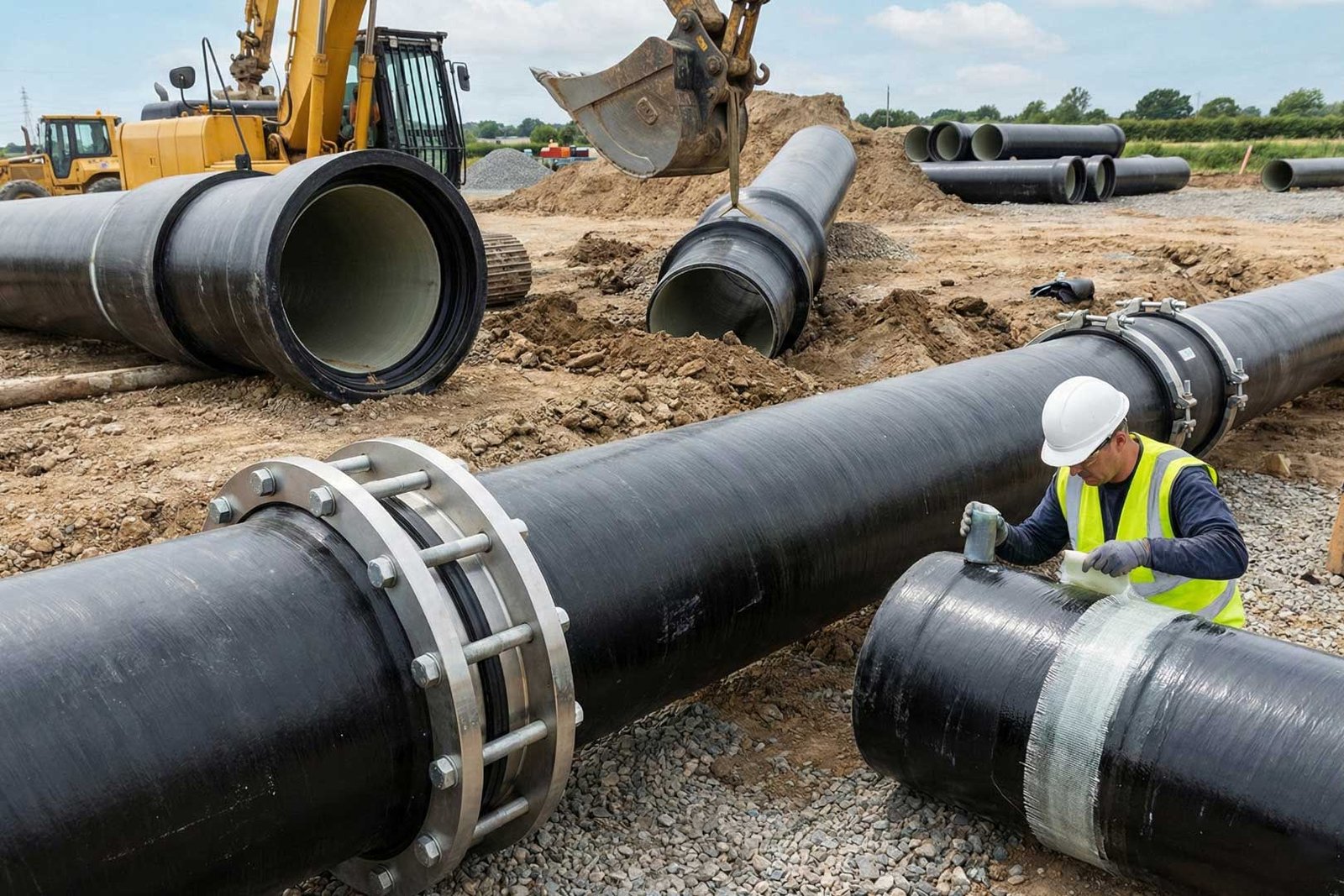
Composite pipes include many jointing methods that ease the process in multiple applications and their hard-to-access locations. For instance, there is no need for welds, and they can be joined by flanges or laminated joints, making GRP pipes the best option for chemical pipelines.
3. Low Maintenance
Composite pipes do not require as much complicated maintenance as steel pipes do. Also, they require no protective coating or linings, which lowers the costs compared to alternatives.
4. Reduced Downtime Over Lifecycle
Composite pipes have fewer replacements and need less maintenance, which means less downtime for the system. This makes the system more efficient and extends the life of the pipes.
Ready to Upgrade Your Chemical Piping? LineCore Pipes Group: Your Trusted Partner
Linecore Pipes Group is the best choice in modern, long-lasting composite solutions for your chemical piping. For tough industrial needs, our high-performance pipes are the best at corrosion resistance, are easy to install, and save money in the long run. Get in touch with us today to change your systems at our website PipeLineCoreGroup.com.
FAQs
1- What types of chemicals can composite pipes handle?
Composite pipes such as GRV, GRVE, or GRE pipes can handle acids, alkalis, and solvents with no degradation.
2- Are composite pipes suitable for high-pressure applications?
Composite pipes with layers of glass fibers include such strength under high-pressure systems internally and externally.
3- How long do composite pipes last in chemical lines?
Composite pipes can last over 50 years in aggressive and extremely harsh environments with no evidence of leakage or damage. This number can be increased in certain conditions with low maintenance.
about
The Author

Farshid Tavakoli is a seasoned professional in engineering and international trade. Holding degrees in Electrical Engineering, Mechatronics, and a Doctorate in Business Administration (DBA) from the University of Lyon, he also has a strong background in industrial automation and production line technologies.
For over 17 years, he has led an international trading company, gaining deep expertise in commercial solutions tailored to industrial needs. With more than 8 years of active involvement in infrastructure development, he specializes in the supply of electromechanical equipment for water and wastewater treatment plants and transfer projects.
Together with comapny expert team, he now provides consultancy and integrated solutions for sourcing and implementing complex infrastructure projects across the region.