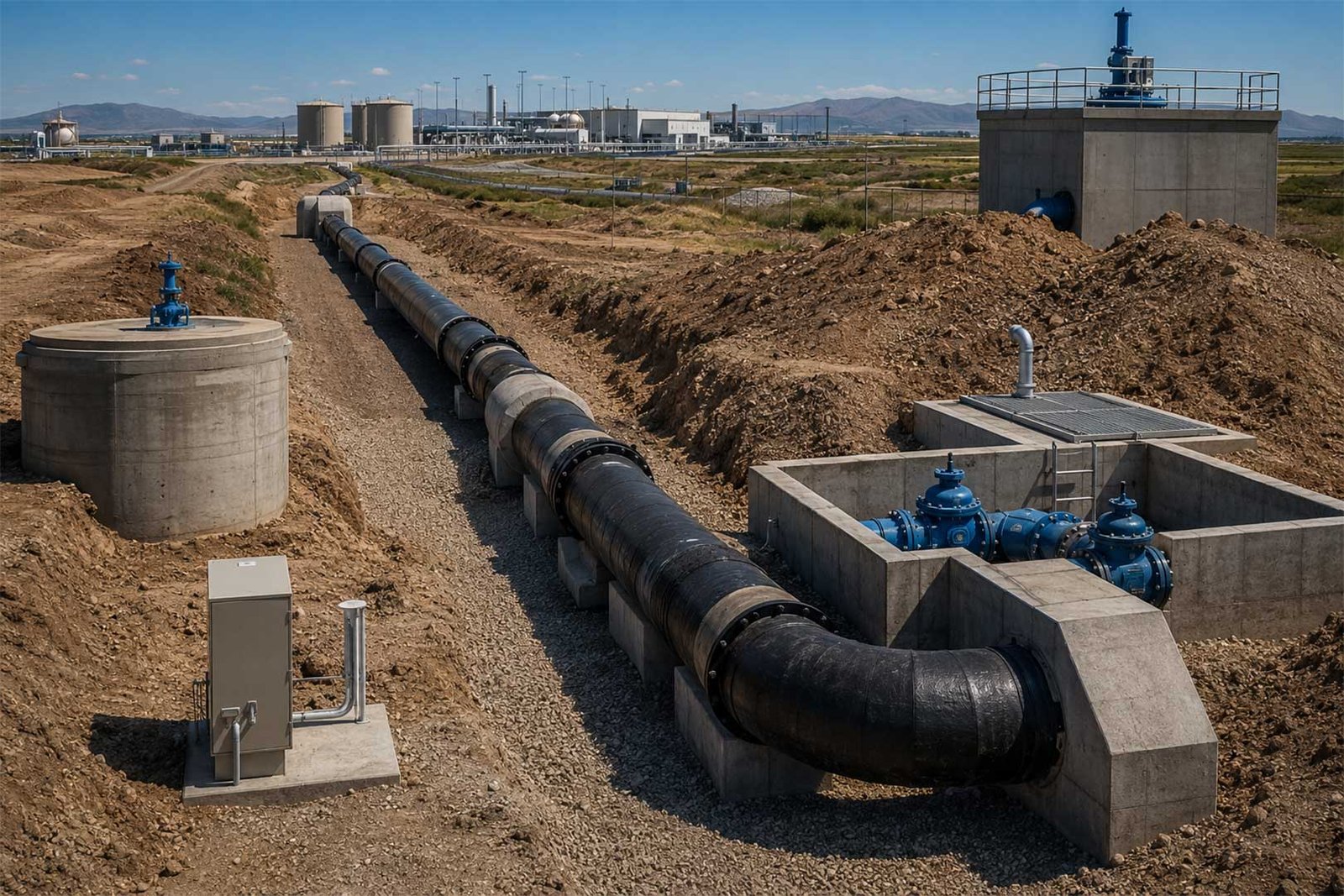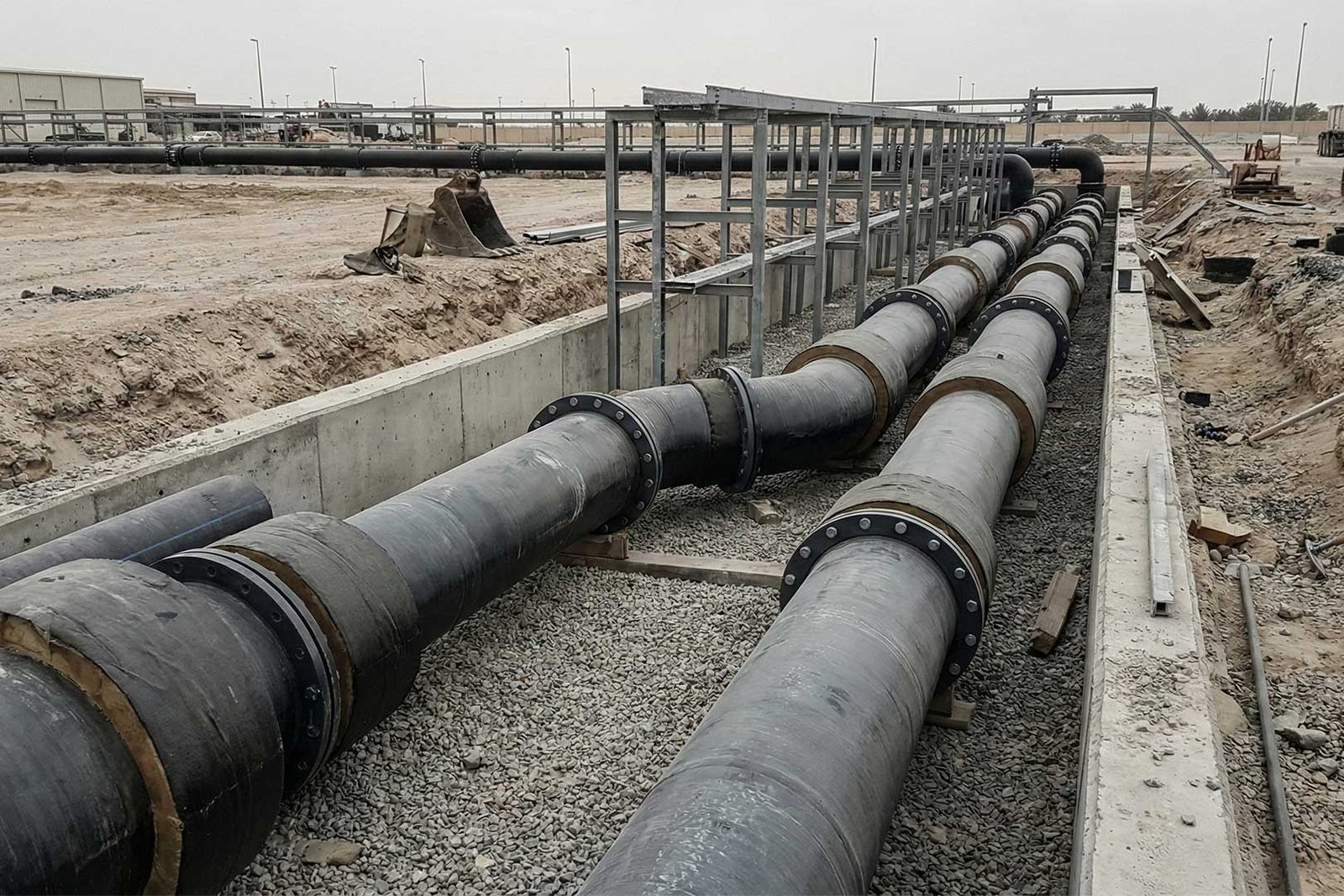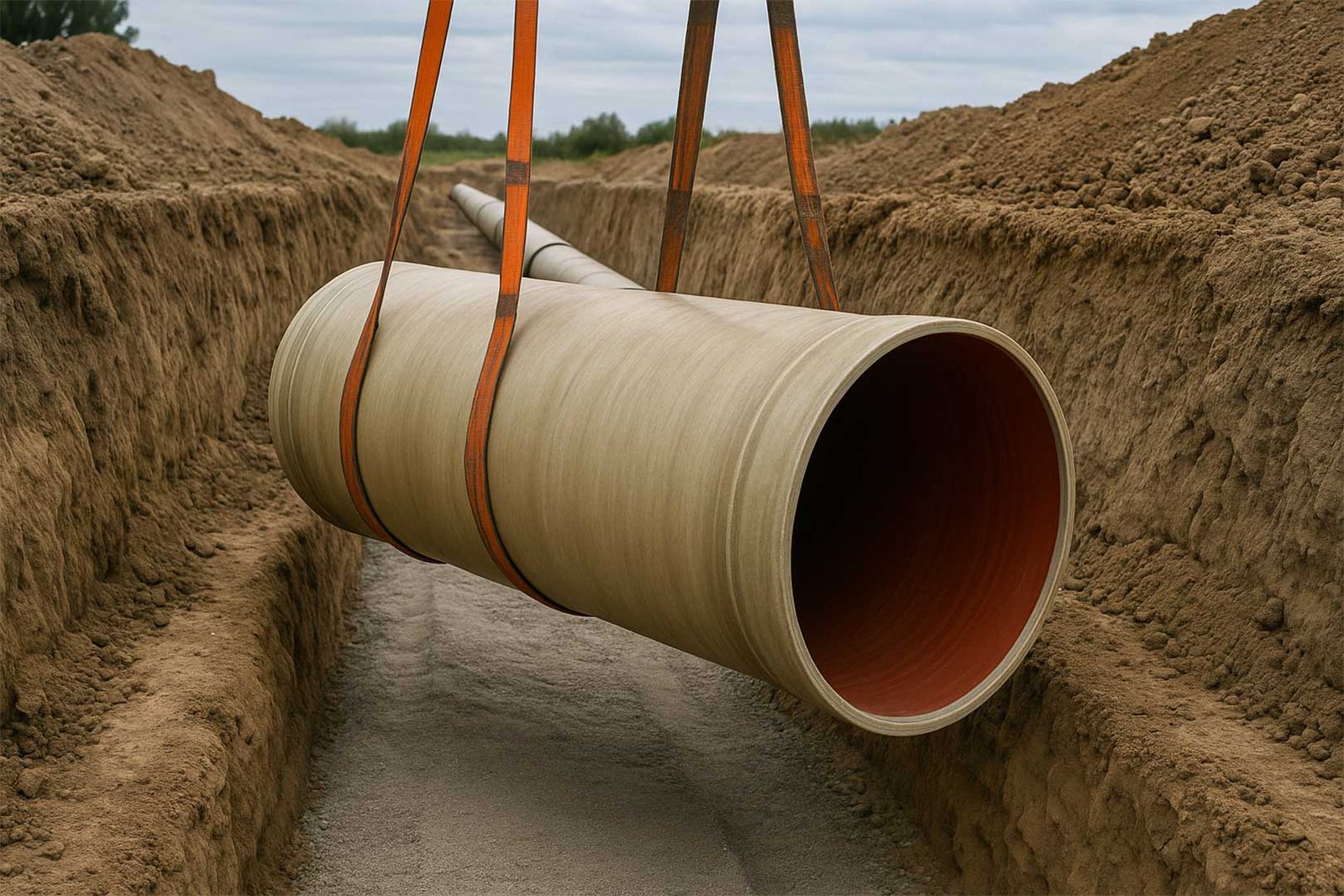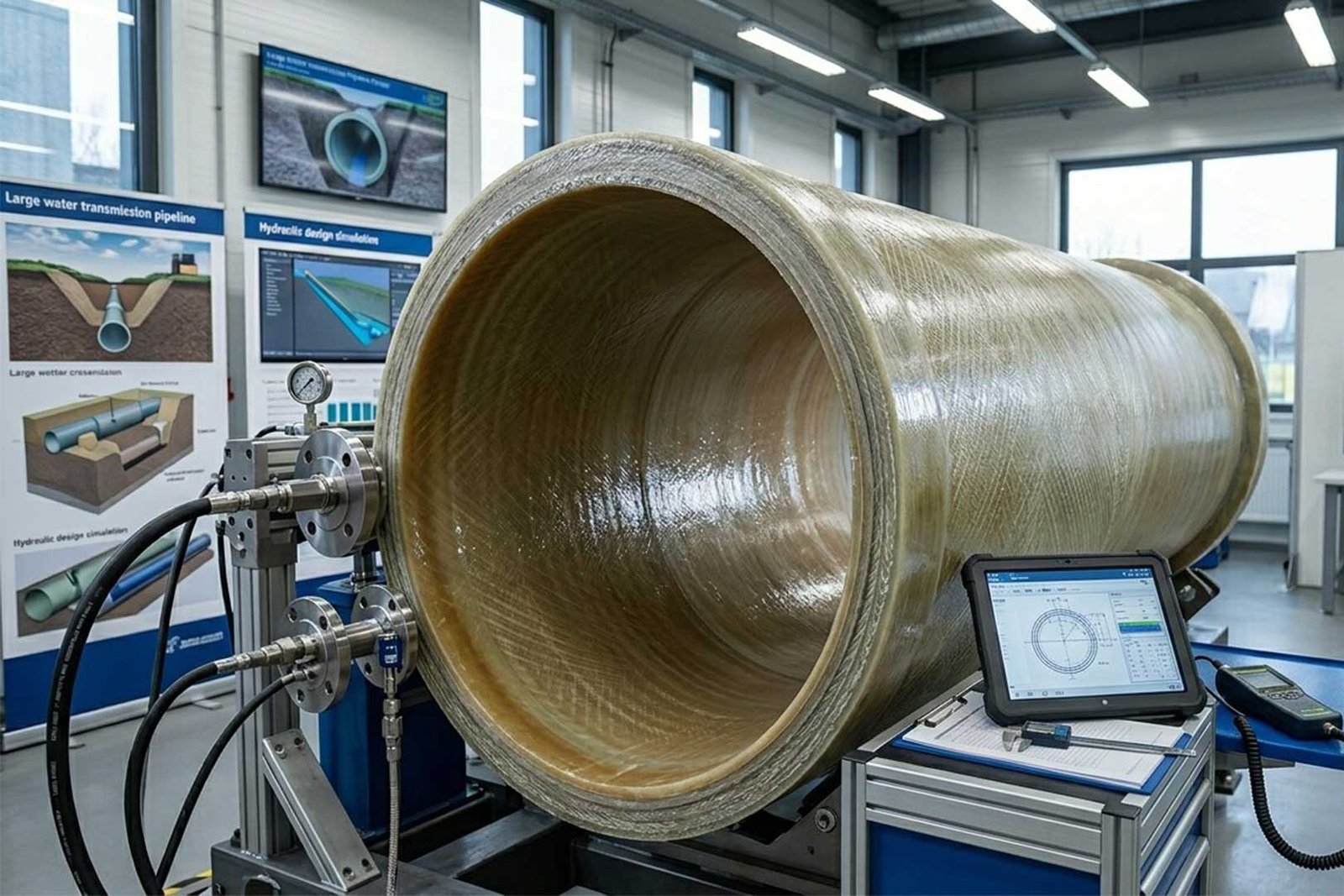
A GRP pipe can be manufactured to specification, but long-term performance depends on much more than production alone. Before approving GRP pipes for a transmission line, how can an owner know that the selected pressure class, stiffness class, joint system, and installation conditions will perform safely for decades?
That requires testing, design validation, hydraulic review, and engineering checks. A pipeline technology center helps bring these activities together before procurement and installation. In this article, we explain how that process supports reliable composite pipeline projects.
What Is a Pipeline Technology Center for GRP and Composite Pipes?
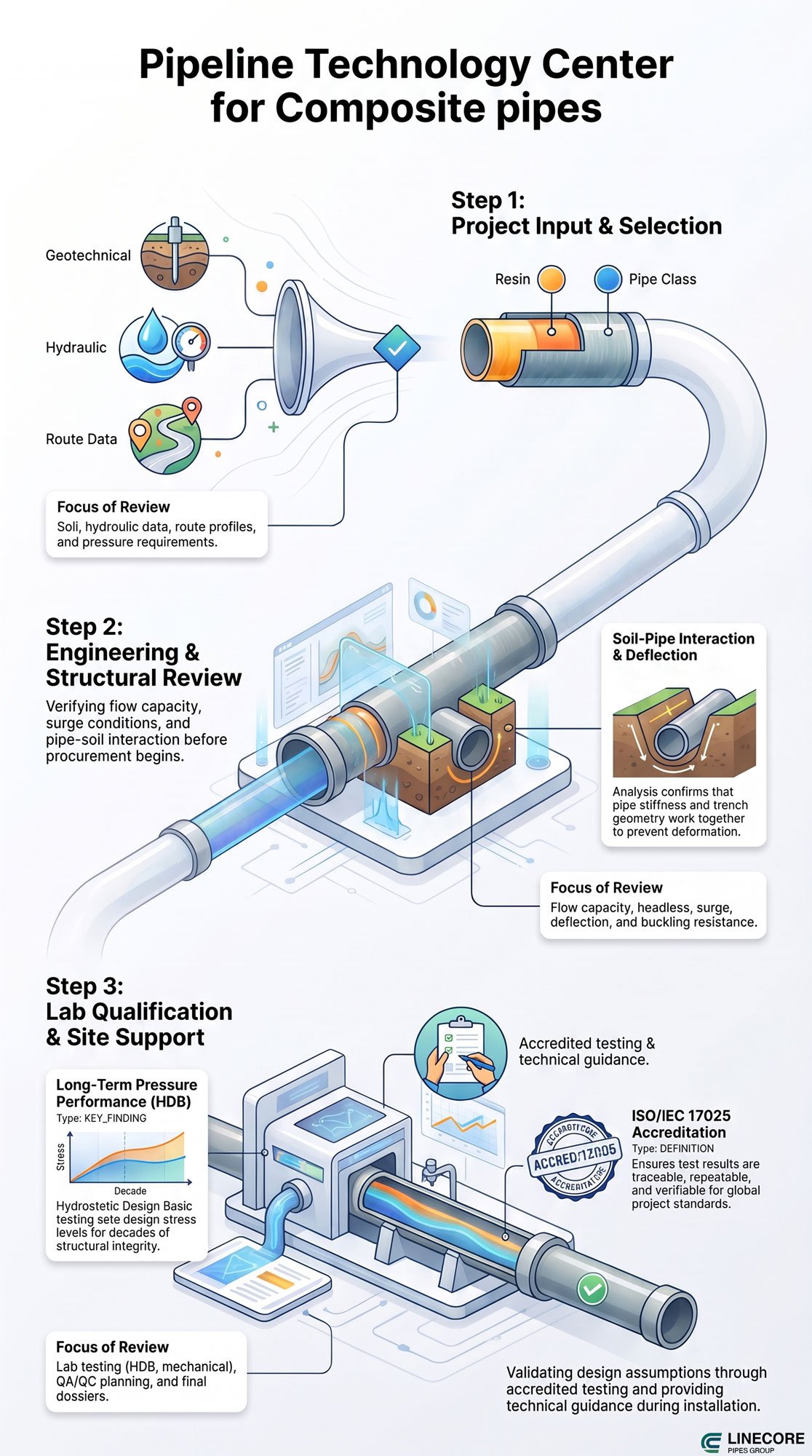
A pipeline technology center is where engineering, testing, and manufacturing come together. Its job is to answer a practical question: will the selected pipe system perform as expected once it is installed and operating in the field?
Turning Test Results into Engineering Decisions
Pipe performance depends on more than production quality. Engineers need to review material properties, pressure requirements, hydraulic conditions, soil loads, joint performance, and long-term durability. A technology center supports this work through:
- Product design and development
- Material qualification
- Mechanical and chemical testing
- Hydraulic review
- Structural assessment
- Design validation
The data generated in the laboratory becomes part of real project decisions, from pipe selection to installation requirements.
Supporting Long-Term Pipeline Performance
Many water transmission projects are designed for decades of service. Long-term testing helps engineers evaluate how composite pipes behave under pressure, deflection, and environmental exposure throughout that period. These results support design values used in applicable industry standards.
LineCore Pipes Group Technology Center
LineCore Pipes Group operates a dedicated composite pipe technology center that supports product development, engineering review, testing, and technical validation.
More than 30 researchers work across six departments which cover composite design, chemistry and polymers, mechanical engineering, machinery design, nanotechnology, and civil engineering. The center provides technical support for:
- GRP pipe manufacturing
- Resin production
- Composite blade production
- Composite profiles and components
This structure links research, testing, manufacturing, and project engineering within a single technical framework.
Why a Technology Center Matters in Water Transmission and EPC Projects
Large pipeline projects involve much more than pipe supply. Decisions made during design can influence construction costs, long-term performance, maintenance requirements, and project risk for decades. That is why engineering review and testing should begin long before pipes arrive on site.
From Design Data to Pipe Specification
An EPC water transmission project depends on a connected technical process. Survey data, hydraulic calculations, material selection, pipe classes, structural checks, manufacturing, testing, installation, and commissioning all need to support the same design assumptions.
When these activities are reviewed separately, gaps can appear between design intent and field conditions. A technology center helps identify those gaps before procurement and construction begin.
Better Decisions Before Construction Starts
Small design decisions can have major consequences later in the project. A technology center helps review:
- Pipe diameter selection
- Pressure class requirements
- Stiffness class requirements
- Trench and bedding assumptions
- Installation methods
For example, an oversized pipe may increase project cost unnecessarily, while an undersized pipe can increase headloss and pumping energy demand throughout the life of the system.
From Testing to Site Execution
Laboratory results become more valuable when they support real project decisions. Material qualification, hydraulic review, and structural verification help project teams confirm that selected pipe systems are suitable for the expected operating conditions.
What Happens Next?
This helps reduce the risk of joint leakage, excessive deflection, surge-related problems, or selecting the wrong pipe class for the application.
For LineCore Pipes Group, the technology center connects engineering, manufacturing, testing, and field execution through one coordinated process.
Core Functions of a Composite Pipe Technology Center
A technology center supports much more than laboratory testing. It provides the engineering, material, and design review needed to evaluate how a pipe system is expected to perform throughout its service life.
A. Product Development and Pipe Design
Engineers review laminate structure, resin systems, glass fiber architecture, wall thickness, pressure classes, stiffness classes, and joint designs.
The same process also supports specialized applications such as jacking pipes, buried pressure lines, industrial fluids, and corrosive environments.
B. Material Qualification
Pipe performance starts with raw materials. Engineers must check several items such as resin quality, glass fibers, fillers, curing behavior, resistance to corrosion or temperatures, and durability before materials enter production.
C. Testing and Performance Validation
Testing confirms whether design assumptions and actual performance are synced together. Programs may include mechanical testing, hydrostatic pressure testing, ring stiffness and deflection tests, strain corrosion evaluation, joint testing, and other qualification requirements related to the project.
D. Hydraulic and Structural Engineering Support
The technology center also reviews hydraulic and structural design inputs. This includes flow capacity, head loss, pressure classes, surge conditions, pipe stiffness, burial depth, trench assumptions, external loads, buckling resistance, and support requirements for fittings and special structures.
GRP and Composite Pipe Testing in Real Pipeline Conditions
Pipe testing is not about passing lab numbers. It is about predicting how GRP and composite pipelines behave after years in pressure service, soil stress, and chemical exposure. That is what separates design assumptions from real performance.
Long-Term Pressure Performance
Pressure ratings come from long-duration testing, not catalog data. Hydrostatic Design Basis (HDB) testing keeps pipes under constant internal pressure for long periods, sometimes at elevated temperatures or under repeated pressure cycles. (Source: ASTM D2837)
What’s the Result? The results are processed through regression methods to set design stress levels. This is what engineers use when they decide whether a pipe can stay in service for decades without losing structural integrity.
Ring Behavior and Soil Interaction
Buried GRP pipes do not behave like rigid steel lines. They bend with the soil. Ring bending and deflection tests simulate this soil–pipe interaction under sustained load. The data feeds directly into field decisions such as pipe stiffness selection, trench geometry, and allowable burial depth. In practice, this is where lab results meet construction reality.
A Fruitful Takeaway: small changes in backfill compaction can shift deflection behavior more than changes in pipe wall thickness.
Chemical Resistance and Strain Effects
Chemical exposure is never a theoretical assumption. Scribd highlights that pipes are tested under combined mechanical strain and exposure to acidic, alkaline, wastewater, and hydrocarbon environments.
These tests guide resin selection and liner design. A resin system that performs well in water may behave very differently in industrial effluent.
Mechanical and Material Checks
Material consistency drives long-term reliability more than most design parameters. Testing typically covers:
- Tensile and flexural strength
- Ring stiffness and joint performance
- Resin, glass fiber, and filler qualification
Even when geometry is correct, variation in raw materials can change long-term creep and fatigue response.
Soil and Installation Conditions
Soil governs how a buried pipeline actually behaves in service. Geotechnical testing covers soil classification, shear strength, bedding response, and compaction behavior. These inputs define installation limits and help predict long-term deflection under real field conditions.
The table below summarizes commonly referenced standards used in GRP and composite pipe testing programs.
| Testing Area | Suggested Standards |
|---|---|
| Hydrostatic Design Basis | ASTM D2992 |
| AWWA M45 | |
| Ring Bending & Deflection | ASTM D5365 |
| EN 1225 | |
| ISO 10468 | |
| Strain Corrosion | ASTM D3681 |
| Chemical Resistance | ASTM C581 |
| ASTM D543 | |
| Mechanical Testing | ASTM D638 |
| ASTM D790 | |
| ASTM D2290 | |
| ASTM D2412 | |
| Polymer & Resin Testing | ISO 2114 |
| ASTM D2583 | |
| ASTM D570 | |
| ASTM D3418 | |
| Soil & Civil Testing | ASTM D3080 |
| ASTM D2487 | |
| ASTM C39 |
Hydraulic Review for GRP and Composite Water Transmission Lines
Selecting a GRP pipe is never just a diameter and pressure class decision. The full hydraulic behavior of the system needs to be checked to see how the line will actually perform under real operating and future demand conditions.
From Flow Demand to System Performance
A hydraulic review usually starts with design flow, future demand growth, and early pipe sizing. From there, engineers look at how the system behaves in terms of velocity, headloss along the alignment, pumping energy demand, pressure zoning, and the hydraulic grade line across the full network.
Hydraulic design guidance shows that transient events such as pump trips and rapid valve operations can produce surge pressures significantly higher than normal operating pressure, and these cases often govern final pipe pressure class selection (Source: USBR). Additional checks typically include:
- Air valve placement along high points
- Washout and drain point locations
- Isolation valve positioning for maintenance sections
- Interfaces with pump stations
- Connections to reservoirs and storage tanks
The goal is not limited to pipe verification. A technology center should confirm that the selected diameter, pressure rating, and surge allowance actually work together as a full system before installation starts.
Structural Checks for Buried Composite Pipelines
Structural checks for GRP and composite pipelines focus on one question: will the pipe and surrounding soil work together safely under real site conditions over time. This matter represents both short-term installation effort and long-term site conditions or soil behavior.
A buried pipe is not the only player in the system. Soil support, traffic loading, groundwater, and installation quality all will impact how the system works after backfilling.
What Structural Validation Covers
Engineers usually review the following conditions in their structural design phases to make sure of achieving the right angle in the overall process.
- Internal Pressure Capacity: This matter shows how the pipe can safely carry operating and surge pressures without overstressing the laminate structure.
- External Soil and Traffic Loads: Evaluates how buried depth, backfill, and surface loads transfer into pipe wall stress.
- Pipe Stiffness and Ring Deflection: checks whether deformation stays within acceptable limits under long-term loading.
- Buckling Under External Pressure or Vacuum: this is when an engineer checks the stability in groundwater or negative pressure conditions.
- Installation Conditions: includes trench type, bedding quality, haunch support, and backfill compaction assumptions.
- Joint and System Behavior: evaluates angular deflection capacity, thrust forces, anchorage design, and fittings.
- Special Crossings: reviews critical zones such as roads, rivers, and high-fill areas where loads are non-uniform.
In the table below we provided all these stages in one to map the whole process at a glance.
| Stage | What is checked |
|---|---|
| Project Input | Soil, hydraulic data, route, pressure |
| Material Selection | Resin, diameter, stiffness, joints |
| Hydraulic Review | Flow, headloss, surge |
| Structural Review | Deflection, loads, buckling |
| Testing | HDB, mechanical, chemical |
| Construction | Installation + QA/QC |
| Final Dossier | Reports + compliance |
Powerful Message: As recognized in AWWA M45, buried GRP pipes work as a pipe-soil system. Structural validation confirms that pipe class, soil conditions, and installation design are appropriate for the expected loads.
Design Validation Workflow: From Project Data to Approved Pipe System
Design validation is what exactly should contractors be aware of planning for it. Each stage builds on the previous one which can help engineers check whether the selected pipe system is in the right placement for the hydraulic, structural, and operational demands of the project.
Step 1: Project Input Review
The process goes through data gathering. This step mainly includes the information of route profiles, geotechnical investigations, hydraulic requirements, pressure conditions, fluid properties, operating temperatures, installation methods, design life targets, and owner specifications. These inputs form the basis for the design work that follows.
Step 2: Material and Pipe Selection
With the project requirements established, engineers select the pipe system that fits the operating conditions. This typically includes:
- Resin system and liner type
- Pipe diameter and pressure class
- Stiffness class
- Joint type and fitting approach
The goal is straightforward: select a pipe system that matches the hydraulic, structural, and environmental demands of the project.
Step 3: Hydraulic Review
Next comes the hydraulic review. Engineers check flow capacity, headloss, pressure zones, and surge conditions to confirm that the proposed pipe system can operate as intended.
Technical note: According to AWWA and U.S. Bureau of Reclamation guidance, transient events such as pump trips and rapid valve operations can create pressures significantly higher than normal operating pressure. In many projects, these surge conditions influence the final pressure class selection.
Step 4: Structural Review
Structural checks are what can verify aspects of the system like pipe-soil interaction, burial depth, trench geometry, traffic loading, deflection limits, buckling resistance, and long-term creep behavior.
Result: This stage confirms that the selected pipe class and installation assumptions work together under field conditions.
Step 5: Laboratory Qualification
Design assumptions are then checked against test data. Based on the project, qualification may include:
- Hydrostatic pressure test
- Mechanical tests
- Chemical resistance checks
- Jointing system tests
- Long-term performance test
- Raw-material verification
At this stage, the objective is simple: check that laboratory results support the selected pipe design to avoid further wasteful costs.
Step 6: Manufacturing Quality Planning
Before production starts, quality plans establish requirements for incoming material inspection, process control, dimensional verification, production testing, traceability, and nonconformance management.
Step 7: Installation and Site Support
Engineering involvement continues during construction through guidance on handling, storage, trench preparation, bedding, joint assembly, backfilling, field testing, and commissioning activities.
Step 8: Final Technical Documentation
The process ends with a technical document that is filled with test reports, design calculations, pipe data sheets, installation recommendations, QA/QC records, compliance documents, and as-built project information where required.
Ending Note: This can be used also for further maintenance, when engineers are struggling with the problem root.
Why ISO/IEC 17025 Accreditation Matters in Pipeline Testing
Test results carry more weight when they come from a laboratory that follows recognized quality and competence requirements. This is where ISO/IEC 17025 becomes important.
How Does ISO/IEC 17025 Work in GRP & Composite Pipe Systems
ISO/IEC 17025 is the international standard for testing and calibration laboratories. This section covers factors that affect test result reliability. These include:
- Competent laboratory personnel
- Calibrated testing equipment
- Controlled test procedures
- Measurement accuracy
- Traceable and documented results
The goal stays simple. Technicians produce test data that others can repeat and verify.
Why It Matters for Pipeline Projects
Lab results help with decisions on material qualification, pressure class selection, quality control, and design validation. Owners, consultants, and contractors want trust that the numbers come from proper testing methods.
LineCore Pipes Group’s technology center follows ISO/IEC 17025 requirements. It acts as a cooperating laboratory for standard testing. This approach adds credibility to qualification tests, material evaluations, and performance assessments.
Section Summary
In large pipeline projects, accredited testing does more than fill out paperwork. Engineering decisions rest on traceable, repeatable, and verifiable results.
How a Technology Center Supports EPC Water Transmission Projects
Many pipeline issues do not start in the trench. They start much earlier, when design assumptions, material selection, and construction requirements are reviewed by different teams with different priorities.
A technology center helps bring those decisions together before they become site problems.
Support Throughout the Project Lifecycle
The involvement usually starts during feasibility studies and route development, where engineers review hydraulic requirements, site conditions, and possible pipeline alignments. As the design develops, the focus shifts to pipe diameter selection, pressure classes, stiffness requirements, and installation methods.
The same team can then support:
- Procurement specifications that clearly define material and testing requirements.
- Manufacturing QA/QC backed by laboratory qualification and production testing.
- Installation procedures for handling, bedding, jointing, and backfilling.
- Pressure testing and commissioning before the system enters operation.
Section at a Glance: The Case of Water Transmission Lines
In many projects, design, testing, manufacturing, and construction are handled separately. When one assumption changes, the effect may not appear until installation begins. A technology center helps connect these stages through a single technical workflow, reducing rework, delays, and design-related surprises in the field.
Typical Deliverables from a Composite Pipe Technology Center
A technology center does way more than just produce test reports. It creates the real technical documents that help with design decisions, manufacturing, and getting projects done right.
Design and Engineering Documents
You usually receive pipe design basis reports, hydraulic reviews, surge analysis inputs, structural calculations, and recommendations for pressure class, stiffness class, burial depth, and trench design.
Project Example: As noted by Dynaflow Research Group, a surge and stress review for a large GRP cooling water system confirmed the selected pressure class and identified the need for vacuum breakers before detailed design progressed.
Testing and Qualification Reports
In the lab you get material qualification reports, chemical resistance evaluations, joint test reports, and summaries of long-term performance such as HDB testing where it applies.
Industry Example: According to GrandPipe Quality Criteria, GRP pipe qualification includes raw-material verification, hydrostatic testing, ring stiffness evaluation, tensile testing, and long-term performance assessments such as HDB and strain corrosion testing.
Construction and Project Documentation
When the project moves closer to construction, attention turns to QA/QC plans, inspection and test plans, installation procedures, commissioning documents, and field testing requirements.
Project Example: Based on InDepth Water Management, final project documentation may include pressure test certificates, chlorination records, calibration reports, commissioning documents, and handover records for project approval.
| Category | Deliverables |
|---|---|
| Design | Hydraulic + structural reports |
| Testing | HDB, material, chemical reports |
| Construction | ITP, method statements |
| Final | Technical dossier |
The table above shows each category of piping project processing requires what deliverables to be evaluated.
Common Problems Prevented by Proper Testing and Design Validation
Most pipeline failures do not appear suddenly. They usually start from things missed during design, material selection, or installation planning. Good validation catches these problems early.
1- What happens if the wrong pressure class is selected?
The pipeline may work okay at first, but over time pressure changes or surge events can push it beyond what it can handle.
2- Why is surge pressure a common design issue?
Pump trips and valve operations can create sudden pressure spikes that go well above normal levels. Without an early review this often leads to pipe stress or failure.
3- What causes excessive pipe deflection?
In most cases it comes from weak soil support, poor compaction, or picking the wrong stiffness class rather than the pipe material itself.
4- Why do joints or materials fail in service?
The issues usually come from resin quality, curing problems, inconsistent raw materials, or chemical incompatibility with the fluid being transported.
5- What is the risk of missing QA/QC documentation?
Without clear records small installation errors cannot be checked later. This makes troubleshooting and final approval much harder.
6- Why does buckling happen in buried pipelines?
External groundwater pressure, vacuum conditions, or insufficient burial design can cause problems if they are not reviewed properly during the structural checks.
about
The Author

Farshid Tavakoli is a seasoned professional in engineering and international trade. Holding degrees in Electrical Engineering, Mechatronics, and a Doctorate in Business Administration (DBA) from the University of Lyon, he also has a strong background in industrial automation and production line technologies.
For over 17 years, he has led an international trading company, gaining deep expertise in commercial solutions tailored to industrial needs. With more than 8 years of active involvement in infrastructure development, he specializes in the supply of electromechanical equipment for water and wastewater treatment plants and transfer projects.
Together with comapny expert team, he now provides consultancy and integrated solutions for sourcing and implementing complex infrastructure projects across the region.