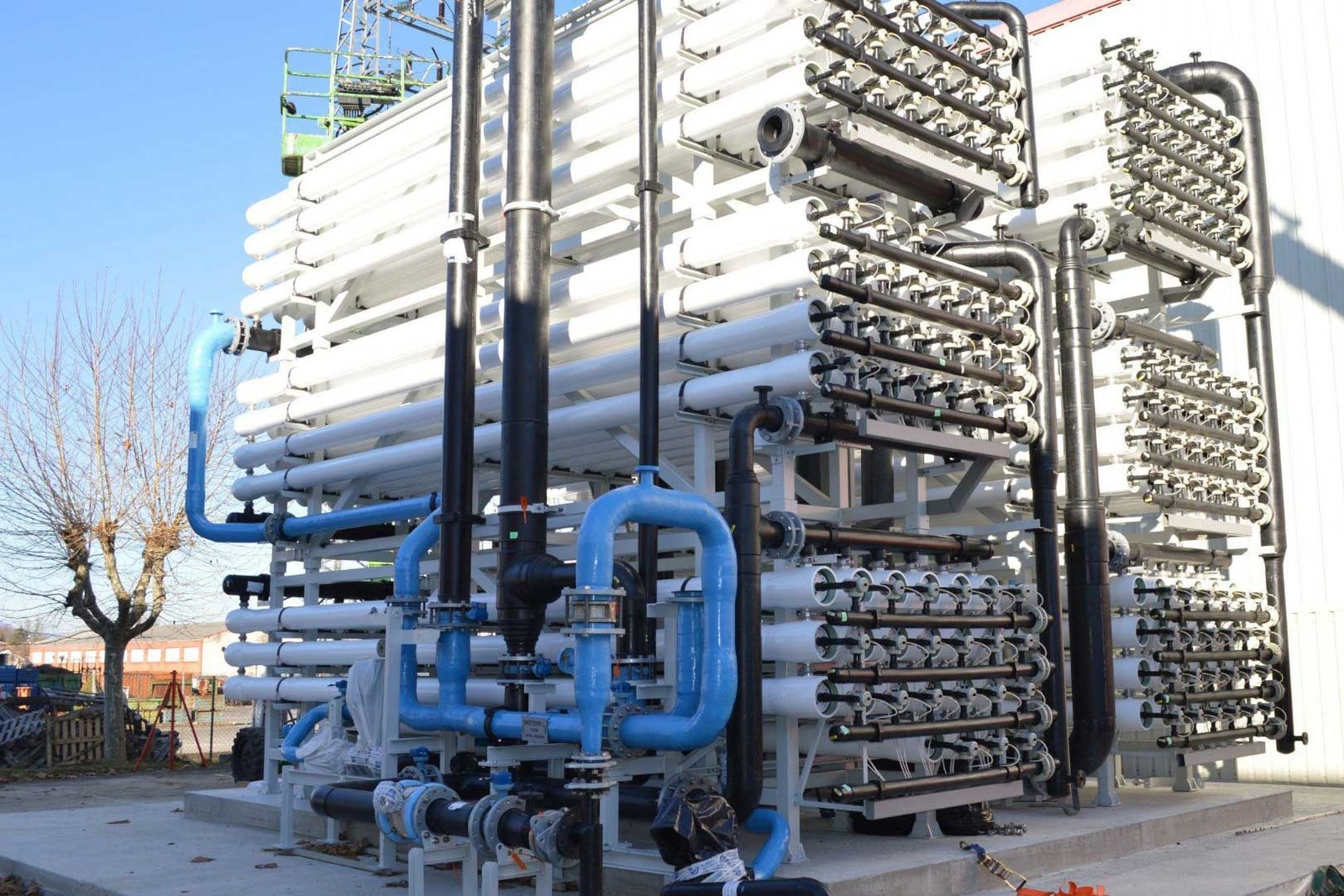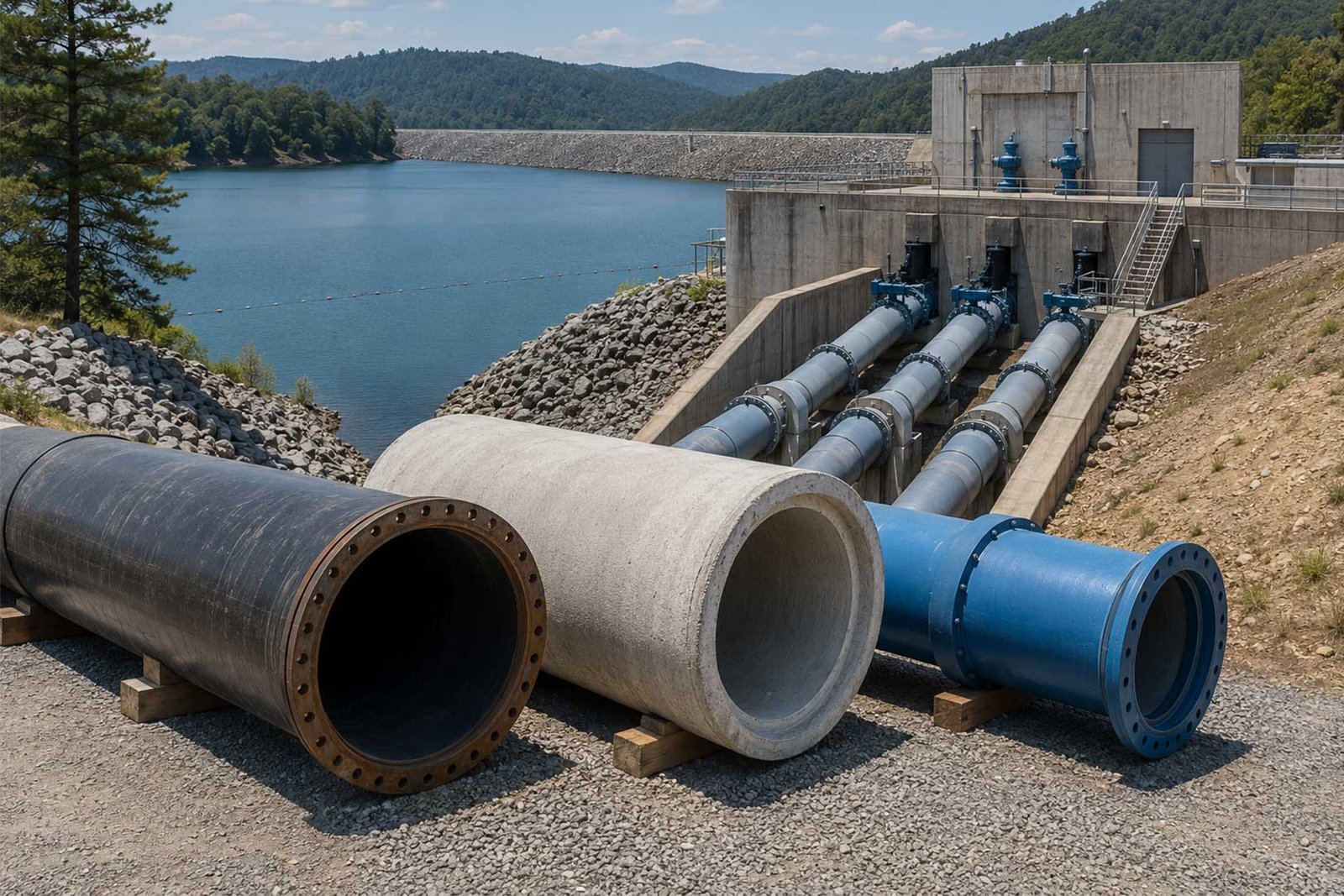
One wrong pipe choice can lock in costs for over a half a century. This decision shapes capital spends, pumping energy, leakage risk, maintenance load, and system reliability. A transmission line is not a simple product; it’s a long-life infrastructure asset. The cheapest pipe today can become the most expensive over time. Owners must weigh water chemistry, soil conditions, pressure and surge, diameter, route limits, and future rehabilitation. Before asking which material is best, ask which one fits the conditions and risks.
This guide includes a lifecycle framework. At Linecore Pipes Group, we support full system solutions from design to delivery.
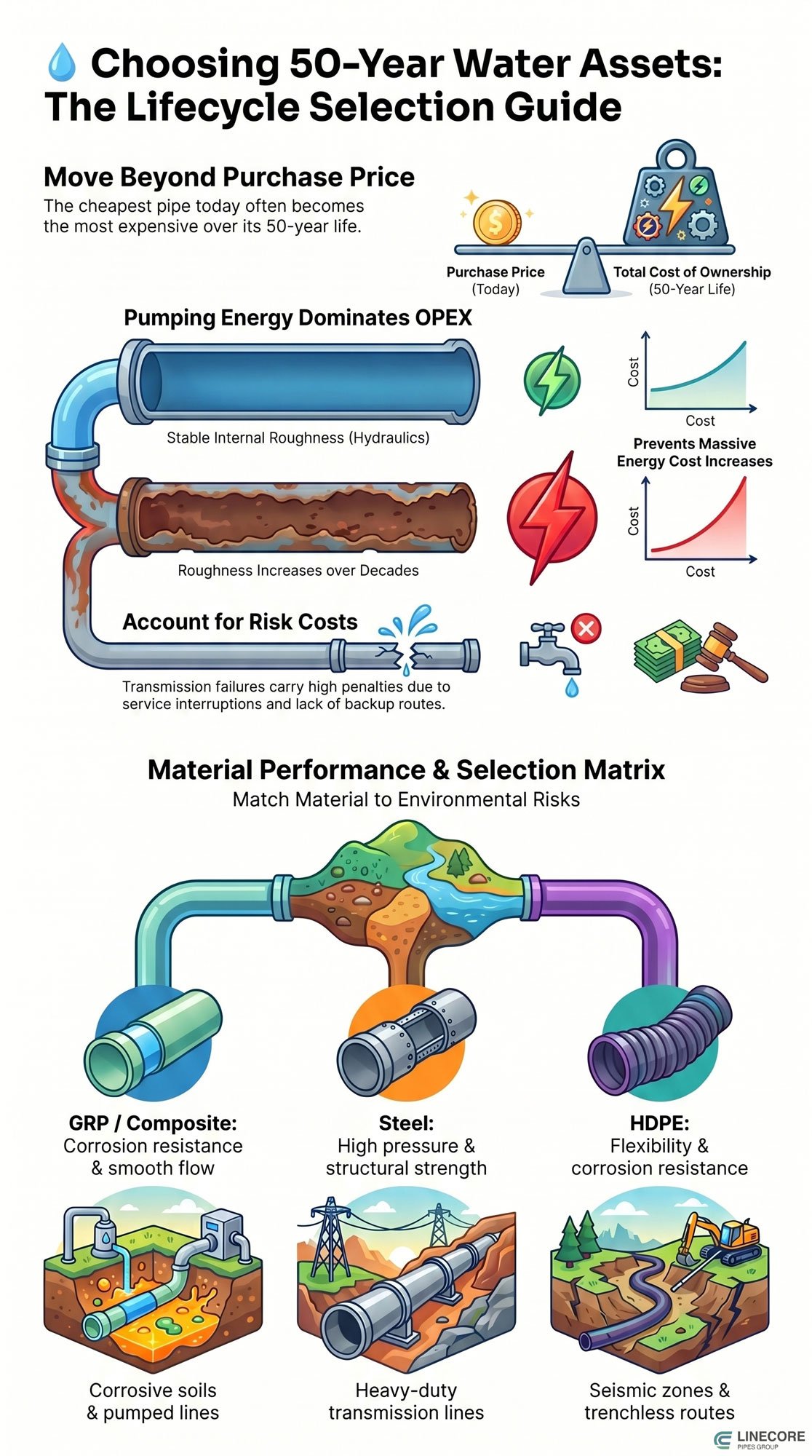
Water transmission pipe materials infographic (source: Pipelinecoregroup.com)
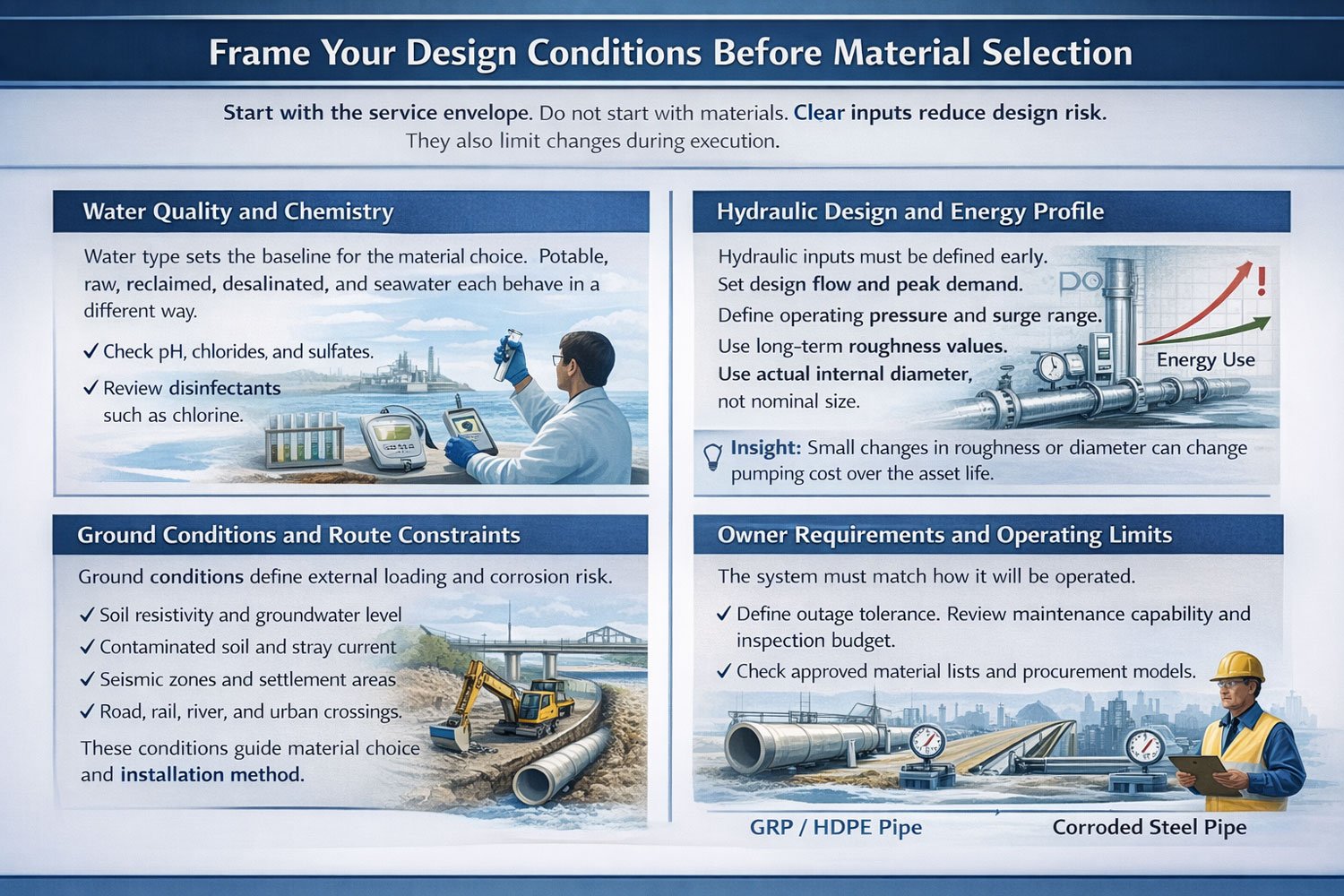
Frame Your Design Conditions Before Material Selection
Start with the service envelope. Do not start with materials. Clear inputs reduce design risk. They also limit changes during execution.
Water Quality and Chemistry
Water type sets the baseline for the material choice. Potable, raw, reclaimed, desalinated, and seawater each behave in a different way. Based on an article published on National Institutes of Health, aspects below must be confirmed in water lines.
- Check pH, chlorides, and sulfates.
- Review disinfectants such as chlorine.
These parameters control corrosion, scaling, and material compatibility.
Hydraulic Design and Energy Profile
Hydraulic inputs must be defined early. Set design flow and peak demand. Check what operating pressure and surge range mean. Use long-term roughness values. Use actual internal diameter, not nominal size.
Insight: Small changes in roughness or diameter can change pumping cost over the asset life.
Ground Conditions and Route Constraints
Ground conditions define external loading and corrosion risk.
- Soil resistivity and groundwater level
- Contaminated soil and stray current
- Seismic zones and settlement areas
- Road, rail, river, and urban crossings
These conditions guide material choice and installation method.
Owner Requirements and Operating Limits
The system must match how it will be operated. Define outage tolerance. Review maintenance capability and inspection budget. Check approved material lists and procurement models.
Long-term asset strategy should guide the final selection.
Owner’s First Questions Before Selecting Pipe Material
What design life target applies to the system
What corrosion risks exist inside and outside the pipe
What surge condition can occur in emergency events
What energy cost will accumulate over 50 years
What maintenance system can the utility support
What installation method fits the corridor constraints
What approvals apply for potable water use
These questions indicate what technical boundaries the project includes. Then find their answers before starting to design the system.
Compare Pipe Materials by Risk Profile, Not by Price Alone
Material comparison must focus on risk behavior, not purchase price. Each pipe system reacts differently under pressure, soil exposure, and long-term operation.
No single material fits all conditions. Each system solves a different engineering problem.
GRP and Composite Pipes
GRP pipes include strong corrosion resistance and stable hydraulic performance. Their internal surface remains smooth over decades of service, which supports lower energy use in pumped systems.
- High resistance to corrosion in aggressive soil and water
- Low hydraulic friction and stable internal roughness
- Reduced lifting and transport requirements due to low weight
- Strong performance in high groundwater zones
These systems require correct design of pressure class, stiffness class, bedding, and joint installation. Performance depends on engineering discipline during installation.
GRP systems perform best in corrosive environments and long pumped transmission lines where energy cost dominates lifecycle performance. (Source: ScienceDirect)
Steel Pipes
Steel pipes support high pressure systems, large diameters, and complex fabrication requirements. They allow flexible design for special sections and above-ground crossings.
However, steel systems depend heavily on corrosion control strategy. Coatings, linings, and sometimes cathodic protection define long-term performance. Steel pipes are threatened by:
- External corrosion in aggressive soils
- Internal corrosion without proper lining
- Dependence on maintenance of protection systems
Consideration: Scribd notes that steel pipes work efficiently when it’s about heavy load toleration or engineered structures. but they easily fail in chemical exposure and corrosive environments.
Ductile Iron (DI) Pipes
Ductile iron pipes are still commonly used in urban water networks. They are strong, mechanically reliable, and familiar to most utilities.
Their real performance is closely tied to how well they are coated, lined, and protected from the surrounding soil. In aggressive soils, corrosion protection becomes an essential concern. Main risks include:
- External corrosion when protective layers are not adequate
- Joints behaving differently underground movement
- Long-term dependence on protective systems
These pipes tend to work best in municipal distribution and moderate transmission lines, especially where operators already have strong maintenance experience.
HDPE Pipes
HDPE pipes are what integrate both flexibility and corrosion resistance for various piping systems. due to their lightweight, transportation cost is lower than traditional material, while this factor cause deformation under heavy loads. Key design considerations include:
- Temperature sensitivity
- Oxidation over long service life
- Surge and fatigue behavior
- Disinfectant exposure in potable water systems
HDPE performs well in trenchless installation, seismic zones, and flexible alignment corridors.
Concrete Pressure Pipe (PCCP)
PCCP systems serve large diameter transmission networks. These pipes offer high structural capacity and long service history in major infrastructure.
However, failure consequences can become severe if prestressing wire or cylinder deterioration remains undetected. Main risks include:
- Wire corrosion and loss of prestress
- Hidden deterioration inside pipe structure
- High consequence failure modes
PCCP requires active condition assessment programs in aging networks.
| Pipe Material | Main Strength | Main Risk | Common Use |
|---|---|---|---|
| GRP / Composite | Corrosion resistance and smooth hydraulics | Installation and joint quality | Corrosive and pumped systems |
| Steel | High pressure and structural strength | Corrosion and coating dependence | Heavy-duty transmission lines |
| Ductile Iron | Mechanical reliability | External corrosion | Municipal water networks |
| HDPE | Flexibility and corrosion resistance | Temperature and surge sensitivity | Trenchless and seismic areas |
| PCCP | Large-diameter structural capacity | Hidden wire deterioration | Major transmission mains |
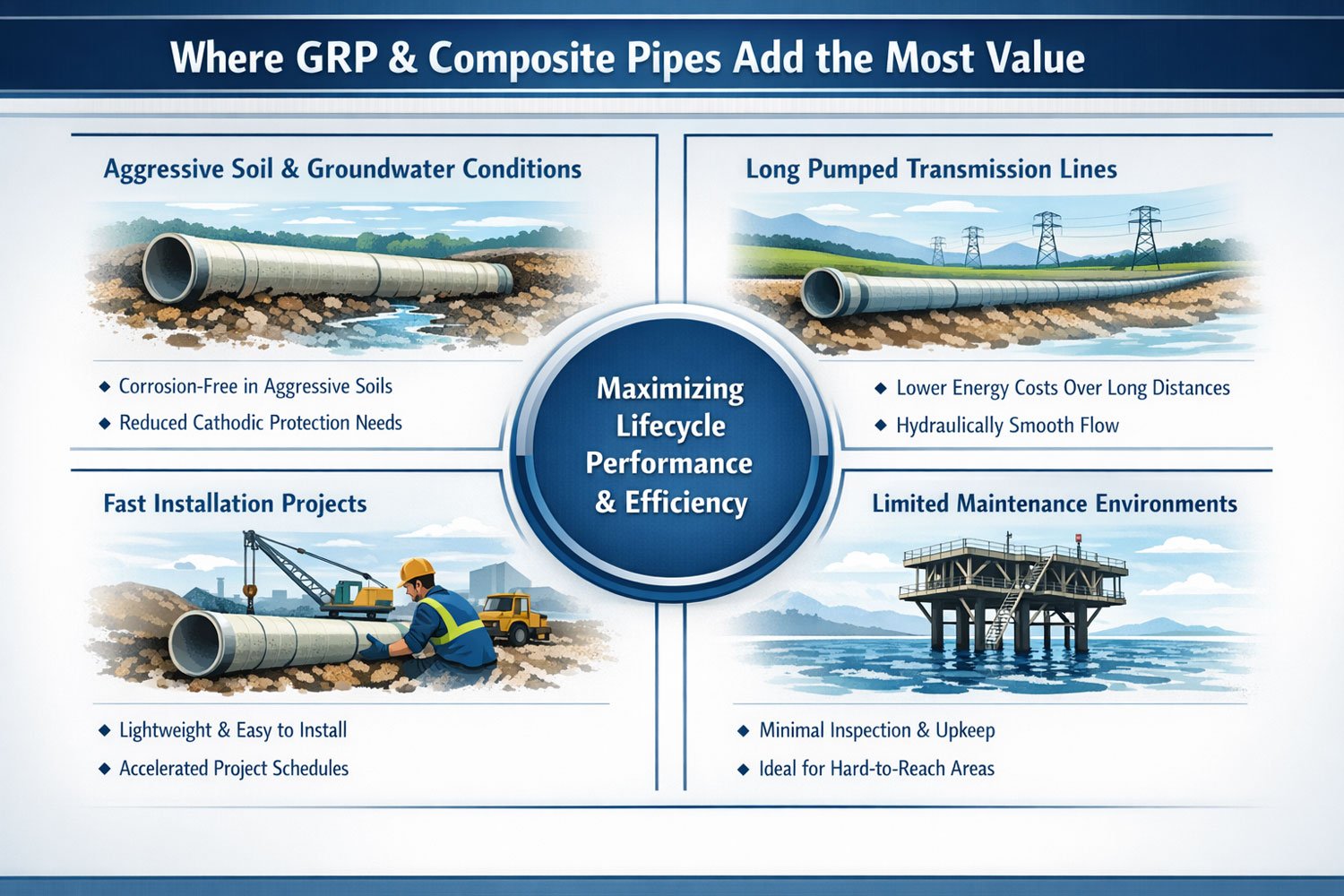
Where do GRP and Composite Pipes Add the Most Value to the System?
Composite systems provide strong value when lifecycle behavior matters more than initial installation cost.
Aggressive Soil and Groundwater Conditions
GRP systems remove corrosion interaction with soil chemistry. This reduces dependence on cathodic protection systems and lowers long-term maintenance load.
Long Pumped Transmission Lines
Hydraulic smoothness reduces energy demand over decades. In long-distance systems, energy cost often exceeds pipe cost.
Fast Installation Projects
Lightweight pipe sections reduce transport complexity and installation time. This improves schedule control in EPC projects.
Limited Maintenance Environments
Where access remains difficult, composite systems reduce inspection and corrosion management requirements.
EPC Delivery Integration: What Makes Difference and Reduces the Overall Costs
Linecore Pipes Group works with EPC partners in an integrated model that covers material selection, hydraulic coordination, procurement, installation planning, and QA/QC through to commissioning. This helps keep all project stages aligned and reduces coordination gaps in large transmission projects.
Calculate Total Cost of Ownership Over the Full Asset Life
Most pipe decisions look correct at the purchase stage. The issue appears later when pumping energy rises, maintenance starts, and repairs interrupt service. A 50+ year transmission line rarely fails because of a single factor. It fails because early cost decisions ignore long-term behavior.
A proper comparison looks at total cost of ownership for pipe materials in water transmission systems, not just procurement cost.
CAPEX: What Owners Usually Focus on
Owners usually start with upfront costs. They look at pipes, fittings, valves, excavation or trenchless work, bedding, thrust restraint, coatings, transport, lifting, testing, and commissioning. This part often drives early budget decisions.
It also narrows the view because it reflects only installation, not how the system performs over time.
OPEX: The Cost that Grows Quietly over Time
Operational cost builds slowly but becomes significant over the life of the system. It includes pumping energy, leakage losses, inspections, routine maintenance, corrosion control, emergency repairs, shutdowns, and rehabilitation.
- Consideration: Even small inefficiencies in hydraulics can increase energy use year after year and add up to a large total over 30 to 50 years. (Source: ResearchGate)
Risk Cost: The Part Many Projects Ignore
Risk cost shows up when something goes wrong. It includes service interruptions, traffic disruption, emergency repairs, penalties, and damage to reputation. Transmission mains carry higher risk because they have no backup routes, so a single failure can affect many users and critical services at once.
| Cost factor | Why it matters | GRP / composite relevance |
|---|---|---|
| Corrosion protection | Drives long-term maintenance burden | Natural corrosion resistance |
| Pumping energy | Largest long-term operational cost in many systems | Stable internal smoothness |
| Installation logistics | Impacts schedule and construction complexity | Lightweight handling |
| Maintenance demand | Determines long-term staffing and cost | Lower corrosion intervention |
| Failure consequence | Critical for main transmission lines | Depends on design and QA/QC |
| Rehabilitation timing | Defines future capital planning | Long-life performance options |
Lifecycle thinking changes the discussion from “what is cheapest” to “what remains stable for decades.”
Hydraulic Efficiency: The Cost Hidden inside Energy Use
Hydraulic design shapes long-term energy consumption more than most owners expect. A pipe that looks similar on paper can behave very differently in operation.
Energy Demand Grows with Roughness and Diameter Loss
Pump stations work continuously. Even small changes in internal roughness create long-term energy differences. Over decades, energy cost often exceeds pipe installation cost.
The real issue is not only diameter. It is how the pipe behaves after years of service.
Smooth Internal Surfaces Change Long-Term Cost
Materials such as GRP and HDPE maintain smoother internal surfaces over long periods. That stability keeps energy demand predictable (ScienceDirect).
In long pumped systems, this often becomes the strongest financial advantage.
Design Assumption Errors Create Long-Term Distortion
Many designs compare materials using different assumptions for roughness or aging. That leads to unrealistic results.
A fair comparison uses the same hydraulic model for all materials. Otherwise, the outcome becomes misleading.
Corrosion and Aging: Every Material Follows a Different Failure Path
No pipe material lasts forever. The real difference comes from how deterioration begins, how quickly it spreads, and how much control owners keep over it during operation.
Metallic Systems: Corrosion Develops Slowly at First
Steel and ductile iron pipes depend on coatings, linings, and corrosion protection systems. As long as these layers stay intact, the system usually performs well for many years.
Problems start when protection weakens. Corrosion often begins quietly below the surface. Soil conditions, groundwater, and stray current increase external damage.
GRP and Composite Systems: An Integration of Constructive and Operational Performance
GRP and composite pipes do not face corrosion in the same way as metallic systems. Their well-layered surfaces keep them away from the danger of a corrosive environment.
Wrong stiffness selection, weak bedding, handling damage, or poor joint installation can reduce service life and create stress points in the system.
HDPE Systems: Long-Term Operations Matter Most
HDPE pipes handle flexible installations and trenchless work very well. Their long-term performance depends on temperature, oxidation, and fusion joint quality.
In potable water systems, disinfectant exposure and surge loading need close attention because they can change durability over the system’s lifetime.
PCCP Systems: Deterioration Can Stay Hidden
PCCP systems present a different challenge. Internal deterioration may continue with no visible warning signs or evidence of failure.
- Ending Note: Utilities are based on inspections and monitoring programs to track wire condition and identify structural problems before failures appear.
Standards, Approvals, and QA/QC Requirements
A pipe specification should cover the full system, not just the pipe material. Owners need clear rules for hydraulic design, structural loads, testing, commissioning, and local utility approval. These requirements help the project stay consistent from design to operation.
System-Level Requirements
Most transmission projects include:
- Water main design criteria
- Hydraulic and surge requirements
- Structural design requirements
- Testing and commissioning procedures
- Local utility codes and approvals
Clear project requirements reduce installation problems and help utilities manage the system more easily after startup.
| Pipe System | Design Standards | Product / Manufacturing Standards | Testing Standards | Installation / Design Manuals |
|---|---|---|---|---|
| GRP / Composite | ISO 10639, EN 1796 | AWWA C950, ASTM D3517 | ASTM D2992, ASTM D1599, joint performance testing standards | AWWA M45 |
| Steel Pipe | AWWA M11, ASME B31.4 / B31.8 | AWWA C200 | AWWA C205, AWWA C210, hydrotest requirements | AWWA M11 |
| Ductile Iron | ISO 2531, EN 545 | AWWA C151 | AWWA C600, coating and lining inspection standards | AWWA M41 |
| HDPE | ISO 4427, EN 12201 | AWWA C906 | ASTM F2164, ASTM D2837, fusion testing standards | PPI Handbook, AWWA M55 |
| Concrete Pressure Pipe (PCCP) | AWWA M9 | AWWA C300, C301, C304 | Wire inspection and hydrotesting standards | AWWA M9 |
Potable Water Approvals: Potable-water systems may also need NSF/ANSI/CAN 61, WRAS, KTW, EU hygiene approvals, or local drinking water certifications depending on the country and utility requirements.
QA/QC Beyond Standards
Standards set the minimum level of acceptance. They do not guarantee long-term performance on their own. Owners should also require hydrotesting, joint testing, installation procedures, material traceability, inspection records, and clear commissioning criteria before final acceptance.
EPC Delivery: Why Pipe Material and Project Delivery Must Stay Together
Pipe material shapes every part of a transmission project. It guides design, transport, installation, testing, and future maintenance. Separate contractors usually create gaps between these stages and add to the downtime dilemmas. Those gaps can lead to delays, extra costs, and site problems.
On one hand, an EPC model gives the owner one team for the whole project. Design, material supply, installation, QA/QC, and commissioning stay connected from day one until project completion. EPC delivery fits projects such as:
- Large water transmission pipelines
- Desalination and rehabilitation projects
- Hard installation routes
- Fast-track infrastructure work
On the other hand, Linecore Pipes Group includes a fully supported plan for long-life water infrastructure projects. Services include:
First, GRP and composite pipe supply
Second, engineering and route planning
Third, pipe and fitting procurement
Fourth, joint installation and field work
At the end, testing, commissioning, and technical support.
Planning a Water Transmission Project with a 50+ Year Service Life?
Linecore Pipes Group helps utilities and project owners build reliable GRP pipe systems through EPC project delivery.
Decision Matrix: Matching Conditions with Pipe Systems
No single pipe material fits every transmission project. Soil conditions, pressure, installation limits, maintenance capacity, and operating environment all affect material selection. The best results usually come from matching the material to the actual project condition rather than choosing one standard solution for every case.
| Project condition | Material often Used | Why GRP / Composite Systems Stand Out |
|---|---|---|
| Aggressive soil or groundwater | GRP, HDPE, protected steel, ductile iron | Corrosion resistance becomes critical |
| Long pumped transmission line | GRP, HDPE, cement-lined systems | Energy efficiency dominates lifecycle |
| Urban constrained corridor | GRP, ductile iron, steel | Handling and installation space matter |
| Rehabilitation work | GRP sliplining, liners | Shutdown time controls selection |
| High pressure sections | Steel, ductile iron, PCCP | Structural strength drives choice |
| Seismic or unstable zones | HDPE, flexible systems | Joint flexibility becomes important |
| Low maintenance capacity | GRP, HDPE | Lower operational burden |
No single material covers all conditions. Selection depends on project priorities.
Final Checklist before Material Selection
In this section we provide a checklist that includes all components which owners must check out. Before final approval, owners and utilities should confirm:
- Target service life (50, 75, 100+ years)
- Water chemistry and corrosion potential
- Hydraulic design and surge envelope
- Internal diameter and roughness assumptions
- Pumping energy cost over full lifecycle
- Soil and groundwater conditions
- Seismic and settlement risk
- Installation constraints and access
- Joint system performance
- Corrosion protection strategy
- Maintenance and inspection capacity
- QA/QC and testing requirements
- Potable water compliance
- Lifecycle cost model
- Delivery method (EPC or segmented)
Final Wrap-Up: Pipe Material Is a Long-Term Infrastructure Decision
A 50+ year water transmission system starts with the right material choice. Pipe selection shapes energy use, maintenance needs, hydraulic performance, and failure risk for decades. Lower installation cost can result in higher repair and operating expenses later.
GRP and composite pipes are the best option for projects that need corrosion resistance, smooth flow, and fast installation all in one choice. Metallic pipes support high-pressure sections. HDPE works good in flexible and trenchless routes. PCCP still is used for large-diameter networks. The best result comes from matching pipe behavior to actual site and service conditions.
Planning a Water Transmission System for the Next 50 Years?
Linecore Pipes Group supports utilities and project owners with GRP pipe systems, composite solutions, and EPC delivery built for long-term infrastructure performance.
about
The Author

Farshid Tavakoli is a seasoned professional in engineering and international trade. Holding degrees in Electrical Engineering, Mechatronics, and a Doctorate in Business Administration (DBA) from the University of Lyon, he also has a strong background in industrial automation and production line technologies.
For over 17 years, he has led an international trading company, gaining deep expertise in commercial solutions tailored to industrial needs. With more than 8 years of active involvement in infrastructure development, he specializes in the supply of electromechanical equipment for water and wastewater treatment plants and transfer projects.
Together with comapny expert team, he now provides consultancy and integrated solutions for sourcing and implementing complex infrastructure projects across the region.