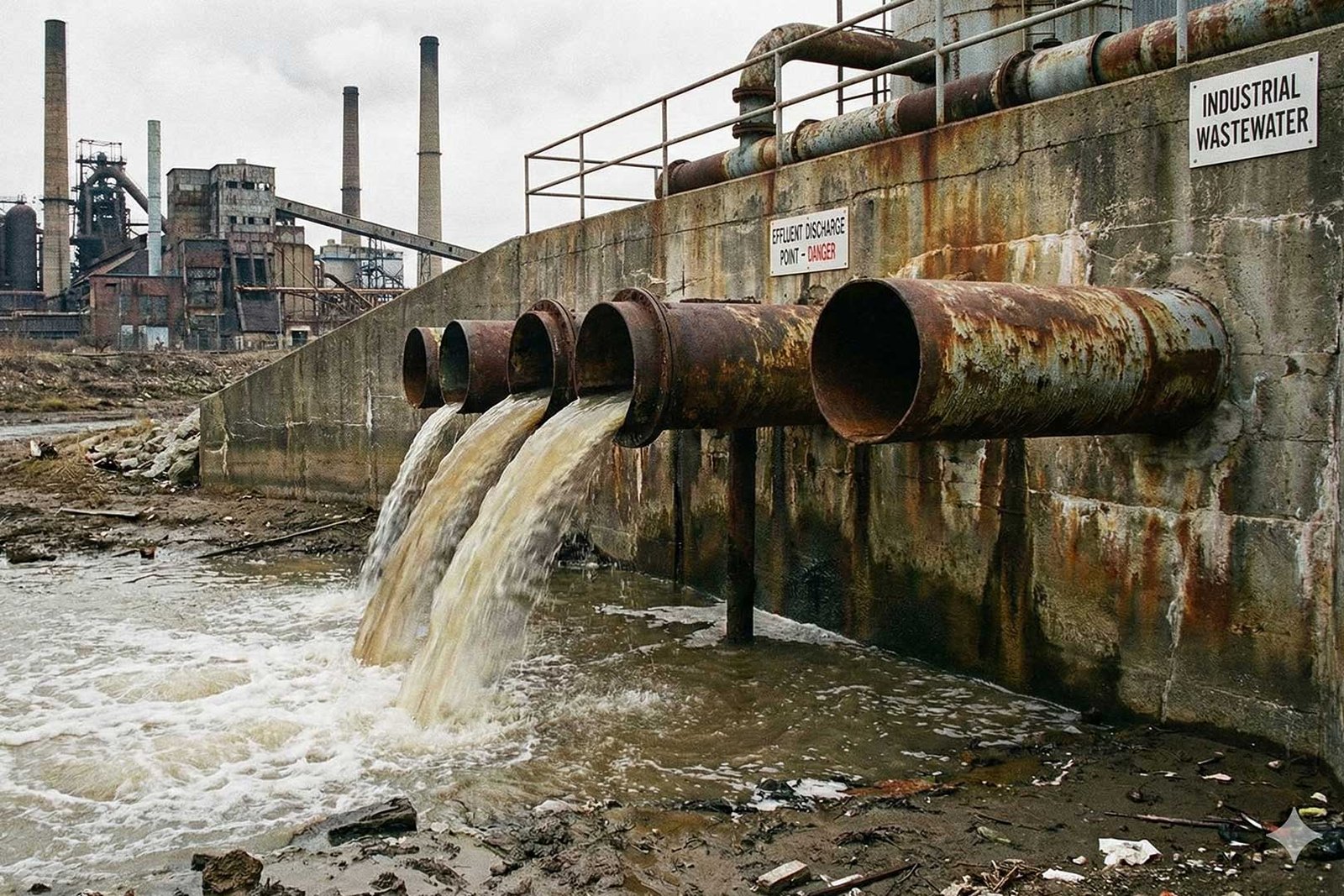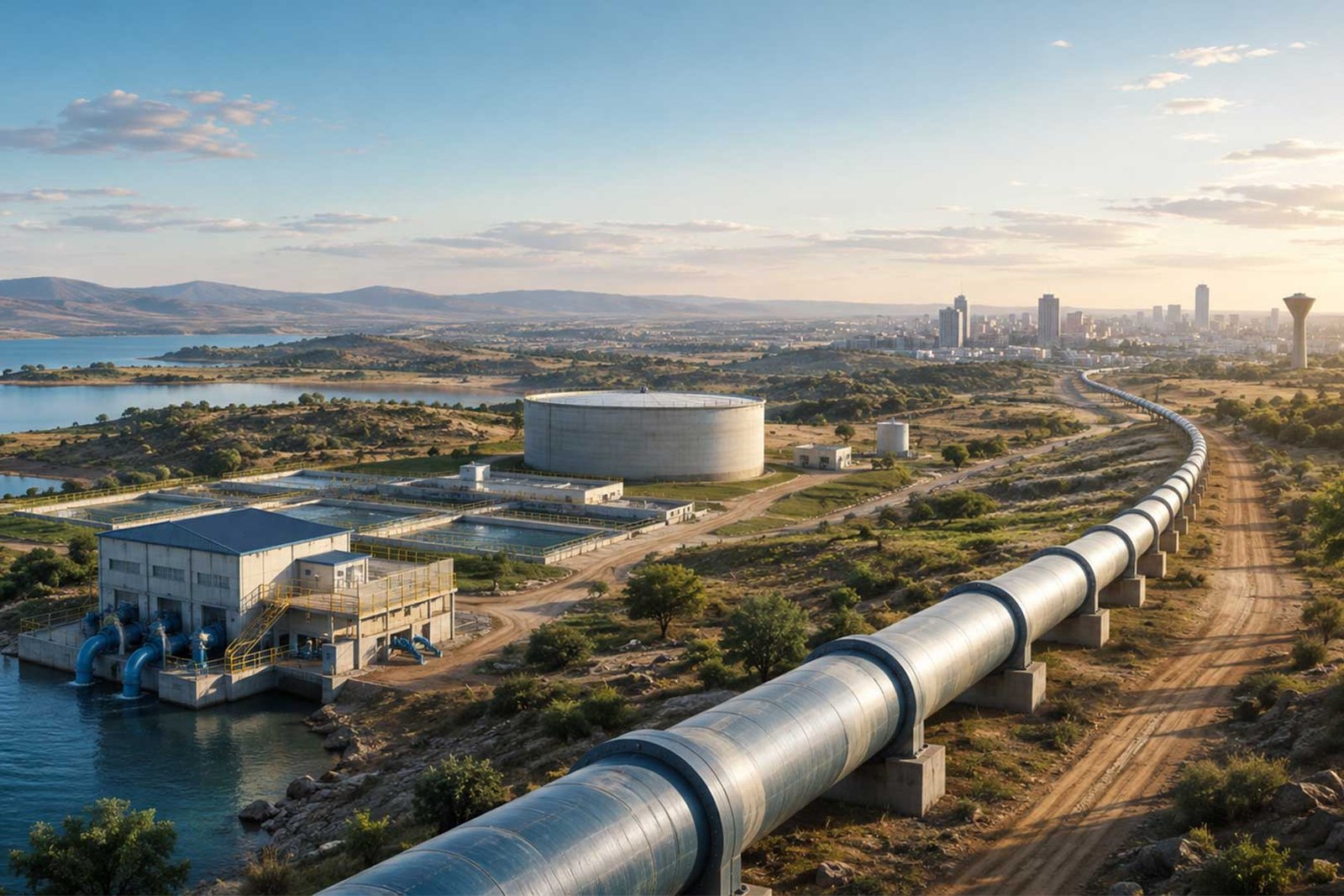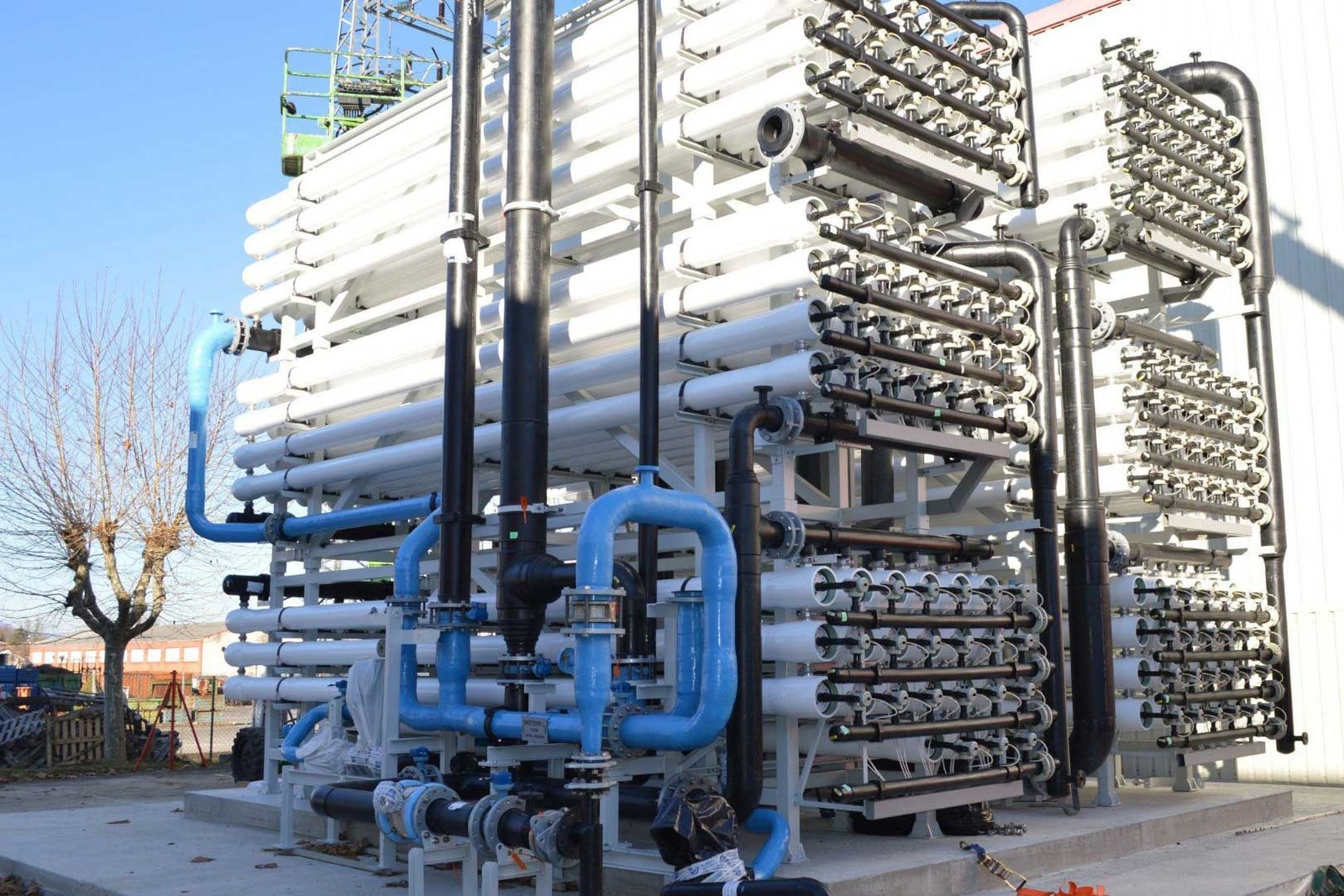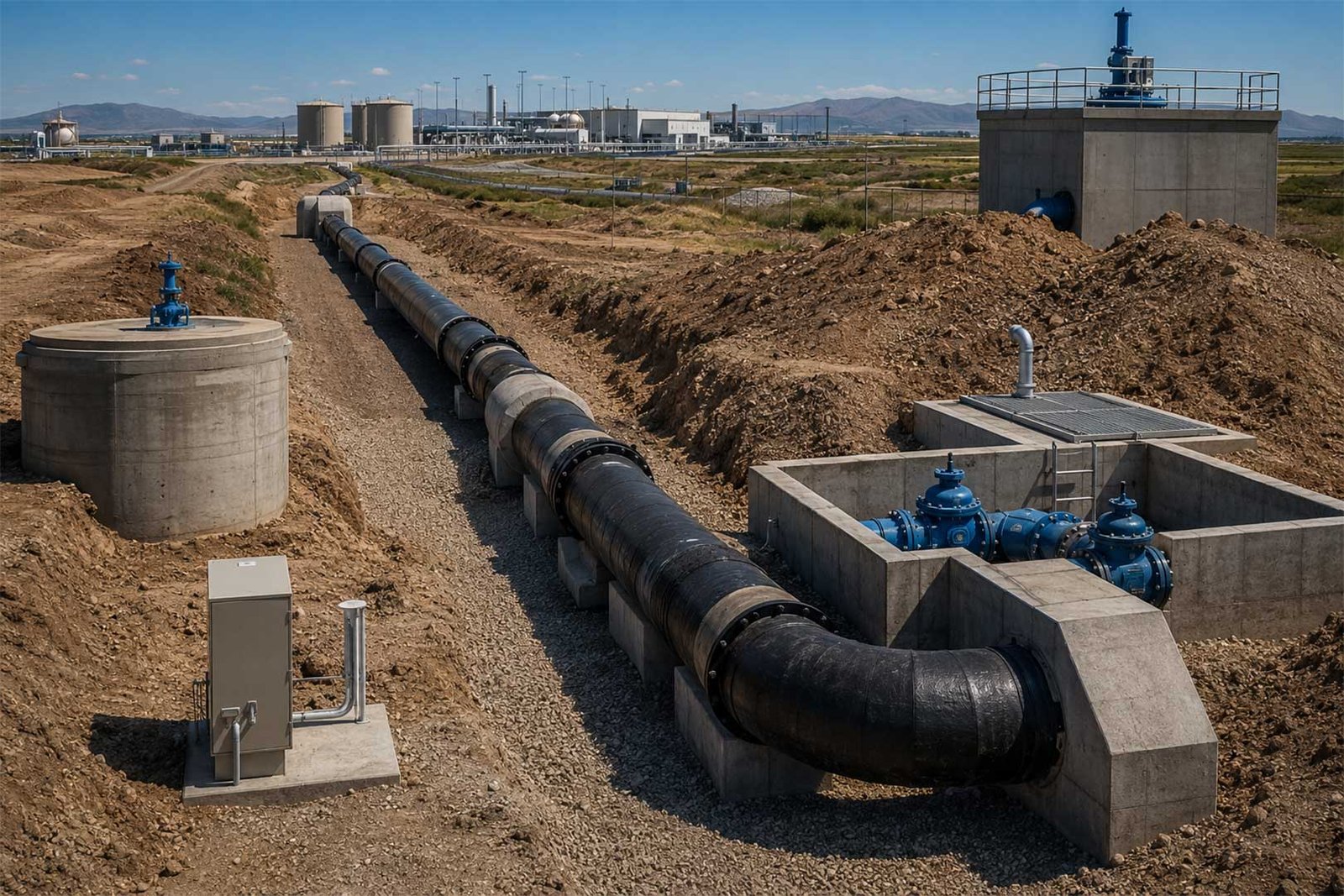
In piping systems, the case of probable leakages is not all about the water loss. Each small leak in the pipelines increases the risk of more horrible issues, operating costs, makes repair or maintenance processes complicated and expensive. Many projects find out the leaks during the post-installation process, while a smart design will decrease the risk of in-field dilemmas. The choice of material can be also effective in cases like GRP family as one of the most resistant composite pipes for modern projects.
LineCore Pipe Group supports customers across the full process, from system supply, manufacturing, and design to EPC delivery, with a sharp focus on how to make water transmission systems reliable.
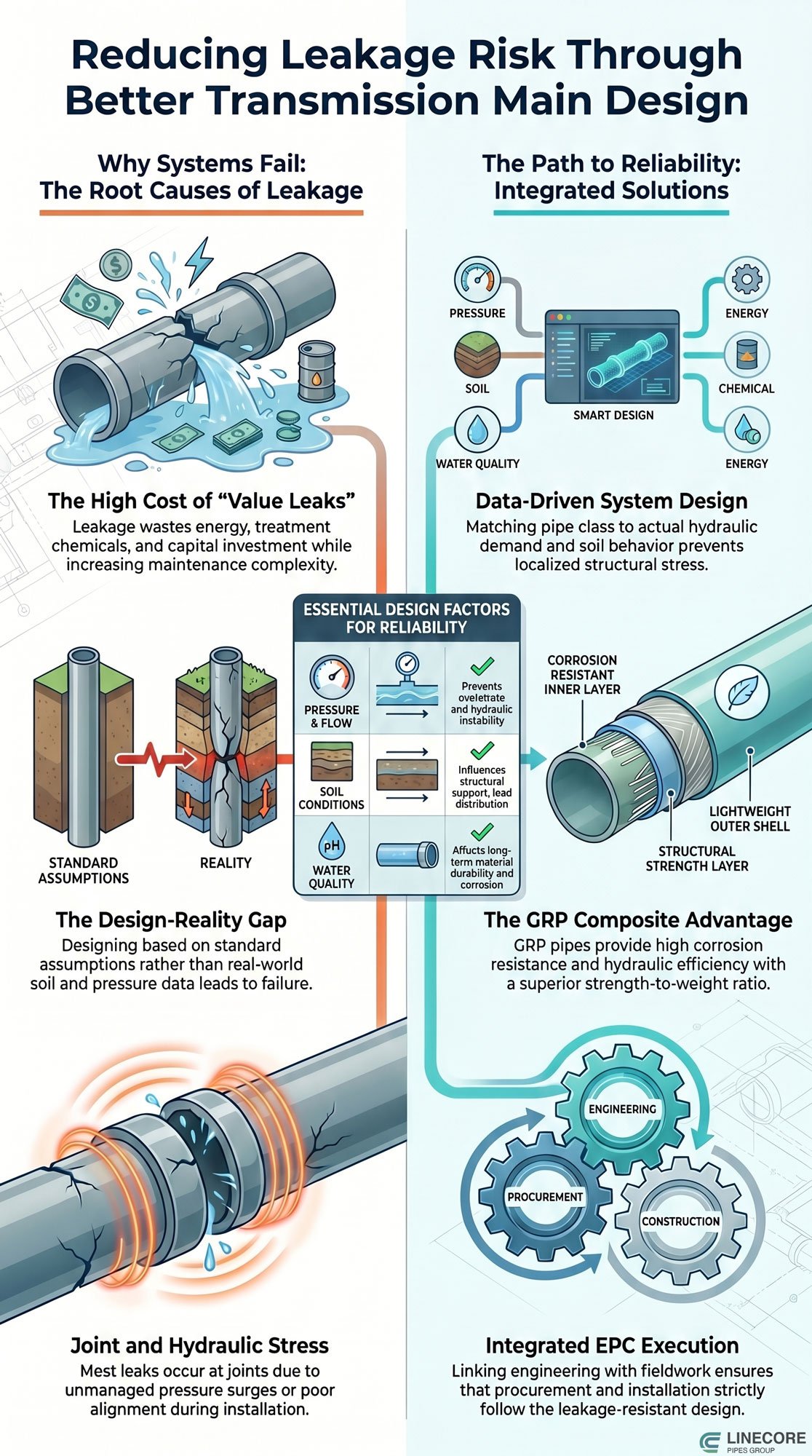
Reducing Leakage Risk Through Better Transmission Main Design Infographic (source: Pipelinecoregroup.com)
Why Leakage Risk in Transmission Mains Matters
Leakage is not just a flow to reduce the efficiency of the system, but it also brings forward damage to overall costs, reliability, and final project value. The World Bank highlights the latest impacts of water loss and infrastructure stress in global water systems. That’s why considering points below is necessary for EPC managers.
Cost Impact Across the Value Chain
When it comes to leakage, water is not the only one, but money also does leak. This leakage refers to efforts, such as treatment, pumping, and distribution, put in the system. Such leakage means the waste of energy, chemicals, and money. Eventually, consider:
- The treatment and cost of energy are already high.
- In large networks it causes the loss.
- Pumping inefficiency increases system strain.
Operational Reliability and Service Continuity
A transmission line is designed to move the water with no flaw. That’s where a teeny tiny leakage can affect horribly the trust of the systems and operational processes.
Maintenance Burden and Repair Complexity
Pipelines in underground installation situations are already hard to maintain. If there’ll be any chance of leakage and it won’t be diagnosed after testing. It leads to big terrible things such as the following:
- Difficulty of buried area access
- The interruption and downtimes
- Added costs to labor, logistics, and materials
Long-Term Asset Expectations
Nowadays EPC managers, consultants, and owners all agree to move the focus to durability and consistency in long-term performance.
- A System, Not a Single Aspect: Leakage is not just about pipe quality. It shows how proper the whole system is designed, built, and managed.
What Usually Causes Leakage in Transmission Lines
There are too many reasons why a system leaks. The reasons that may lead to leaks are all gathered in this section to become aware of them and then try to avoid them.
Wrong Material Selection and Design
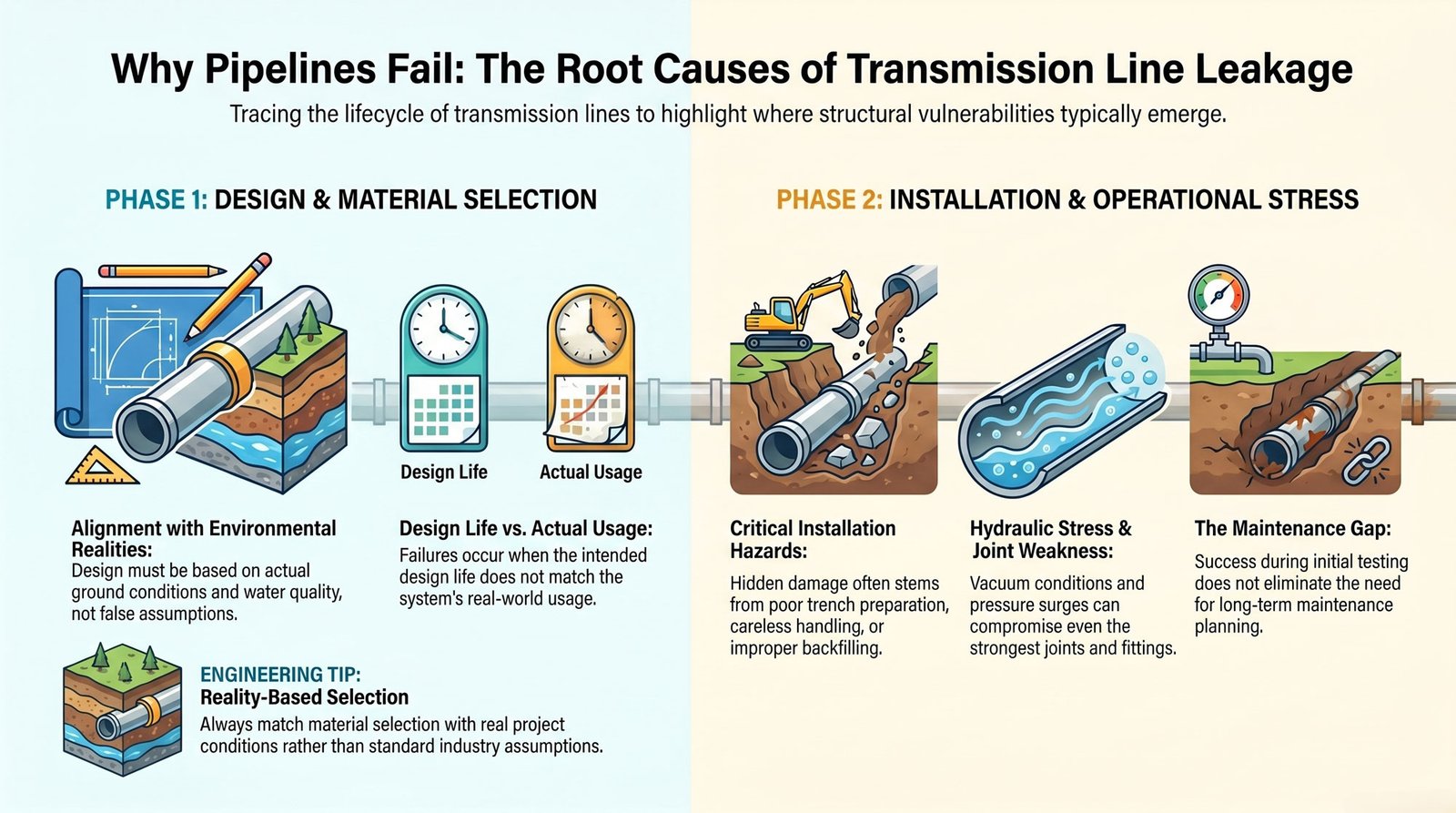
Many problems stem from the very first steps, design and material choice. If you design pipes on false assumptions or choose a material without considering the ground conditions, pipes are likely to face unpredictable issues.
- Pressure ranges and soil conditions
- Water quality
A wrong match between design life and actual usage in pipelines can also affect the systems and result in failures.
Weak Points at Joints and Hydraulic Stress
Even if the choice of pipe material is strong, there’s still a chance of leakage coming from the joints and fittings. The hydraulic stress is what can weaken the pipes under certain conditions.
- Consideration Point: These risks can be increased in vacuum conditions or pressure surges.
Installation and Ground Condition Issues
Once the joints were checked, the installation issues appeared. That’s where the wrong assumption of ground conditions shows its impact on performance. Hidden aspects that show their damages later included:
- Poor trench preparation
- Careless handling
- Poor backfilling
Testing Gaps and Lack of Long-Term Planning
If all else goes right at first sight, when pipes undergo the testing, they may show both failure and appropriate situations. But it’s not the end, while after inspections and tests there’s always a chance of leakage and its continuous maintenance costs. (Source: U.S. EPA)
- Engineering tip: Always match material selection with real project conditions, not standard assumptions.
Why Better Design Is the First Step to Leakage Reduction
Leaks are often treated as part of the job, but they rarely happen by chance. In many cases, the root sits in early design choices. A well-developed design must include real data of site conditions. When pressure ranges, flow behavior, and environmental factors are clearly understood, the pipeline works better with no extra strain on joints or connections.
| Design Factor | Why It Matters |
|---|---|
| Pressure & Flow | Prevents overstress and instability |
| Water Quality | Affects material durability |
| Soil Conditions | Influences structural support |
| Route Profile | Impacts load distribution |
| Temperature | Causes expansion and contraction |
| Movement & Loads | Determines joint and pipe behavior |
Good design also goes beyond the pipe. Water quality, soil type, route profile, temperature shifts, and ground movement all shape how the system performs over time. As noted in AWWA, miss one of these, and problems may show up only after the system is already in service.
- Engineering Point: Most of all, leakage drops when the pipeline is treated as one complete system. Pipes, joints, fittings, and installation conditions need to match from the start. If they do not, weak points form, and those are the places where leaks begin.
The Role of Pipe Material in Leakage Prevention
The choice of material indicates how pipes will perform during their lifespan. The influence goes through resistance to chemicals or external conditions, tolerance under pressure or certain temperatures, and durability. To keep the long-term strategy of the system working, a right material selection is key.
Composite Pipes: A Modern Solution
GRP is known as one of the most resistant cases among the composite pipe family due to its excellent resilience and durability under harsh conditions. These modern materials include a smooth inner surface that decreases the need for expensive pumping energy.
Moreover, their higher strength-to-weight ratio compared to traditional materials like steel makes installation and transportation easier with less need for heavy machinery.
A Trusted Supplier for Composite Pipes
However, it’s natural for all materials not to be perfect for every situation. The selected pipe must be prepared for variable conditions such as pressure, soil, or operational demands. At LineCore Pipes Group, we help clients select the right composite piping systems based on your actual project requirements.
How to Reduce Leakage in Designing Step
Leakage risk is not controlled by a single decision. That means all steps are connected together and can be effective for the next one.
What Happens When Pipe’s Design Goes Accurately
A reliable system begins with a grounded design basis that reflects real operating conditions. Pressure ranges, flow variability, and environmental constraints must be defined with precision so the system is not exposed to unexpected stress during operation. When service life expectations are set early, every downstream decision becomes more stable and predictable.
Correct Pipe Class and System Selection
Pipe selection determines how well the system handles both routine and peak conditions. Pressure class and stiffness class must match actual hydraulic demand and soil behavior. When system components are not aligned, imbalance appears at weak points, reducing long-term reliability and increasing failure probability.
Joint and Connection Design
Joints are often the most sensitive parts of a transmission system. They must accommodate movement, alignment variation, and field conditions without losing sealing integrity. When joints and fittings are not designed correctly, it shows the impact in the installation phase. (Source: ResearchGate)
Surge and Pressure Management
Hydraulic transients can push stress far beyond normal operating limits. Without proper surge analysis, pressure surges and vacuum conditions stay hidden until they cause damage. A thoughtful system design represents itself in several components such as:
- Pump behavior
- Valve operation
- Route elevation changes
So, these forces stay under control before they reach the pipeline.
Route, Soil, and Installation Conditions
The surrounding ground has a direct impact on pipeline performance. The quality of bedding, embedment, and backfilling defines how pipes will operate during their lifetime. When trench conditions are poorly managed, uneven support leads to localized stress and eventual leakage development over time.
Testing and Commissioning Planning
Testing is part of design validation, not a final checkpoint. Proper pressure testing, inspection routines, and commissioning procedures make sure weak points are identified before the system enters full operation. Without this stage, small construction defects can remain hidden until they grow into failures.
Monitoring and Lifecycle Thinking
A transmission system must be viewed across its entire lifecycle. Regular inspections, ongoing monitoring, and planning for maintenance all help keep performance stable.
- Note: When design includes consideration about the whole lifecycle, the system stays strong long after it is put into use, instead of relying on reactive maintenance methods, which sometimes cause longer downtime or higher maintenance costs.
Why EPC Execution Matters Just as Much as Design
A strong design alone does not guarantee a reliable transmission system. In the real world, many projects fail not because of the weakness of design but because execution does not follow it for real. Small flaws in procurement, installation, or testing cause leakage that was never present on paper.
Fixing Chaos by Right System Alignment
EPC capability brings all important phases in one structured phase. Instead of being controlled separately, engineering, procurement, installation, quality control, testing, and commissioning are all part of the same workflow.
A standard EPC strategy makes the result more controlled and predictable, which decreases risk over the project lifecycle. LineCore Pipes Group is your solution-maker that helps clients lower the risk of leaks from design to further steps through its knowledge and experience on piping systems over time.
Why GRP and Composite Systems Are Strong for Modern Water Transmission
As we discussed in the last sections, the GRP pipe family is one of the newest creations among modern piping systems, which include multiple strengths for various piping cases. Here is why GRP selection is a must for water transmission.
- Corrosion Resistance: GRP pipes are made of glass fibers and a resin matrix. This makes them highly resistant under aggressive conditions surrounding pipes in water transmission lines.
- Hydraulic Efficiency: According to ScienceDirect, the inner surface of GRP pipes is covered with resin, which not only makes them sealed from resistance but also improves the hydraulic flow and requires less pumping energy for transport.
- Easy Installation: The choice of lightweight composite pipes helps engineers to get rid of heavy machinery for transportation, lessens the need for handles, and eases the installation process in both under- and above-ground cases.
- Stable in Large Systems: These systems are well-designed for large-diameter applications where structural performance and installation efficiency must work together.
In other words, GRP pipes with exceptional characteristics represent long-term value for water transmission systems, which must last over decades with low maintenance requirements in hard-to-access sites.
What Project Owners and Consultants Should Look For
Project success depends as much on the partner as on the product. Owners and consultants should work with suppliers who understand full system design, not just pipe supply. This keeps decisions on hydraulics, materials, and installation aligned from the start and lowers risk later.
- Right Fit: Good support in pipe and joint selection matters, since mismatched parts often lead to leaks. Experience in transmission mains also matters, because these systems behave differently from distribution networks.
- Quality at Every Stage: Teams that link engineering with field work bring design closer to site reality. Strong quality control at every step of the process, from production to shipping to installation to testing, makes it even more reliable.
EPC capability helps connect all the parts so that the system works as a whole.
| Evaluation Area | Why It Matters |
|---|---|
| Design expertise | Ensures system-level reliability |
| EPC capability | Reduces coordination gaps |
| QA/QC systems | Prevents hidden defects |
| Field experience | Improves real-world performance |
How LineCore Pipes Group Supports Leakage-Resistant Transmission Projects
LineCore Pipes Group includes high-quality GRP and composite pipes, fittings, and jointing pieces. The pipes can last over decades under harsh and aggressive environments with no flaws.
The team helps clients choose the right system based on real pressure, soil, and site requirements, which prevents these misunderstandings between design and site conditions.
EPC services keep design, supply, and construction in one line. This keeps the project clear and reduces gaps on site.
The focus is simple: strong systems, fewer leaks, and long service life.
A Final Thought on Reliable Water Transmission: No Leak Edition
At the end, to reduce leakage in your water transmission system, start with proper design, do not rely just on assumptions, and inspect the reality of the site. Reliability improves when pipe material, joints, hydraulics, route conditions, installation quality, and EPC execution are managed as one integrated framework. GRP and composite pipelines can reduce the risk of leakage while adding to long-term values. LineCore Pipe Group is where clients convert their design basis into reliable piping performance with decreased risk of leakage over the lifetime of the system.
about
The Author

Farshid Tavakoli is a seasoned professional in engineering and international trade. Holding degrees in Electrical Engineering, Mechatronics, and a Doctorate in Business Administration (DBA) from the University of Lyon, he also has a strong background in industrial automation and production line technologies.
For over 17 years, he has led an international trading company, gaining deep expertise in commercial solutions tailored to industrial needs. With more than 8 years of active involvement in infrastructure development, he specializes in the supply of electromechanical equipment for water and wastewater treatment plants and transfer projects.
Together with comapny expert team, he now provides consultancy and integrated solutions for sourcing and implementing complex infrastructure projects across the region.