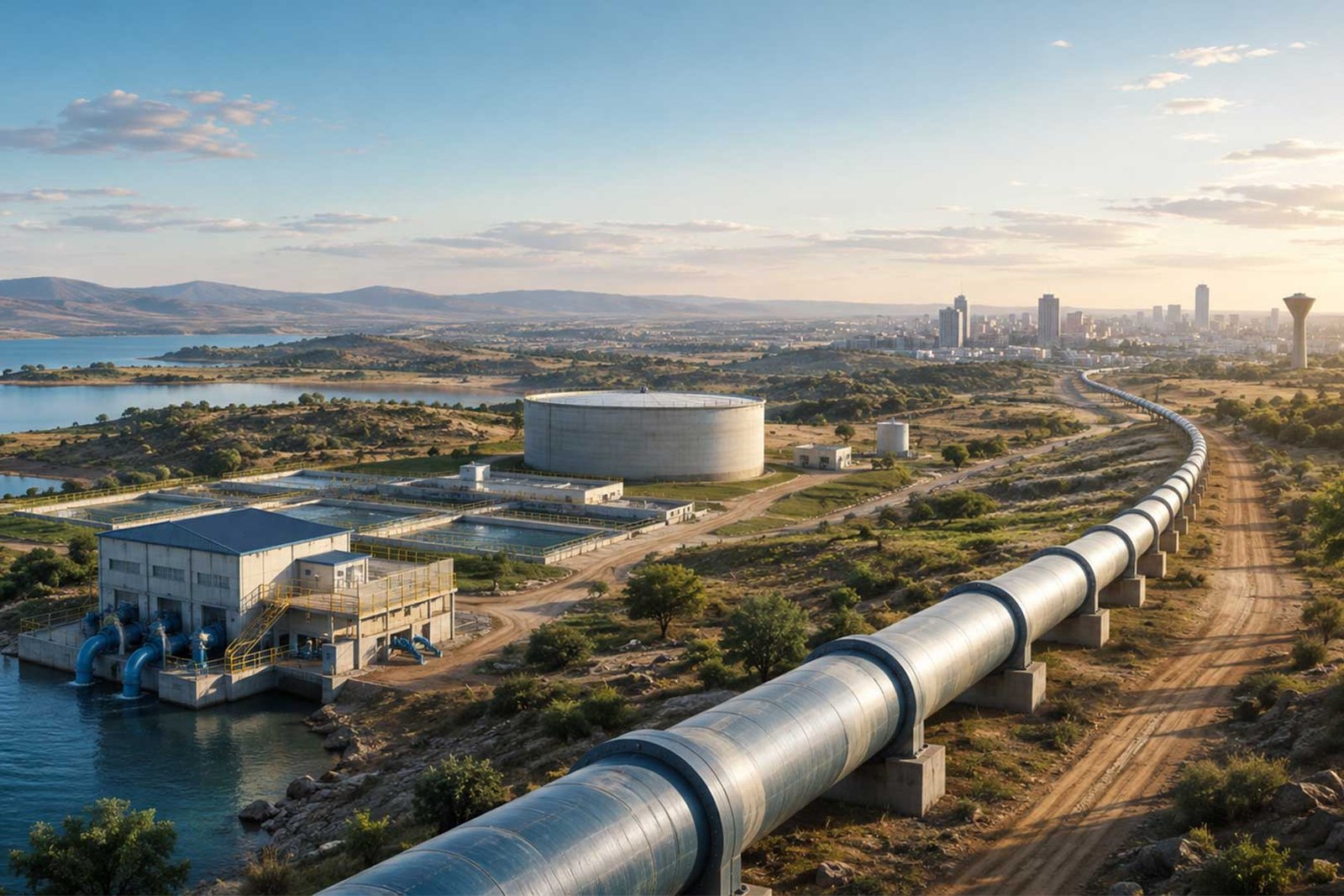
You see no coastal water systems fail in the easy conditions. Instead, they usually fail at the land-to-sea transition. If you work on desalination projects in the GCC, you already know this zone creates big problems. It faces heavy corrosion from seawater and salty groundwater. It deals with moving sand, strong waves, and currents. Installation is difficult, and the maintenance is even tougher!
This is exactly where your choice of material and execution strategy makes the biggest difference. The land-to-sea transition is not just a simple connection point. It is a major risk concentration zone. That is why we will explain exactly what this transition zone is, why it causes so many issues in GCC projects, and how the right approach can reduce your risks.
What is a land-to-sea transition?
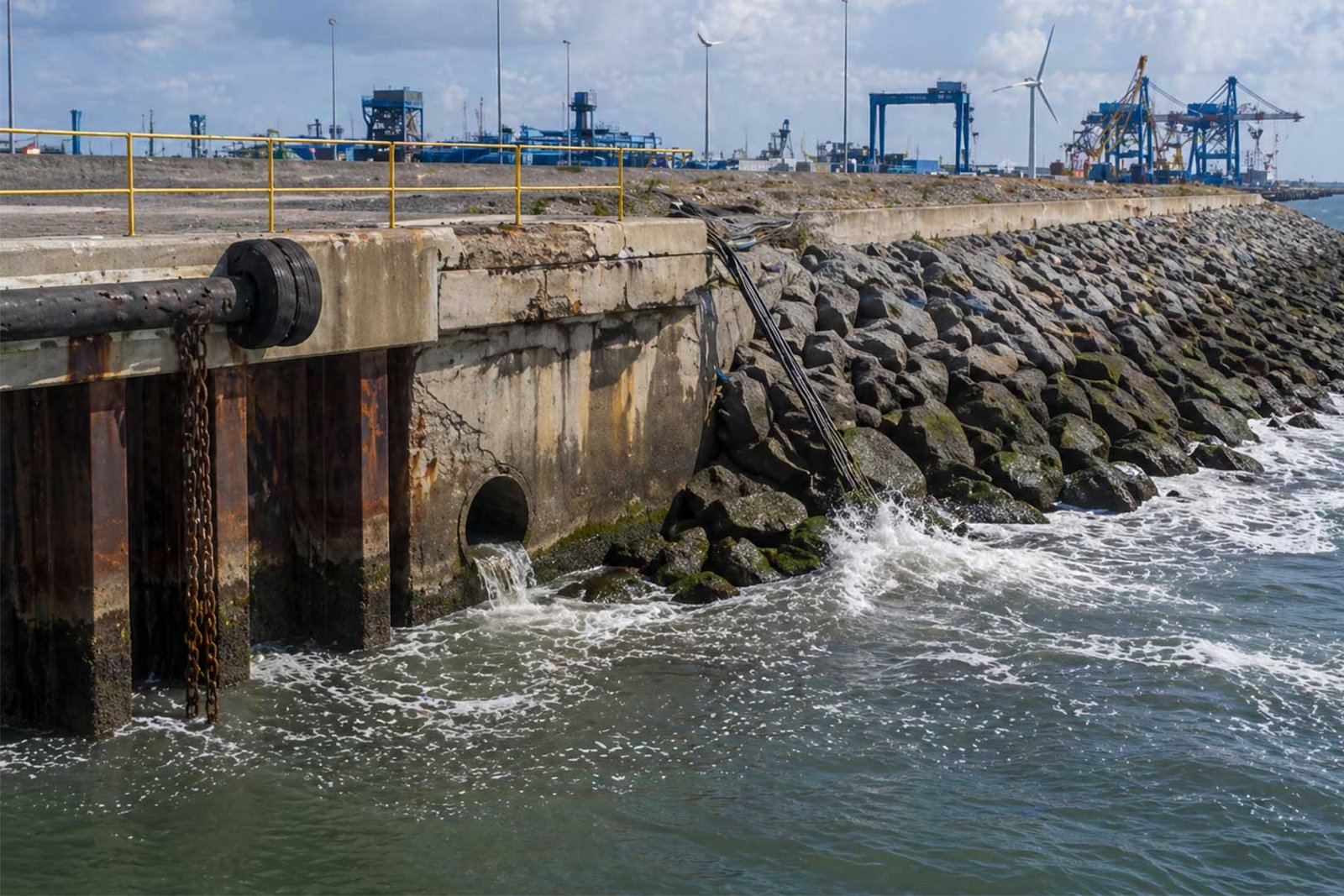
A land-to-sea transition is the spot where your pipeline leaves the land and enters the sea. This is where your underground pipelines meet the ocean environment.
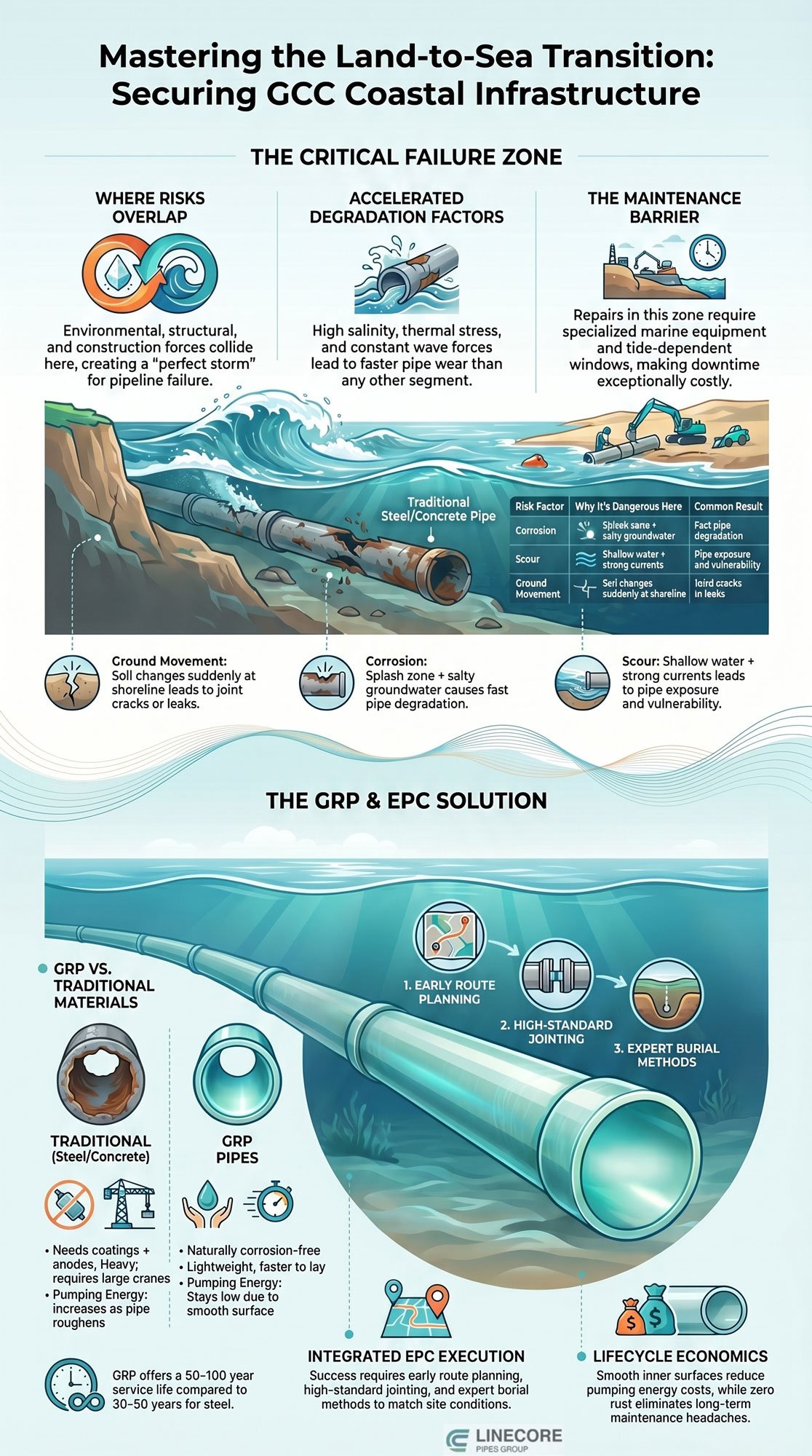
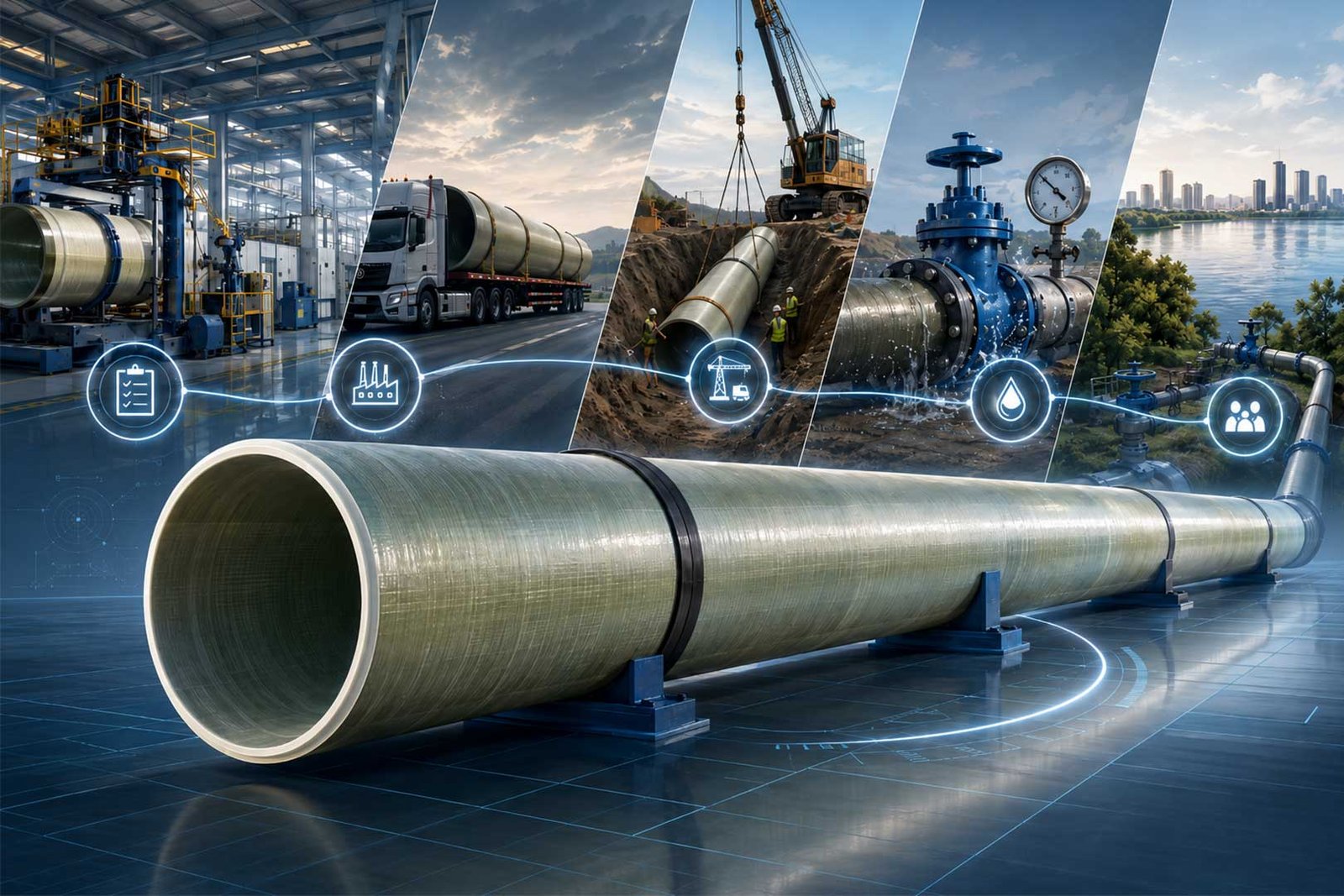
land-to-sea Transition infographic (source: pipelinecoregroup.com)
This region represents a combination of many problems:
- Shore approaches and landfalls
- Intertidal and nearshore pipeline corridors
- Changing ground conditions
- Seawater exposure
- Wave and tidal forces
- Shifting sediments
- Difficult access for installation and repair
This area doesn’t behave like the calm onshore parts or the deeper offshore sections. It acts differently. That’s why you should treat it as its own separate engineering challenge (source: Academia).
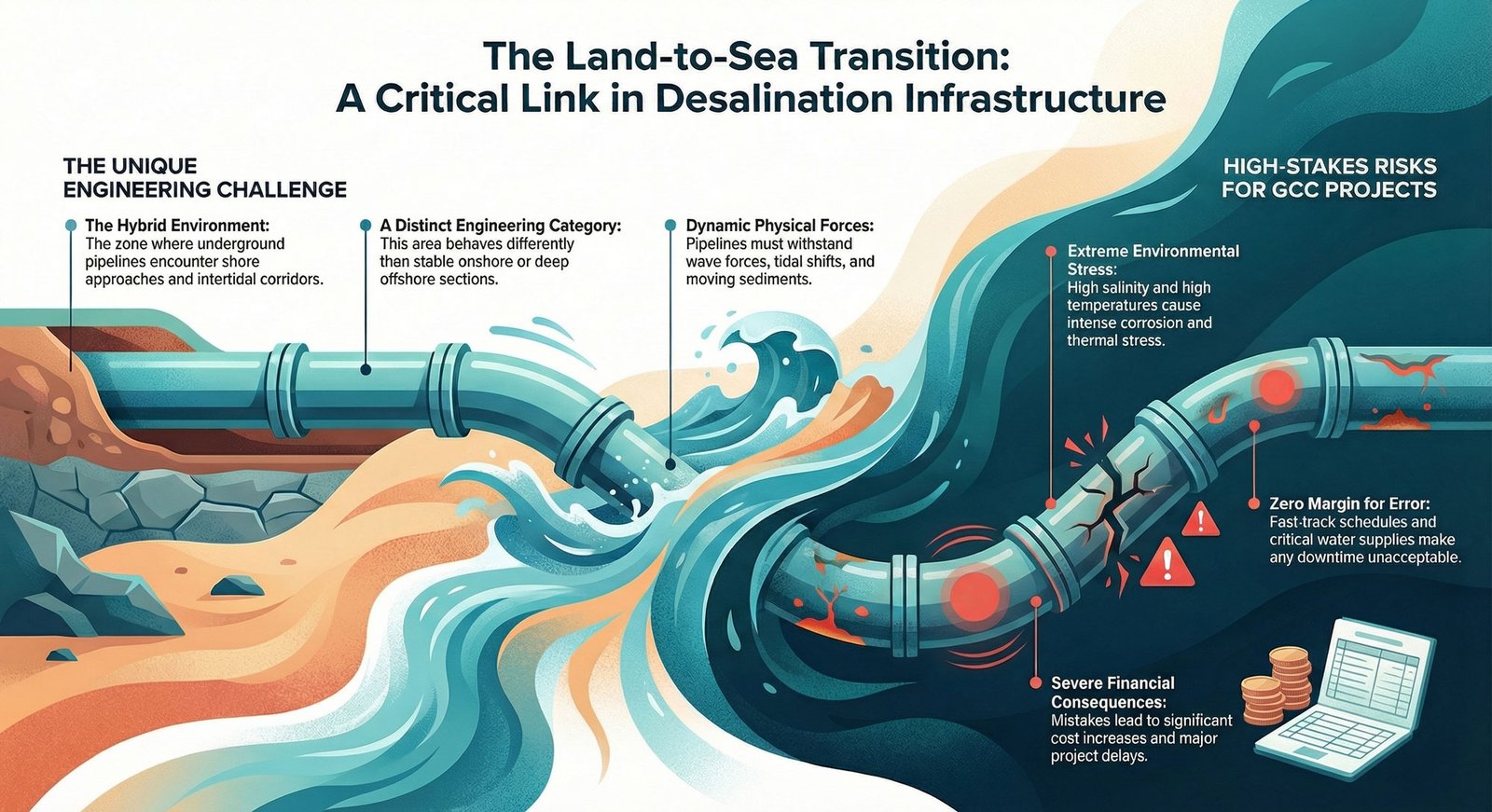
Why This Is a Major Issue in GCC Coastal Desalination and Water Transfer Projects
Most large desalination plants sit right on the coast. They take in seawater and send clean drinking water far inland through long pipelines. The land-to-sea transition sits right in the middle of all this.
Any mistake in this area will have serious consequences for you. Your water supplies for an entire city may be at risk, your fast-tracked schedule will be affected, and the costs for your project will go up significantly. Some of these factors make it worse:
- High salinity and corrosive seawater
- High temperatures and high thermal stress
- Fast-track schedules with no margin for error
- Highly critical – any downtime is unacceptable
As someone involved in developing desalination plants, water utilities, construction, consulting, project ownership, and industrial facilities, this concerns you a great deal.
Why This Section Fails More Often Than Other Parts of the Line
This section rarely fails because of just one issue. It fails because lots of tough conditions attack it all at once. This is where environmental, structural, and construction risks overlap and create a perfect storm. The pipe has to deal with seawater and chlorides, moving sand, scour and loss of cover, settlement between land and sea, strong waves and currents, third-party risks, and very difficult access for inspection and repair.
All these things together make the land-to-sea transition much weaker than any other part of the pipeline.
Real-World example: The Mississippi Landslide That Broke a Pipeline
Heavy rain caused a landslide on a steep embankment in Mississippi. PHMSA reports that the moving ground put huge stress on a CO₂ pipeline. A weld suddenly failed all the way around the pipe. This case clearly shows how dangerous ground movement and settlement can be in the land-to-sea transition zone.
This table shows the main reasons why the land-to-sea transition zone fails more often than other parts of the pipeline:
| Risk Factor | What Happens | Why It’s More Dangerous Here | Common Result |
|---|---|---|---|
| Corrosion | Seawater and salt attack the pipe | Splash zone + salty groundwater | Fast pipe degradation |
| Scour & Loss of Cover | Sand washes away, pipe becomes exposed | Shallow water + strong currents | Pipe becomes vulnerable |
| Ground Movement | Uneven settlement between land and sea | Soil changes suddenly | Joints crack or leak |
| Wave & Current Forces | Strong forces in shallow water | Constant movement and fatigue | Pipe fatigue and damage |
| Difficult Access | Hard to reach for repair | Tides and marine conditions | Very expensive and slow repairs |
The Most Common Failure Risks in Practical Project Terms
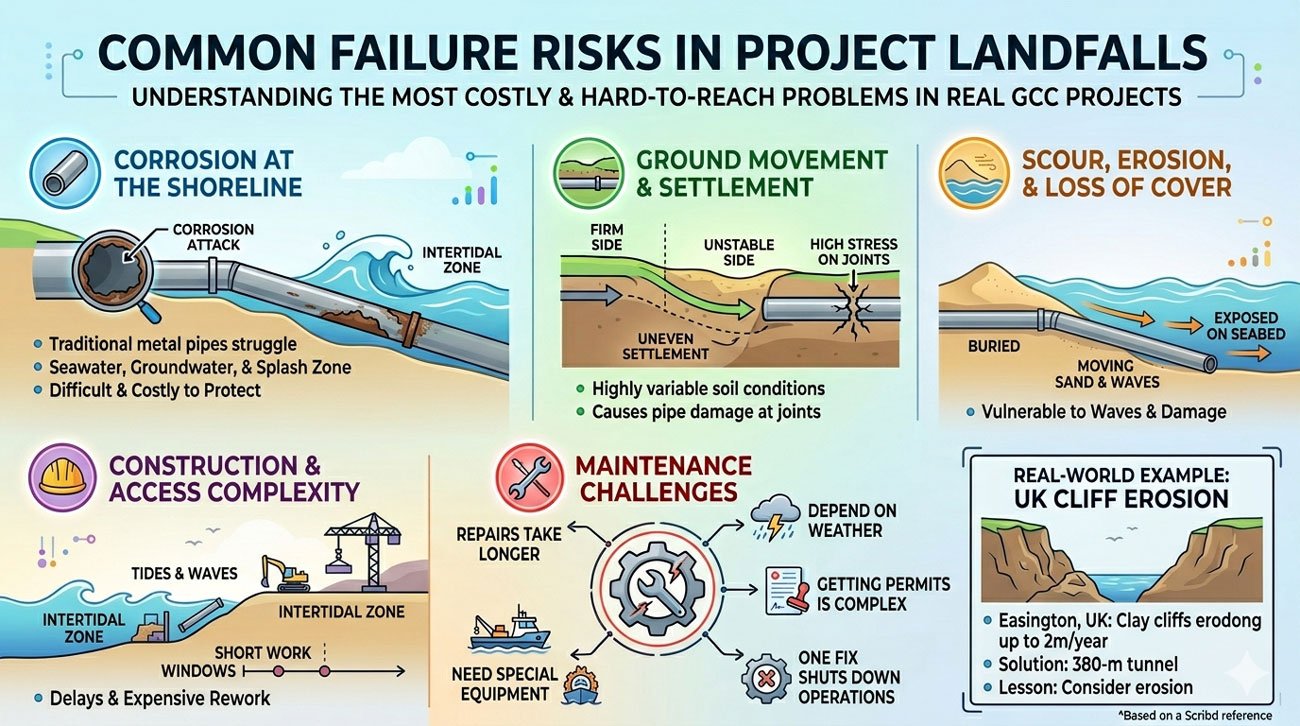
Most failures in this zone are expensive, not just because they happen, but because they are really hard to reach, hard to fix, and hard to get back online. Here are the risks you see most often in real GCC projects:
Corrosion at the Shoreline
Traditional metal pipes hate the shoreline. The mix of seawater, salty groundwater, and the splash zone attacks them constantly. Corrosion happens much faster here. Protecting the pipes becomes difficult and costly, and they often don’t last as long as planned.
Scour, Erosion, and Loss of Cover
Moving sand and waves can wash away the soil around your pipe very quickly. Suddenly, the pipe you buried for protection is lying exposed on the seabed. Once it’s uncovered, it becomes vulnerable to waves, currents, and damage.
Maintenance Challenges
You can not fix the problems in this part easily. Why? Repairs simply take longer, cost far more, and interrupt the whole project, because:
- You need special boats and equipment
- You depend on good weather and tide times
- Getting permits and access is complicated
- One small fix can shut down operations for days or weeks
Ground Movement and Settlement
The soil condition at the point where the land and water meet is highly variable. While one side will be firm, the other side will be loose and unstable, causing uneven settlement. Uneven settlement causes high stress to be exerted on the joints, causing damage.
Construction and Access Complexity
Building in the intertidal zone is tough. You fight against tides and waves, and you only have short windows to work. If you don’t plan it well, you end up with delays and expensive rework.
Real-World Example: The UK Cliff That Would Not Stop Eroding
At Easington in the UK, unstable clay cliffs were eroding up to 2 meters every year. To protect the long Langled gas pipeline, engineers dug a 380-meter curved tunnel beneath the cliffs. Scribd explains that this project proved how important it is to consider long-term coastal erosion when designing landfalls.
Why Material Selection Is a Strategic Decision, Not Just a Procurement Choice
Do not choose your pipe only because it is cheap. Selecting the right material is important beyond your imagination. It impacts your risk, your costs, and your project for many years. The wrong material creates big problems later. The cheapest pipe now often becomes the most expensive one later. You pick your pipe based on these factors:
- Corrosion environment: How harsh the seawater and salty ground are.
- Operating life: How long you want the pipe to last.
- Installation method: How you plan to lay the pipe.
- Hydraulic efficiency: How easily water flows through it.
- Maintenance expectations: How much repair and downtime you can accept
Real-World Example: GRP Pipes Working Successfully in the Middle East
For more than 50 years, GRP pipes have been performing well in hot and highly saline seawater conditions across the Middle East. In some desalination and cooling water systems, they have already lasted over 33 years. Most failures were due to installation issues, not the pipe material. (source: Pipeline Conference)
The table below explains the important factors you should consider when choosing the right pipe:
| Factor | What It Means | Why It Matters in GCC Coastal Projects | Example Impact |
|---|---|---|---|
| Corrosion Environment | How harsh the seawater and salty ground are | Determines how fast corrosion happens | Can destroy metal pipes quickly |
| Operating Life | How many years you want the pipe to last | Affects long-term reliability | 50+ years vs 30 years |
| Installation Method | Trench, HDD, or other techniques | Impacts cost and difficulty | Heavy pipes need big cranes |
| Hydraulic Efficiency | How easily water flows inside the pipe | Saves pumping energy | Lower electricity bills |
| Maintenance Expectations | How much repair you can accept | Reduces future headaches | Less downtime = better reliability |
Where GRP Pipe Systems Bring Practical Value in Coastal Water Projects
Let me show you why GRP pipes can be a real game-changer for your coastal projects. GRP is not just another pipe material. It is part of a smarter and tougher strategy for building reliable coastal infrastructure.
1. Corrosion resistance in aggressive marine environments
Think about having no rust problems ever again! GRP pipes are corrosion-free because they’re made of GRP material. GRP pipes perform excellently in salty environments. They are therefore ideal for the marine water intake, discharge, and coastal transfer systems.
2. Hydraulic efficiency for long-distance transmission
The inner surface of the GRP pipe is extremely smooth. There is less resistance while water passes through. There will be a huge saving of pumping power, particularly when conveying water for long distances inland.
3. Lightweight handling and installation advantages
GRP pipes are unexpectedly lightweight, unlike steel and concrete. They are easy to transport and lay down without requiring large cranes. This will save you time and effort, especially in difficult coastal areas.
Pro tip: Lighter pipes often mean shorter installation windows and fewer weather delays.
4. Suitability for desalination and water infrastructure
GRP is ideal for use in desalination applications. Its application in such areas as intake, outfall, cooling water, and transmission pipes is simply outstanding. There are many projects in the GCC that are currently making good use of GRP.
5. Better lifecycle economics
In using GRP pipes, it costs you very little to maintain them, as there will be minimal corrosion. This means you will repair them rarely or not at all; thus, your downtime will be greatly reduced.
Pro tip: Think about the total cost over 50 years, not just the initial price. Let’s compare traditional pipes with GRP pipes over the full life of the project:
| Aspect | Traditional Pipes (Steel/Concrete) | GRP Pipes |
|---|---|---|
| Corrosion Protection | Needs coatings + anodes | Naturally corrosion-free |
| Weight & Installation | Very heavy, needs big equipment | Lightweight, easier to install |
| Maintenance Cost | High over time | Very low |
| Service Life | 30–50 years | 50–100 years |
| Pumping Energy | Increases as pipe roughens | Stays low due to smooth surface |
Why EPC Execution Is Just as Important as the Pipe Itself
Even if you pick an ultimate-quality GRP pipe, it can still have problems if your team can not handle the land-to-sea transition correctly. The pipe alone doesn’t guarantee your success in this dangerous zone; what you need is careful planning and then execution. That’s when the perfect EPC work talks louder and changes the game. You must get these things right:
- Efficient route planning and landfalls
- Proper coordination amongst all concerned departments
- The right installation process as per the requirements of the site
- High-standard jointing and connections
- Effective burial and protection process
- Proper testing and commissioning
- Considering future efficiency at the time of starting the project
If any of these processes is not proper, even a high-quality pipe may fail after some time. The message is simple:
The right pipe + good execution = a strong and reliable system.
Real-World Example: The Australian LNG Project That Faced Everything
According to Semantic Scholar, in North Western Australia, a large gas pipeline had to come ashore near coral reefs, busy shipping channels, and sensitive heritage sites. The team used detailed surveys, physical model testing, and smart protection methods to safely complete the difficult shore approach under extreme waves and currents.
What a Total Coastal Pipeline Solution Should Include
You need more than just a good GRP pipe, a complete solution that covers everything from start to finish. A strong total solution should include these four parts:
1. Front-end design support
This phase involves an evaluation of the pipeline route and landfall in order to determine whether the pipeline design will be easy to construct and provide recommendations on suitable pipe material. This early planning phase is crucial in preventing costly adjustments and potential delays in future stages.
2. Integrated supply and project execution
This phase entails procurement of all GRP pipes and fittings, accessories, as well as total installation management and coordination of the entire process by one party. This ensures that the work is done efficiently and avoids any confusion from multiple parties.
3. Commissioning and handover
This stage aims at ensuring that the pipeline is ready for utilization. These are some of the tasks to be done under this phase:
- Complete testing of the pipeline system for pressure
- Inspection of all connections
- Training of the operators
- Provision of technical documents for future repairs and maintenance.
Pro tip: Bring in your solution partner as early as possible in the project.
4. Shoreline protection and transition detailing
In this case, proper planning of burial methods and providing adequate protection will be done. Also, consideration will be made about ground movement and developing appropriate and robust links between the terrestrial and marine parts. Good detailing will ensure that the transition zone remains secure for a long time.
Pro Tip: Always ask for a simple long-term maintenance plan during handover.
Practical Considerations for GCC Project Owners and Consultants
If you are a project owner or consultant in the GCC, here is some practical advice. The earlier you ask the right questions, the lower the chance of costly redesign, delays, or early failures. Before you finalize your coastal water transmission or desalination pipeline design, ask these important questions:
- Has the land-to-sea zone been treated as its own separate risk segment?
- Is the material selected for long-term marine exposure?
- Has the installation method been aligned with the actual shoreline conditions?
- Are future access and maintenance realistic and practical?
- Is the pipe supplier also capable of supporting strong execution quality?
- Has lifecycle cost been considered, or only the initial CAPEX?
Typical Applications Where This Approach Adds the Most Value
This approach may not be that practical for small or special projects. It is highly valuable for the main types of coastal infrastructure across the GCC. The list below shows the best situations in which it is practical and even necessary:
- Desalination plant intake lines
- Outfall systems
- Seawater transmission lines
- Potable water transfer from coastal plants to inland demand centers
- Industrial cooling water networks
- Marine utility corridors
The list above contains the main projects in the GCC coastal market. So, if you are involved in one of them, you can improve reliability, reduce long-term costs, and support smooth operation for many years.
Conclusion: Land-to-Sea Transitions in GCC Coastal Projects
The land-to-sea transition is the most important and often overlooked part of coastal pipelines. It faces high risks such as corrosion, moving sand, scour, tough installation, and expensive repairs. The problems in a small zone in the GCC desalination and water projects become big so fast. It can even interrupt the whole project for good.
However, your success depends on three simple things: the right material, good design, and strong execution.LineCore Pipes Group delivers full GRP pipe and EPC solutions for coastal intake, outfall, and water transmission projects.
If you are planning a coastal project in the GCC, contact us today. Let us help you make your land-to-sea transition strong and reliable.
about
The Author

Farshid Tavakoli is a seasoned professional in engineering and international trade. Holding degrees in Electrical Engineering, Mechatronics, and a Doctorate in Business Administration (DBA) from the University of Lyon, he also has a strong background in industrial automation and production line technologies.
For over 17 years, he has led an international trading company, gaining deep expertise in commercial solutions tailored to industrial needs. With more than 8 years of active involvement in infrastructure development, he specializes in the supply of electromechanical equipment for water and wastewater treatment plants and transfer projects.
Together with comapny expert team, he now provides consultancy and integrated solutions for sourcing and implementing complex infrastructure projects across the region.