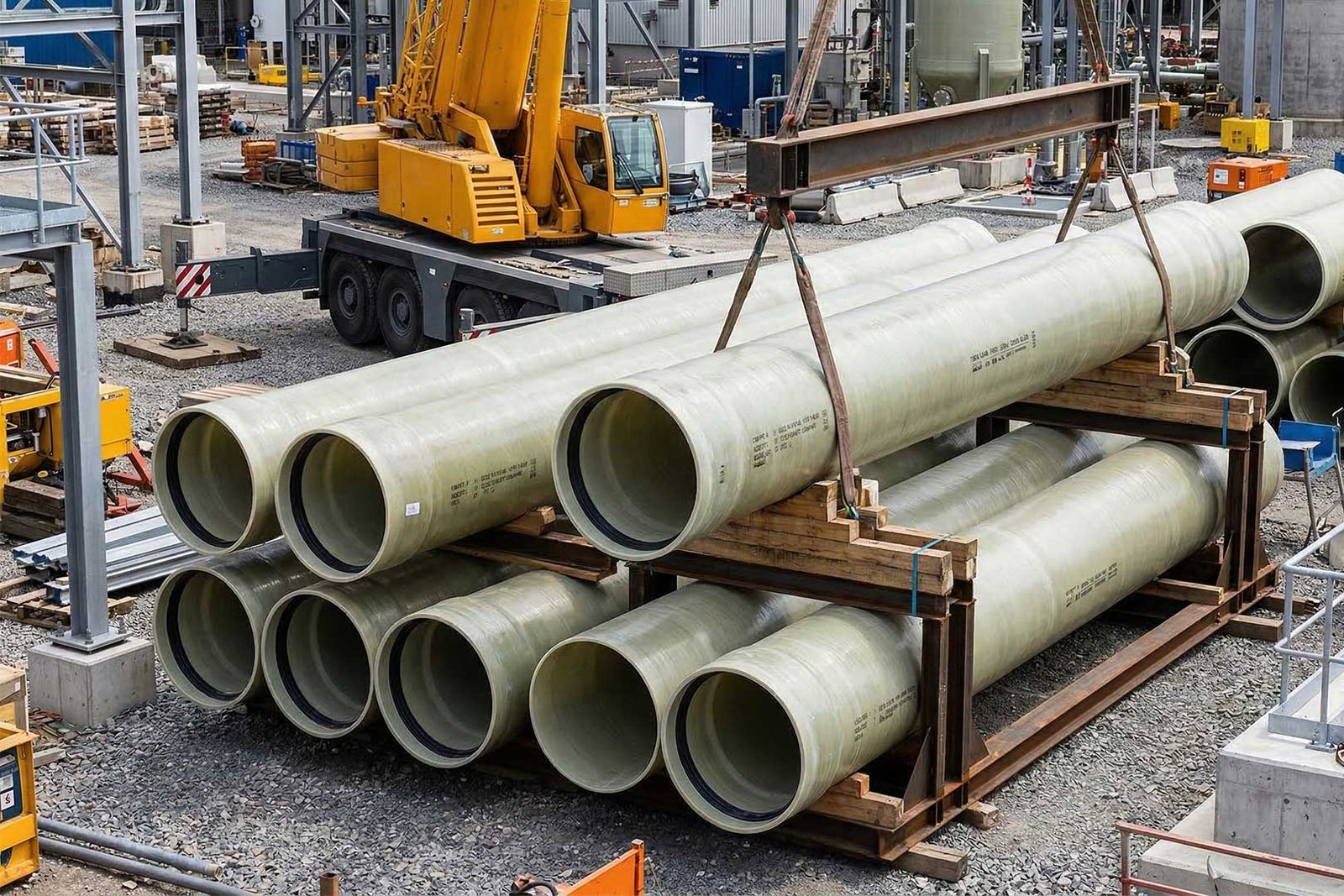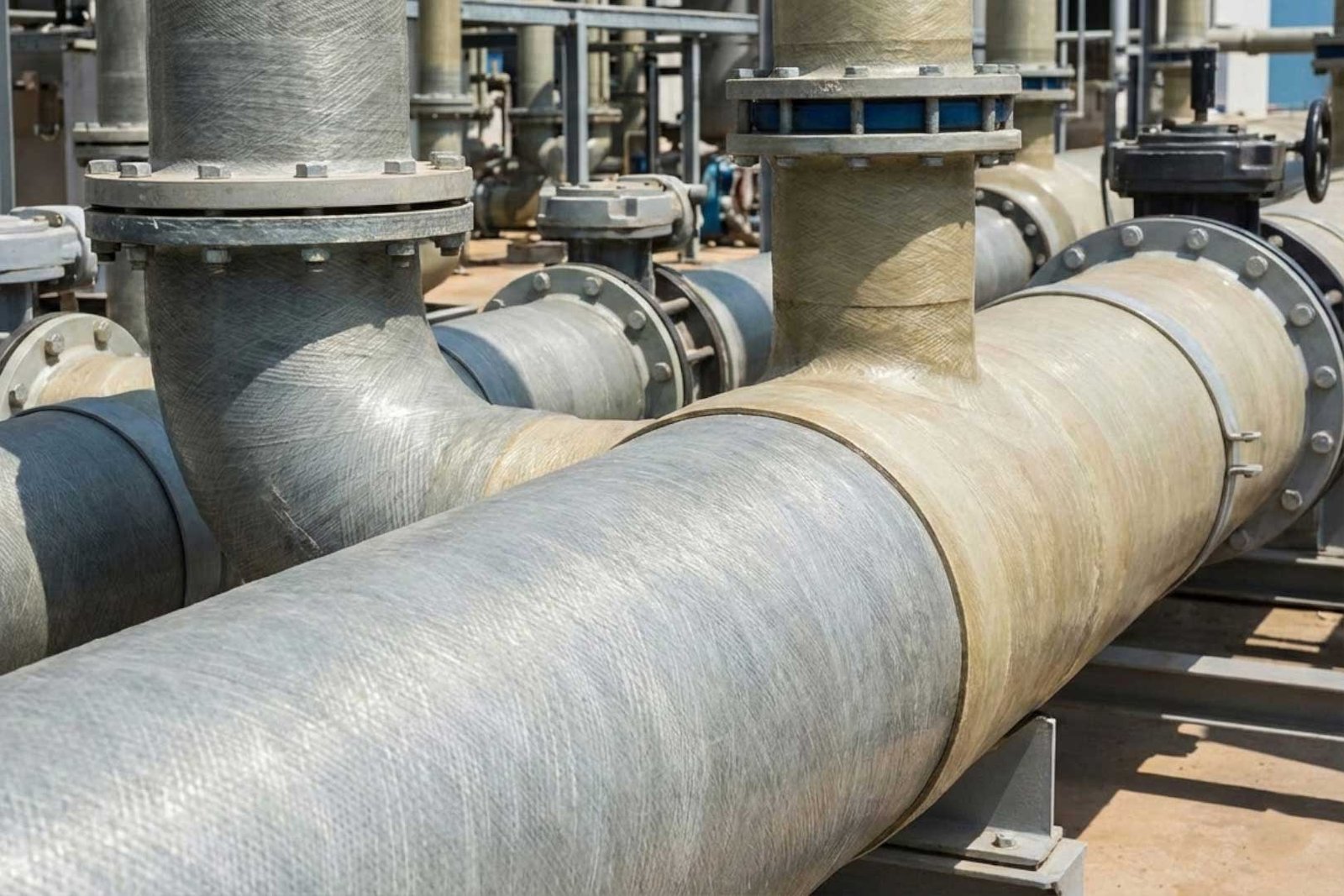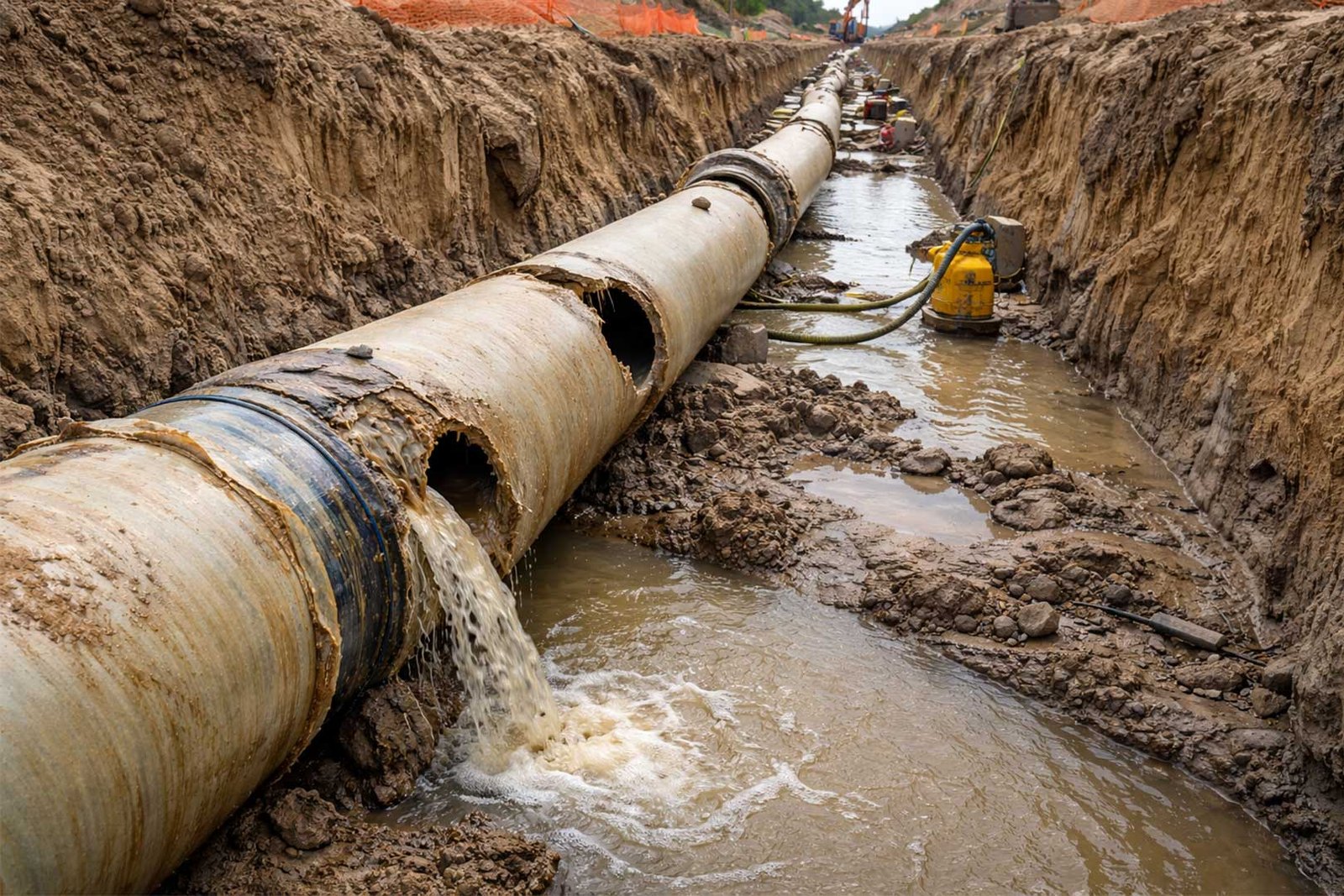
GRP pipelines are an excellent choice for water transmission projects. They fight corrosion really well, weigh much less than steel, and can last for decades. But here’s the thing you should consider. Many failures don’t come from poor pipe design. They happen when teams handle, transport, store, or install the pipes incorrectly.
This is called “hidden failures”, tiny internal cracks or delamination you usually can’t see when the pipes arrive or even during installation. These problems will soon cause big leaks and costly repairs years later. Let’s assess these hidden failures, the reasons behind them, and how you can prevent them.
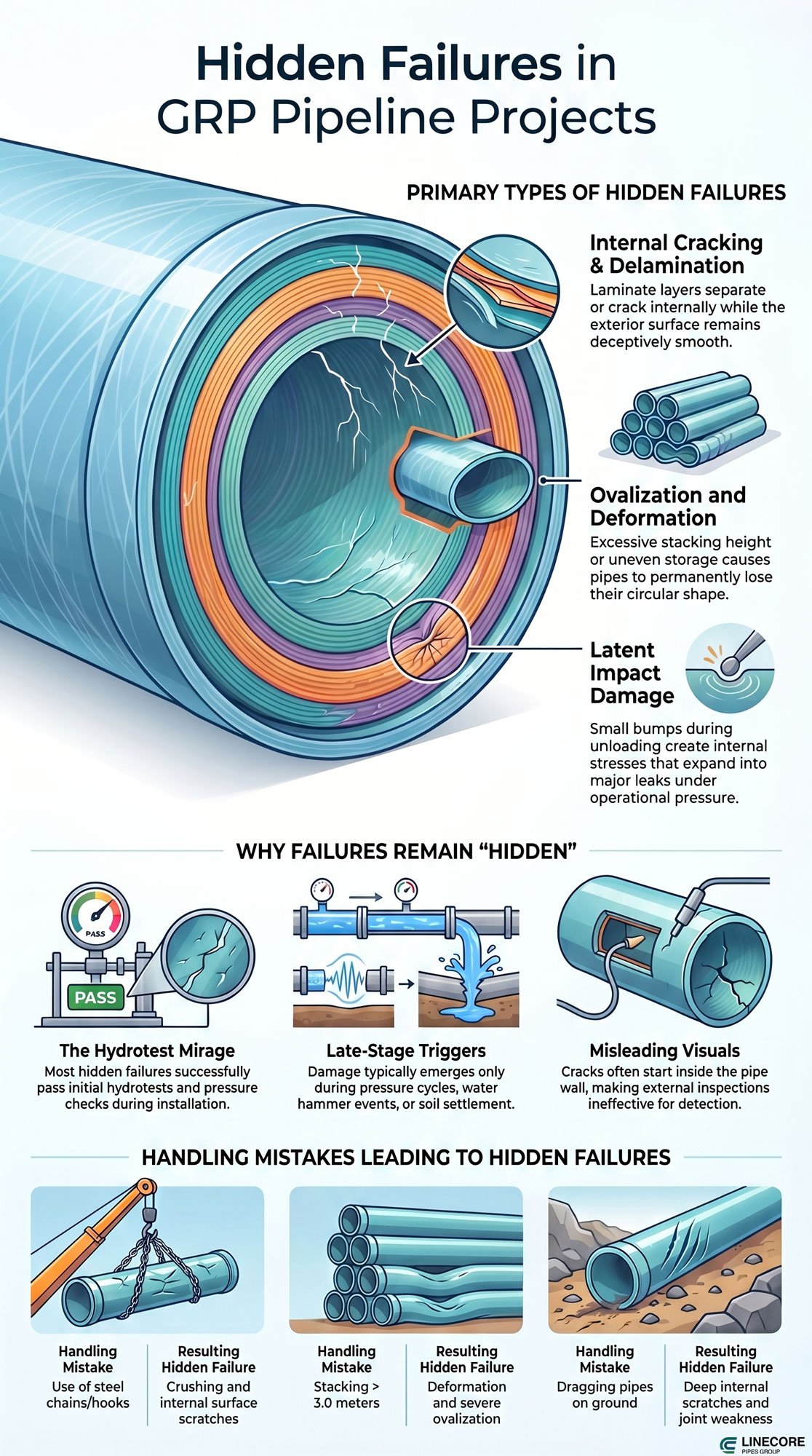
Hidden Failures in GRP Pipeline Projects infographic (source:Pipelinecoregroup.com)
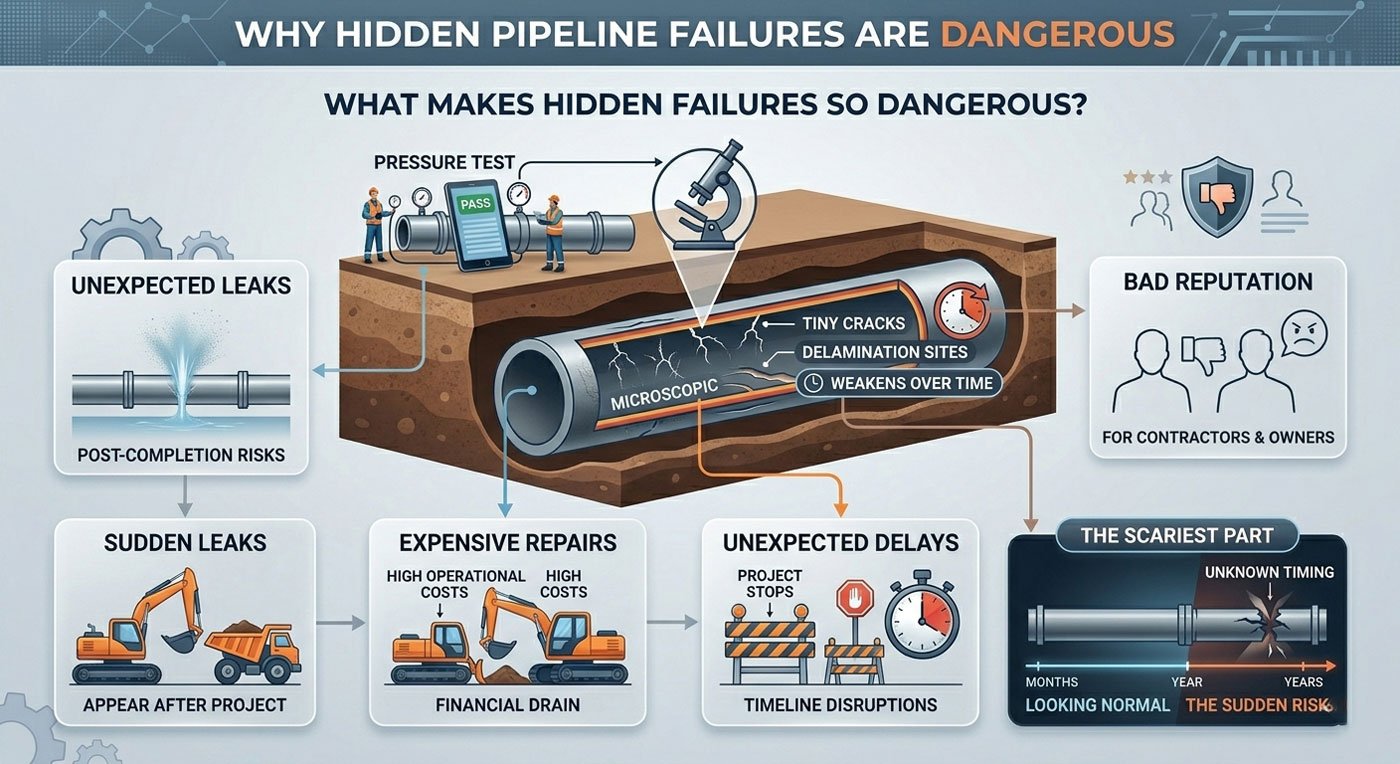
What Makes Hidden Failures So Dangerous?
You probably don’t see the damage at first from the outside of the pipeline. The pipe may even pass the pressure tests successfully. However, the tiny cracks and delaminations change the story from the inside. Your pipeline gets weaker and weaker over time due to these issues, and you will face the following risks:
- Leaks that suddenly appear after the project is finished
- Expensive repairs that cost a lot of money
- Unexpected delays on your project
- Bad reputation for contractors and owners
The scariest part is that the pipe may work fine for months or even years before anything goes wrong. You never know when the problem will show up.
Common Handling Mistakes That Lead to GRP Pipe Failures
The small mistakes by the teams are the main reasons for the GRP pipe failures in various projects. Although seemingly small, some of these mistakes are devastating. We will talk about those mistakes that happen while handling:
Rough transportation
Teams drag pipes on the ground instead of lifting them. They use trailers with poor support that let the pipes sag or bend. Impacts happen during loading and unloading. They also use steel chains or wrong lifting tools that crush or scratch the pipe (source: International Labour Organization).
Poor storage practices
Workers stack pipes too high. They place them on the wrong sites, such as uneven or rough ground. They leave the pipes exposed to the sun and weather for too long. They also forget to protect the pipe ends.
Improper site handling
Crews drop pipes, even from a small height. They use forklifts or slings that press too hard on one small area. They force pipes into alignment during installation. They also move pipes carelessly near the trench.
To avoid hidden damage, follow these basic handling and transport rules:
| Item | Correct Requirement | Why It Matters |
|---|---|---|
| Lifting | Use soft nylon or textile slings (min 10 cm wide) | Prevents crushing and surface scratches |
| Support Spacing | Maximum 2.5 – 3.0 meters | Stops pipes from sagging or bending |
| Support Width | Minimum 10 cm | Avoids point loads that cause internal cracks |
| Prohibited Tools | No steel chains, wire ropes or hooks | These cause severe hidden internal damage |
The Most Common Hidden Failures in GRP Pipeline Projects
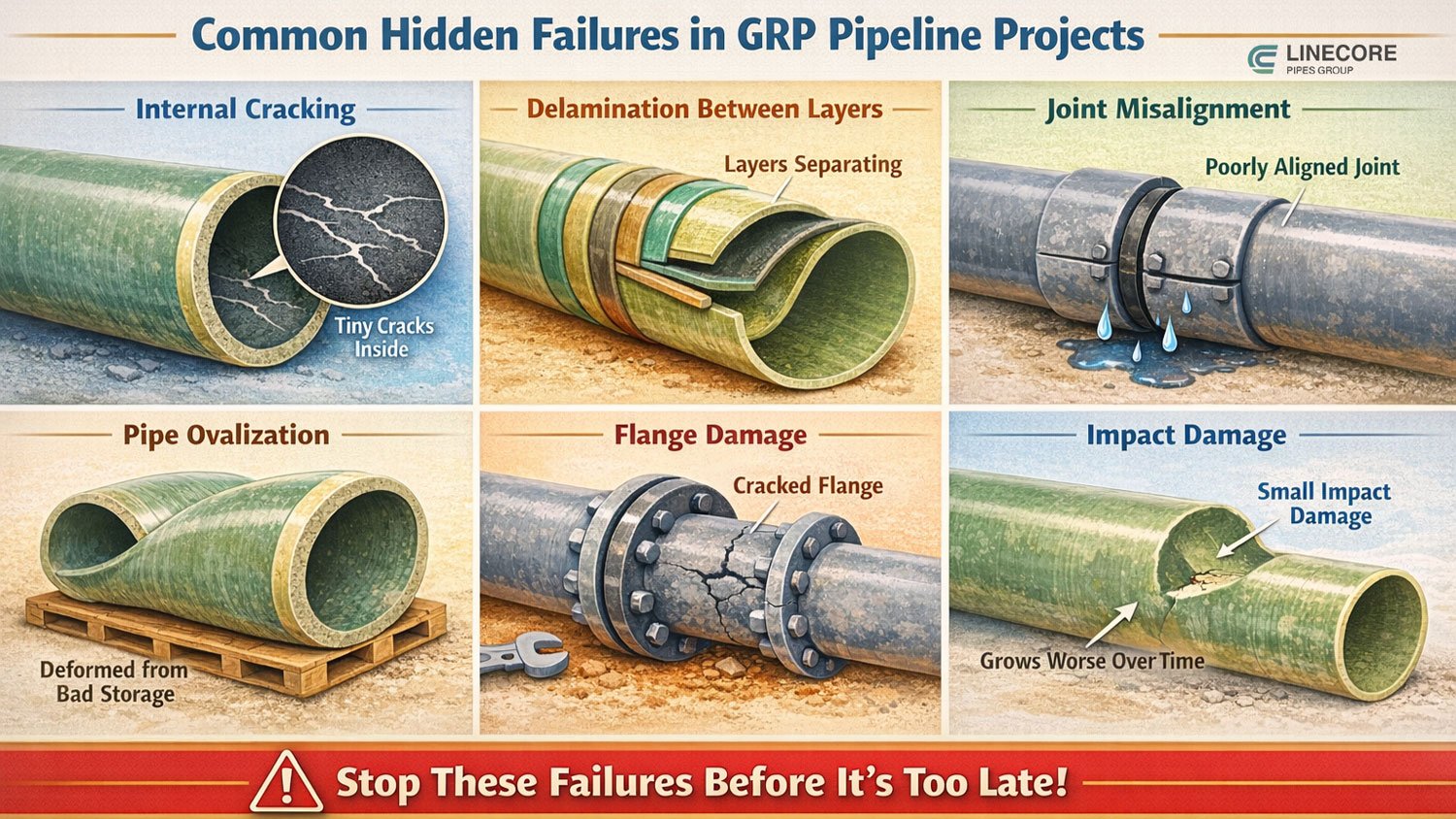
Let us explain the most common hidden failures that happen in GRP pipeline projects. You can not detect them easily, especially if you are not experienced enough. But you must stop them before it is too late. Here they are:
- Internal cracking: Nothing visible from the outside, but there are still tiny cracks on the inside of the pipe.
- Delamination between laminate layers: The pipe consists of a series of layers that may separate from each other over time. This means a really weak pipe.
- Joint weakness caused by bad alignment or poor workmanship: Maybe the workers weren’t careful enough about joining the pipes straight. Leaks are on the way!
- Ovalization or deformation from bad stacking or storage: The pipe becomes oval or bent out of shape because it was stacked too high or stored the wrong way.
- Flange damage from incorrect tightening: Workers sometimes tighten the flanges too much or in the wrong way. The flange cracks in this way.
- Minor impact damage that later grows under pressure and operation: A small hit or bump during handling may look harmless. But later, when the pipe is under pressure or during normal use, this damage gets worse and bigger.
Real-World Example: Pipe Failure in Oil & Gas Project
In one large oil and gas project, a GRE pipe suddenly failed. According to ResearchGate, when experts investigated, they discovered the crack started from a small impact during handling and construction. The outside of the pipe looked perfectly normal, but inside, there were hidden delamination and cracks.
These hidden damages grew over time under pressure and caused the failure. This shows how small handling mistakes can create serious problems that you cannot see at first.
Below, check how high you can safely stack GRP pipes during storage:
| Storage Type | Maximum Safe Height | Important Note |
|---|---|---|
| Loose pipes (no extra support) | 1.5 meters | High risk of damage |
| Pipes with good support | 2.5 meters | Safer if using timber |
| General site storage | 3.0 meters | Use flat, even ground |
| Large diameter pipes (>1400mm) | Do not stack | Very high risk of ovalization and deformation |
Why These Failures Are Often Missed at the Beginning
This may be surprising, but the hidden failures that we talked about are shaped from the beginning. “Why?” you ask, because you don’t see anything from the outside. Some tests, such as a hydrotest, may be helpful. However, nothing is enough to catch all these issues red-handed. You realize many issues just in the following situations:
- Pressure cycles (when pressure goes up and down many times)
- Water hammer events (sudden pressure shocks in the system)
- Soil settlement (when the ground around the pipe moves or sinks)
- Long-term service exposure (after the pipe has been working for months or years)
This explains why everything seems ok at the beginning and while installing the pope, but you must wait for the problems to come in.
Real-World Example: Multiple Pipe Failures in Power and Desalination Plant
In a power and desalination plant, many GRP pipes (from 300mm to 1400mm) started failing after about 10 years. The Engineering Approach explains that the investigation clearly showed the failures were not due to bad manufacturing. They were caused by stresses from poor handling, installation mistakes, and the pipes becoming weaker over time. Even though the pipes passed early tests, the hidden damage slowly grew and created repeated problems later.
Where the Risk Is Highest in EPC Water Transmission Projects
Hidden damage can happen at many stages of a project. In EPC water transmission projects, the risk is highest at these five points:
- During logistics and delivery, pipes are loaded, unloaded, and moved many times. This is when most impacts and rough handling happen.
- During storage at the site, pipes sit for weeks or months. Bad stacking or long exposure to the sun can cause deformation or internal cracks.
- During trench installation, workers lower and move the pipes into the trench. Dropping them or using the wrong lifting methods creates hidden damage.
- At joints and connections: This is where pipes are joined together. Poor alignment or bad workmanship makes the joints weak from the start.
- During testing and commissioning, the system is put under final pressure. Any hidden defects can suddenly appear as leaks or failures.
The larger the project, the more times the pipes are handled. Every transfer point increases the risk of hidden damage. That is why proper handling control must be part of the whole project execution, not just the pipe supply.
When installing pipes in the trench, follow these important rules to prevent hidden damage:
| Installation Item | Requirement | Why It Matters |
|---|---|---|
| Trench Width | Minimum 1.5 × pipe diameter | Allows proper side-fill compaction |
| Bedding Thickness | Minimum 100 mm of clean material | Prevents point loads and cracking |
| Vertical Deflection | Keep below 2–3% | Shows the pipe is well supported by the soil |
The Cost of Improper Handling
You will have to spend a lot later due to improper handling and the issues that follow it. The damaged pipes must be renewed, and that replacement is too expensive. Besides, you will lose a lot of time for testing and restarting. The maintenance costs will also be high for you. The client ends up paying much more over the full life of the project. It can also create arguments between the supplier, contractor, and installer.
Simply put, bad handling turns a good GRP pipe system into a risky and expensive project. It is always cheaper to handle the pipes the right way from the start than to fix big problems later.
Real-World Example: Pipes Failed During Testing on Offshore Platform
On an offshore platform, several GRE pipes failed during the pressure test, especially at the elbows. The main causes were rough handling, impacts, and forcing the pipes into position during installation.
As published on Academia, the damage was hidden at first. The pipes sometimes looked okay and passed basic checks, but when pressure was applied, the hidden cracks showed up and caused leaks. This real case proves that improper handling during construction can lead to expensive failures even before the system starts working.
How to Prevent Hidden Failures in GRP Pipeline Projects
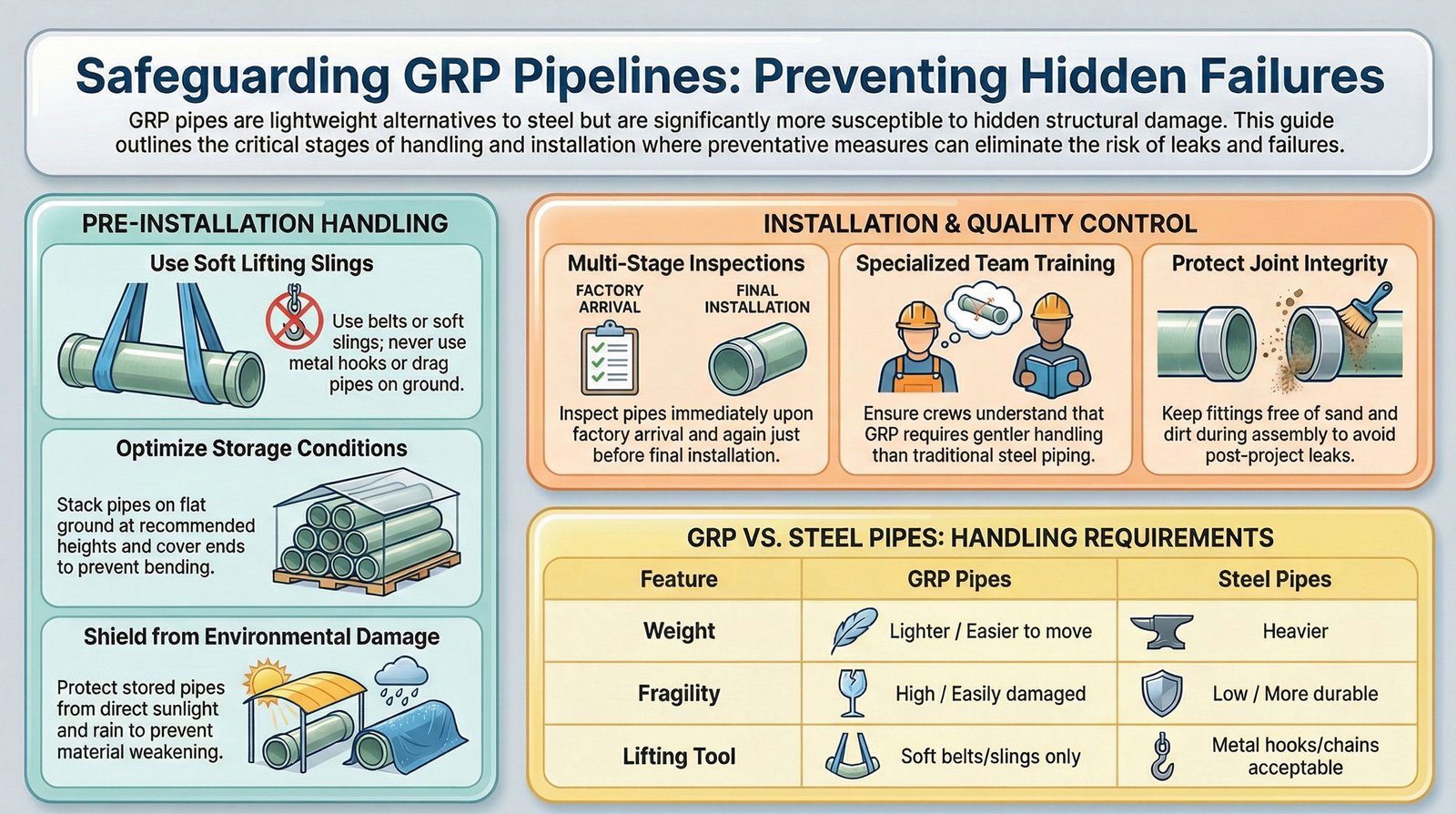
Hidden damages are trouble-making, but avoidable. We provided you with steps that help you stay away from failure. They are as follows:
1. Use proper transport and lifting procedures
Dragging the pipes on the ground damages them. The right way for transportation is to lift them up with belts or soft slings. Metal hooks and steel chains are not suitable for it. If you lift them the wrong way, you can create scratches or hidden cracks inside the pipe.
2. Follow correct storage and stacking rules
Stack the pipes only up to the recommended height and place them on flat, even ground. Protect them from direct sun and rain. Always cover the ends of the pipes properly. Doing this prevents the pipes from bending, becoming oval, or getting weak.
3. Train your installation teams
GRP pipes are much lighter than steel pipes, but they get damaged more easily. Train your workers on the correct way to move, handle, and install GRP pipes. When your team knows what to do, they make fewer mistakes and keep the pipes safe.
4. Inspect pipes at every stage
Never stop watching the pipes. You must check them at every stage. The first inspection is when they first arrive from the factory. This is especially necessary before installation. This helps you find damage before they create bigger trouble.
5. Protect joints and fittings during assembly
Keep the joints and fittings clean and away from dirt and sand. Handle them gently when connecting the pipes. If you protect them well, you will avoid weak joints that can start leaking after the project is finished.
Attention: Don’t work with many different companies. Choose one experienced EPC partner who takes care of everything. At LineCore Pipes Group, we supply the pipes and also handle engineering, delivery, installation, and full project execution. This way, we control the quality at every step and greatly reduce the risk of hidden failures.
Practical Signs Clients and Contractors Should Never Ignore
Here’s something important I want to share. Even small signs can mean big hidden damage inside the pipe. You should never ignore these warning signs:
- Scratches that look deeper than normal
- Whitening marks or visible impact spots on the pipe surface
- Pipe deformation from bad storage (the pipe looks oval or bent)
- Misaligned joints during installation
- Over-tightened flange areas that show cracks
- Any damage that happens after unloading or lowering the pipe into the trench
- Any “minor incident” during handling that was not properly documented
If you see any of these, stop and check the pipe carefully.
Why a Total Solution Approach Reduces Risk
Despite many engineers’ assumptions, working with various companies will not only solve the problem but also worsen it. One does the supply, the other engineering, and the third one the installation, not a good idea! None of them is fully responsible for your project in the end. But a total solution provider is the game-changer. At LineCore Pipes Group, we handle everything in one package. We control:
- Pipe specification
- Transportation planning
- Site handling procedures
- Installation supervision
- Testing and commissioning support
The amount of hidden failures and damages decreases to a significant extent in this way. You will see no fault in responsibilities and will face the least risk in your project. This is why working with a total solution EPC provider gives you better quality and peace of mind in water transmission projects.
Final Thoughts: Protecting Your GRP Pipeline Investment
GRP pipelines are strong, long-lasting, and excellent for water transmission projects. But they only deliver what you really need when handled, installed, and executed correctly. You and all other project managers can prevent failures as they happen, not out of the blue, but because of small mistakes in various stages. The only thing you need is the right care and expertise.
At LineCore Pipes Group, we don’t just supply GRP pipes. We act as a total solution EPC provider (handling engineering, delivery, installation, and full project execution) from start to finish. Planning a water transmission project? Contact LineCore Pipes Group today. Let us help you cut the risk and build a reliable system that works for decades.
about
The Author

Farshid Tavakoli is a seasoned professional in engineering and international trade. Holding degrees in Electrical Engineering, Mechatronics, and a Doctorate in Business Administration (DBA) from the University of Lyon, he also has a strong background in industrial automation and production line technologies.
For over 17 years, he has led an international trading company, gaining deep expertise in commercial solutions tailored to industrial needs. With more than 8 years of active involvement in infrastructure development, he specializes in the supply of electromechanical equipment for water and wastewater treatment plants and transfer projects.
Together with comapny expert team, he now provides consultancy and integrated solutions for sourcing and implementing complex infrastructure projects across the region.