Why does the choice of joint selection make or break a GRP project? The answer has roots in the design of the jointing system in different situations. More specifically, a wrong choice can result in delays, wasteful costs of further maintenance, and failures in operational sections (bends, pump stations, and…). The right choice helps project managers to manage both time and money for proper project operation.
This paper guides you to find the best GRP pipe jointing method based on your project’s demand for a durable lifetime.
An Overview: How Jobsite Forces Shape GRP Pipe Joint Decisions
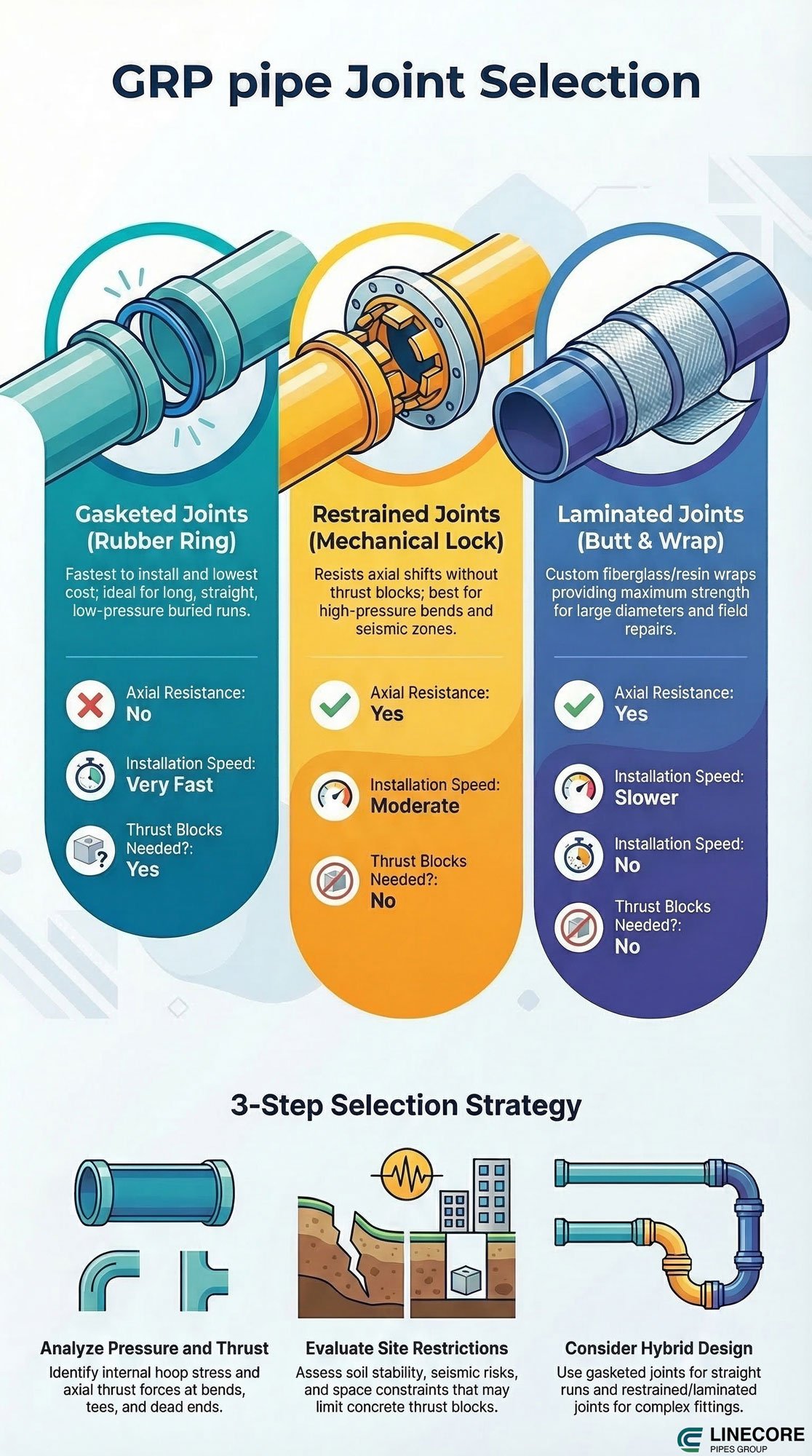
grp pipe joint selection infographic (source:Pipelinecoregroup.com)
What matters in a GRP piping project, once you have chosen the pipe’s specs, is the right selection of joints. This is related to several factors that influence the final joint type. Relate your project specifications to the joint here:
Internal Pressure and Axial Forces: Two Important Forces in Jointing Selection
There are two main factors that can affect the result of joint selection. The hoop and axial forces are what all engineers must consider in their projects for both pipe and joint design.
- Hoop stress comes from the internal pressure of fluids. This force indicates how pipes behave in high-pressure flow systems, while requiring the type of joints.
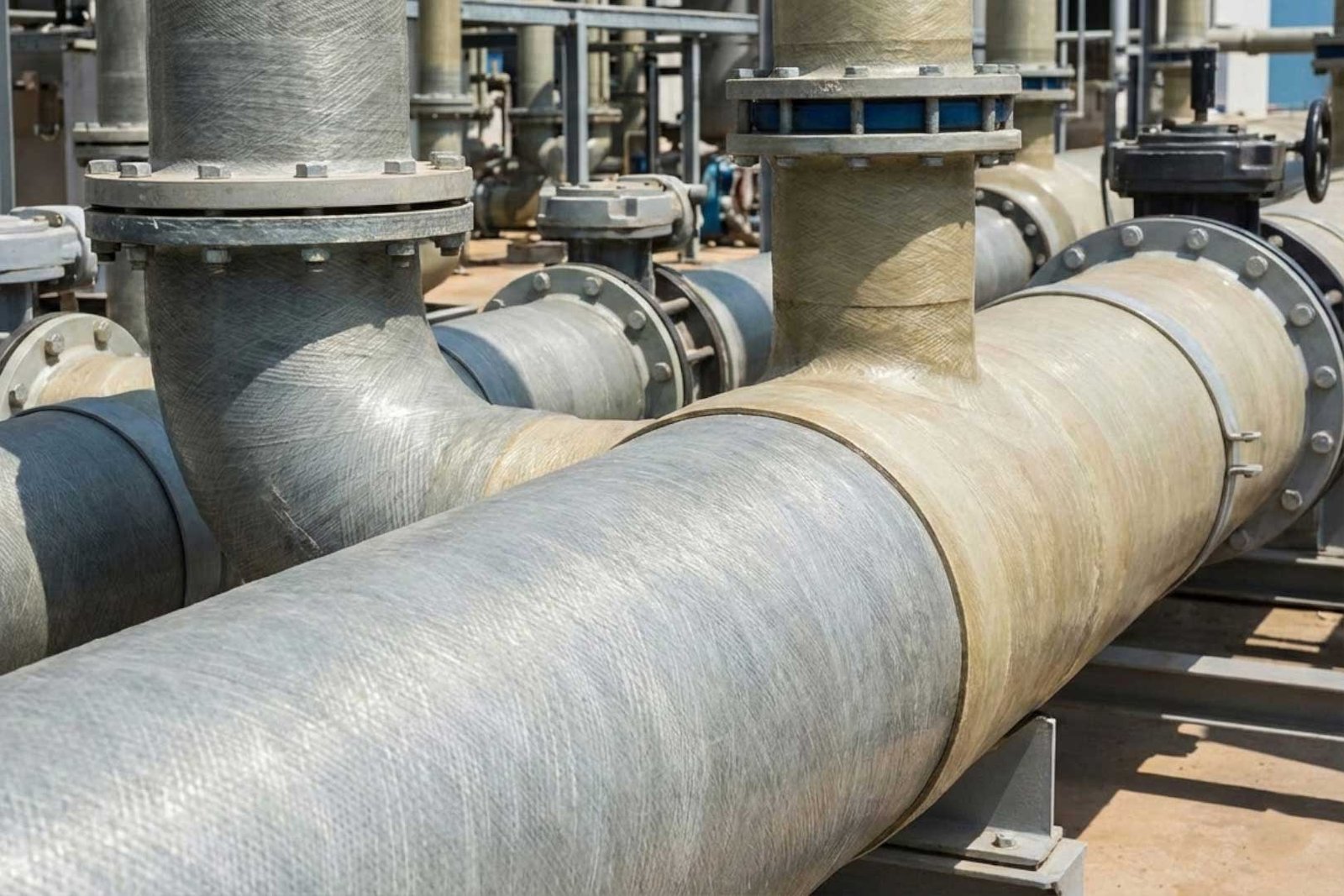
- Axial thrust forces are for where bends, tees, dead ends, or reducers go under the push of the surrounding area. A proper restraint of axial forces can avoid such problems in jointing areas.
Why Many Projects Underestimate Axial Loads
Engineers may look at the impact of axial loads in piping systems.
- Surge pressure happens when the velocity of fluid flow changes. (ScienceDirect)
- Pump start/stop routines can whip up major pressure jolts, too.
- Plus, extended transmission lines build up axial thrust, complicating efforts to keep everything steady and in line.
Quick Rule for Contractors
When thrust blocks prove tough or pricey to set up, restrained systems step in as a solid pick that includes superior grip on axial forces. Conversely, when adaptability and precise alignment take priority, gasketed joints deliver a smarter, hands-on fix.
Gasketed Joints: Rubber Ring Systems
This part goes through the gasketed joints, which are a common choice for GRP pipes in easy and fast setups.
What Are Exactly Gasketed Joints?
This method uses a bell end on one pipe and a spigot on the other one, then they’re stuck together tightly. This can be compressed for a reliable joint in high-pressure flows.
- Note: No adhesive or specific tools are required in this method.
This type of jointing mainly takes less time to assemble compared to other types of connections. Back in the traditional era of piping, this method was found there, while engineers adapted it to GRP’s lightweight structure.
Where Should Gasketed Joints Be Used?
These excel in extended underground straight sections where the ground stays stable. Think irrigation networks that move water at low pressure, gravity-fed sewer lines, or water mains handling moderate flow without sharp turns.
In practice, contractors turn to them for rural or open-field projects. For example, a 10-kilometer irrigation pipeline in flat terrain benefits from its quick layout. As noted in Scribd, they suit systems up to around 10-15 bar, beyond which other options take over.
What Are the Advantages of Gasketed Joints?
Speed stands out: crews finish joints fast, slashing labor expenses. The setup permits angular shifts up to a few degrees, handy for curves or uneven trenches. They absorb small shifts from soil settlement, reducing crack risks over time.
Cost savings add up with fewer skilled workers needed. Maintenance can be placed simply due to the ease of the joint repair process.
Contractor Insight: Useful Points When Choosing Gasketed Joints
- Go for these when quick work and bend room trump the need for locked-in strength.
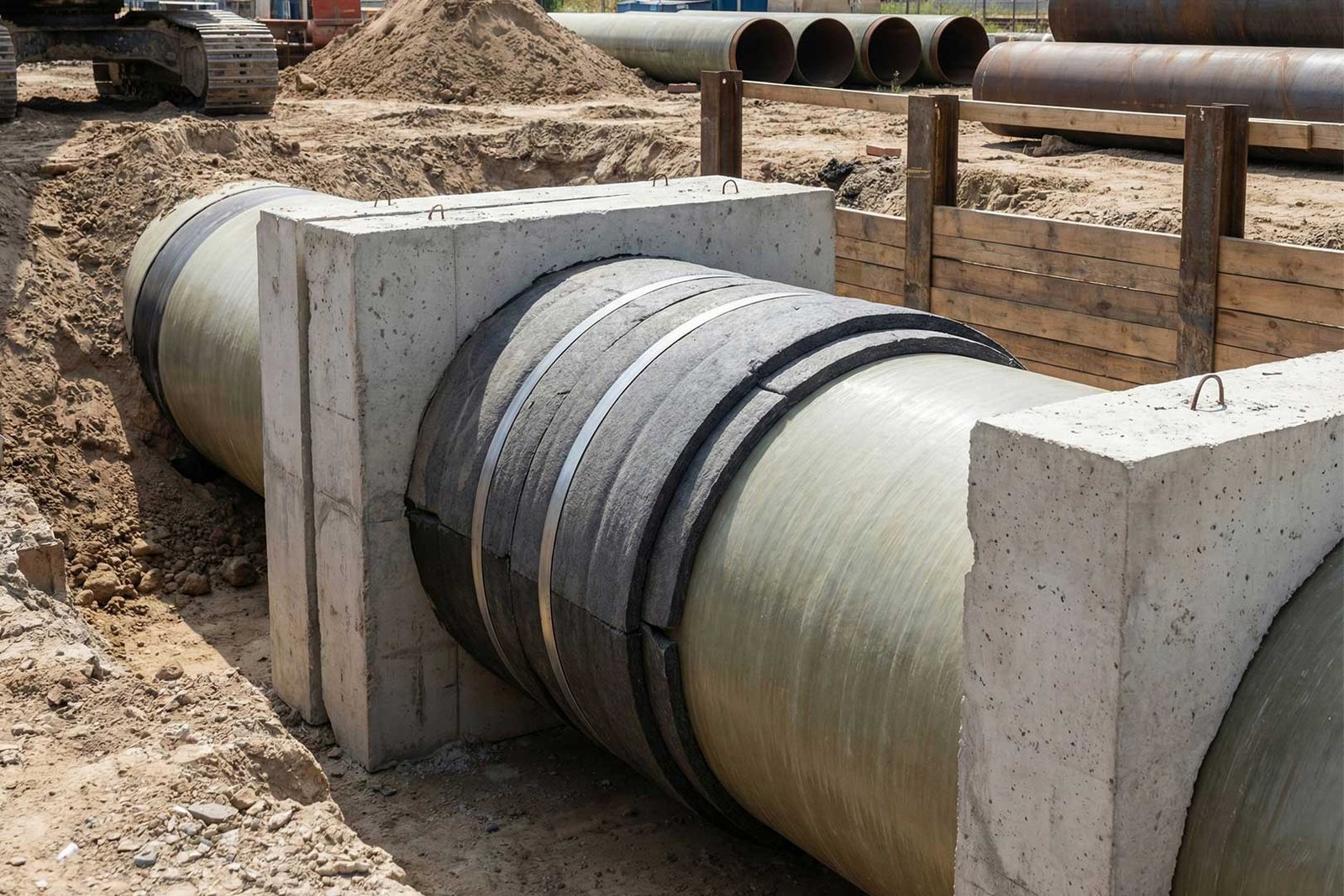
- Always install thrust blocks at bends or tees to counter pull-apart forces. Avoid them where axial pull runs high, like near pumps.
- Above ground? Not wise, since exposure weakens seals over time.
- Poor installation, such as dry gaskets, leads to leaks. Test pressure carefully to spot issues early.
Restrained Joints: When You Need Structural Control
Once you understand when to choose gasketed joints, it’s time to check if restrained ones can fit the project better.
The Structure of Restrained Joints: What Makes Them Different
These joints stand out with mechanical locks or bonds that prevent axial shifts. Key-lock designs use nylon inserts, adhesive tapers rely on epoxy, or flanged connections tie into other parts. (Source: FuturePipes)
- Engineering Consideration: They manage pull forces with no slip, and many setups remove the need for concrete blocks.
To go further, a spline or ring secures the spigot inside the bell in key-lock types, while adhesive versions cure equal pipe strength. Bolted flanges allow easy links to valves or pumps. Such designs suit systems at high pressures, like 20-30 bar, where other joints fail.
What Are the Best Applications?
They fit pump discharge lines with hard hits, high-pressure water mains over rough ground, or zones with unstable earth, like earthquake areas. They also suit narrow urban sites or weak soils where extra digs prove tough.
In actual projects, consider a city sewage pump or a mountain water line-places where shifts cause big problems. They handle industrial fluids or chemicals with no added braces.
Advantages for Construction Managers in the Case of Restrained Joints
They lessen civil tasks with fewer concrete blocks, which cuts time and expense on pours and waits. They boost results in dangerous areas that resist quakes or moves. Also, consider that in tight spots, they can be designed in order with minimal digs. (Source: LinkedIn)
Managers gain faster schedules and fewer issues, especially with limited space or difficult dirt.
Considerations and Project Tips
- Materials cost a touch more due to locks or glues. Installs need accuracy to dodge flaws. Skilled oversight ensures proper line-up and cure times.
- Check matches; some GRP types require adapters.
- Restrained joints cut overall project expenses when civil tasks like blocks cost a lot in hard locations.
Laminated (Butt & Wrap) Joints: High Strength and Adaptable
This part inspects the third and last type of GRP pipe joints, which are the most reliable ones due to the usage of fiberglass and resin. This type is more likely the repair process at first sight.
What They Are: Strong, Glued Joints
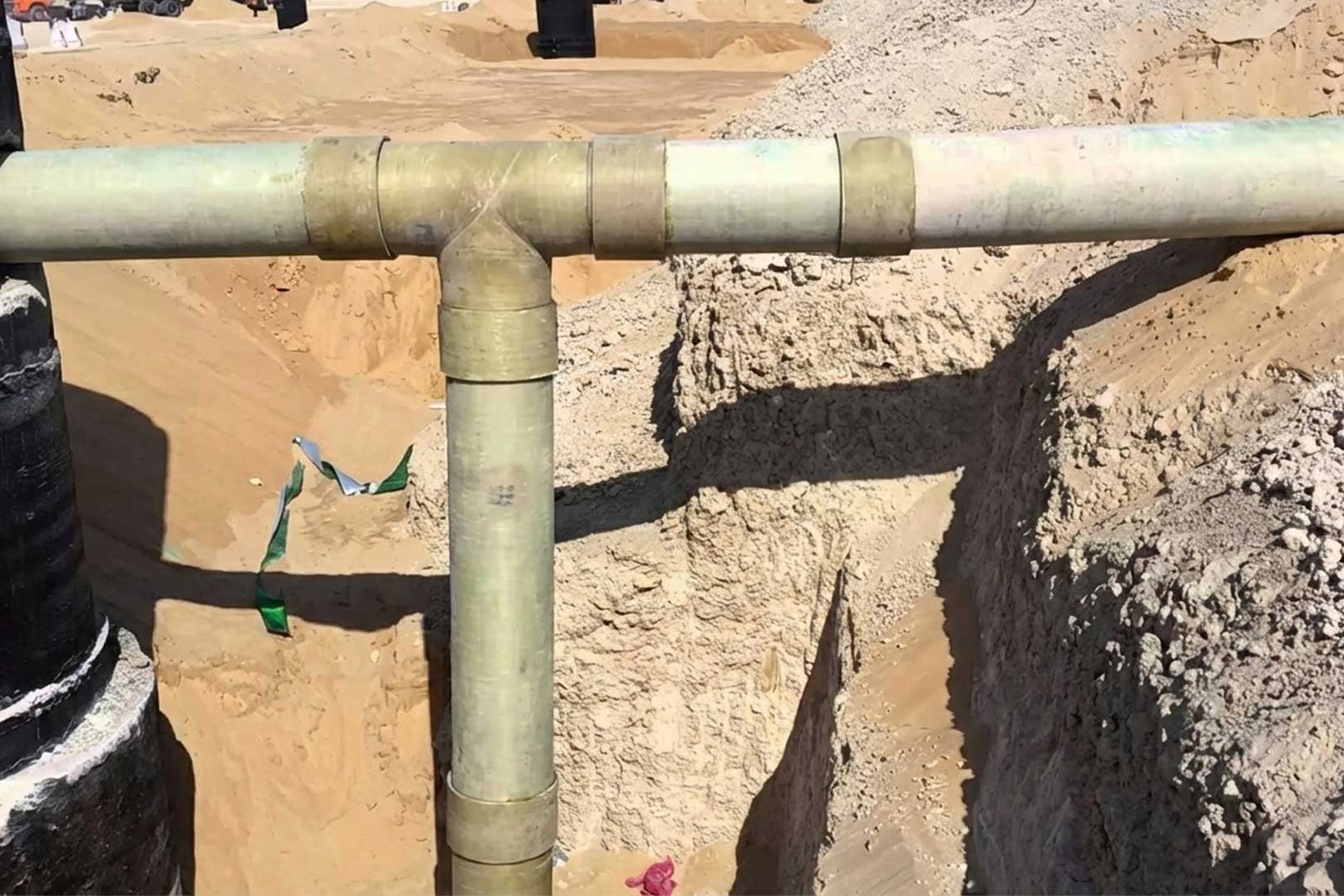
Workers butt pipe ends together, then wrap fiberglass mats soaked in resin around the joint. This operation shapes a solid structure that blends with the pipe walls.
- To detail it, the process starts with sanding ends for grip, applying resin, and layering fiberglass until the joint matches or exceeds pipe thickness. (Source: BHEL)
- Epoxy or polyester resins harden to make a bond that doesn’t break. These kinds of joints are like factory lamination, which is great for custom fits without ready-made pieces.
When to Use Laminated Joints
Choose the laminated method when working with large-diameter pipelines where other connection methods cannot be used properly. Custom fittings, such as strange angles, changes to layouts on the job site, or repairs to broken parts.
In the field, consider a massive water main over 1 meter wide, tie-ins to existing systems, or emergency patches during installs. They adapt well to irregular shapes or transitions between pipe types.
- Constructive Point: Special cases like builds or repairs that are rarely found, not rapid repeat work, where time pressures mount.
Gasketed, Restrained, Laminated: When to Use Each
Here’s a comparison table that leads you to compare all three connection methods. Check if it comes up with the most proper one for your project.
| Criteria | Gasketed | Restrained | Laminated |
|---|---|---|---|
| Axial Resistance | No | Yes | Yes |
| Installation Speed | Very Fast | Moderate | Slower |
| Need Thrust Blocks | Yes | No | No |
| Flexibility | High | Medium | Low |
| Best For | Long buried runs | High-pressure & bends | Large diameters & custom |
| Cost | Low | Moderate | High |
| Durability | Moderate | High | Very High |
| Maintenance | Low | Moderate | High |
| Ideal for Seismic Zones | No | Yes | Yes |
| Resistance to Corrosion | Moderate | High | High |
| Adaptability for Field Modifications | Low | Moderate | Very High |
| Use in Cold Temperatures | Yes | Yes | No |
| Installation Complexity | Low | Medium | High |
Joint Selection Strategy for Contractors and Engineers
To achieve the best jointing systems for your pipelines, we provide a 5-step strategy that guides you to the most proper method based on the project demands. Follow them all:
Step 1: Identify Pressure & Surge Conditions
For the first evaluation of the surrounding condition of pipelines, check the influence of axial and hoop forces (internal & external) on pipes. Changes in the frequency of the pumping energy can lead to sudden pressure and further failures.
Step 2: Locate All Bends, Tees & Thrust Points
Find places in the pipeline where there are bends, tees, and thrust points. These parts have a lot of axial thrust forces acting on them; they need to be properly controlled to avoid problems.
Step 3: Look at the Soil and any Civil Restrictions
Look at the soil conditions and any possible civil restrictions, such as unstable soils, earthquakes, or construction zones that are too small. These things will help you decide if restrained or gasketed joints are better.
Step 4: Time and Installation Considerations
When the installation process of GRP pipes gets started, the downtime is comparative and should be aligned with the project conditions. For example, in sites with heavy traffic above, it doesn’t matter which method to choose, as it has fast installation.
Step 5: Consider Hybrid Design
In some cases, a combination of joint types can be the best option. Check the table below to see if each can satisfy a specific property.
| Joint Type | Application | Axial Resistance | Installation Speed | Best Use Case |
|---|---|---|---|---|
| Gasketed | Straight buried runs | No | Very Fast | Long, straight runs with low axial force. |
| Restrained | Bends and fittings | Yes | Moderate | Bends and fittings with high axial forces. |
| Laminated | Special transitions | Yes | Slower | Large diameter or custom transitions. |
Common Project Mistakes to Avoid
- Are you calculating axial thrust forces correctly?
Yes, correct calculations prevent misalignment and failure at bends and tees.
- What about the overuse of thrust blocks
It’s totally wrong. Thrust blocks must be used when the axial forces are about
to ruin the whole system.
- Have you prepared adhesive surfaces properly?
Yes, clean and smooth surfaces ensure a strong, reliable bond.
- Is gasket lubrication applied correctly?
Yes, proper lubrication can prevent ineffective sealing and leaks.
- Are you allowing enough curing time for laminated joints?
Yes, sufficient curing time is important due to the dilemmas caused by high-pressure flows for strength and durability.
Why the Right Pipe Supplier Makes a Big Difference
It’s not just about getting pipes delivered. It’s about teaming up with someone who helps you every step of the way.
1. Real Engineering Backup
A solid supplier doesn’t just sell products. They talk through joint choices with you, check axial loads and surge pressures so surprises stay away, and suggest smart mixes of gasketed, restrained, and laminated sections when it fits best.
2. Help Right There on Site
When the pipes show up, they come too. They guide installation, train your crew quickly, and fix issues fast so work keeps moving without big setbacks.
3. Lower Costs, Fewer Headaches
They cut out extra thrust blocks and heavy civil work. You avoid delays, rework, and surprise expenses. The system lasts longer, and your budget thanks you.
LineCore Pipes Group as Your Go-To Partner
LineCore Pipes Group is not just a supplier for composite pipes; they’re also a technical partner that assists you in designing your pipelines, fittings, and jointing pieces based on your project environment. This design and installation aid both provide support for all steps of running your piping system and the prevention of wasteful maintenance or repair dilemmas.
Engineers, contractors, and project managers can rely on LineCore Pipe Group for their piping project for a smooth and cost-effective pipe choice.
about
The Author

Farshid Tavakoli is a seasoned professional in engineering and international trade. Holding degrees in Electrical Engineering, Mechatronics, and a Doctorate in Business Administration (DBA) from the University of Lyon, he also has a strong background in industrial automation and production line technologies.
For over 17 years, he has led an international trading company, gaining deep expertise in commercial solutions tailored to industrial needs. With more than 8 years of active involvement in infrastructure development, he specializes in the supply of electromechanical equipment for water and wastewater treatment plants and transfer projects.
Together with comapny expert team, he now provides consultancy and integrated solutions for sourcing and implementing complex infrastructure projects across the region.