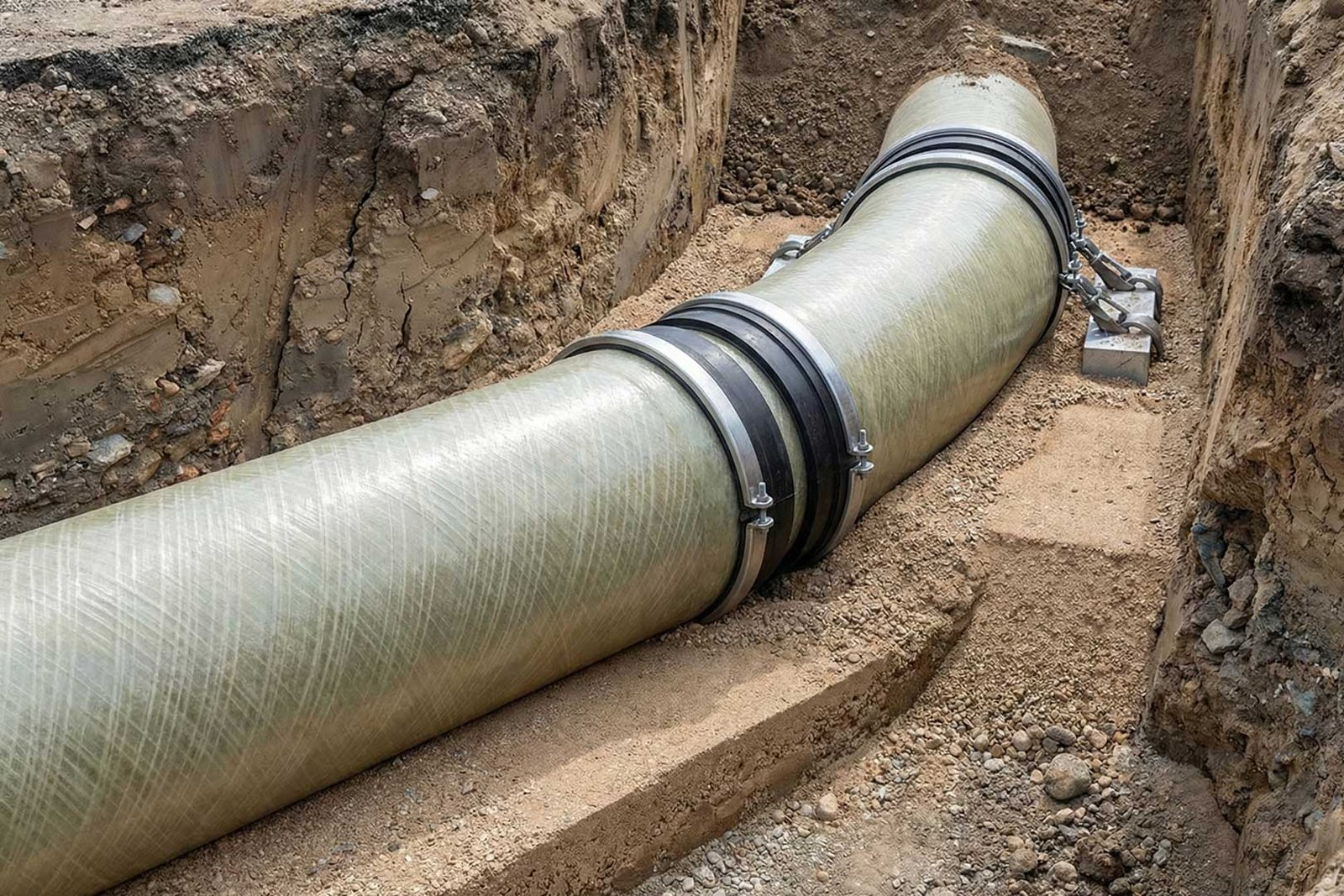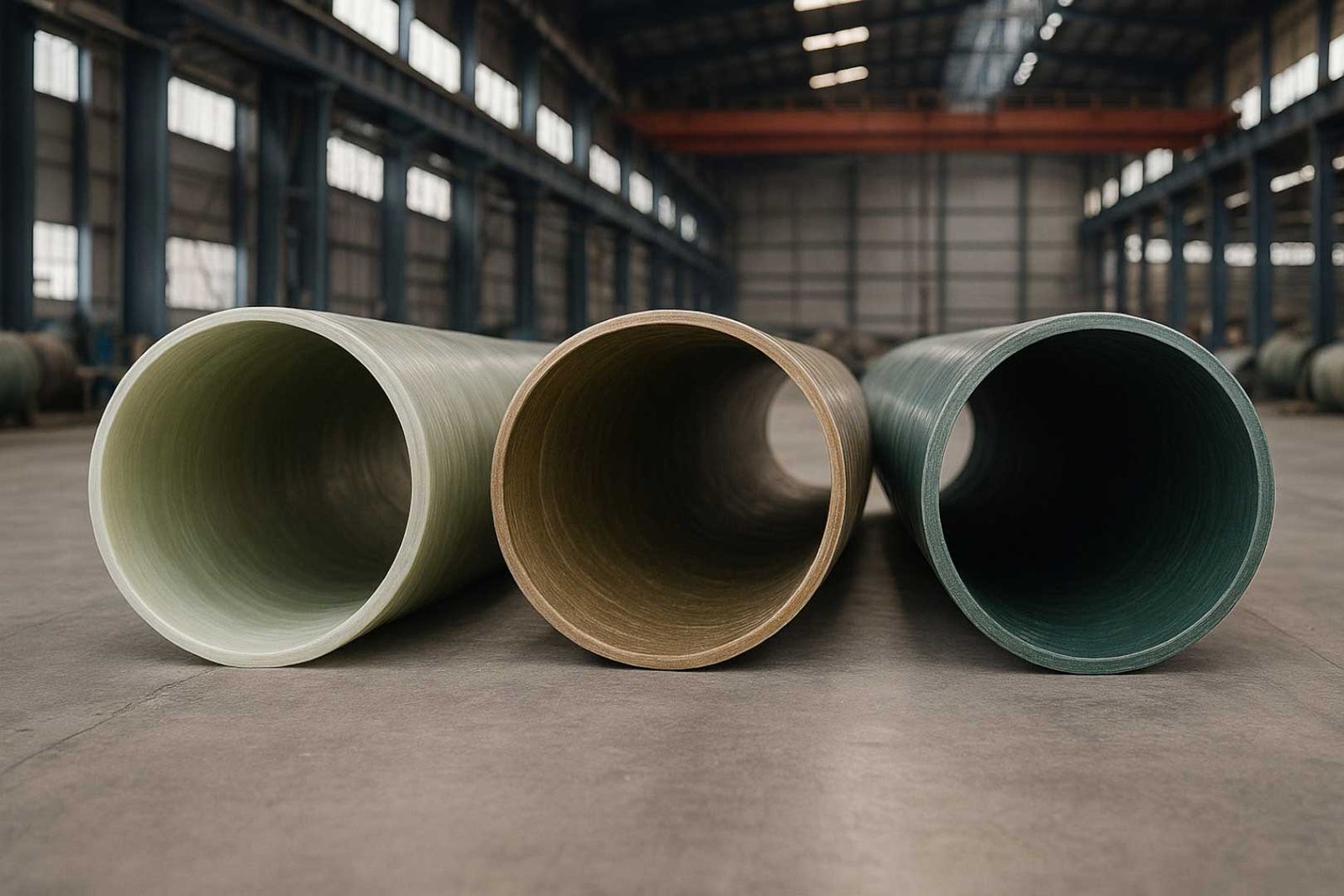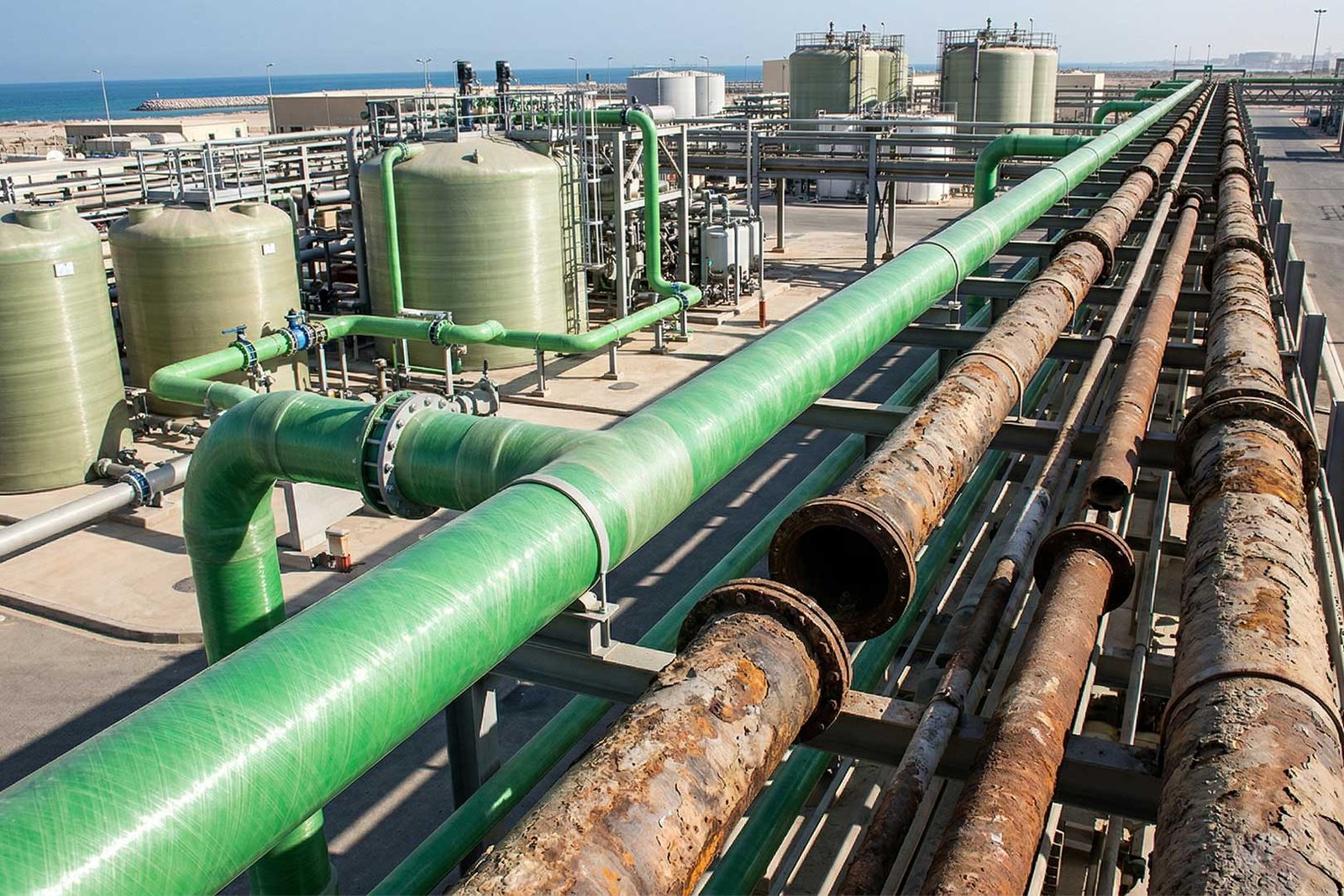
GRE pipes, as a magnificent choice for oil and gas pipelines, are made of glass fibers and an epoxy resin matrix that creates lightweight, corrosion-resistant pipes. This requires a production process to wind fibers around a mandrel and shape the pipes to handle high-pressure flows with low maintenance cost. This market is projected to be around $1.7 billion in 2026, which represents the ease of use of GRE in various industries.
This post walks through the manufacturing process, tips, techniques, and other considerations in the field of GRE pipes.
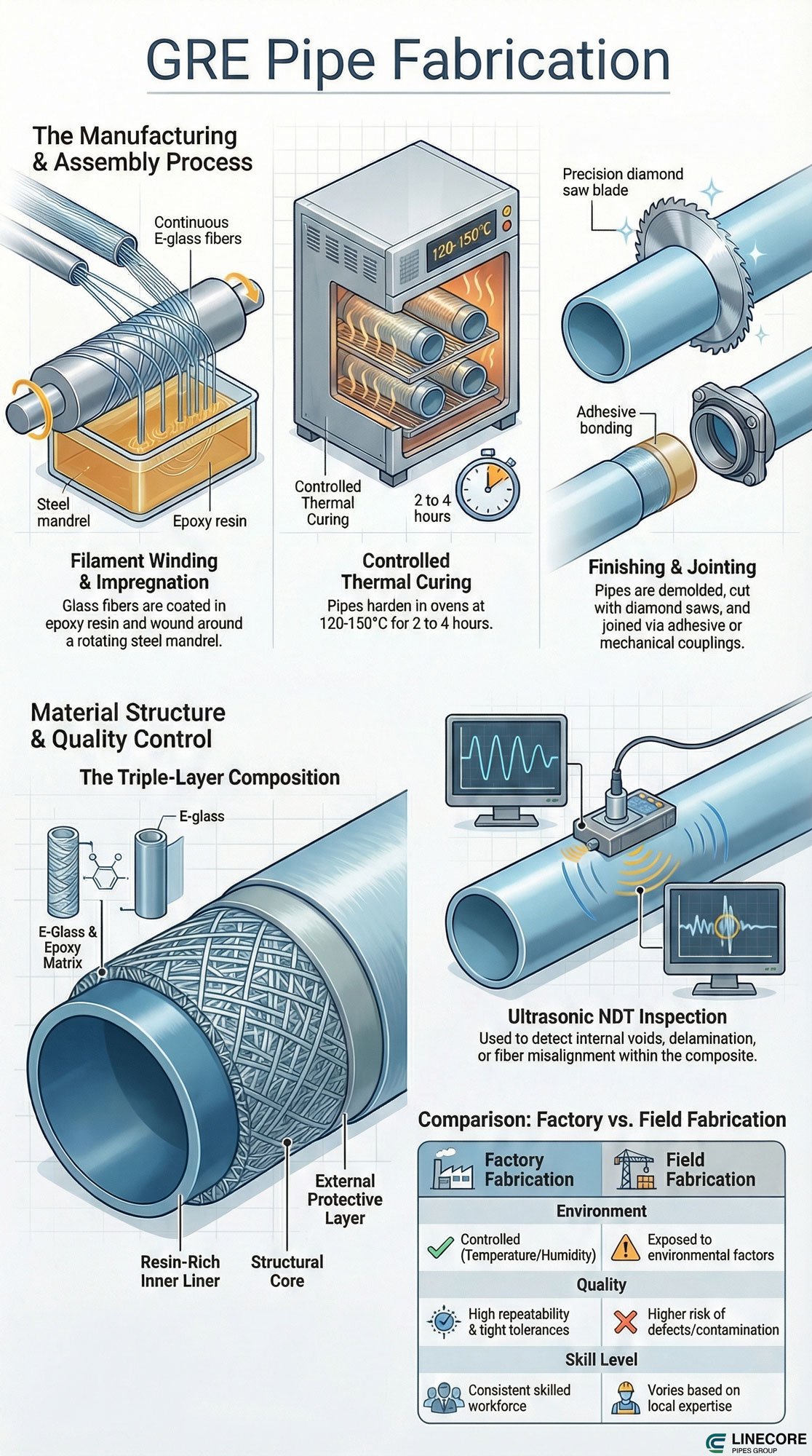
GRE Pipe fabrication infographic (source: Pipelinecoregroup.com)
Materials Used in GRE Pipe Fabrication
The right ratio of glass fibers and resin will aim for those well-structured pipelines used in oil, gas, and fire-retardant systems. What makes GRE this resistant:
Glass Fiber Reinforcement
E-glass is key for continuous filament glass fibers in GRE pipes, with tensile strengths of 2.415 to 4.890 GPa. The role of fiber orientation in fabrication matters a lot, 55-degree helical angles amp up hoop strength for pressure, while axial setups manage tension in oil lines.
Epoxy Resin Systems
These features include thermosetting epoxy, like amine-cured bisphenol A, that hardens for strong bonds. As Scribd highlighted in an article, resin selection criteria for GRE fabrication focus on heat tolerance to 120°C, resistance to acids or H2S, and low viscosity for fiber wetting in gas fields.
Composite Laminate Structure
Composite pipes are designed in three main layers:
- Inner Liner Fabrication: A resin-rich layer to protect pipes from corrosive fluids
- Main Structural Layer: The core of the pipe, made of glass fibers in multiple directions to resist high-pressure loads.
- External Protective Layer: This layer also includes resin and protective materials to keep pipes safe in harsh environments.
GRE Pipe Manufacturing Process
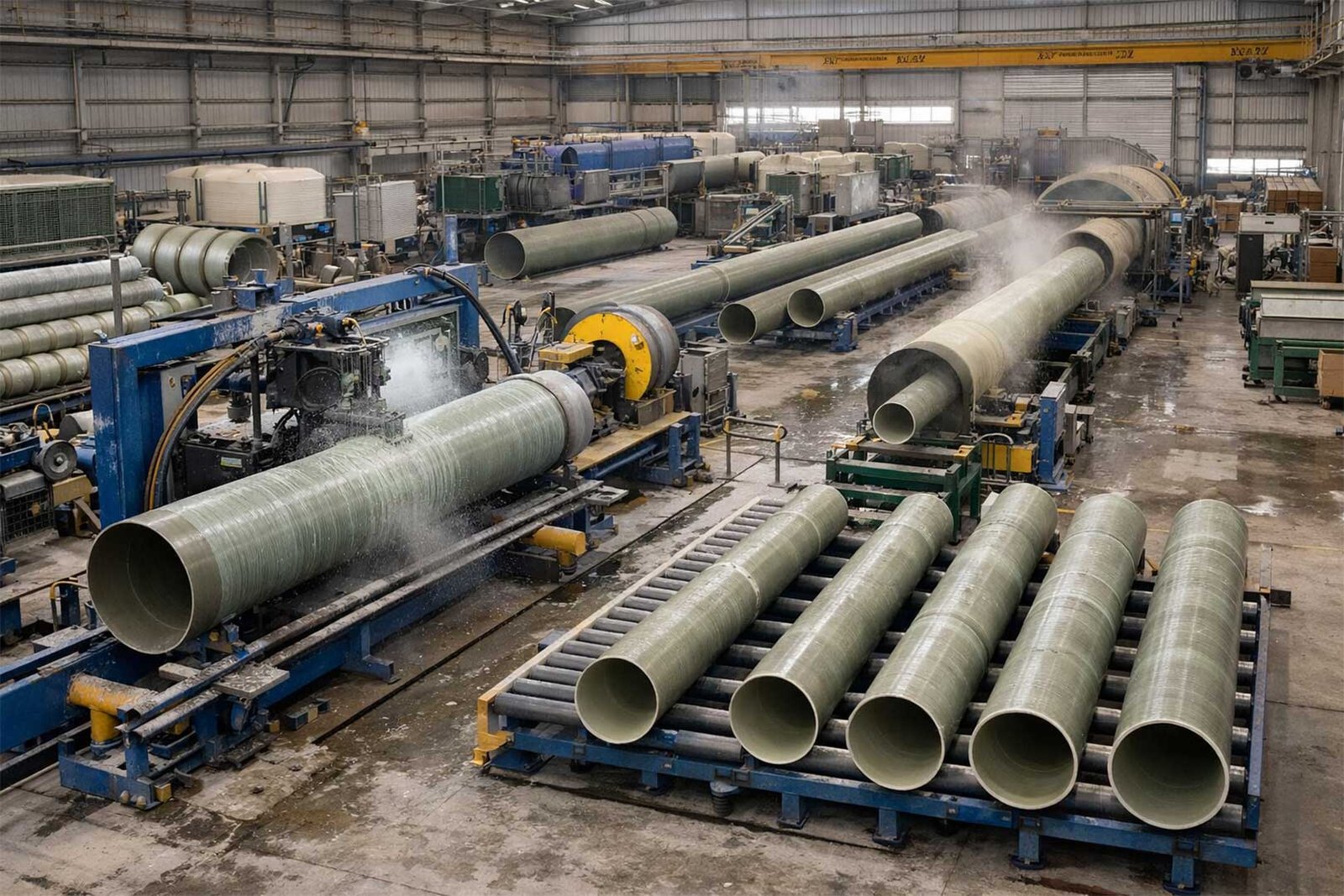
Filament winding is the method used for GRE pipe fabrication that provides the strength in composite pipes.
Filament Winding Fabrication Method
This process goes through several steps mentioned below:
- First, the mandrel is prepared by coating the steel cylinder to remove the pipes, making it easier.
- Fiber impregnation is what happens to the resin to make it ready for the winding process.
- Then, the right angle of winding is chosen to shape the pipes in customized pressure-handling criteria.
Curing and Post-Curing
Once the pipe is designed in shape, it must go through curing for the resin to harden. This happens at 120-150°C for 2-4 hours in ovens over a controlled temperature condition. (Source: ResearchGate)
Pipe Demolding and Finishing
After cooling, hydraulics are used to remove the mandrel. Diamond saws are used to cut, square, and prepare the ends of pieces so that they are ready for couplings.
Fabrication of GRE Fittings and Specials
Fittings match the strength of the pipes to keep systems from leaking at bends and branches.
How to Manufacture Standard GRE Fittings
Elbows, tees, and reducers are made by winding filaments around specific mandrels to make sure the walls are even. GRE flanges are molded separately and then glued together to make sure they stay in place.
How Custom and Large-Diameter Fittings Are Made?
Multi-layer reinforcement building layers of fibers in high-stress locations for big sections. Molds and hydrotests are used to make sure that dimensional and pressure control fulfill ratings.
Making GRE Pipes in a Factory vs. in the Field
Factory builds provide you control, and field work takes care of problems that come up on the job.
Factory Fabrication
A controlled fabrication environment maintains the temperature, humidity, and cleanliness in check. The benefits of repeatability and quality lead to pipes that are all the same, with tight tolerances, and better pass rates.
Field Fabrication
Field fabrication is needed when the location is far away, the rig is offshore, or changes need to be made quickly. Environmental and workmanship factors, including dust, moisture, wind, and different skill levels, make it more likely that defects may happen. (Source: Scribd)
Check the table below for a comparison at a glance.
| Factor | Factory Fabrication | Field Fabrication |
|---|---|---|
| Environment Control | Controlled conditions. | Exposed to environmental factors. |
| Quality Consistency | High repeatability and tight tolerances. | Higher defect risk. |
| Location | Suitable for accessible sites. | For remote or offshore sites. |
| Skill Levels | Skilled workforce. | Varies based on local expertise. |
| Time Efficiency | Faster due to controlled setup. | May take longer due to challenges. |
The Manufacturing of GRE Pipe Joints
Solid joints maintain the system tight and trustworthy, even when there is a lot of pressure. Here are the types of joints used in GRE pipes:
1. Adhesive-Bonded Joint
Cleaning and sanding the ends of the surface makes it easier to grip. Mixing and applying adhesive uniformly coats the spigot and bell with epoxy. Joint assembly and curing press pieces together and heat them with blankets for 2 to 4 hours.
2. Mechanical and Coupling Joints
The tolerances for making seals are 0.5 mm. Alignment criteria make sure that clamps and lubricants pull in straight.
3. Flanged Joint
GRE flanges are used to connect pipes or make molds. Torque wrenches are used to control the seating of gaskets and the tightening of bolts so that the pressure is equal.
What Is Related to the Handling and Preparation for GRE Manufacturing?
GRE pipes as composite pipes must be handled in careful conditions for a reliable installation process. If it’s mishandled, it may fail to crack or leak.
Cutting and Preparation of GRE Pipes
Cutting methods like diamond blades or carbide saws can help avoid failures in GRE pipe jointing. At the same time, edge finishing requirements are used for chamfering sharp spots and sealing with resin to avoid any probable moisture. (Source: ScienceDirect)
Handling Tips in Fabrication
When lifting and moving made pipes, only nylon slings or ropes are used at two locations; no chains. End caps, padded racks, and clean storage spots protect against damage and dirt.
Quality Control During GRE Pipe Fabrication
In all processes, quality control is the road to achieving consistency. GRE fabrication requires multiple steps of QC, as mentioned below.
- Checking Raw Materials: We thoroughly verify the glass fiber and epoxy resin to make sure they meet the strength and durability standards.
- Inspection of Fabrication in Progress: During production, the thickness of the laminate is checked, and visual checks are done to find any early problems.
- Last Check of the Fabrication: After the pipe is made, its size is checked, and any flaws on its surface are looked for to make sure it is of good quality and strength.
Non-Destructive Testing (NDT) in GRE Fabrication
That’s where GRE pipes pass tests to reduce the risk of failure after installation.
What’s Applicable for GRE Pipes in Case of NDT Methods?
Ultrasonic testing is what you should do for GRE pipes to test them and detect inner issues caused by composite materials.
- Consideration: conventional NDT methods may show some flaws in complicated designs of GRE pipes.
Inspection of Fabricated Joints
Joints must be checked for voids, disbonds, or delamination that cause corrosion and failures.
Bonds are inspected for proper adhesive layers and their resistance to pressure for their performance under heavy loads.
Common GRE Fabrication Defects
What can make the GRE pipe fabrication process fail? The answer relies on several factors, which we bring here, plus the prevention method.
| Defect | Description | Impact | Cause | Detection Method | Prevention |
|---|---|---|---|---|---|
| Resin Starvation | Insufficient resin, leaving dry areas. | Weak spots, failure. | Poor resin impregnation. | Visual, ultrasonic tests. | Consistent resin application. |
| Fiber Misalignment | Incorrect fiber alignment during winding. | Weakens pipe strength. | Faulty winding. | Visual, X-ray, ultrasonic. | Accurate winding process. |
| Voids and Delamination | Gaps or separation in laminate layers. | Weakens strength, risk of failure. | Improper curing. | Ultrasonic, visual. | Control curing, resin use. |
| Improper Joint Bonding | Inadequate bonding or curing of joints. | Weak joints, leakage. | Incorrect adhesive, curing. | Bond strength tests, visual. | Proper adhesive, curing. |
How To Keep The GRE Manufacturing Process Safe?
Health and safety must be considered in GRE pipes production, especially because of the usage of glass fibers and epoxy resin.
- Epoxy Resin Handling: To keep the process of resin handling and curing safe from dangerous fumes, the following factors must be added to the workplace:
- Proper ventilation
- Protective gloves
- Masks
- Glass Fiber Dust Exposure: Once the glass fiber exposure occurs, the respiratory issues and skin harm are likely to follow. Then, workers must use dust masks and protective clothing to prevent such happenings.
- Safe Fabrication Practices: Workers should follow safety guidelines, use personal protective equipment (PPE), and keep their workspace clean to avoid accidents and health concerns. (BHEL)
Standards and Compliances Related to GRE Fabrication
Check the table below for standards that are used for GRE pipes to get verified in global uses.
| Standard / Code | Scope |
|---|---|
| ISO 14692‑1 to ‑4 | GRP & GRE piping in oil, gas & industrial |
| ASTM D2996 | Filament-wound fiberglass pipe |
| ASTM D3567 | Fiberglass pipe & fittings dimensions |
| ASTM D1598/D1599 | Pressure & hydraulic strength tests |
| AWWA C950 / M45 | Water utility fiberglass systems |
| ISO 10639:2017 | Composite pipe specifications |
How to Get High-Quality GRE Pipes for Your Project
If you’re looking for a supplier that provides customized and project-specific designed pipelines, we at LineCore offer you GRE pipes with strength, corrosion resistance, and long-term performance. Contact our technical team today for GRE solutions ready for fabrication and optimized for your project’s requirements.
FAQs
1- What is GRE pipe fabrication?
The GRE (Glass Reinforced Epoxy) pipe manufacturing method is all about the combination of glass fibers and epoxy resin in the filament winding process that provides the shape of pipes in multiple directions to improve the pipe’s strength.
2- What materials are used in GRE pipe fabrication?
The main materials of GRE pipes are continuous glass fibers (mats or chopped) and a thermosetting epoxy resin matrix. Additives can enhance some properties, like fire-retardancy.
3- What is the filament winding process for GRE pipes?
Filament winding is a method where glass fibers are wound around a rotating mandrel and impregnated with epoxy resin to create layers of reinforcement. This method includes the pipe’s strength and durability under heavy loads.
4- How are GRE pipes tested for quality?
GRE pipes, like other forms of composite pipes, are tested under certain conditions. These tests contain dimensional checks, pressure resistance tests, non-destructive testing (NDT) methods like ultrasonic inspection, or hydrostatic testing for leakages.
5- Can GRE pipes be used for both water and gas pipelines?
Yes, GRE pipes are one of the most resistant pipelines among all modern types. They can be used in both water and gas pipelines, where leakage prevention or high-risk sectors require such a reliable choice as GRE with epoxy coating and linings.
about
The Author

Farshid Tavakoli is a seasoned professional in engineering and international trade. Holding degrees in Electrical Engineering, Mechatronics, and a Doctorate in Business Administration (DBA) from the University of Lyon, he also has a strong background in industrial automation and production line technologies.
For over 17 years, he has led an international trading company, gaining deep expertise in commercial solutions tailored to industrial needs. With more than 8 years of active involvement in infrastructure development, he specializes in the supply of electromechanical equipment for water and wastewater treatment plants and transfer projects.
Together with comapny expert team, he now provides consultancy and integrated solutions for sourcing and implementing complex infrastructure projects across the region.