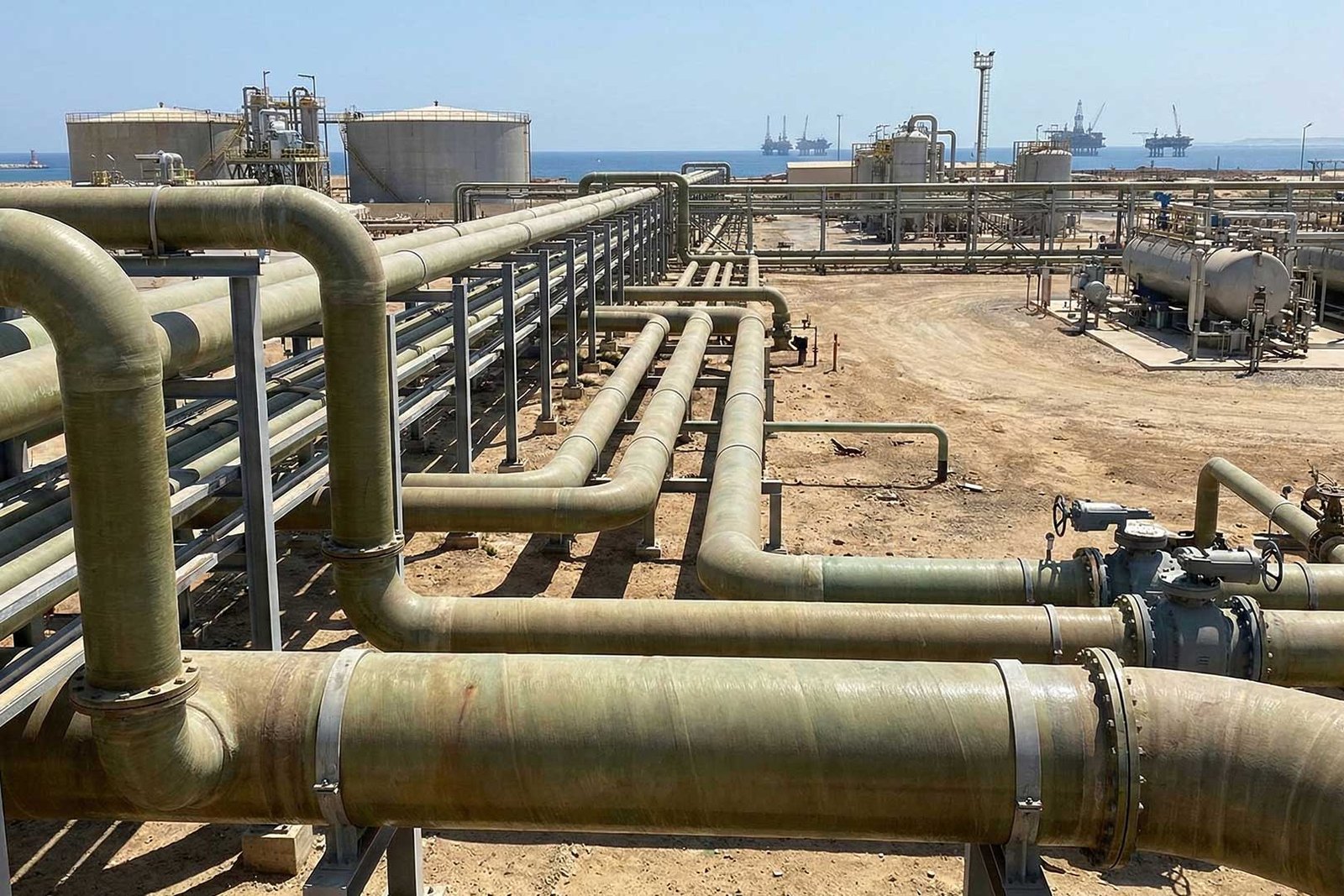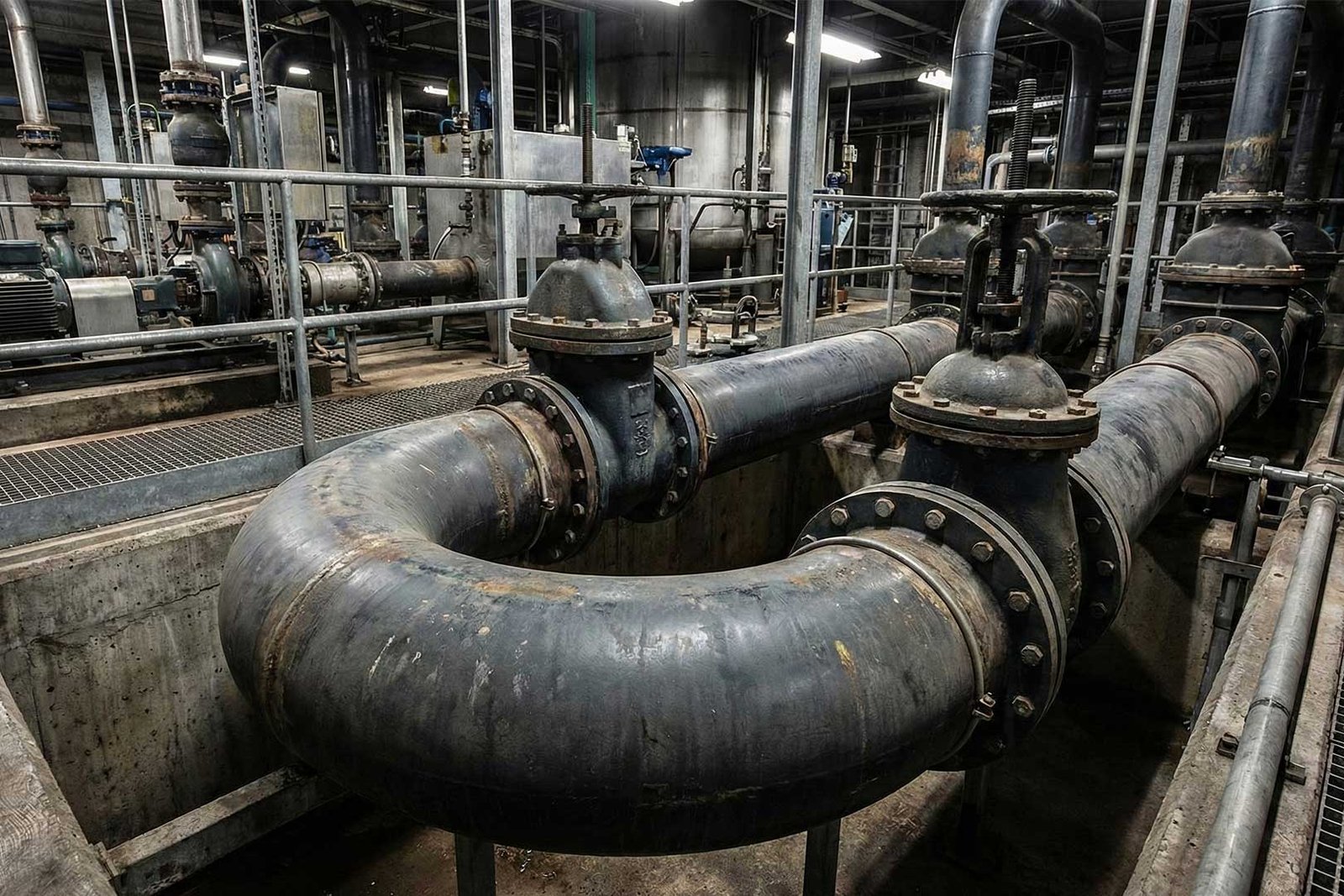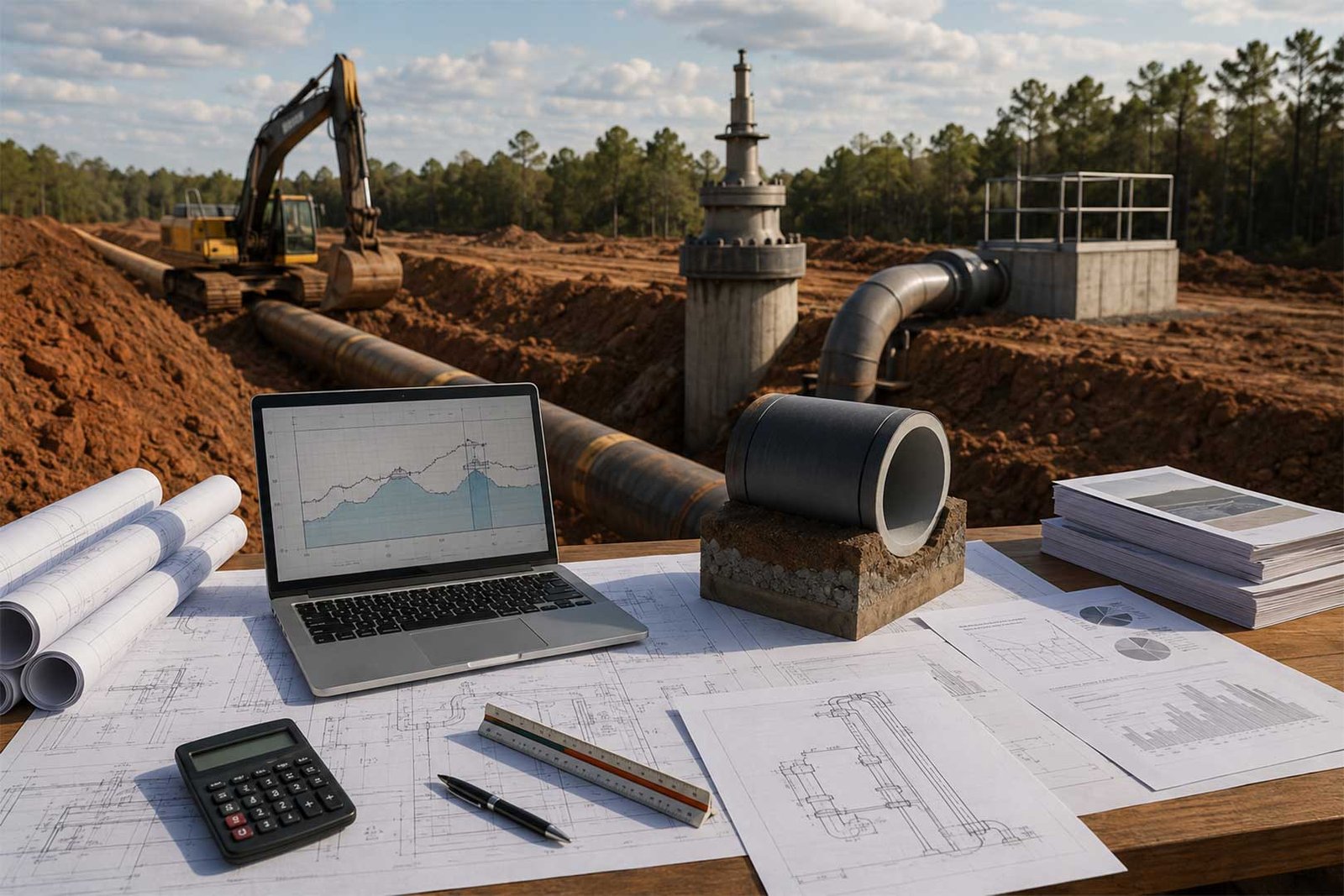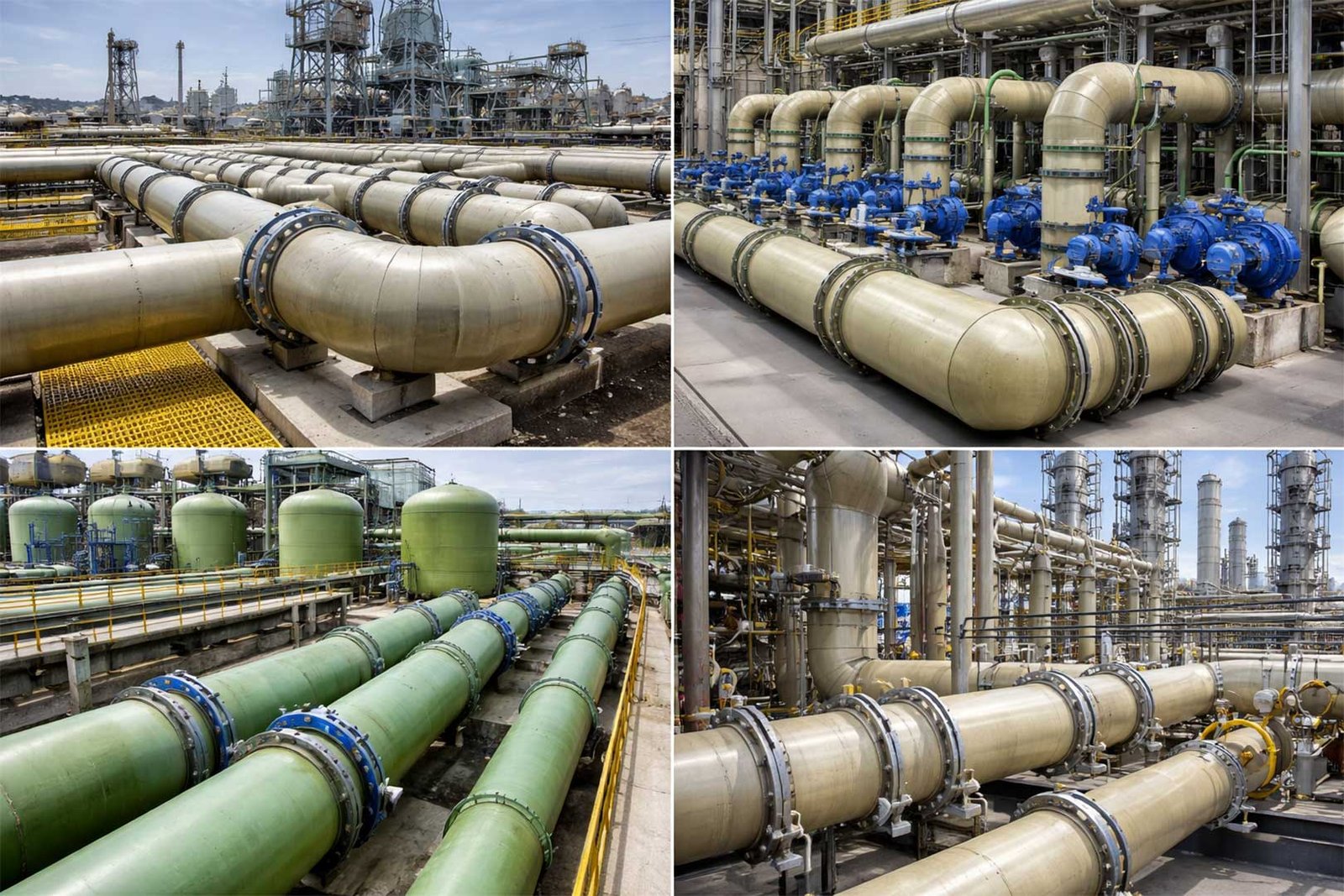
In the modern era of piping systems, composite pipes are popularly used in various applications due to their high resistance to corrosion and pressure. Composite pipes are made from resin and glass fibers, which makes them light and easy to handle and install. Engineers and contractors choose them where scandals require tough pipes, such as oil and gas lines, water supply, chemical plants, and industrial piping systems.
This post goes through different use cases of the most-used composite pipe types like GRP, GRE, and GRV based on what industry needs which type is better. Before getting into the main section, check the table below at a glance.
| Application / Use Case | Primary Pipe Type(s) | Key Benefits | Main Industries |
|---|---|---|---|
| Potable water transmission | GRP | Corrosion-free, long life | Municipal, utilities |
| Sewerage & wastewater | GRP, GRV/GRVE | Aggressive fluid & soil resistance | Municipal, wastewater |
| Produced water & injection lines | GRE, RTP/TCP, GRP | High pressure, corrosion resistant | Oil & gas, energy |
| Oil & gas flowlines | GRE, RTP/TCP | Lightweight, high pressure, spoolable | Oil & gas |
| Chemical transport | GRV/GRVE, GRE | Acid & solvent resistance | Chemical, petrochemical |
| Industrial wastewater | GRV/GRVE, GRP | Handles corrosive fluids | Industrial, mining |
| Desalination (intake & outfall) | GRE, GRV/GRVE, GRP | Seawater corrosion resistance | Water treatment |
| Cooling & utility lines | GRP, GRE, Multilayer | Thermal stability, low maintenance | Power plants, industrial |
| High-pressure water injection | RTP/TCP, GRE | Flexible, fast install | Oil & gas, utilities |
| Irrigation & agriculture | GRP, RTP/TCP | UV resistant, lightweight | Agriculture |
| Offshore flowlines & risers | RTP/TCP, GRE | Collapse & pressure resistant | Offshore oil & gas |
| Firefighting systems | GRP, GRE | Reliable pressure, no corrosion | Buildings, industrial |
| HVAC & district heating | Multilayer, GRP | Smooth flow, easy install | Construction, commercial |
| Mining slurry & tailings | RTP/TCP, GRV/GRVE | Abrasion & chemical resistant | Mining |
| Hydrogen & CO₂ transport (emerging) | RTP/TCP | Permeation resistant | Energy transition |
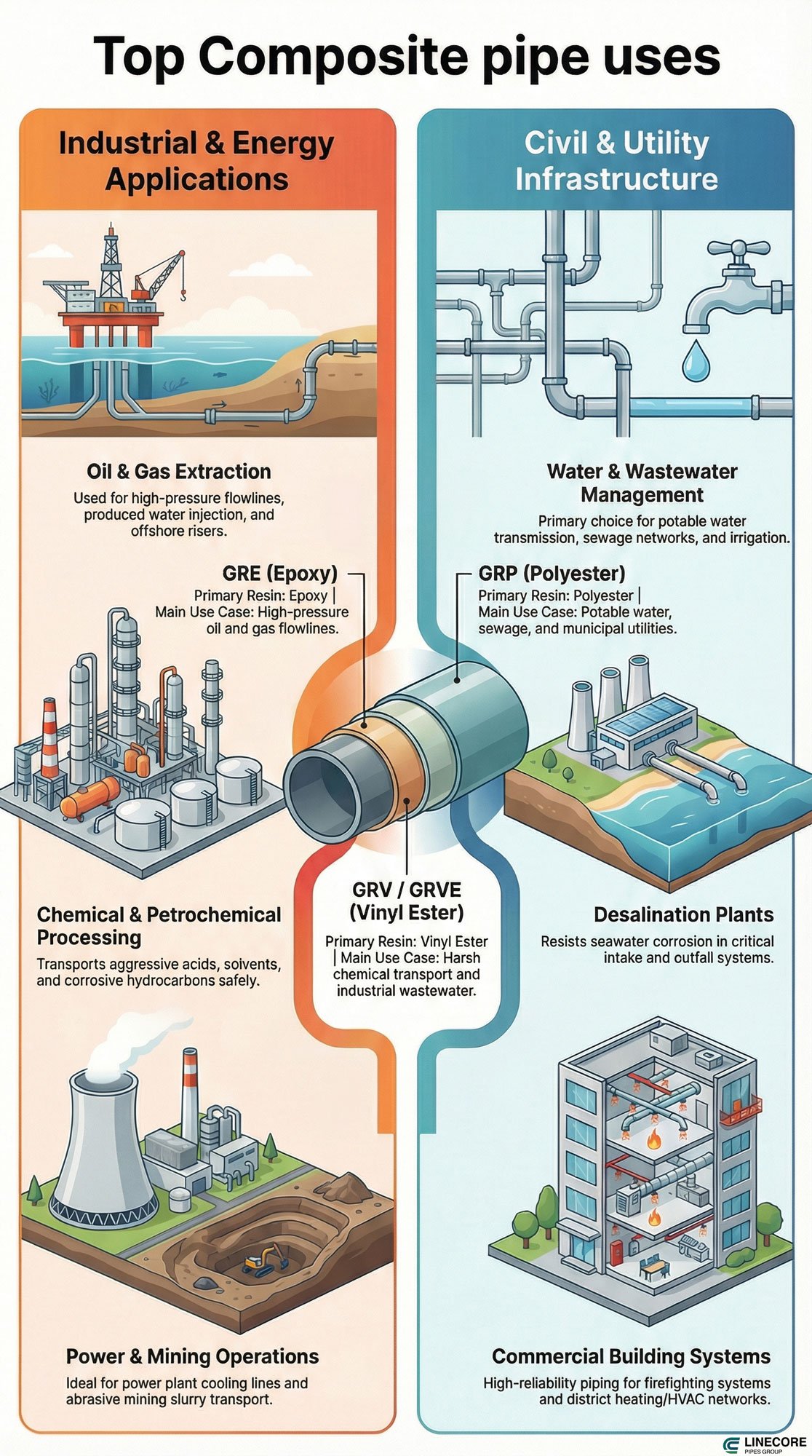
top composite pipe applications infographic (source:Pipelinecoregroup.com)
Overview of Composite Pipe Types Used in Industry
Composite pipes vary by material and structure to match pressure, chemical, and installation demands. The main families include rigid fiberglass thermosets and flexible thermoplastic systems.
1. Fiber-Reinforced Composite Pipes
These embed glass fibers in resin for high strength and corrosion resistance. They suit demanding loads in water, chemical, and energy lines.
2. Thermoplastic Composite Pipes
Known as TCP or RTP, they combine a thermoplastic core with fiber reinforcement. Due to their lightweight, they are perfect for oil and gas flowlines, offshore, and quick remote setups.
3. Multilayer Composite Pipes
Built with an inner liner for fluid contact, a middle reinforcement for pressure, and an outer shield against UV and wear. They’re used in industrial and utility applications where a protective layer is required.
4. Flexible and Reinforced Composite Pipe Systems
Spoolable RTP/TCP designs allow easy coiling and fast deployment. They fit dynamic uses like subsea risers, mining, and high-pressure injection in hard-to-reach areas. (Source: Scribd)
Where GRP-Based Systems Surpasses All Other Types
GRP-based systems lead rigid thermoset composites. Here’s how the main GRP family variants compare and fit:
| Type | Resin | Main Strength | Pressure/Temp | Typical Use |
|---|---|---|---|---|
| GRP | Polyester | Cost-effective | ~25 bar, 80°C | Water, sewage |
| GRV | Vinyl Ester | Chemical resistance | Medium-high | Wastewater, acids |
| GRVE | Vinyl Ester | Strong acid resistance | Medium-high | Harsh chemicals |
| GRE | Epoxy | High pressure & heat | ~30+ bar, 110–150°C | Oil & gas, energy |
5 Reasons Why People Choose Composite Pipes Instead of Metallic Pipes
Composite pipes work better than steel, ductile iron, and concrete pipes in harsh situations. They include benefits that lower long-term risks and costs. There are five main reasons why composite pipes surpassed metal pipes.
- They work well in aggressive conditions without corrosion, even when exposed to chemicals, salinity, acids, and soils that cause damage and failure of metal pipes.
- Because they are so light, they are much easier and cheaper to move and install than heavy steel or ductile iron. As noted in Scribd, this can save 30–50% on labor and equipment expenditures.
- Composite pipes can handle high pressure and temperature, up to 30+ bar and 110–150°C, depending on the type of resin. They are good for oil, gas, and hot fluid lines where steel may bend or break.
- They survive a long time and don’t need much maintenance. They usually last 50 years or more without needing any repairs, unlike regular pipes, which need to be checked and fixed often.
- Finally, they cut the total cost of ownership during the life of the product by lowering the costs of installation, maintenance, downtime, and replacement. This gives owners and operators a high return on investment (ROI).
How to Design Composite Pipes to Be Aligned with Various Uses
Composite pipe design makes pipes stronger, more resistant to corrosion, and more flexible for certain fluids, pressures, and locations.
● The Case of Structure in Composite Pipes
Polyester, vinyl ester, and epoxy are all types of resin-based composite matrices that hold fibers together and impose restrictions on chemicals and temperatures.
The direction of the reinforcement (helical, hoop, or axial) controls the loads, which directly affect the pressure rating, stiffness, and long-term durability.
● Multilayering in Composite Pipe
The inner liner makes sure that fluids may flow smoothly and are compatible with each other. The reinforcement layer adds strength in terms of pressure, tension, and collapse. The outer layer protects against damage from machines, UV rays, and the weather.
● Bonding and Resin Choices
For stable, buried, or high-stiffness uses, bonded pipes combine layers into a solid unit. Non-bonded pipes keep layers apart so they can bend and spool (Source: ScienceDirect). This makes them great for dynamic offshore, seismic, or remote lines where movement tolerance is important.
How Are Composite Pipe Applications Categorized by Industry?
Composite pipes are designed to be adaptable to many use cases, from deep burials to deep oceans, with no corrosion included. Check this section for all industries with uses of composite pipes:
1. The Oil and Gas Industry
Composite pipes work well with corrosive fluids and high pressures in the oil and gas plants due to their multiple choice of resin and additives to boost the fire retardancy. They’re used in:
- Flowlines and gathering systems
- Injection and generated water
- Offshore and onshore applications
2. Industrial Use Cases
They handle hot fluids and dangerous substances with little upkeep. The resin layers in GRV and GRVE pipes make them highly resistant to harsh acids and chemicals. Best uses:
- Transporting chemicals
- Lines for cooling and utilities
- Fluids that are aggressive and hot
3. Building and Infrastructure
Lightweight and long-lasting composite pipes make it easier to put them in buildings and over vast distances. While durability is the key in hard-to-access sites like infrastructures, these pipes are also able to handle heavy loads. Key cases:
- Structures and services
- Long-distance pipelines for sending things
4. Systems for Water, Wastewater, and the Environment
In this case, composite pipes show such a resistance during their log lifespan in water infrastructures with no corrosion included. Here are what they can fix:
- Transmission of drinking water
- Drains and sewers
- Plants for desalination and treatment
5. Energy, farming, and Other Specific Uses
They reliably serve applications that are distant, corrosive, or in high demand. ResearchGate highlights that in the power lines, where the risk of leakage can ruin the whole infrastructure, composite pipes with their various jointing types can be the best option.
- Power plants
- Transporting fertilizers and watering plants
- District heating/cooling networks
- Water towers
GRP, GRV, GRVE, and GRE Pipes Applications
What makes the composite pipe family the best option for modern systems is the GRP family. They include GRP, GRV, GRVE, and GRE pipes for all piping projects to last over half a century.
Compared to thermoplastics like RTP or TCP pipes, the GRP family contains a more reliable design that can be adapted to the project. Check the table below to see if each type can be used where:
| Type | Resin | Key Strength | Max Temp | Pressure | Main Use |
|---|---|---|---|---|---|
| GRP | Polyester | Cost-effective | ~80°C | Medium | Water, sewage, utilities |
| GRV | Vinyl Ester | Chemical resistance | ~100°C | Medium-high | Wastewater, mild acids |
| GRVE | Vinyl Ester | Strong acid resistance | ~110°C | Medium-high | Harsh chemicals, desalination |
| GRE | Epoxy | High pressure & temperature | ~150°C | High | Oil & gas, offshore, energy |
Now let’s check them separately to see where exactly they shine.
GRP Pipe Uses and Applications
GRP pipes or glass reinforced plastic, which uses unsaturated polyester resin, make it cost-effective and easy to use for moderate applications like water supply. Here are some places where GRP pipes are used:
- Water Transmission: GRP pipes are the best option for modern water supply due to their corrosion-free surfaces.
- Sewer Systems: GRP pipes have no reaction with sewerage and can be used in hard-to-access urban systems of water drainage with ease.
- Desalination Plants: GRP pipe is one of the best options for desalination systems where salty water requires such a resistant pipe.
- Industrial Water Networks: Utility systems mainly require a pipe with high resistance to pressure and aggressive conditions, which is not that costly, so choose GRP!
GRV Pipe Applications (Vinyl Ester Resin Systems)
GRV pipes that use vinyl ester resin are a better option for aggressive chemical resistance than standard GRP in industrial and wastewater uses.
- Chemical Transmission: GRV safely carries acids, alkalis, and corrosive mixtures without degradation.
- Industrial Wastewater: They manage acidic or chemically laden effluents in plants with reliable long-term performance.
- Acidic Burials: GRV withstands harsh buried environments where standard pipes would corrode quickly.
GRVE Pipe Uses in Harsh Chemical Environments
GRVE pipes show a pro vinyl ester performance for extreme chemical attack in demanding processing settings.
- Acidic Fluid Transportation: GRVE handles strong acids, solvents, and mixtures that destroy most other materials.
- Chemical processing plants: They provide safe, leak-free lines for reactors, storage, and transfer in aggressive operations.
- Petrochemical Plants: GRVE resists hydrocarbons, chlorides, and blends common in refining and production. (Source: FuturePipe)
- Corrosive Surrounding Environments: These pipes deliver durability in highly corrosive atmospheres, soils, or fluids where failure is not an option.
GRE Pipe Applications in Oil, Gas, and Energy Sectors
What makes GRE pipe different from other types is the choice of epoxy resin that can provide such a base for oil and gas pipelines with a high risk of flames and corrosion in saline conditions.
- Flowlines: GRE carries crude, gas, and multiphase fluids reliably in high-pressure gathering systems.
- Produced Water: They handle saline, sour, or chemically treated water without corrosion or scaling.
- Offshore and Onshore: Lightweight GRE simplifies installation on platforms, rigs, and remote fields.
- High-Pressure Lines: GRE resists up to 30+ bar and 150°C in demanding extraction and processing lines. (Source: NDT)
A Complete Comparison of GRP, GRV, GRVE, GRE Pipes
What makes each of GRP, GRV, GRVE, and GRE pipes the best choice for specific applications relies on resin type, pressure, and chemical resistance. Check the table below to see which type suits your project demands better.
| Aspect | GRP (Polyester) | GRV (Vinyl Ester) | GRVE (Premium VE) | GRE (Epoxy) | Best Option |
|---|---|---|---|---|---|
| Pressure | Medium (~25 bar) | Medium-High | Medium-High | High (~30+ bar) | GRE |
| Chemical Resistance | High (mild) | Very High | Excellent (strong acids) | Excellent (broad) | GRVE |
| Typical Industries | Water, sewage | Wastewater, chemicals | Chemical plants | Oil & gas, energy | Match need (GRP water; GRE energy) |
| Best For | Budget water lines | Enhanced chemicals | Extreme corrosives | High pressure/temp | Fluid type + pressure/temp |
Future Applications and Market Trends for GRP and GRE Pipes
The newest trends for oil and gas and industrial pipelines drive engineers and manufacturers to look for a material with a green vision. Composite pipes with their long lifespan and cost-effectiveness have taken place for all types of piping systems.
A. The Growth of Urban Infrastructures
The significant growth of cities in Asia, Africa, and Latin America boosted the need for substantial water mains, sewer systems, and stormwater systems. For cities that are growing and innovative infrastructure projects, GRP pipes are a cheap, long-lasting option.
B. Investment in Water and Sewage
To avoid pollution and scares, governments all over the world are spending billions to improve old water systems and develop new desalination facilities. GRE supports high-pressure treatment operations, while GRP is the most common material used for drinking water and sewage lines.
C. Demand for Oil, Gas, and Energy
Even if energy is changing, oil and gas recovery, and new offshore projects, GRE pipes are still needed for flowlines and injection systems. New projects that move hydrogen and capture carbon also prefer GRE for handling high-pressure gas.
D. New Trends of Composite Pipe Manufacturing Lines
New automated filament winding, recyclable polymers, and hybrid reinforcements make things stronger, cheaper, and more environmentally friendly. These extra features make GRP and GRE more competitive with steel and make it possible to use them in harsh conditions with renewable energy.
Ready to Upgrade Your Piping Project?
If you’re designing your piping project and looking for a reliable composite pipeline, Linecore Pipes Group supplies GRP, GRV, GRVE, and GRE pipe systems designed and customized for your demands in terms of corrosion resistance, pressure and temperature tolerance, and long service life.
Contact our consultant for an application-specific recommendation and personalized solutions to your project that you can truly count on.
FAQs
1- What are composite pipes?
Composite pipes are a combination of resin and fibers that last for decades with no corrosion or deformation included.
2- Why use composite over steel?
They are lighter, more resistant to acids and chemicals, have a lifespan of 50 years, and have overall costs that are more competitive than steel pipes.
3- When to choose GRV or GRVE?
Choose GRV for acids and harsh fluids, while choosing GRVE over GRV for situations where aggressive chemicals and the surrounding environment require more resistant pipes.
about
The Author

Farshid Tavakoli is a seasoned professional in engineering and international trade. Holding degrees in Electrical Engineering, Mechatronics, and a Doctorate in Business Administration (DBA) from the University of Lyon, he also has a strong background in industrial automation and production line technologies.
For over 17 years, he has led an international trading company, gaining deep expertise in commercial solutions tailored to industrial needs. With more than 8 years of active involvement in infrastructure development, he specializes in the supply of electromechanical equipment for water and wastewater treatment plants and transfer projects.
Together with comapny expert team, he now provides consultancy and integrated solutions for sourcing and implementing complex infrastructure projects across the region.